Crafting the Impassable Wilderness: Inside LAIKA’s 16-Year Odyssey to Bring Travis Knight’s Wildwood to Life
Main Facts
After a monumental 16-year development and production journey, acclaimed stop-motion animation powerhouse LAIKA Studios is preparing to release its most ambitious cinematic endeavor to date: Wildwood. Directed by TravisKnight, the fantasy feature adapts the beloved children’s novel of the same name written by Colin Meloy and illustrated by his wife, Carson Ellis.
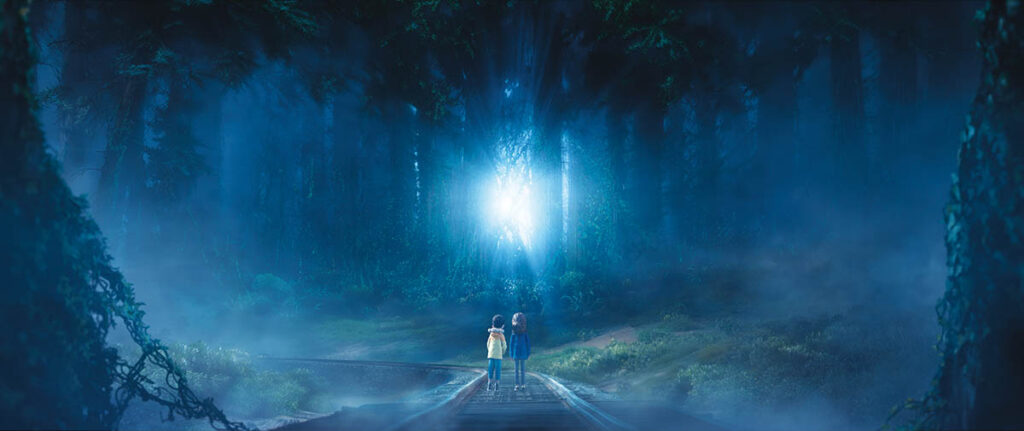
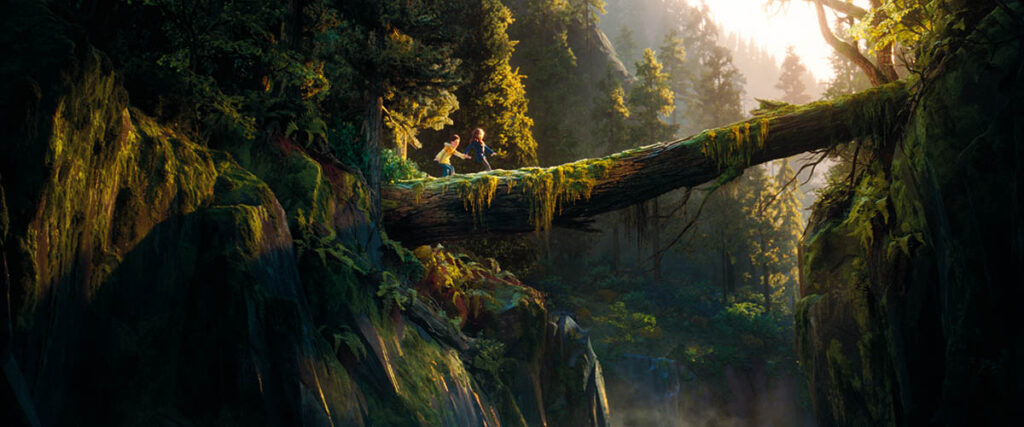
The narrative follows 12-year-old Prue McKeel as she embarks on a perilous, high-stakes quest into the forbidden, magical depths of "Wildwood"—a dense, mythical reimagining of Portland’s actual Forest Park, known in the story as the ImpassableWilderness. Prue must navigate warring factions of talking animals and mysterious political entities to rescue her infant brother, Mac, who has been abducted by a menacing murder of crows.
Simultaneously directing Masters of the Universe alongside Wildwood placed an unprecedented strain on Knight. Yet, it is Wildwood that represents the crown jewel of LAIKA’s technical and artistic evolution. The production doubled the scope of any previous LAIKA film, ballooning to a staggering 2,800 shots. To conquer this monumental undertaking, the studio expanded its internal visual effects department from 90 to 300 artists and, in an industry first for the company, partnered externally with Wētā FX.
Chronology
The genesis of Wildwood stretches back nearly two decades, requiring intense perseverance through both creative pivots and external global disruptions.
Pre-Production and Early Development (Mid-2000s–2010s): Travis Knight first encountered Colin Meloy’s novel early in its publication cycle. What began as a passionate dream steadily took shape through conceptual art, script adaptation, and early world-building.
The Milestone Threshold (Post-Missing Link): Following the completion of LAIKA’s first five feature films, leadership assessed the studio’s technical readiness. Confident that their pipeline could handle the source material, Knight officially greenlit full-scale production, declaring, "We can do it."
Overcoming Crises (2020–2022): Production collided head-on with a cascade of unprecedented real-world disruptions. The COVID-19 pandemic forced remote workflows, catastrophic wildfires ravaged the Oregon landscape, and civil unrest unfolded in the streets of Portland just outside the studio doors.
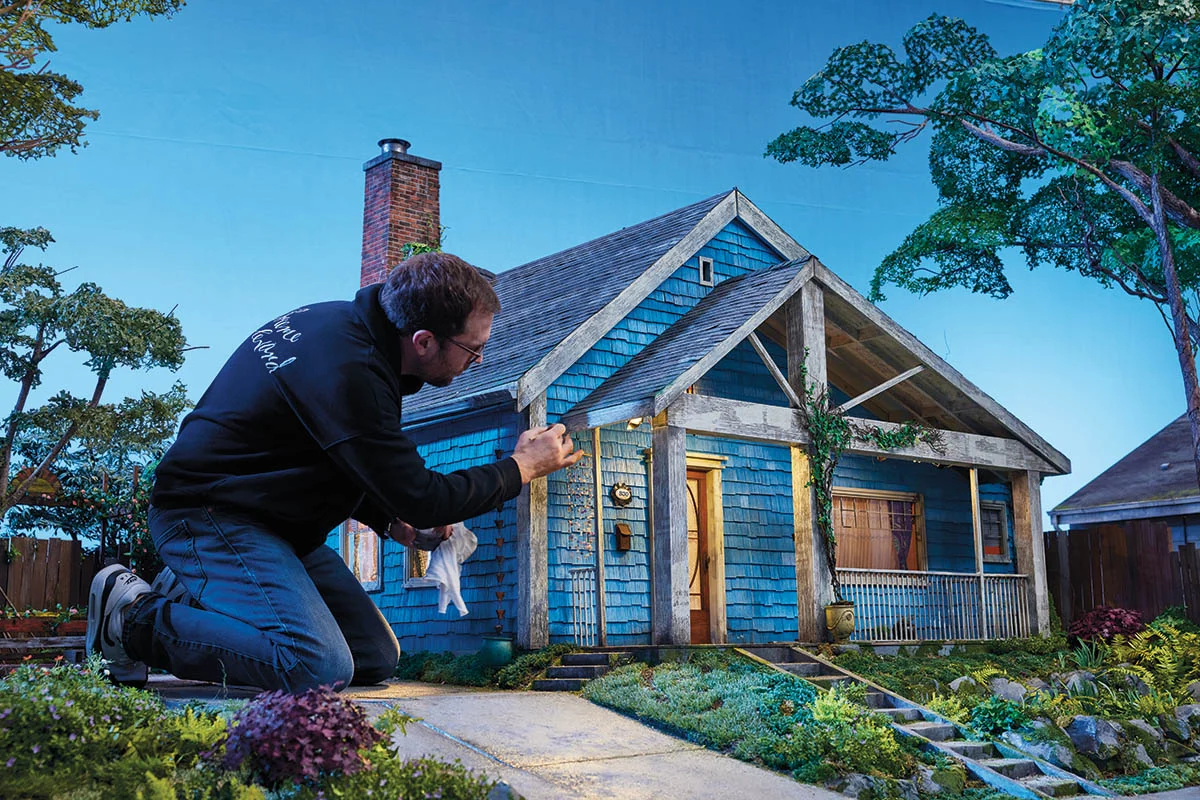
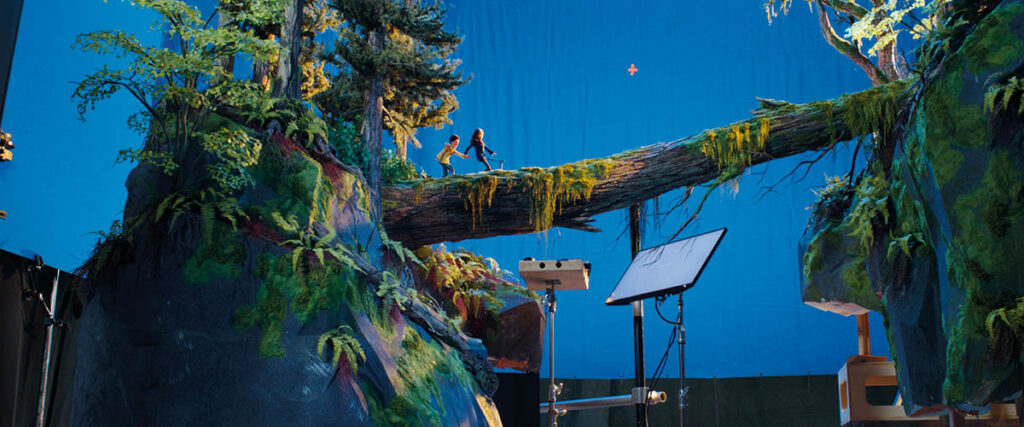
Production and Technical Expansion (2022–2025): The scale of the production exploded. The team constructed 236 fully functional puppets, manufactured bespoke parts via advanced wax and 3D printing technologies, and splintered complex sets across multiple soundstages.
Post-Production and Delivery (2025–2026): External collaborations with Wētā FX helped lock down the complex hybrid pipeline of digital extensions, atmospheric effects, and hyper-detailed stop-motion photography, culminating in a 2026 release.
Supporting Data
The sheer logistical and technical metrics behind Wildwood highlight why the production stands as a landmark achievement in modern animation:
Shot Count: The film features approximately 2,800 shots, roughly double the standard shot volume of a typical LAIKA feature (by comparison, Missing Link totaled around 1,450 shots).
VFX Workforce: LAIKA expanded its internal visual effects crew from its baseline of 90 artists up to 300 members, supplemented by external partnerships with Wētā FX.
Puppet Inventory: The production fabricated 236 fully functional puppets, each designed using a parallel fabrication workflow.
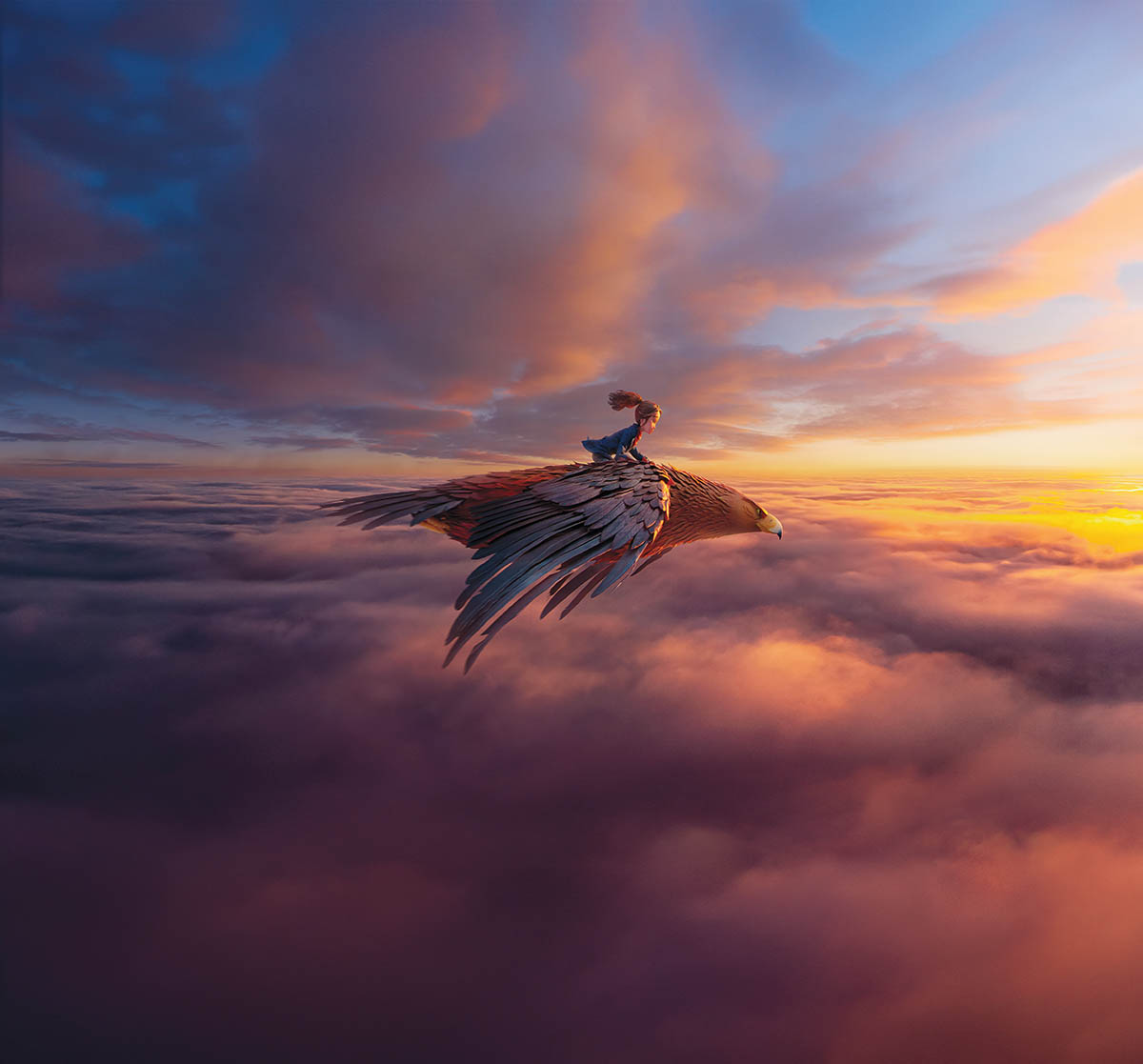
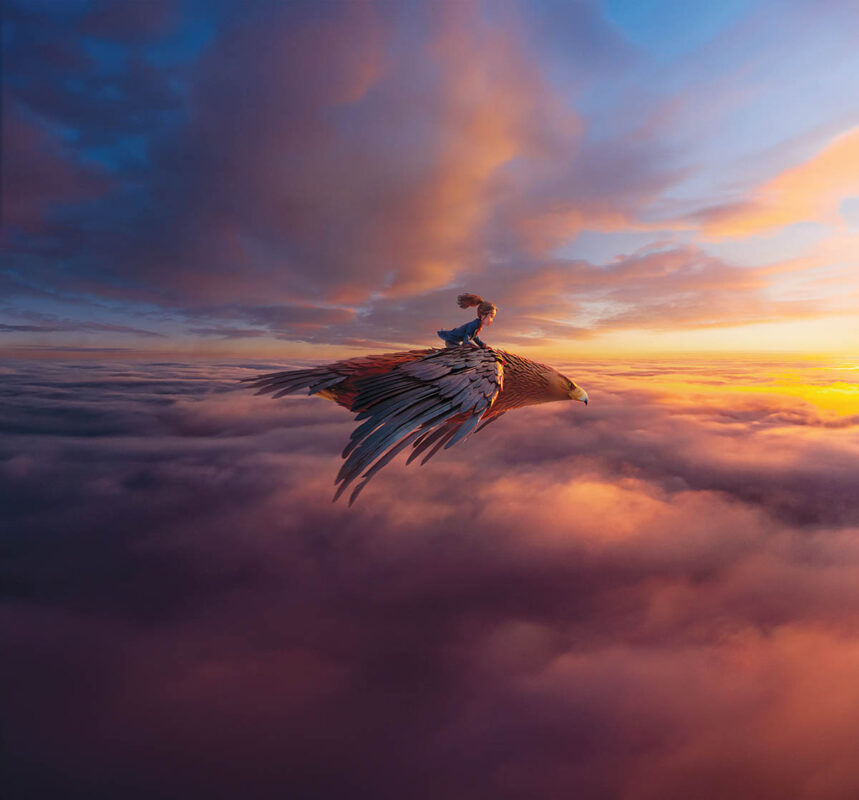
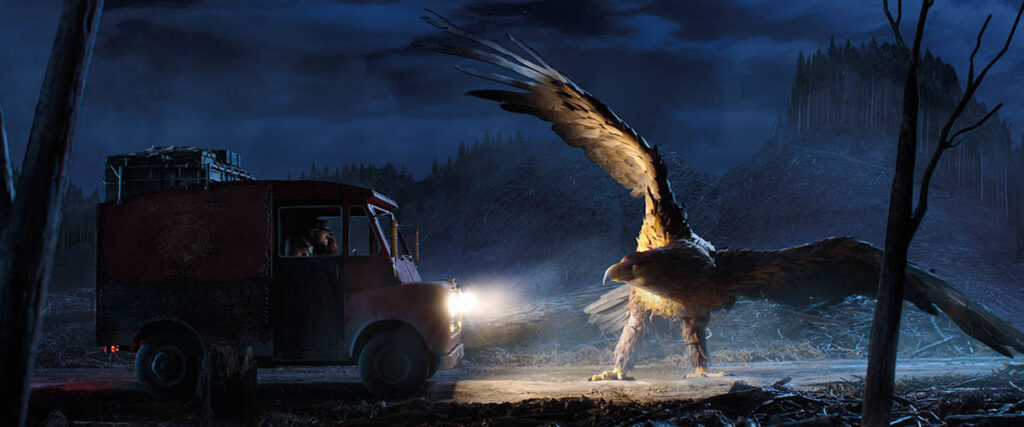
The General’s Scale: The film’s primary antagonist/ally, a massive golden eagle known as The General, featured a 5-foot wingspan and was outfitted with 3,000 individual hand-applied feathers crafted from poly satin with integrated gold thread.
Timeline Duration: The film was in development and production for 16 years, with Visual Effects Supervisor Steve Emerson dedicating six continuous years to the project.
Official Responses
The creative leadership behind Wildwood have been vocal about the agonizing, yet deeply rewarding, hurdles crossed during production:
Director Travis Knight reflected candidly on the grueling double-feature schedule and the physical toll of the production:
"Releasing two movies within the same year is not for the faint of heart. I’m sure it has taken years and years off my life… It’s happenstance that Wildwood is coming out in the same year that I’ve got my little costume drama [Masters of the Universe]. At times, I felt like the universe was conspiring against us. The pandemic hit. These crazy wildfires ripped through Oregon. There were riots in the streets of Portland. It was one thing after the next when we were trying to make this movie. But we persevered."
Discussing the intrinsic philosophy of LAIKA, Knight emphasized the seamless marriage of old and new technologies:
"Visual effects have always been an absolutely indispensable part of what we do, and it’s one of the things that actually makes LAIKA unique in that handcrafted, practical, virtual and digital are entwined together. Each one of those techniques informs the other; that’s how we ended up with the 3D printing and other things that start life in a digital way and are reborn as a physical thing."
Visual Effects Supervisor Steve Emerson addressed the studio’s stubborn refusal to take shortcuts:
"We will choose to do things the difficult way because it’s uncomfortable, and other studios flat-out don’t do it; that goes back to the spirit of stop-motion animation. Who would ever be crazy enough to take a week to get three and a half seconds of animation when you can pick up a camera and tell stories at 24 frames per second? We are chasing an art form that welcomes doing things in a difficult way. If we make it too easy on ourselves, then we’re doing it wrong."
Puppet Fabrication Supervisor Ollie Jones explained how digital pipeline integration rescued the daunting character workload:
"Using Maya, AutoCAD and Inventor to create armatures upfront—as well as rig systems, so we can preview—has enabled us to be able to stack. We can give an avatar to our costume or armature teams so they can design within the constraints of the puppet… We produced 236 fully functional puppets for the show. We wouldn’t have been able to do it unless we could have a more parallel fabrication process."
Cinematographer Caleb Deschanel discussed the unique spatial realities of translating live-action sensibilities into miniature stop-motion environments:
"In stop-motion, the thing that’s missing is the serendipity of an actor coming in and performing something… You have to accept that it’s going to be animated a certain way, and where it goes is going to create its own reality. When we were first starting on the movie, I went outside and shot a number of scenes at different light levels and f-stops so I had an understanding of real human beings in a real situation and what the depth of field should feel like."
Implications
Wildwood signals a paradigm shift not only for LAIKA Studios, but for the broader landscape of hybrid animation filmmaking. By crossing the threshold into external studio collaboration—partnering with Wētā FX for the first time—LAIKA has proven that traditional stop-motion ateliers can scale up to blockbuster VFX volumes without sacrificing their tactile, handcrafted soul.
Furthermore, the technological breakthroughs achieved during Wildwood—such as utilizing high-precision wax 3D printing for investment-cast bronze armature components and developing synchronized digital-to-practical facial animation workflows—set a new benchmark for the industry. It proves that centuries-old cinematic techniques can be aggressively modernized through 21st-century computational tools.
Ultimately, Wildwood stands as a defiant counter-narrative to modern digital homogenization. In an era where algorithmic, purely computer-generated imagery dominates the animated landscape, LAIKA’s embrace of deliberate discomfort—taking weeks to capture mere seconds of film—reinforces stop-motion as a living, breathing, and fiercely relevant art form.