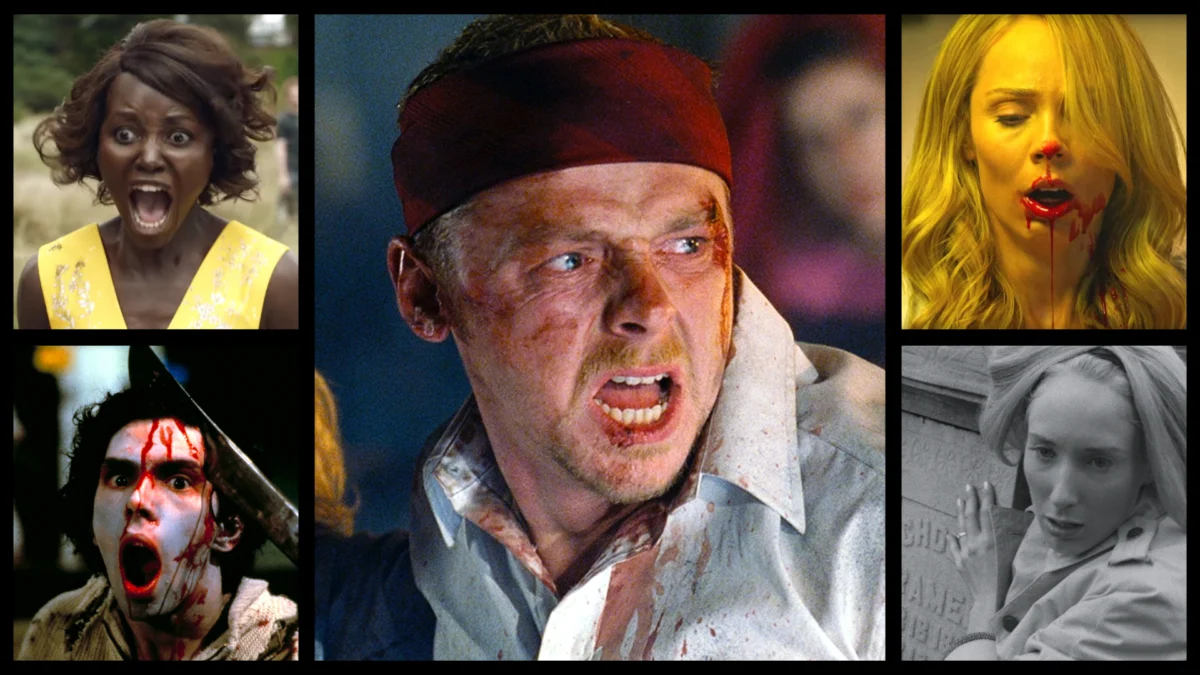
Beyond the Shufflers: How Zombie Cinema Transcended B-Movie Trash to Become Our Culture’s Sharpest Mirror
By IndieWire Film Desk Updated and Expanded Edition
Main Facts: The Undying Appeal of the Cinematic Corpse
When cataloging the foundational taboos of Western civilization, death itself rarely sits at the top of the list. Yet, perhaps it should. Modern North American and European societies remain chronically, almost pathologically, averse to confronting mortality. Too many of us operate under the quiet, desperate assumption that the right high-intensity workout regimen, a relentless diet of organic kale, and a medicine cabinet stocked with expensive longevity supplements might somehow conspire to help us cheat the grim reaper permanently.
It is a deeply predictable coping mechanism for a youth-obsessed culture. Enter the zombie film.
The enduring, terrifying allure of the cinematic zombie is that the genre forces audiences to confront death head-on—or rather, forces death to confront us, hungering to scoop out our brains and induct us into its shambling ranks. Far from mere adolescent bloodlust, the zombie movie functions as a visceral memento mori. Sometimes, the walking dead bear heavy, sociological metaphors on their decaying shoulders. Consider Edgar Wright’s Shaun of the Dead, which uses the mindless horde to skewer the hyper-connected yet profoundly isolated reality of our post-internet world. Other times, however, a zombie is simply a zombie: a rotting, shuffling corpse reminding audiences that, even if we escape reanimation, this is precisely what our physical vessels will look like beneath the earth. It is, if nothing else, a profoundly effective argument for cremation.
Chronology: From Haitian Folklore to Global Phenomenon
To understand how the zombie evolved from regional folklore into a multi-billion-dollar cinematic empire, one must trace a fascinating historical trajectory marked by shifting societal fears.
The Roots of the Undead (Pre-1968)
Long before George A. Romero unleashed his ghouls upon rural Pennsylvania, the concept of the living dead was deeply rooted in Haitian Vodou traditions, representing the horrific legacy of chattel slavery and the loss of bodily autonomy. Hollywood first tapped into this mythology with films like Victor Halperin’s 1932 classicWhite Zombie, starring Bela Lugosi. However, the turning point arrived in 1948 with Jacques Tourneur’s atmospheric masterwork I Walked With a Zombie. This film broke new ground by embedding explicit commentary on racism, European colonization, and the enduring trauma of the slave trade into a gothic narrative.
The Romero Revolution (1968–1985)
The modern zombie genre as we know it was born in 1968 with George A. Romero’s independent micro-budget shocker, Night of the Living Dead. Eschewing voodoo curses in favor of a mysterious sci-fi contagion, Romero reinvented the corpse as a flesh-eating cannibal. More importantly, he injected biting social commentary into the frame—culminating in a devastating, racially charged final scene that forever altered horror history. Romero expanded on these themes a decade later with 1978’s Dawn of the Dead, utilizing the enclosed space of a suburban shopping mall to launch a blistering, prophetic critique of unchecked American consumerism.
The Modern Renaissance and Reanimation (2002–Present)
The turn of the millennium saw a dramatic acceleration in the genre’s pacing and scope. Danny Boyle’s 2002 adrenaline-fueled masterwork 28 Days Later (featuring infected humans rather than literal corpses) popularized the "fast zombie," upending decades of slow-shuffling tradition. This was quickly followed by Zack Snyder’s slick 2004 Dawn of the Dead remake and Edgar Wright’s genre-defining zom-com Shaun of the Dead. Globally, the genre expanded exponentially, highlighted by South Korea’s monumental contributions like Yeon Sang-ho’s Train to Busan (2016) and the prestige Netflix historical-horror series Kingdom (2019), proving that the genre’s flexibility is as limitless as human ingenuity.
Supporting Data: Evolution of the Zombie Sub-Genre
Class warfare, institutional corruption, familial sacrifice
High production value, international acclaim, emotional depth.
Official Perspectives: What Filmmakers and Critics Say
Zombie films have long served as a premier vehicle for cinematic satire, political protest, and contemporary critique. Industry veterans and academic critics alike have frequently pointed out the surprising intellectual rigor underlying tales of flesh-eating hordes.
George A. Romero, widely regarded as the godfather of the modern zombie movie, frequently noted that his monsters were never truly about the supernatural; they were about human failure. In various interviews across his legendary career, Romero emphasized that societal friction in the face of crisis—how humanity eats its own—was far more terrifying than the ghouls outside the barricaded doors.
Meanwhile, contemporary directors have leaned into the emotional core of the sub-genre. Speaking on the enduring appeal of blending comedy and horror in Shaun of the Dead, co-writer and star Simon Pegg highlighted how mundane modern routines mirror the lifestyle of the walking dead:
"The zombie has always been a reflection of us. We live in a society where we commute, we work, we consume, and we repeat. Shuffling onto the tube at 8:00 AM, we are already part of the horde."
Critics echo this sentiment, arguing that the genre’s durability stems entirely from its chameleon-like nature. Whether addressing the AIDS crisis of the 1980s, post-9/11 anxieties, or modern political polarization, the zombie remains a blank canvas onto which society projects its deepest collective fears.
To dismiss the zombie genre as overdone, derivative, or purely base-level exploitation is to ignore nearly eighty years of cinematic history. As proven by the breadth of critical analysis surrounding the medium, these movies have brains.
IndieWire’s definitive ranking of the 24 greatest zombie films ever made—compiled through editorial contributions from prominent critics including Christian Blauvelt, Alison Foreman, Tambay Obenson, Eric Kohn, Ryan Lattanzio, and Leonardo Adrian Garcia—serves as a testament to the genre’s artistic weight. By balancing raw technical quality against lasting cultural impact, these selections illustrate that horror cinema can be simultaneously terrifying and deeply intellectually stimulating.
Ultimately, the zombie genre survives because humanity’s anxieties refuse to stay buried. As long as society grapples with consumerism, systemic inequality, isolation, and the inescapable reality of mortality, the walking dead will continue to claw their way up from the cinematic earth, reminding us of what we are—and what we might eventually become.