
The Tempest at CBS News: Inside the Firing of Scott Pelley, the ‘60 Minutes’ Mutiny, and the Battle for a Legacy Broadcaster
Introduction: A Dignified Departure Amidst an Editorial Storm
In the high-stakes, highly volatile world of network television, sometimes the most profound statements are the ones left unsaid.
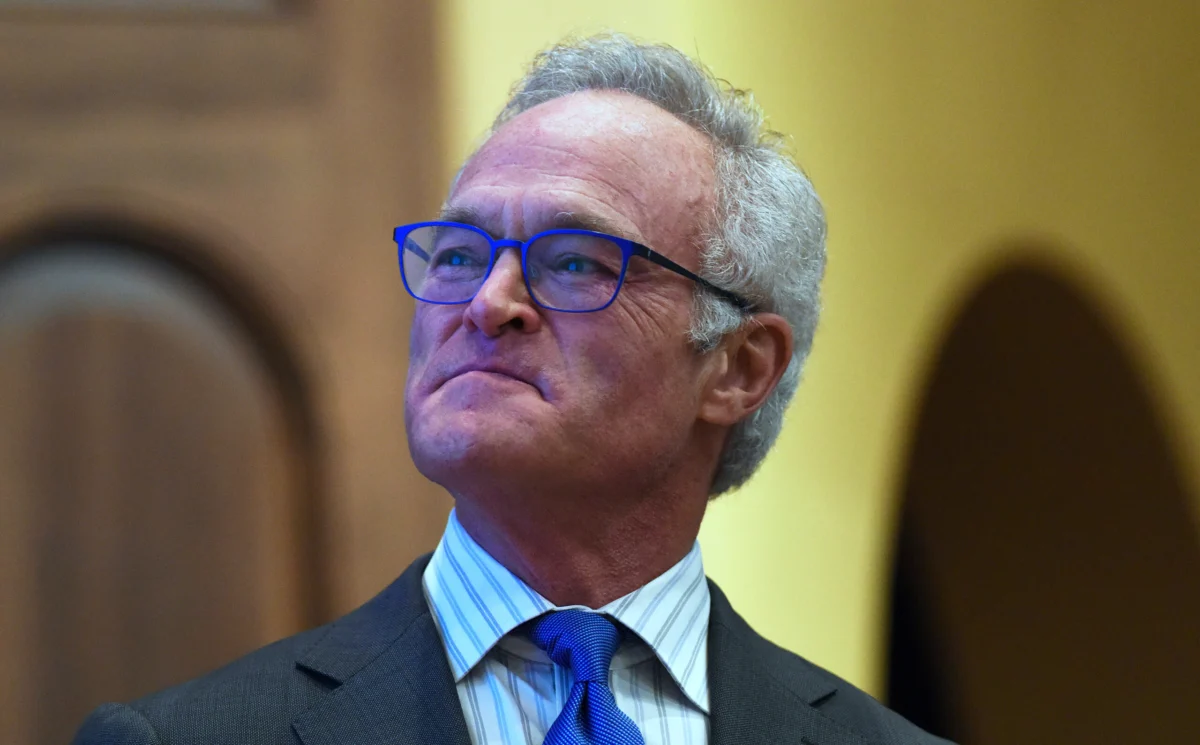
This week, veteran broadcast journalist Scott Pelley, the 68-year-old former anchor of the CBS Evening News and a cornerstone of 60 Minutes, chose to break his silence not with a fiery legal salvo or a bitter press release, but with an image of serene defiance. Taking to Instagram following his abrupt and controversial firing "with cause" by CBS News leadership, Pelley shared a photograph of himself at the helm of a sailboat, navigating open waters.
The accompanying caption was brief, poetic, and pointed: “To all of you who have been so kind, you are the wind in my sails. So deeply grateful.”
For industry observers, the imagery was unmistakable. It evoked the spirit of "Sea-Fever," the classic 1902 poem by former British Poet Laureate John Masefield—a work defined by its longing for the independence of the open sea, away from the constraints and turmoils of the shore.
Yet, beneath the tranquil surface of Pelley’s maritime post lies one of the most explosive institutional crises to hit CBS News in its modern history. The termination of Pelley is the latest and most high-profile casualty in a sweeping, ideological, and structural overhaul of the news division led by newly appointed CBS News Chief Bari Weiss and 60 Minutes Executive Producer Nick Bilton. The restructuring, initiated under the auspices of Paramount’s new owner, David Ellison, has sparked an internal rebellion, brought the network’s flagship newsmagazine to the brink of collapse, and raised profound questions about the future of independent investigative journalism in the corporate media landscape.
Main Facts: The Core of the CBS News Conflict
The crisis currently engulfing CBS News is centered on several key developments:
- The Termination of Scott Pelley: Scott Pelley, a 31-year veteran of CBS News, was fired "with cause" after confronting 60 Minutes Executive Producer Nick Bilton over a series of deep staff cuts and the perceived editorial direction of the program.
- The Restructuring Regime: Under the ownership of David Ellison (who acquired Paramount Global) and the editorial leadership of CBS News Chief Bari Weiss, the network is undergoing a significant transformation. Weiss, the founder of the independent media outlet The Free Press, was brought in to overhaul what leadership has characterized as an out-of-touch legacy news operation.
- The "Mass Purge": Pelley’s firing followed the sudden dismissals of other highly respected 60 Minutes correspondents, including Sharyn Alfonsi and Cecilia Vega, signaling a dramatic break from the program’s established roster.
- The Correspondents’ Ultimatum: In an unprecedented show of solidarity, the remaining veteran correspondents of 60 Minutes—Lesley Stahl, Bill Whitaker, and Jon Wertheim—issued a joint public statement threatening to resign if the program’s editorial independence is compromised.
- The Corporate and Political Backdrop: This internal civil war comes at a critical moment for Paramount Global. Owner David Ellison is currently navigating a complex, $111 billion merger/acquisition involving Warner Bros. Discovery (WBD), a transaction requiring federal regulatory approval amidst a highly charged political environment.
Chronology of a Network Crisis
To understand the velocity of the collapse in morale at CBS News, it is necessary to trace the events of late May and early June 2026, which transformed a routine editorial transition into an existential struggle for the network’s identity.
[Late May 2026] ────> [June 1, 2026] ────> [June 2-3, 2026] ───> [June 5, 2026] ────> [June 6, 2026]
Mass Purge:           The Confrontation:   Pelley Fired:        The Ultimatum:        "Wind in My Sails":
Alfonsi & Vega        Pelley challenges    Dismissed "with      Stahl, Whitaker, &    Pelley posts serene
abruptly dismissed    EP Nick Bilton over  cause"; morale       Wertheim issue        sailing photo;
by new leadership.    editorial direction. plummets.            conditional stay.     legal threats loom.
Late May 2026: The First Salvos
The tension began to build following the sudden and unceremonious dismissals of correspondents Sharyn Alfonsi and Cecilia Vega. The moves sent shockwaves through the corridors of the CBS Broadcast Center in New York. Both journalists were highly regarded within the division, and their abrupt departures were viewed by staff not as routine budget cuts, but as an ideological purging of the old guard.
June 1, 2026: The Confrontation
Furious over the departures of his colleagues and concerned about the editorial mandate being imposed by the new leadership, Scott Pelley confronted the newly appointed Executive Producer of 60 Minutes, Nick Bilton. According to sources close to the network, the meeting was highly contentious. Pelley reportedly challenged Bilton’s journalistic credentials and questioned whether the new regime, guided by Bari Weiss’s contrarian editorial philosophy, was attempting to soften the program’s investigative edge to appease corporate and political interests.
June 2–3, 2026: The Firing
Following the confrontation, CBS News leadership moved swiftly. Pelley was terminated "with cause"—a designation typically reserved for severe contractual violations or gross misconduct. By labeling the dismissal "with cause," the network attempted to void Pelley’s lucrative remaining contract, a move that immediately escalated the conflict from an internal editorial dispute to a high-stakes legal battle.
June 5, 2026: The Rebellion of the Old Guard
As news of Pelley’s firing leaked, morale within the news division collapsed. In an effort to prevent a total walkout, CBS News President Tom Cibrowski, along with Weiss and Bilton, engaged in frantic damage control.
The crisis reached a tipping point on Friday, June 5, when the show’s remaining heavyweights—Lesley Stahl, Bill Whitaker, and Jon Wertheim—issued a carefully drafted, highly conditional joint statement. While agreeing to remain with the show for the immediate future, they made their terms explicitly clear:
“If we can continue doing the work that made this show what it is—committing acts of independent, fearless journalism and storytelling—we’re here for it. If not, we leave.”
June 6, 2026: The Calm and the Storm
On Saturday, Pelley published his sailing photograph on Instagram. The post served as a public thank-you to his supporters and a quiet contrast to the corporate warfare continuing behind the scenes.
Supporting Data: The Legacy of ’60 Minutes’ and the Stakes of Consolidation
To understand why the firing of Scott Pelley has reverberated far beyond the media industry, one must examine the unique economic and cultural power of 60 Minutes.
The Economic Engine of CBS News
For over half a century, 60 Minutes has been the crown jewel of CBS. Unlike most network news programs, which operate as loss leaders or run on thin margins, 60 Minutes has historically been a massive profit center.
| Metric | Detail / Value | Significance |
|---|---|---|
| Premiere Year | 1968 | Created by Don Hewitt; established the modern TV newsmagazine genre. |
| Weekly Viewership | 7 to 10 million viewers | Consistently ranks in the Nielsen Top 10, an unprecedented feat for a news program. |
| Ad Revenue Generation | Estimated $100M+ annually | Commands premium advertising rates due to its highly desirable, affluent demographic. |
| Awards & Accolades | 150+ Emmy Awards | The most decorated program in the history of television journalism. |
Because of this unique financial and cultural clout, the correspondents of 60 Minutes have historically enjoyed an extraordinary level of editorial autonomy, insulated from the typical pressures of network executives and corporate parent companies. The current conflict represents a direct challenge to this long-standing autonomy.
The Ideological Shift: From Legacy to "The Free Press" Model
The appointment of Bari Weiss as CBS News Chief by Paramount owner David Ellison represents a fundamental shift in the network’s editorial direction. Weiss, a former opinion writer for The New York Times and The Wall Street Journal, rose to prominence as a vocal critic of what she characterizes as the ideological conformity and "groupthink" of legacy mainstream media. Her digital media company, The Free Press, has built a massive audience by focusing on stories and perspectives that she argues are ignored or suppressed by traditional newsrooms.
While supporters view Weiss as a necessary disrupter capable of revitalizing a stagnant brand and capturing a broader, more politically diverse audience, critics within CBS News fear that her leadership will compromise the network’s commitment to objective, non-partisan journalism. The appointment of Nick Bilton, a veteran tech and media journalist with a history of documenting the disruption of legacy industries, further signaled a desire to dismantle the traditional 60 Minutes production model in favor of a leaner, more digitally focused operation.
Official Responses and Corporate Stance
The response from the various factions involved in the CBS News crisis reflects a deeply fractured institution, with each side attempting to control the narrative.
The Corporate and Leadership Response
Thus far, Paramount Global and CBS News leadership have declined to comment publicly on the specific contractual grounds for firing Scott Pelley "with cause." However, sources close to Bari Weiss and Nick Bilton defend the restructuring as a necessary evolution.
Insiders argue that the traditional, highly expensive production model of 60 Minutes—which features massive travel budgets, long production cycles, and highly compensated correspondents—is unsustainable in the modern streaming era. Furthermore, leadership has privately expressed a desire to diversify the program’s editorial focus, moving away from what they perceive as predictable legacy investigative tropes toward stories that challenge prevailing cultural and political orthodoxies.
The Institutional Rebellion
The joint statement by Lesley Stahl, Bill Whitaker, and Jon Wertheim is an unprecedented public rebuke of network leadership by its own on-air talent. By publicly stating that their continued presence "might be construed as an endorsement of the existing power structure," the trio drew a clear line in the sand.
Their ultimatum puts CBS News President Tom Cibrowski in an incredibly difficult position. If Stahl, Whitaker, and Wertheim were to resign, 60 Minutes would lose its entire institutional memory and its most recognizable faces, potentially devastating the show’s ratings and brand equity ahead of its 59th season this fall.
Implications: Legal Battles, Corporate Mergers, and the Future of Journalism
The fallout from the purge at 60 Minutes is poised to play out across multiple arenas, with significant consequences for the media landscape.
                  ┌───> Legal Warfare (Breach of Contract & Wrongful Termination Lawsuits)
                  │
CBS News Crisis ──┼───> Regulatory Hurdles (Trump Administration & WBD-Paramount Merger)
                  │
                  └───> Editorial Shift (The "Bari Weiss Era" and Legacy Brand Dilution)
1. The Impending Legal Warfare
Industry lawyers widely expect Scott Pelley, Sharyn Alfonsi, and Cecilia Vega to launch major legal actions against CBS News and Paramount. Pelley’s "with cause" termination is highly unusual for a journalist of his stature and will likely be contested as a breach of contract and wrongful termination.
If the case goes to discovery, CBS News could be forced to reveal internal communications, emails, and executive discussions surrounding the restructuring, potentially exposing the network to further public embarrassment and revealing the political and corporate motivations behind the editorial shift.
2. The $111 Billion Merger and the Political Dimension
The internal turmoil at CBS News comes at a delicate time for Paramount’s owner, David Ellison. Ellison is currently seeking to finalize a massive, $111 billion merger with Warner Bros. Discovery (WBD). To successfully execute this transaction, Ellison must secure regulatory approval from federal agencies, a process that is highly susceptible to political influence.
The political dimension is further complicated by the figure of Donald Trump. Trump has long been a vocal critic of legacy media outlets, including CBS and 60 Minutes, which he has frequently accused of bias. Observers suggest that Ellison’s appointment of a more contrarian, legacy-skeptic figure like Bari Weiss may be a strategic effort to signal a shift in editorial tone, potentially easing regulatory hurdles under a politically conservative administration. However, the resulting internal chaos and public mutiny by the network’s top journalists could have the opposite effect, drawing unwanted scrutiny to the merger.
3. The Future of Investigative Journalism
Ultimately, the crisis at 60 Minutes is a microcosm of a broader struggle occurring across the media industry. As legacy print and broadcast networks are acquired by tech billionaires and private equity firms, the traditional walls separating editorial independence from corporate and political interests are being tested.
If the new leadership succeeds in transforming 60 Minutes into a vehicle for a more contrarian, opinion-driven brand of journalism, it will mark the end of an era for a program that has long defined the gold standard of network investigative reporting. Conversely, if the remaining correspondents carry out their threat to walk, CBS News may find itself with a hollowed-out brand, leaving a loyal audience to wonder whether the "wind in the sails" of independent journalism has finally died down.
