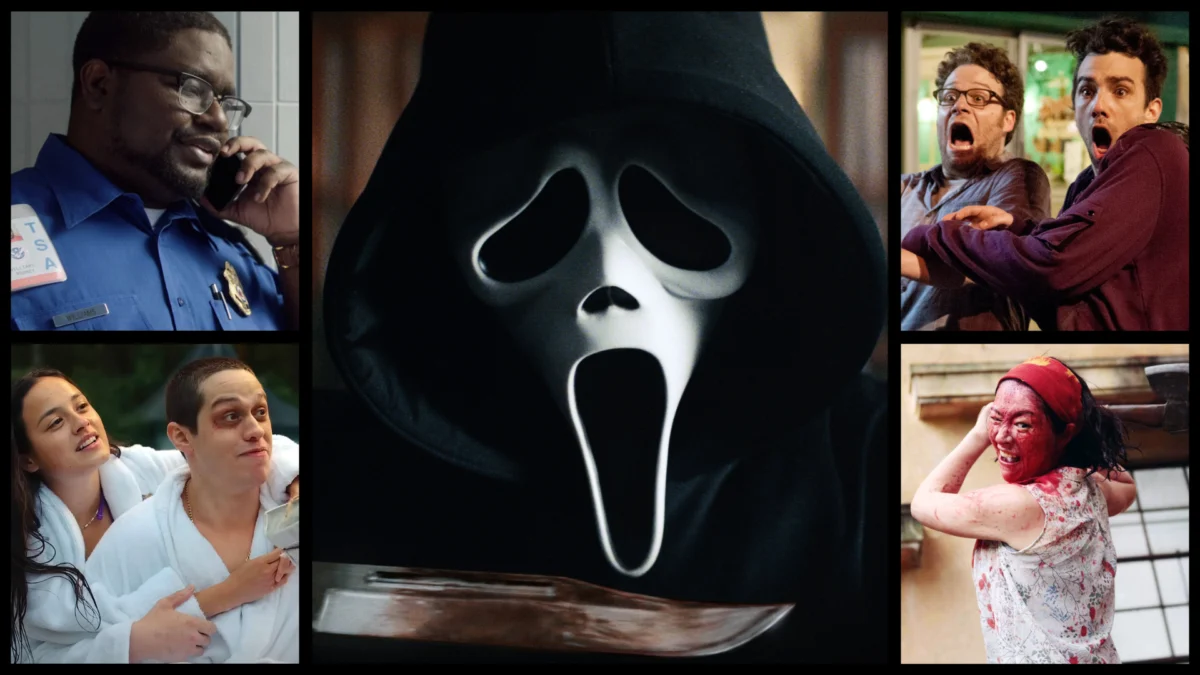
The Evolution of Terror and Titter: A Definitive Exploration of the Horror-Comedy Genre
Editor’s note: This retrospective on the symbiotic relationship between fear and laughter was originally published in October 2022 and has been comprehensively updated with new genre milestones and critical analysis.
Main Facts: The Anatomy of a Dual Emotion
Short of outright sobs, there are just two visceral sounds you will ever hear echoing from the darkened sanctuary of a movie theater: laughter and screams. When filmmakers can successfully elicit both—running horror-loving audiences through emotional minefields that chase each adrenaline spike with just enough comedic relief to set them up for yet another shock—their films take on an almost electric quality.
Just thinking of the stunning yet delightfully silly reveals in genre staples like Edgar Wright’s Shaun of the Dead or Joss Whedon and Drew Goddard’s The Cabin in the Woods can instantly paste a smile across a viewer’s face. It leaves audiences itching to rewatch the memorable gore, gags, and scares that define the best funny-yet-spooky cinematic offerings.
At its core, the horror-comedy operates on a paradox. Both horror and comedy rely heavily on timing, tension, and the unexpected release of pressure. In horror, the release is a scream or a gasp; in comedy, it is a laugh. When combined, the genre creates a unique alchemy. The audience is kept perpetually off-balance, never quite sure whether they are supposed to cower behind their popcorn or burst into laughter. This high-wire act requires immense directorial skill: lean too far into the comedy, and the stakes evaporate into camp; lean too heavily into the terror, and the humor falls flat, resulting in tonal whiplash.
Chronology: From Silent Gags to Modern Meta-Horror
There is considerable, ongoing debate among film historians regarding which title merits being called the absolute first horror comedy. Numerous early silent shorts, including the 1920 production Haunted Spooks starring Harold Lloyd, certainly laid foundational groundwork by injecting slapstick into spooky mansions.
However, it was not until comedy duo Bud Abbott and Lou Costello officially crossed paths with Universal’s iconic gallery of monsters in the 1948 classicAbbott and Costello Meet Frankenstein that the horror-comedy was firmly established as hallowed cinematic ground. The film proved that audiences loved seeing classic horror tropes deflated by comedic common sense.
The Golden Eras of Camp and Subversion
Throughout the 1970s and 1980s, film talents ranging from legendary horror icon Vincent Price to visionary director John Landis joined in the fiendish fun. Movies like The Abominable Dr. Phibes (1971) and An American Werewolf in London (1981)—the latter of which famously won the very first Academy Award for Best Makeup—pushed the boundaries of what these blended genres could achieve.
Not long after, a wave of cult classics popped onto the cultural landscape, including:
Elvira: Mistress of the Dark (1988)
Evil Dead II (1987)
Re-Animator (1985)
They Live (1988)
Horror-comedy musicals of that era proved to be especially enduring, with The Rocky Horror Picture Show (1975), Mel Brooks’ masterpiece Young Frankenstein (1974), and Little Shop of Horrors (1986) successfully baiting mainstream theater crowds into visiting the dark side with a song and a dance.
The 1990s Paradigm Shift
Of course, the modern trajectory of the horror-comedy genre truly belongs to the innovations of the 1990s. Wes Craven fundamentally broke the mold with his 1996 meta-slasher titan, Scream. By introducing characters who were acutely aware of horror movie rules, the film injected razor-sharp wit directly into the slasher formula, acknowledging the inherent absurdity of the genre while still delivering genuine, blood-pumping scares.
This self-aware wave was soon followed by the Wayans brothers’ uproarious Scary Movie (2000) series, which leaned heavily into juvenile, gag-driven parody. With such fruitful and frightful territory thoroughly explored, modern horror comedies eventually became a dime a dozen, threatening to overstuff the market with cheap nightmares that often sacrificed narrative cohesion for surface-level jokes.
Supporting Data: The 21st-Century Renaissance
Throughout the 21st century, the absolute best horror-comedy movies have set themselves apart not by merely mocking genre conventions, but by lambasting both the tropes of horror and the genuine, lived-in fears from which those tropes originally emerged.
Modern Masterpieces and Social Commentary
A prime example of this evolution is Jordan Peele’s genre-defying marvel Get Out (2017). Peele expertly found the dark, deeply uncomfortable humor embedded within mundane societal racism and microaggressions, wrapping social commentary inside a chilling psychological thriller.
Similarly, Karyn Kusama’s cult classic Jennifer’s Body (2009)—initially misunderstood upon its theatrical release—has since been reevaluated as a masterpiece of feminist rage, boasting an unprecedented revenge arc that just so happened to include a man-eating high school cheerleader.
Recent horror-comedy heavyweights continue to push the envelope:
Bodies Bodies Bodies (2022): Directed by Halina Reijn, this A24 release is a social media-fueled disaster of privilege, paranoia, and poor communication that audiences love to dissect.
Barbarian (2022): Directed by Zach Cregger, this film pivots from excruciating tension to dark absurdity, proving memorable enough to anchor contemporary discussions on modern horror shifts.
Official Responses: Industry Perspectives on the Subgenre
Filmmakers and critics alike have long marveled at the delicate balancing act required to helm a successful horror-comedy. Speaking on the enduring appeal of blending scares with laughs, directors often point to the shared physiological reactions of the audience.
"Laughter and fear are essentially two sides of the exact same coin," notes genre historian and curator Marcus Vance. "When you watch a great horror-comedy, the director is manipulating your nervous system. They wind you up so tightly with a suspense sequence that when the joke lands, your body doesn’t just process the humor—it violently purges the built-up tension."
Furthermore, studio executives have increasingly recognized the financial viability of the subgenre. While straight-ahead horror can sometimes alienate mainstream audiences with its relentless bleakness, the addition of comedy broadens a film’s demographic appeal, often turning modest-budget productions into massive box-office hits.
Implications: The Future of Laughing in the Dark
As the cinematic landscape continues to evolve through streaming platforms, shifting theatrical windows, and changing cultural sensitivities, the horror-comedy genre remains remarkably resilient. Because it inherently possesses a mirror to reflect societal anxieties, it adapts seamlessly to generational changes.
Where past decades used monsters as stand-ins for Cold War paranoia or sexual repression, today’s horror comedies tackle smartphone addiction, internet subcultures, gentrification, and political polarization. By wrapping these heavy, topical anxieties in humor and gore, filmmakers provide audiences with a safe, cathartic space to process the terrors of modern life.
Without further ado—and maintaining a strict standard that avoids any franchise repeats—the cinematic landscape continues to look toward these 35 defining pillars of 21st-century horror comedy to guide the next generation of filmmakers brave enough to make us scream and laugh all at once.