
Beyond the Book: How One Pivotal Script Convinced Blake Crouch to Greenlight ‘Dark Matter’ Season 2
Introduction: The Sophomore Slump That Wasn’t
Adapting a beloved, self-contained sci-fi novel for television is a daunting task, but what happens when you successfully adapt the entire book in your very first season? That was the unique creative dilemma facing author and showrunner Blake Crouch following the success of Apple TV’s mind-bending multiverse thriller, Dark Matter.
Based on Crouch’s 2016 bestselling novel, the first season traced the harrowing, reality-hopping journey of physicist Jason Dessen (played by Joel Edgerton) as he fought his way back across infinite dimensions to his original family. When Apple TV officially greenlit a second season to push the narrative past the boundary of the original source material, it raised an immediate question among fans and critics alike: Where does the story possibly go from here?
In an exclusive interview, Crouch revealed the heavy behind-the-scenes uncertainty that plagued the writers’ room. Surprisingly, even with a multi-season outline in place, the author-turned-showrunner "wasn’t 100% convinced" that Season 2 should happen—until a specific, highly unconventional episode unlocked the creative floodgates.
Main Facts: Navigating Uncharted Multiverses
When Dark Matter first premiered, it was pitched broadly as a three-season arc, though Crouch and co-writer Jacquelyn Ben-Zekry readily admit they took a pragmatic approach. The primary goal was to faithfully adapt the complete 2016 novel for Season 1 and gauge audience response before looking too far ahead.
Once the renewal order came down from Apple, Crouch and Ben-Zekry faced the intimidating reality of operating entirely without source material for the first time.
- The Creative Challenge: Writing a follow-up season without a definitive book to lean on meant inventing entirely new narrative horizons for Jason Dessen, his wife Daniela (Jennifer Connelly), and their son Charlie.
- The Turning Point: Apple initially requested the first five scripts of Season 2 to evaluate the trajectory of the show. Even deep into the writing process, Crouch remained skeptical.
- The Breakthrough: It was the crafting of Season 2, Episode 5—a self-contained, nearly dialogue-free hour titled "Love and Be Loved"—that finally convinced Crouch the second season was worth the monumental effort.
Chronology: From Novel to Screen and Beyond
To understand the weight of Crouch’s hesitation, it helps to look at the timeline of the franchise’s evolution and the meticulous writing process behind the sophomore season.
1. The 2016 Launch and Adaptation Phase
- 2016: Blake Crouch publishes Dark Matter, which rapidly becomes a definitive contemporary sci-fi classic, praised for its grounded exploration of the "Many-Worlds" interpretation of quantum mechanics.
- The First Season: Crouch takes on the role of lead creative and showrunner for the Apple TV series adaptation, meticulously breaking down the 340-page novel into a serialized television format. Season 1 covers the entirety of the book’s events, culminating in the Dessens escaping into the multiverse.
2. The Season 2 Greenlight and Early Struggles
- Post-Season 1 Renewal: Buoyed by strong viewership and critical acclaim, Apple TV orders a second season.
- The Writers’ Room: Crouch and Jacquelyn Ben-Zekry begin mapping out the post-finale landscape. They establish broad strokes for where the characters could go, but the lack of existing source text leaves the narrative feeling uncertain.
- The Script Order: Apple requests the first five scripts to test the waters. Crouch confesses that even while penning these initial episodes, his internal doubts persisted. He feared the season might risk feeling like "more of the same" rather than a genuine narrative evolution.
3. The Genesis of Episode 5
- Breaking the Mold: Seeking a way to break out of standard serialized constraints, the writing team conceptualizes Episode 5.
- The Isolation: The episode focuses on an alternate version of Jason Dessen who deals with the aftermath of the Season 1 finale, learns to move on, and eventually builds a new life and family.
- The Epiphany: The process of writing this near-silent, movie-like character study acts as the catalyst for Crouch. It proves that the Dark Matter universe can sustain standalone, deeply emotional storytelling distinct from the primary A-plot.
Supporting Data: The Anatomy of a Sci-Fi Hit
The logistical realities of producing a high-concept, science-fiction series like Dark Matter involve complex world-building, high-end visual effects, and precise structural pacing.
| Production Metric / Detail | Season 1 Baseline | Season 2 Evolution |
|---|---|---|
| Source Material | Based on the 2016 bestselling novel by Blake Crouch | Entirely original television storytelling |
| Core Creative Team | Blake Crouch, Jacquelyn Ben-Zekry | Blake Crouch, Jacquelyn Ben-Zekry |
| Key Narrative Focus | Returning to the original reality | Exploring alternate outcomes, emotional fallout, and multiverse branches |
| Pivotal Breakthrough | Faithful structural adaptation | Episode 5 ("Love and Be Loved" – a self-contained, silent narrative) |
| Release Timeline | 2024 Premiere | Season 2 finale streaming October 30, 2026 |
Official Responses and Creative Insights
Reflecting on the grueling process of charting new territory, Crouch has been transparent about the psychological barrier he had to clear before committing fully to the sophomore run.
"We had originally pitched the show as a three-season show, although we didn’t know — obviously, you don’t know that it’s going to be great," Crouch shared during the exclusive interview. "And we knew the first season was going to be the full book, then we would see what happened."
Detailing the pressure applied during the development phase, Crouch noted Apple’s hands-on approach:
"Apple was like, ‘Well, why don’t you guys write the first five scripts [of Season 2] and we’ll take a look, we’ll see what happens.’ And even then, even writing the first handful of episodes, I wasn’t 100% convinced."
The turning point, however, completely shifted his perspective on what television adaptations can achieve when liberated from literal text:
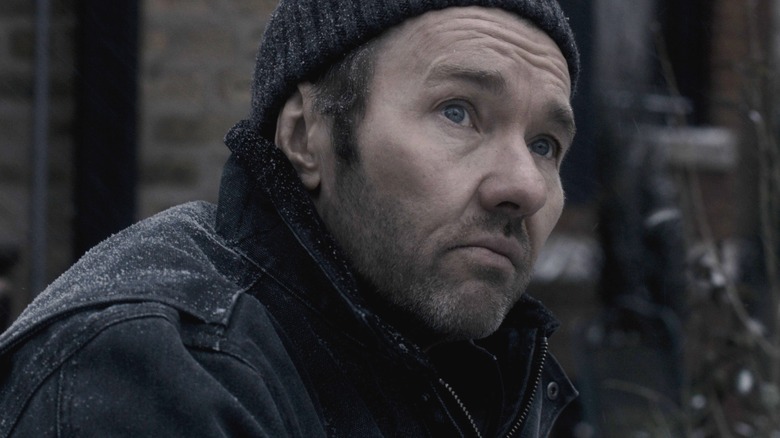
"It was really the fifth episode, which is one of the first ones that we wrote, the silent episode of Season 2. That really kind of broke it open for me and made me want to do it. It was almost like, ‘I’ll do the whole season just to make that episode.’ Because it was exciting to me to be able to tell a story within the ‘Dark Matter’ universe that was a completely isolated, almost a movie-like feel."
Rather than falling into the trap of repeating past formulas, Crouch aimed for higher stakes. "We didn’t want another season that felt like ‘more of the same.’ The goal was to keep improving on what came before and do some really challenging stuff we’ve never done. And once we started on that path, then the rest of the season really opened up and it became, ‘Let’s just have fun and swing for the fences on this one.’"
Implications: What Season 2 Means for the Future of Adaptations
The trajectory of Dark Matter offers a fascinating case study for the modern Peak TV landscape, particularly regarding how intellectual properties transition from single-volume novels to ongoing television franchises.
- The Post-Book Adaptation Model: Traditionally, book-to-screen adaptations struggle immensely once they outpace the author’s written words (notably seen in early seasons of Game of Thrones). Because Dark Matter is helmed directly by its original creator, the transition into original television scripts feels organic rather than derivative.
- Genre Flexibility: By allowing for deeply experimental, character-driven detours like Episode 5, Crouch has proven that high-concept sci-fi series do not need to rely solely on breakneck plot progression. Slowing down to explore existential grief and alternative happiness in a multiverse can elevate the emotional resonance of the entire series.
- Heightened Expectations for the Franchise: With the Season 2 finale set to stream on October 30, 2026, viewer expectations are higher than ever. The willingness of the creative team to "swing for the fences" suggests that the Dark Matter universe may continue to expand into unexpected narrative territories well beyond its initial three-season blueprint.
As audiences tune in to see how Jason Dessen’s multi-dimensional saga concludes its second chapter, it is clear that Blake Crouch’s initial hesitation has ultimately yielded some of the most daring and imaginative science fiction on television today.
