
Fear as a Death Sentence: Inside the Viral Horror Phenomenon Remain Calm
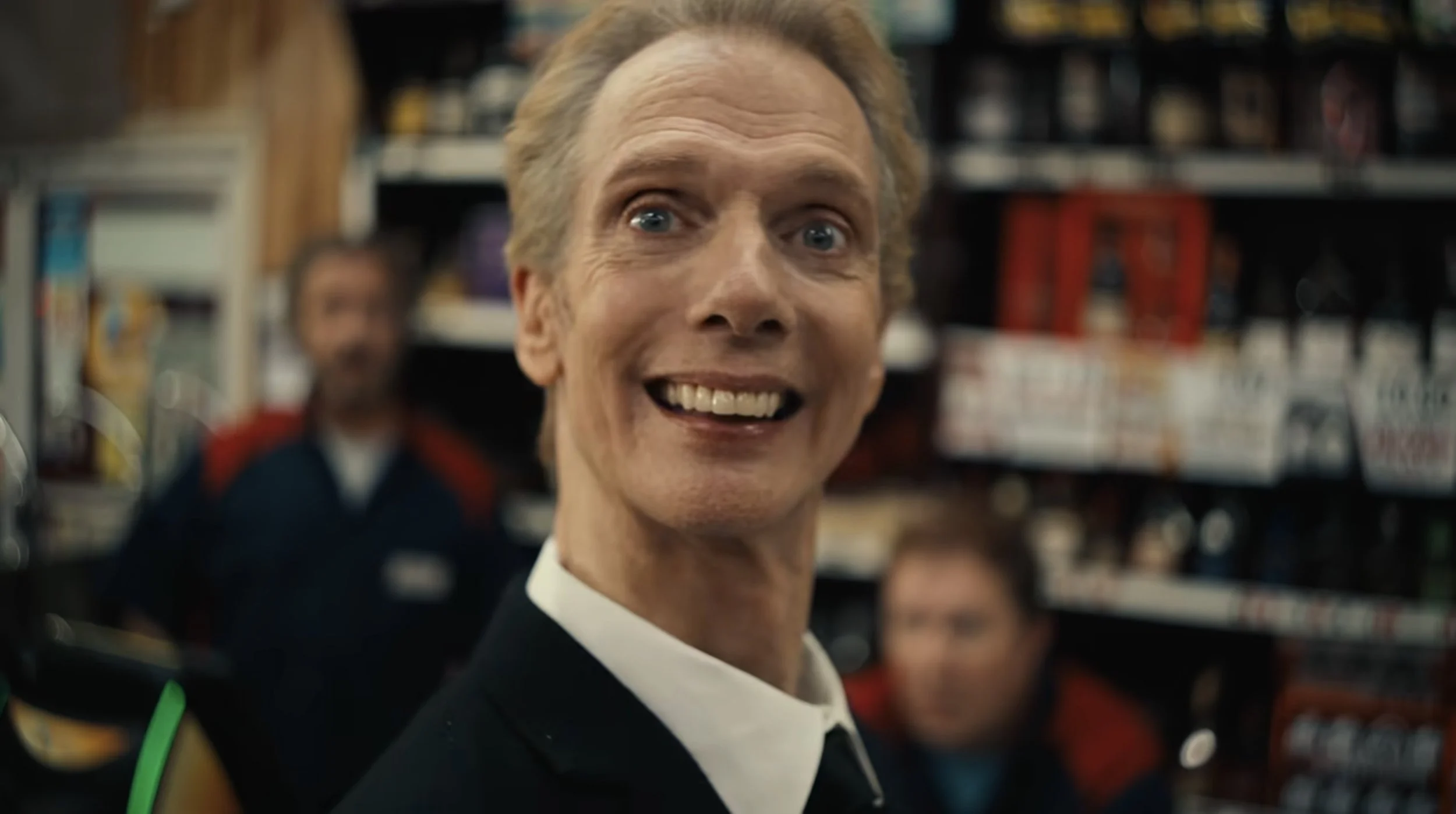
In the landscape of modern horror, the "gimmick"—a singular, high-concept rule that dictates the survival of the protagonists—has become a cornerstone of the genre. From the silent tension of A Quiet Place to the inescapable curses of It Follows, audiences are drawn to stories where the threat is not just a monster, but a fundamental challenge to human behavior. The latest entry into this subgenre is the 14-minute short film Remain Calm, a project that has rapidly spiraled into a digital sensation, racking up over 5.5 million views on YouTube since its October 12 debut.
Written and directed by Jake Lewis, Remain Calm posits a terrifying, physiological question: What if your own fight-or-flight response was the very thing that led to your demise? Featuring an eclectic cast including Pauly Shore, Nick Swardson, and genre icon Doug Jones, the film has captured the cultural zeitgeist by weaponizing anxiety itself.
The Premise: When Panic is Fatal
At the heart of the film is "Mr. Frett," a grotesque, spindly nightmare brought to life by actor Kevin Keppy. Unlike traditional slashers that hunt based on physical proximity or moral failings, Mr. Frett acts as a predator of the psyche. The film’s internal logic is simple yet suffocating: the creature is effectively blind to those who remain tranquil, but it possesses an uncanny ability to lock onto the chemical spikes of anxiety.
For the characters, survival is not a matter of hiding in a closet or arming themselves with weapons; it is a matter of absolute emotional regulation. In a world where a racing heart or a sudden spike in adrenaline acts as a beacon for death, the protagonists are trapped in a cruel paradox: the more they fear the monster, the more visible they become to it.
"In A Quiet Place, the one rule is: you make a noise, you die," the filmmakers explained in a production statement. "In Remain Calm, the one rule is: you feel anxious, you die. Our monster can only see its prey when they’re filled with anxiety. So, in an increasingly anxious world, how do our heroes stay calm when their lives literally depend on it?"
A Chronology of a Viral Success
The ascent of Remain Calm did not happen in a vacuum. It is the latest evolution in the career of Jake Lewis, a filmmaker who has spent the last several years mastering the art of the viral short.
Lewis’s trajectory began with a series of biographical projects that garnered significant mainstream attention. His debut, a nuanced look at the life and legacy of Robin Williams, acted as a calling card, earning coverage from major outlets including CNN, Rolling Stone, and PEOPLE. This success provided the momentum for his next venture, The Court Jester, a biographical short featuring Pauly Shore as the late fitness icon Richard Simmons. The film, which explored the complexities of Simmons’s public persona, saw a triumphant premiere at the Sundance Film Festival, playing to sold-out audiences in Park City.
Following the success of The Court Jester, Lewis leaned further into the biographical genre with The Cowboy and The Samurai, an exploration of the intertwined lives of Jack Nicholson and John Belushi. That film solidified his presence in the industry, premiering at the prestigious TCL Chinese Theatre as part of the Dances With Films festival.
However, with Remain Calm, Lewis took a sharp pivot away from the biopic format. By synthesizing his experience in high-end production with a desire to explore speculative horror, he created a project that feels like a collision between the grounded, observational humor of a Kevin Smith film and the visceral, practical-effect-heavy horror of the 1980s.
The Craft: Practical Effects and Realism
In an era dominated by CGI, Remain Calm distinguishes itself through a commitment to tactile, physical horror. The creature, Mr. Frett, was designed and brought to life by the effects team at Gorgazma, known for their work on projects like Pizza Panic Party. By choosing to utilize practical suits and animatronics, the filmmakers achieved a level of "unsettling" realism that digital effects often struggle to replicate.
The production process was equally grounded. Filming was split between authentic, gritty locations and Lewis’s own production facility, Reel Ghost Studios. This facility—a sprawling 11,000-square-foot space in downtown—is a testament to Lewis’s vision for independent filmmaking. Featuring standing sets ranging from a medieval bar to a sci-fi cantina and a naturalistic cave system, Reel Ghost Studios allowed the production team to control their environment completely, ensuring that the visual language of the film remained consistent and immersive.
Official Responses and Cast Dynamics
The cast of Remain Calm represents a fascinating mix of comedic backgrounds and genre pedigree. The inclusion of Doug Jones—whose body of work includes legendary creature roles in Pan’s Labyrinth, The Shape of Water, and Hellboy—provides an immediate stamp of legitimacy for horror fans. Opposite him, the inclusion of Pauly Shore and Nick Swardson adds a layer of unpredictable, deadpan humor that grounds the terror in a recognizable, almost conversational reality.
Pauly Shore, reflecting on the project’s massive digital reception, expressed genuine gratitude for the collaborative process. "I’m so thrilled by the response of this short that we did with Jake and Sam Lewis, Nick, and Doug," Shore told PEOPLE. "I love that people are digging it. And happy Halloween!"
The synergy between Shore and Lewis—a partnership established during the production of The Court Jester—seems to have provided the perfect foundation for the film’s tone. The ability to pivot between the absurdity of a panic-induced death and the comedic timing of the actors is what has likely fueled the film’s 5.5 million views. It captures an audience that wants to be scared, but also wants to be entertained by the sheer irony of the situation.
Implications: The Future of the High-Concept Short
The massive success of Remain Calm raises significant questions about the future of short-form storytelling in the age of streaming. Historically, short films were viewed as stepping stones—portfolio pieces designed to attract studio interest for feature-length adaptations. Remain Calm, however, suggests a shift where the "short" is a viable destination in itself.
With millions of viewers tuning in on YouTube, the film demonstrates that a compelling, high-concept premise can bypass the traditional gatekeepers of the film industry to find an immediate, global audience. This "Clerks meets nightmare" aesthetic has created a blueprint for other independent filmmakers.
Furthermore, the concept of a monster that feeds on anxiety is ripe for expansion. As mental health remains a prominent topic in global discourse, the metaphor of a creature that hunts those struggling with anxiety resonates deeply with modern viewers. There is, quite clearly, plenty of narrative room to grow. Whether through a feature-length adaptation or a series, the story of Mr. Frett has the potential to become a franchise.
For Jake Lewis and his team at Reel Ghost Studios, the success of Remain Calm is not just a viral moment—it is a proof-of-concept. It proves that there is an appetite for horror that is both technically ambitious and conceptually daring. As the short continues to circulate and the view count climbs, the industry is undoubtedly watching.
In the final analysis, Remain Calm serves as a reminder that the most effective horror is often the kind that taps into our most universal, internal struggles. By externalizing the sensation of anxiety and giving it a physical form, Lewis has managed to create something that is not only terrifying to watch but impossible to look away from. For those who find themselves watching the short, the advice in the title is easier said than done: if you want to survive the experience, you really must remain calm.
