
Rediscovering the Pathology of Power: Mary Harron on the 4K Restoration of I Shot Andy Warhol
By Filmmaker Magazine Staff
Enriched and Expanded Editorial Report
Main Facts
Decades before she brilliantly dissected the chilling, designer-suit pathology of the charismatic serial killer Patrick Bateman in American Psycho (2000), director Mary Harron was already mapping out a very different kind of New York pathology. In her 1996 narrative feature debut, I Shot Andy Warhol, Harron captured the volatile collision between the 1960s downtown avant-garde and radical feminist fury.
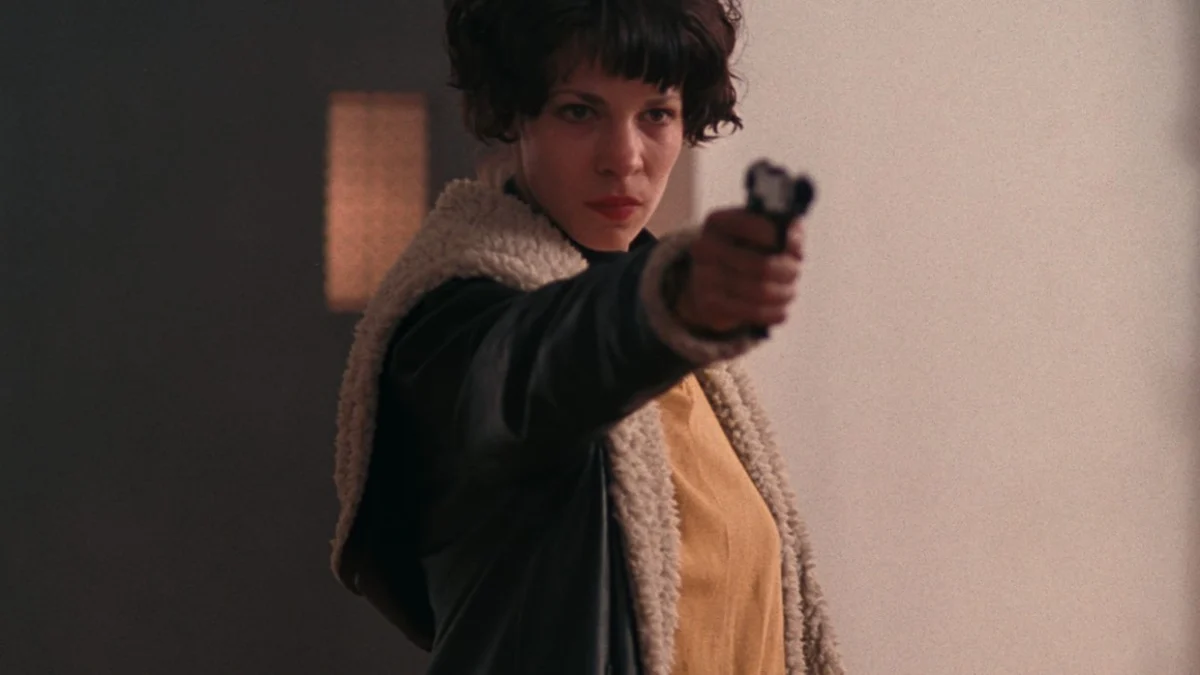
The film centers on Valerie Solanas, the radical writer and provocateur who shot pop art icon Andy Warhol in 1967, nearly ending his life. Immortalized by Lili Taylor’s tour-de-force, deadpan performance as Solanas, the film explores the margins of New York’s creative underground, where artistic genius, exploitation, and profound alienation frequently intertwined.
Now, nearly thirty years after its initial release, I Shot Andy Warhol is returning to theaters in a striking new 4K restoration, supervised by cinematographer Ellen Kuras. To mark the re-release, filmmaker and critic Elissa Suh sat down with Mary Harron to discuss the film’s arduous path to the screen, the enduring legacy of Solanas’s infamous SCUM Manifesto, and the complex, mythologized dynamics of Warhol’s Factory.
Chronology: From Underground Infamy to Cinematic Re-Evaluation
1967–1968: The Flashpoint
Valerie Solanas self-publishes the SCUM Manifesto—a blistering, darkly comedic critique of male supremacy and modern societal boredom—and attempts to get her play Up Your Ass produced. After drifting into Andy Warhol’s orbit and growing intensely frustrated by perceived rejections and withheld control, Solanas shoots Warhol at The Factory on June 3, 1968.
The Late 1980s and Early 1990s: Discovery and Research
While working as a researcher on a major documentary about Andy Warhol, Mary Harron encounters a copy of the SCUM Manifesto in a left-wing bookstore. Struck by its literary elegance and sharp, satirical bite, Harron begins conceptualizing a feature film about Solanas. Securing early backing from a BBC producer who earmarks £100,000 for the project, Harron embarks on a five-year journey to bring the script to life.
1996: Theatrical Release and Critical Reception
I Shot Andy Warhol premieres to polarized reactions, celebrated for its raw indie energy and Taylor’s fierce performance, but criticized by some for refusing to neatly assign moral blame between Solanas and Warhol. Concurrently, producer Christine Vachon and Tom Kalin help champion the film at the dawn of the modern New York independent cinema movement.
Present Day: The 4K Restoration
Following a meticulous visual restoration supervised by cinematographer Ellen Kuras, the film returns to contemporary screens. The re-release arrives at a cultural moment defined by renewed debates over feminist rage, internet radicalization, and the shifting boundaries of artistic and political expression.
Supporting Data and Production Insights
The enduring brilliance of I Shot Andy Warhol lies not just in its historical subject matter, but in the rigorous, documentarian approach Harron and her crew took to recreate 1960s New York without falling into the trap of over-stylized period pieces.
- Cinematic Influences: Eschewing dramatic narrative films for visual research, Harron and cinematographer Ellen Kuras studied period magazines, documentary footage, and Magnum photography. They drew heavily on the stark, negative-space aesthetic of Diane Arbus for the hotel sequences, aiming for a poetic realism reminiscent of Larry Clark’s Kids (1995).
- Soundtrack and Score: After Lou Reed famously denied permission to use Velvet Underground tracks, Harron enlisted John Cale to compose the film’s haunting score. The soundtrack features iconic indie mainstays like Yo La Tengo and Pavement, cementing the film as a living bridge between 1960s counterculture and 1990s indie cinema ethos.
- The Factory Cast: The film boasts an exceptional ensemble cast capturing the era’s artistic vitality, including Martha Plimpton, Michael Imperioli, and Stephen Dorff as the luminous trans icon Candy Darling. Jared Harris delivers a breakthrough performance as Andy Warhol, capturing the artist’s elusive fragility and psychological complexity.
Official Responses and Creative Reflections
In her comprehensive retrospective interview with Elissa Suh, Mary Harron offered deep insights into the creation of the film and the ambiguous nature of its central figures:
- On the Visuals of the 4K Restoration:
“You’re just able to see Ellen’s beautiful lighting and the colors. It’s very naturalistic. The Factory is this kind of dream world, but it’s all realistic… I’m really impressed with how she created this slightly magical world while keeping its grunginess.” - On Encountering the SCUM Manifesto:
“I remember sitting on the subway after I’d bought it, reading the first line: ‘Life in this society being, at best, an utter bore…’ I thought, Oh my God, this is so elegant, like Evelyn Waugh. The way she writes is so stylish and sophisticated, her irony so spot on.” - On Avoiding Heroes and Villains:
“I never wanted heroes and villains. I was obviously more focused on Valerie’s story, but I wasn’t out to assign blame. I got criticized for it at the time—for not delivering a clearer narrative of who’s right and who’s wrong. But to me, the point is to make you think.” - On Warhol’s Complex Legacy:
“He had such an eye for talent… But the other thing he did was take a very intense interest in people, and all these hungry-for-attention people would blossom, and then he would just turn away. Some people went off the deep end because they couldn’t take that loss of attention, that rejection, including Valerie.”
Implications: I Shot Andy Warhol in the Modern Era
The re-release of I Shot Andy Warhol prompts a vital reassessment of how modern culture metabolizes radicalism, gender politics, and the outsider artist.
1. The Evolution of Feminist Discourse
When the film was released in 1996, American culture was navigating the conservative backlash documented by authors like Susan Faludi. The label "feminist" carried commercial and social anxieties. Today, the cultural landscape is vastly different—marked by intense, polarized debates over the legitimacy of public anger, systemic injustice, and the various forms feminist expression is permitted to take. Solanas’s uncompromising fury, once dismissed as the rantings of an isolated outlier, reads differently in an era accustomed to systemic critiques of institutional power.
2. The Factory as a Gendered Economy
Harron’s film refuses to romanticize Andy Warhol’s Factory, framing it instead as an artistic ecosystem with the ruthless efficiency of a classic Hollywood studio. While Warhol provided a vital platform for marginalized voices—championing drag queens and trans women long before mainstream acceptance—the culture he curated could be equally brutal when individuals ceased to be useful or compliant. This transactional nature of avant-garde stardom directly fueled Solanas’s catastrophic sense of betrayal and despair.
3. Solanas in the Age of Internet Culture
As Harron notes, Valerie Solanas might have navigated the contemporary digital landscape very differently. In an age where self-publishing, viral manifestos, and decentralized internet subcultures allow fringe voices to rapidly build audiences and manufacture notoriety, Solanas could have found a direct pipeline to listeners that was entirely closed to her in the analog world of 1960s New York.
Ultimately, Harron’s debut feature remains vital precisely because it refuses easy moral categorization. By placing viewers squarely inside the frantic, brilliant, and deeply troubled mind of Valerie Solanas, I Shot Andy Warhol challenges us to confront the uncomfortable intersections of art, power, and the desperate human need to be heard.
