
The Throne Revisited: Jay-Z 30 and the Definitive Architecture of a Hip-Hop Legacy
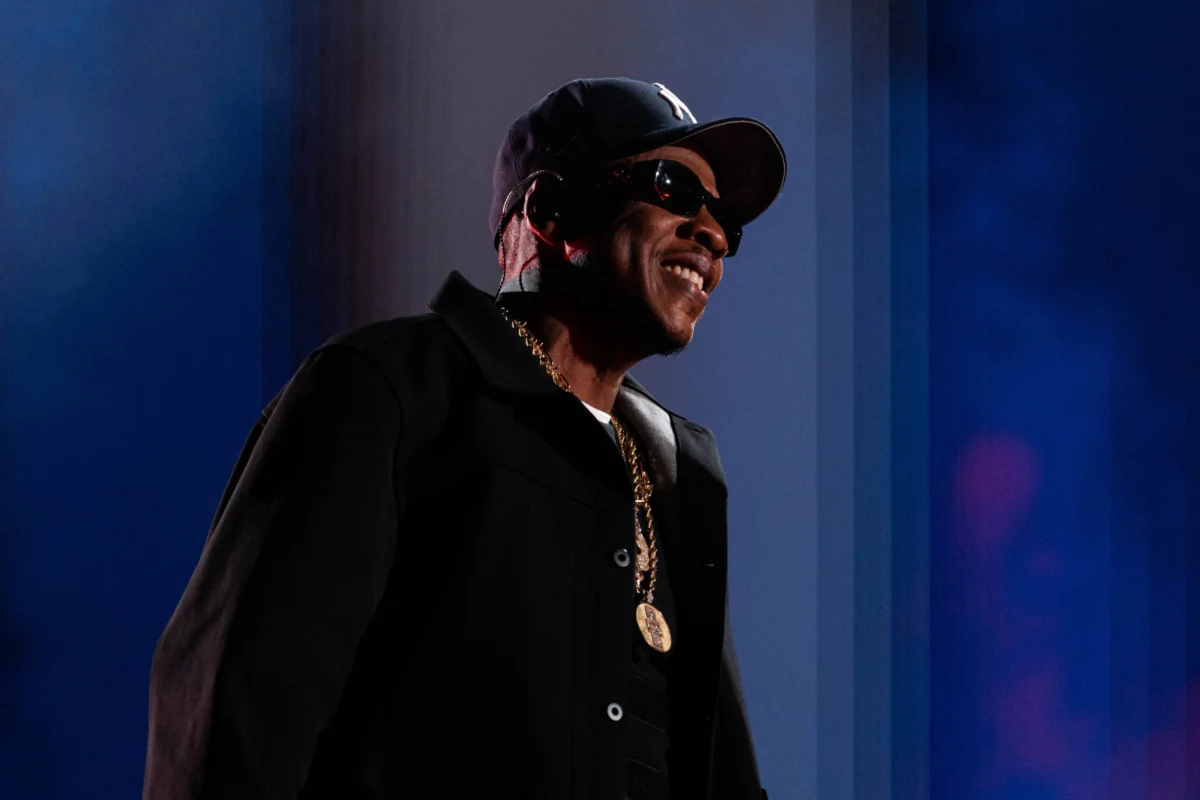
In an era defined by the fleeting nature of digital content and the rapid turnover of viral trends, Jay-Z has spent the last year engaged in a monumental act of reclamation. "Jay-Z 30," a yearlong, multi-faceted celebration of the mogul’s three-decade reign in music, arrived as more than just a victory lap; it was a curated argument for his enduring relevance. From the sprawling, exhaustive eight-part documentary series exploring the granular details of his lyricism to a global concert series that touched down in iconic venues, the project served as an existential audit of one of hip-hop’s most consequential careers.
The celebration reached its emotional and technical climax this past Saturday at SoFi Stadium in Inglewood, California. Following a triumphant kickoff at the Roots Picnic in Philadelphia last May, the two-night residency at SoFi served as the final chapter of a journey that forced both the artist and his audience to confront the shifting sands of musical legacy.
The Chronology of a Resurgence
The arc of "Jay-Z 30" was meticulously mapped to reassert his dominance during a period of relative artistic silence. With over a decade having passed since his last full-length studio album, Jay-Z faced a landscape populated by a new generation of hip-hop artists—a demographic that has, at times, questioned the necessity of the "old guard."
The project’s chronology was strategic. It began with the Roots Picnic, where Jay-Z reminded the world that his catalog remains a foundational text of modern culture. This was followed by a highly publicized three-night residency at Yankee Stadium in New York City, a homecoming that underscored his status as a titan of the tri-state area.
By the time the tour reached Inglewood, the narrative had matured. The SoFi performances were not merely concerts; they were masterclasses in stage management. Jay-Z, now a billionaire businessman and cultural statesman, proved that he could occupy a venue of that magnitude not through sheer production spectacle, but through the weight of his discography. Each show functioned as a "brick-by-brick" reconstruction of his career, reminding fans that while the industry has evolved, the blueprint he created remains the standard.
The "Tricknology" of Digital Perception
One of the most defining moments of the finale at SoFi Stadium occurred during the closing track, "Encore." Amidst a setlist that spanned his entire career, Jay-Z took a moment to address the friction between reality and digital perception.
In recent months, social media platforms have been flooded with speculation regarding the attendance figures of his tour, with anonymous users suggesting the stadium was undersold or that tickets were artificially distributed. Jay-Z, ever the sharp observer of power dynamics, turned this into a teachable moment.
"You gotta be really real with what’s going on in the world," he told the crowd. "People will tell you that nobody was in here tonight, but you got eyes. You can see. People will tell you that the music wasn’t great, but you got ears."
His commentary extended beyond his own concert statistics, touching upon a broader philosophical concern regarding the information age. He framed the current climate of misinformation—fueled by AI and algorithmic bias—as a modern iteration of "propaganda."
"They called it propaganda before. But now, the technology has caught up and people are tricked. A lot of tricknology for us… Make sure you question everything you feel," he urged. This rebuttal was not just about ticket sales; it was a defense of the human experience in an increasingly synthetic world, reinforcing his role as an artist who insists on the sanctity of the live, communal performance.
Supporting Data: A Catalog of Constants
The setlist at SoFi was a testament to the "static" brilliance of his work. While critics often wonder if a legend can maintain momentum without a constant stream of new material, Jay-Z’s setlist proved that his existing hits possess a structural integrity that renders constant reinvention unnecessary.
The transition from "Girls, Girls, Girls" into "’03 Bonnie & Clyde," and the seamless blend of "N—as in Paris" into "Big Pimpin’," demonstrated a surgical precision. However, the true "data" of his success lay in the guest appearances. Unlike the Yankee Stadium residency—which saw a heavy rotation of high-profile collaborators like Alicia Keys, Fat Joe, and Jadakiss—the SoFi shows were leaner, placing the onus of the performance squarely on the headliner.
While he did invite Too $hort for a tribute to the Bay Area, and welcomed hip-hop royalty in Dr. Dre and Snoop Dogg to perform staples like "Still D.R.E." and "Nuthin’ But a ‘G’ Thang," the show remained, at its core, a showcase of Jay-Z’s own vocal stamina and breath control. His ability to navigate the stage and the mic for ninety minutes, decades into his career, provided the empirical evidence needed to quiet any whispers about his decline.
The Institutionalization of Hip-Hop
Jay-Z’s legacy is unique in that it was built in two distinct worlds: the recording booth and the boardroom. To understand the "Jay-Z 30" project, one must understand his role as a bridge between the street-level grit of early 90s hip-hop and the corporate sophistication of the 21st-century music industry.
He is not just a rapper; he is a pop impresario who helped graft hip-hop culture onto the bedrock of the American mainstream. By revisiting his path through this yearlong celebration, he demonstrated that legacy is not measured by the "next" hit, but by the structural impact of the ones already landed. His presence at the intersection of culture and commerce has created a blueprint that modern artists, from Kendrick Lamar to Travis Scott, continue to reference.
The documentary series accompanying the tour provided the intellectual scaffolding for this claim. By breaking down the "intricacies of rhymes laid down years ago," the project invited fans to treat his work with the same academic rigor typically reserved for classical literature. It was an exercise in canonization, positioning Jay-Z as the primary architect of modern rap’s institutional status.
Implications: The Road Ahead
As the "Jay-Z 30" tour concludes, the industry is left to ponder what follows a celebration of this scale. The rumors of a new studio album continue to circulate, though official confirmations remain elusive. The persistent, low-humming speculation regarding a potential Super Bowl Halftime Show performance—a stage that has eluded him despite his massive cultural footprint—remains the next logical frontier for his brand.
Yet, perhaps the most profound implication of this year is the confirmation that Jay-Z no longer needs to chase the zeitgeist; he has become a fixed point within it. During his performance of "Heart of the City (Ain’t No Love)," the lyric "Jigga held you down 30 summers, damn, where’s the love?" resonated with a new, sharper poignancy. It was a reminder that he has provided the soundtrack to three decades of American life.
Whether or not he returns to the studio for another album, the "Jay-Z 30" series has achieved its objective: it has cemented his position in the pantheon of popular music. He has forced the audience to look past the "tricknology" of social media and recognize the reality of his contribution. In an age of artificiality, Jay-Z has chosen to lean into the authentic, the visceral, and the enduring.
As the lights dimmed at SoFi Stadium, the message was clear: the throne is occupied, the history is written, and the legacy is, for the moment, untouchable.
Appendix: SoFi Stadium Final Night Setlist
- The Watcher 2
- Blow the Whistle (feat. Too $hort)
- Izzo (H.O.V.A.)
- Beach Is Better
- FWM
- N—a What, N—a Who (Originator 99)
- Run This Town
- Family Feud
- U Don’t Know
- On to the Next One
- Clique
- Dirt Off Your Shoulder
- I Know
- Never Change
- Song Cry
- Dead Presidents
- Where I’m From
- Hard Knock Life (Ghetto Anthem)
- Lucifer
- No Church in the Wild
- D’Evils
- Murder Was the Case (feat. Snoop Dogg)
- The Next Episode (feat. Dr. Dre and Snoop Dogg)
- California Love (feat. Dr. Dre and Snoop Dogg)
- Nothin’ but a "G" Thang (feat. Dr. Dre and Snoop Dogg)
- Still D.R.E. (feat. Dr. Dre and Snoop Dogg)
- 99 Problems
- Girls, Girls, Girls
- Excuse Me Miss
- La-La-La (Excuse Me Miss Again)
- Change the Game
- I Just Wanna Love U (Give It 2 Me)
- Money, Cash, Hoes
- Jigga My N—a
- Heart of the City (Ain’t No Love)
- Empire State of Mind
- N—as in Paris / Big Pimpin’
- Public Service Announcement (Interlude)
- Encore
