
The Curse of the Gilded Age: Celebrating 30 Years of Stephen King’s Thinner
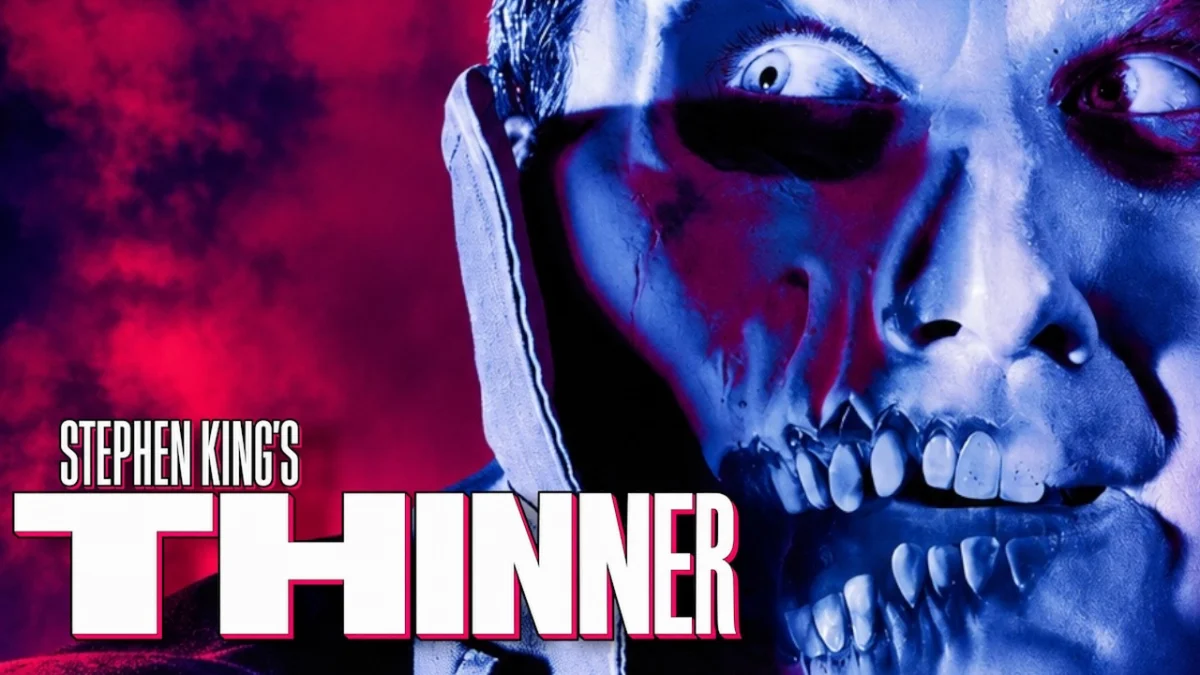
Thirty years have passed since Billy Halleck, the rotund, morally bankrupt protagonist of Stephen King’s Thinner, first graced the silver screen. Released in 1996, the film—directed by horror visionary Tom Holland—remains one of the most distinct, divisive, and oddly compelling entries in the expansive catalog of Stephen King adaptations. To mark this three-decade milestone, we delve into the production history, the creative struggles, and the enduring legacy of a film that manages to be equal parts visceral body horror and biting dark satire.
The Premise: A Cautionary Tale of Hubris and Hunger
At the center of Thinner is Billy Halleck (Robert John Burke), a high-powered, overweight attorney whose life is a tapestry of unearned privilege. Billy is the embodiment of excess; he moves through suburban existence with the callous indifference of a man who believes the law—and life—can be bent to his will.
The narrative catalyst is as simple as it is brutal: while driving distracted, Billy strikes and kills an elderly Romani woman. Leveraging his connections within the local police force, Billy maneuvers his way out of legal repercussions, effectively burying the crime. However, the victim’s father, the ancient and formidable Tadzu Lempke (Michael Constantine), is not bound by the corrupt machinations of American law. With a single, spindly finger tracing a line across Billy’s cheek and a whisper of the word, "Thinner," Lempke sets a supernatural, inexorable clock in motion.
What follows is not merely a transformation, but an undoing. Billy’s body begins to wither away, despite his voracious consumption of food. As he descends into a skeletal nightmare, he finds that he is not alone; his corrupt allies are similarly cursed, leading to a desperate, gruesome race against time to find Lempke and beg for mercy.
A Chronology of Chaos: From Page to Screen
The road to the screen for Thinner was notoriously treacherous. Originally published under King’s pseudonym, Richard Bachman, the novel was an exercise in pure, unadulterated cynicism. When the true identity of "Bachman" was revealed by an astute fan who noted the stylistic similarities to King, the rights to Thinner were quickly snapped up by producer Richard Rubinstein, who had previously found success with Pet Sematary (1989).
However, the transition from manuscript to celluloid was a five-year ordeal characterized by "development hell." Major studios were wary of the film’s inherently unlikable protagonist and its bleak, uncompromising tone. Over the course of half a decade, the project went through approximately 15 script revisions, helmed by screenwriter Michael McDowell, the brilliant mind behind Beetlejuice and The Nightmare Before Christmas.
It wasn’t until Tom Holland—fresh off the success of his television miniseries The Langoliers—was brought on board that Paramount finally gave the project a greenlight. Even then, the production was plagued by shifting budgets, starting at $14 million and ballooning to roughly $17 million (equivalent to nearly $37 million today). The primary culprit for this fiscal inflation was a last-minute, studio-mandated rewrite of the film’s conclusion, a decision that still rankles fans and the director alike.

The Craft of the Grotesque: Practical Effects and Makeup
The heart of Thinner lies in its practical makeup effects. In an era before the total dominance of CGI, the physical transformation of Robert John Burke was a triumph of prosthetics. Burke spent over five hours daily in the makeup chair, layered beneath complex silicone and latex appliances designed to simulate his rapid, unhealthy physical decline.
The production reached out to the legendary Dick Smith, the visionary behind The Exorcist, to design the makeup. Due to scheduling conflicts, the task fell to Greg Cannom, and eventually, to the hands of effects master Vincent Guastini. The process was fraught with artistic friction. Holland, known for his blunt and uncompromising directorial style, famously clashed with his effects team over the design of Billy’s withered face.
"Tom’s originally from New York, very blunt—to a fault—and said, ‘Why does Billy look like a creature from the Black Lagoon?’" Guastini recalled in an interview with Dread Central. "So we had to adjust the prosthetics and cut off the deflated earlobe design that bothered Tom. Of course, in the final editing of the film, you’re not going to see any of that."
This rigorous attention to detail extended to the supporting cast as well, with Michael Constantine’s aging process requiring meticulous, daily application to capture the ethereal, ancient quality of a man who could command supernatural forces.
The "Buddy Movie" Dynamic
Despite the supernatural horror, Thinner functions as a perverse buddy comedy. The relationship between Billy and the mobster Richie Ginelli (Joe Mantegna) provides the film with its most human—and most depraved—moments. Mantegna’s performance as the sleazy, loyal, and utterly dangerous Ginelli is a highlight of the film, offering a gritty, grounded counterpoint to the surreal curse.
Their dynamic raises a core question: does a man like Billy deserve redemption? While the film attempts to garner sympathy for a man being physically erased, the audience is constantly reminded of his original sin. Ginelli represents the absolute moral bankruptcy of the world Billy inhabits—a world where friendship is measured by how far you are willing to go to help someone commit a crime.
The Studio Mandate: A Disputed Conclusion
Perhaps the most significant "what if" in the history of Thinner is its ending. In Stephen King’s original novel, the story concludes with a devastating sense of finality: Billy, in a state of absolute denial and physical ruin, unknowingly brings home a cursed pie, leading to the death of his own daughter. Overcome by the weight of his sins and the horror of his actions, Billy ultimately succumbs to the curse himself.

The test audiences, however, were not prepared for such a bleak, uncompromising resolution. Paramount, fearing a negative reception, forced Holland to shoot a new, more ambiguous ending. This mandate resulted in a final act that, while still dark, lacks the crushing, poetic justice of the source material. For many purists, this change diluted the film’s impact, turning a sharp, cautionary tale into a more conventional—and less satisfying—horror conclusion.
Implications: The Legacy of a Cult Classic
Thirty years later, Thinner stands as a testament to a specific era of horror filmmaking—a time when directors were willing to take risks with unlikable protagonists and practical, tactile effects. It is a film that refuses to coddle its audience, presenting a world where karma is not a benevolent force but a cold, calculated transaction.
The film’s influence can be seen in the way it handles the "slow-burn" body horror genre, paving the way for future adaptations that prioritized the physical toll of supernatural events over mere jump scares. It remains a polarizing piece of work, but its offbeat charm and the sheer commitment of its cast and crew ensure that it remains a staple of the Stephen King cinematic universe.
As we look back at the work of Tom Holland, we see a director who understood that the best horror often stems from human failure. Whether it is the struggle of a man losing his identity or the dark humor found in the face of inevitable death, Thinner continues to challenge, entertain, and disturb. It is, ultimately, a film about the weight of our choices—and how, sometimes, we simply cannot shed the skin of who we really are, no matter how much we try to change.
Conclusion
While the studio-mandated ending may have softened the blow of King’s original vision, the film remains an essential watch for fans of the genre. Its practical effects are a masterclass in the artistry of the 90s, and the performances, particularly from Burke and Mantegna, provide a level of character depth that is often absent in contemporary horror. As we toast to 30 years of Thinner, we are reminded that some curses never truly fade; they just get a little more interesting with time.
