Standardizing the Virtual Stage: ASC and ASWF Release StEM3 to Eliminate Guesswork in In-Camera Visual Effects
Main Facts
The American Society of Cinematographers (ASC), through its Motion Imaging Technology Council (MITC), has officially released StEM3 (Standard Evaluation Material 3), a free, open-source suite of standardized evaluation assets engineered specifically for in-cameravisualeffects (ICVFX) and LED volume production. Hosted publicly by the Academy Software Foundation (ASWF) as part of its Digital Production Example Library (DPEL), StEM3 provides filmmakers, cinematographers, engineers, and virtual production stages with a universal reference baseline to test and calibrate their complex imaging pipelines before the first day of principal photography.
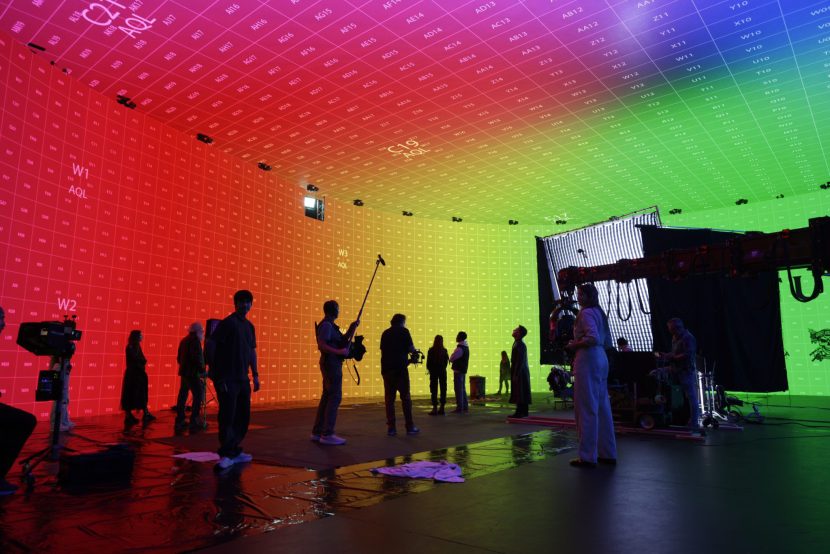
An LED volume is far more than a large background screen; it is an intricate ecosystem comprising real-time rendering engines (primarily Unreal Engine 5), render nodes, complex synchronization hardware, LED processors, varied panel pixel pitches, camera tracking systems, specialized color transforms, lenses, filters, and digital cinema cameras. A single misconfiguration or uncalibrated transform anywhere along this digital and physical chain can distort the final captured image.
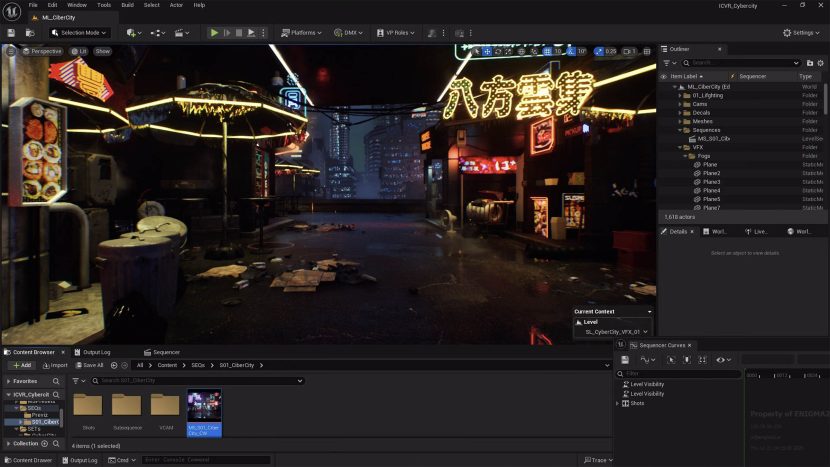
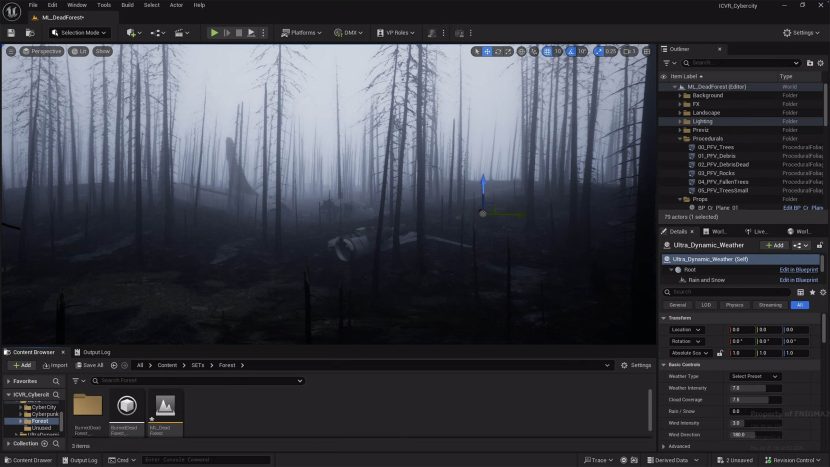
StEM3 directly targets this vulnerability by providing a standardized collection of Unreal Engine 5 (UE5) environments, 2D driving plates, and analytical test elements. Rather than relying on subjective descriptions or mismatched stage specifications, production crews can load StEM3 assets onto an unfamiliar volume, frame them through their production camera, and immediately verify how the stage handles dynamic range, color rendition, black levels, and highlights.
Chronology
The release of StEM3 is the latest chapter in a long-standing ASC initiative to provide neutral reference material during pivotal technological transitions in the motion picture industry.
The Original StEM Era: The first iteration of Standard Evaluation Material was developed during Hollywood’s foundational migration from celluloid to digital acquisition and digital projection. It gave post-production houses and equipment manufacturers a common currency to measure digital fidelity.
StEM2: As digital cinema matured, the ASC introduced StEM2 to address contemporary color pipelines, high dynamic range (HDR), wide color gamuts (WCG), higher-resolution displays, and advanced image processing chains.
The Rise of ICVFX (2020–2025): The rapid adoption of LED volumes for real-time virtual production fundamentally disrupted traditional workflows. Filmmakers gained unprecedented creative control and the ability to capture "final pixels" in-camera, but they also inherited new technical headaches. Cinematographers frequently reported arriving on unfamiliar stages to find poor calibration, sketchy dynamic ranges, or unexpected color shifts between physical cameras and digital walls.
Development and Collaboration: Recognizing the need for a standardized testing methodology tailored to ICVFX, the ASC MITC partnered with major industry stakeholders—including Epic Games, Amazon Studios, Dolby, Sony, Walt Disney Studios, and various virtual production stages—to design, test, and package StEM3.
Current Public Release: The assets have now been thoroughly vetted across multiple LED volumes and released publicly under the ASWF Digital Assets License v1.1 via the Digital Production Example Library.
Supporting Data and Technical Architecture
StEM3 is built to address the reality that conventional display calibration—ensuring an LED wall looks correct to the naked eye—is insufficient for photography. A wall can visually pass human inspection yet photograph poorly due to panel behavior near absolute black, color matrix shifts through specialized cinema lenses, or sensor-to-refresh-rate synchronization artifacts.
What is Included in the StEM3 Package?
The evaluation library features a robust array of complex, production-scale assets donated by leading virtual-production companies:
Diverse Virtual Environments: A wide variety of interior, exterior, day, night, urban, and natural settings designed to stress-test specific photographic challenges. Specific locations include a rustic saloon, a dense forest, a gritty back alley, a subway station, a Himalayan base camp, and a Western town.
2D Driving Plates and Test Elements: Standardized motion elements used to evaluate motion blur, shutter interactions, and tracking latency.
"Warped: CyberCity": A dedicated, short dramatic scene designed to test the pipeline under authentic, narrative production conditions.
"Warped: CyberCity" in Context
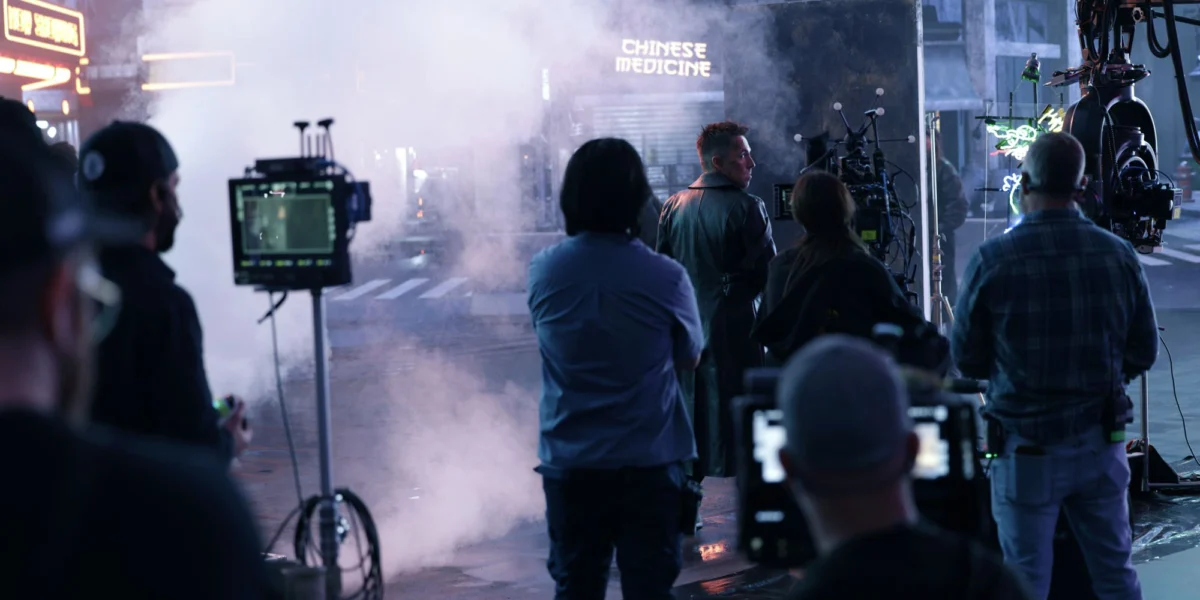
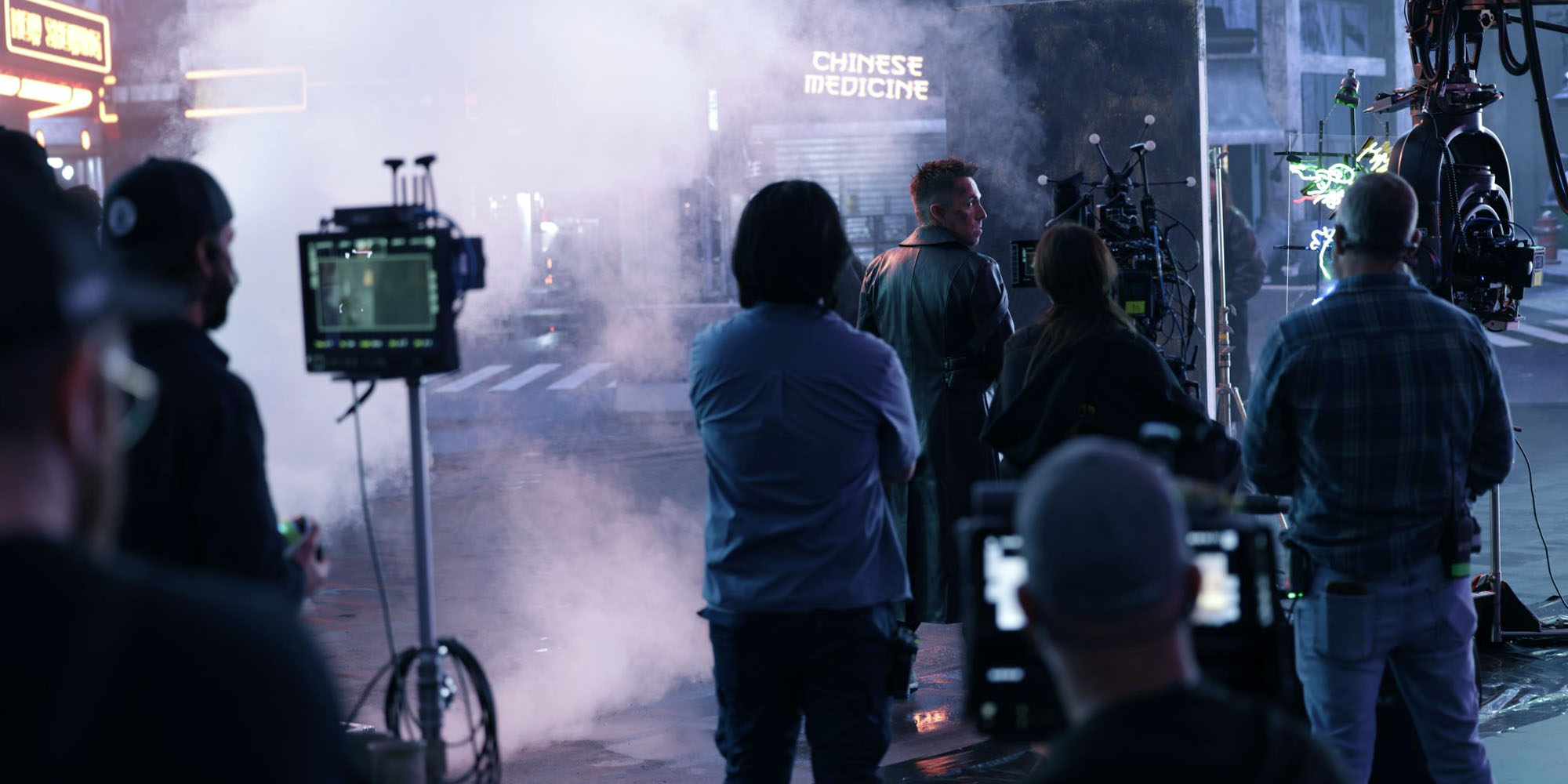
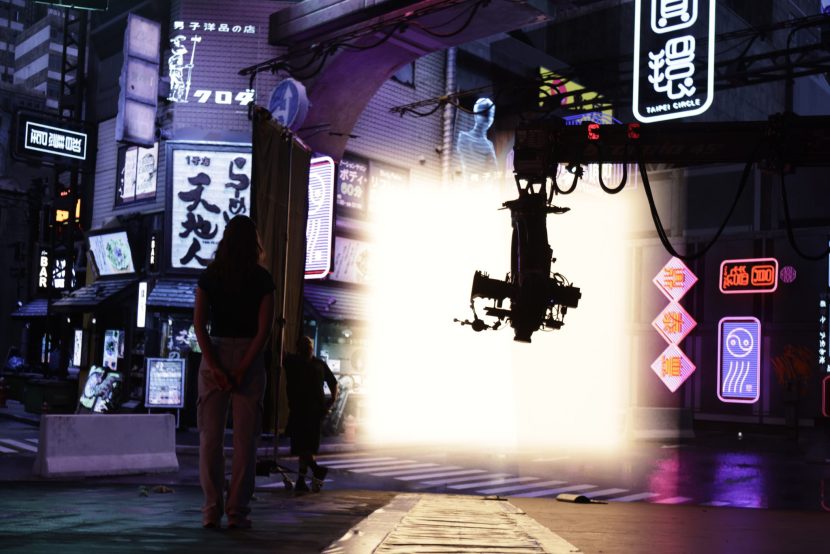
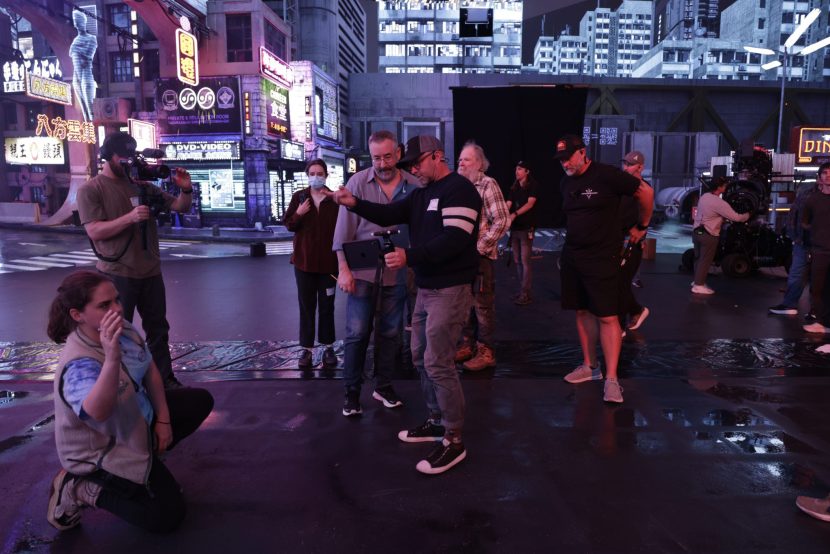
Moving beyond clinical technical charts, the ASC ensured that StEM3 evaluates technology in the service of storytelling. Written by Michael Goi (ASC, ISC) and Jay Holben (ASC associate member), directed by Holben, and photographed by David Klein (ASC), Warped: CyberCity utilizes one of the donated CyberCity virtual environments.
The short film features live actors, physical props, dynamic camera movements, practical foreground elements, and interactive lighting driven by the LED wall. This narrative stress-test allows cinematographers and DPs to evaluate:
How the system renders human skin tones and complex costumes.
The seamless visual blending between the physical foreground set and the virtual background.
Whether the LED wall is contributing natural, plausible ambient and key lighting rather than merely displaying a bright image.
Licensing and Distribution
The entire StEM3 library is packaged under the ASWF Digital Assets License v1.1 and is openly accessible. It joins other prestigious production-scale assets on the DPEL platform, including StEM2, ALab, Sole Mates, Adobe’s OpenPBR Shader Playground, and the AWS Airship asset.
Official Responses and Industry Perspectives
Industry leaders have emphasized that StEM3 is not intended to dictate creative choices or enforce a single uniform "look," but rather to establish a trustworthy baseline.
Michael Goi, ASC, ISC and co-chair of the ASC MITC, noted the genesis of the project stemmed from real-world frustrations:
"Cinematographers have encountered stages where colour rendition was off and dynamic range was sketchy. The aim was therefore to establish evaluation material that shows how a correctly configured system should begin to look."
David Morin, Executive Director of the Academy Software Foundation and an ASC associate member, highlighted the importance of keeping the cinematographer’s perspective at the forefront of technical development:
"The project keeps the cinematographer’s contribution central as the industry moves through another major technological change. Cinematographers do not need to become motion-imaging scientists. They do, however, need material that enables them to work effectively with the engineers, colourists, VFX teams, and virtual-production supervisors around them."
Virtual production supervisors and digital imaging technicians (DITs) have similarly praised the initiative, frequently describing LED volume capture as "the most exciting, fun, frustrating colour-correction suite you’ve ever been in, driven by computers." Having an objective standard prevents subjective arguments on set, transforming vague complaints that an image "feels wrong" into precise, measurable technical dialogues.
Implications for the Future of Filmmaking
The introduction of StEM3 signals a broader structural shift in modern filmmaking: the acceleration of creative and technical decision-making.
Shifting Workloads to Preparation
Virtual production does not eliminate labor; it relocates it earlier in the production schedule. Decisions regarding visual effects compositing, color management, lighting schemes, and set extension—traditionally handled months after principal photography during post-production—must now be resolved during prep.
The virtual environment must be optimized, camera tracking verified, and color pipelines locked before actors step onto the stage. StEM3 serves as the ultimate diagnostic tool during this critical preparation window, allowing the virtual-production supervisor, DP, director, and engineers to confirm that the system behaves predictably.
Preserving Creative Freedom Through Standardization
A common concern in technical standardization is that it breeds creative homogeneity. However, industry veterans argue the exact opposite is true in ICVFX.
By establishing a reliable, neutral baseline across different stages and hardware configurations, StEM3 gives creative teams the confidence to deliberately push boundaries. Once a cinematographer knows that neutral is genuinely neutral, they are free to grade the image warmer, cooler, darker, or more stylized, secure in the knowledge that their artistic choices are intentional rather than the result of an undocumented pipeline error.
As LED panel resolutions, processing speeds, and brightness capabilities continue to evolve rapidly, stage configurations will inevitably remain diverse. By providing an open-source, universally accessible yardstick, StEM3 ensures that as virtual production grows increasingly complex, the underlying technology remains firmly in the service of the story.