
Unmasking the Master of the Fist: Why Akuma in the 2026 Street Fighter Movie Looks So Familiar
Hollywood’s historic struggles to adapt video games into critically and commercially successful cinematic franchises are well-documented. From the campy charm of 1994’s Street Fighter—a film that has quietly cultivated a devoted cult following over the decades—to the universally maligned Street Fighter: The Legend of Chun-Li, Capcom’s legendary fighting game property has long tested the limits of live-action translation.
However, the landscape of video game adaptations has drastically shifted in recent years, spearheaded by high-profile successes like The Last of Us, Fallout, and The Super Mario Bros. Movie. Capitalizing on this new era of faithful and high-budget gaming adaptations, Paramount Pictures and Legendary Entertainment have assembled an all-star, eclectic cast for their ambitious 2026 reboot of Street Fighter.
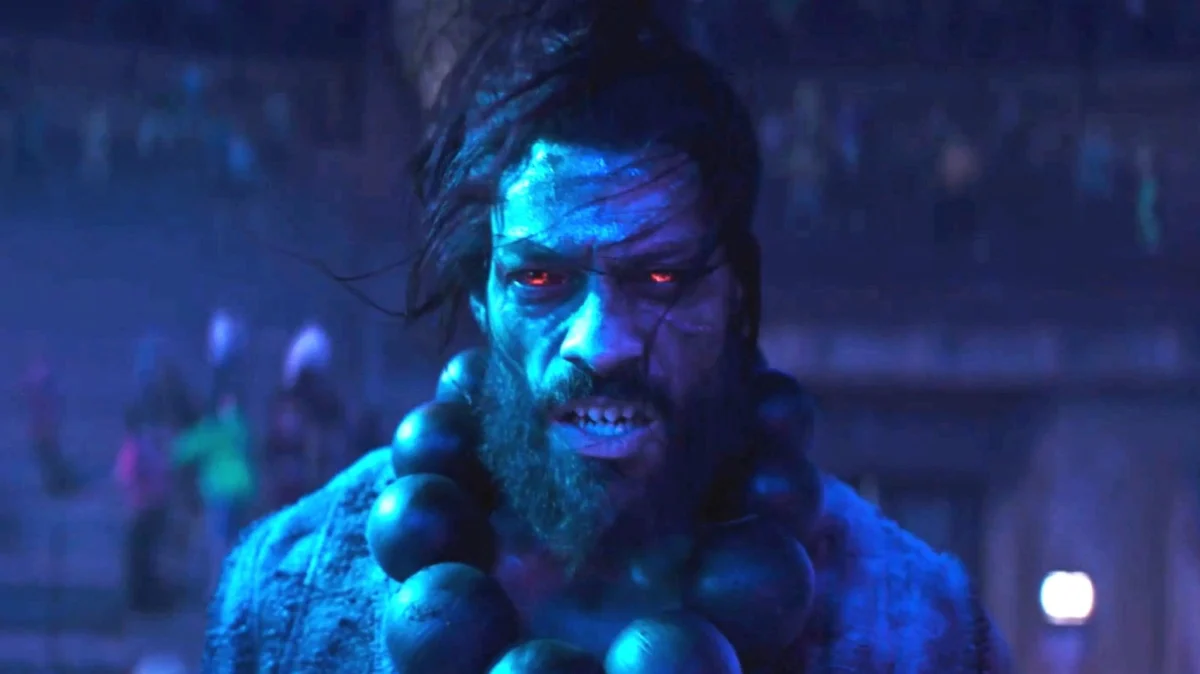
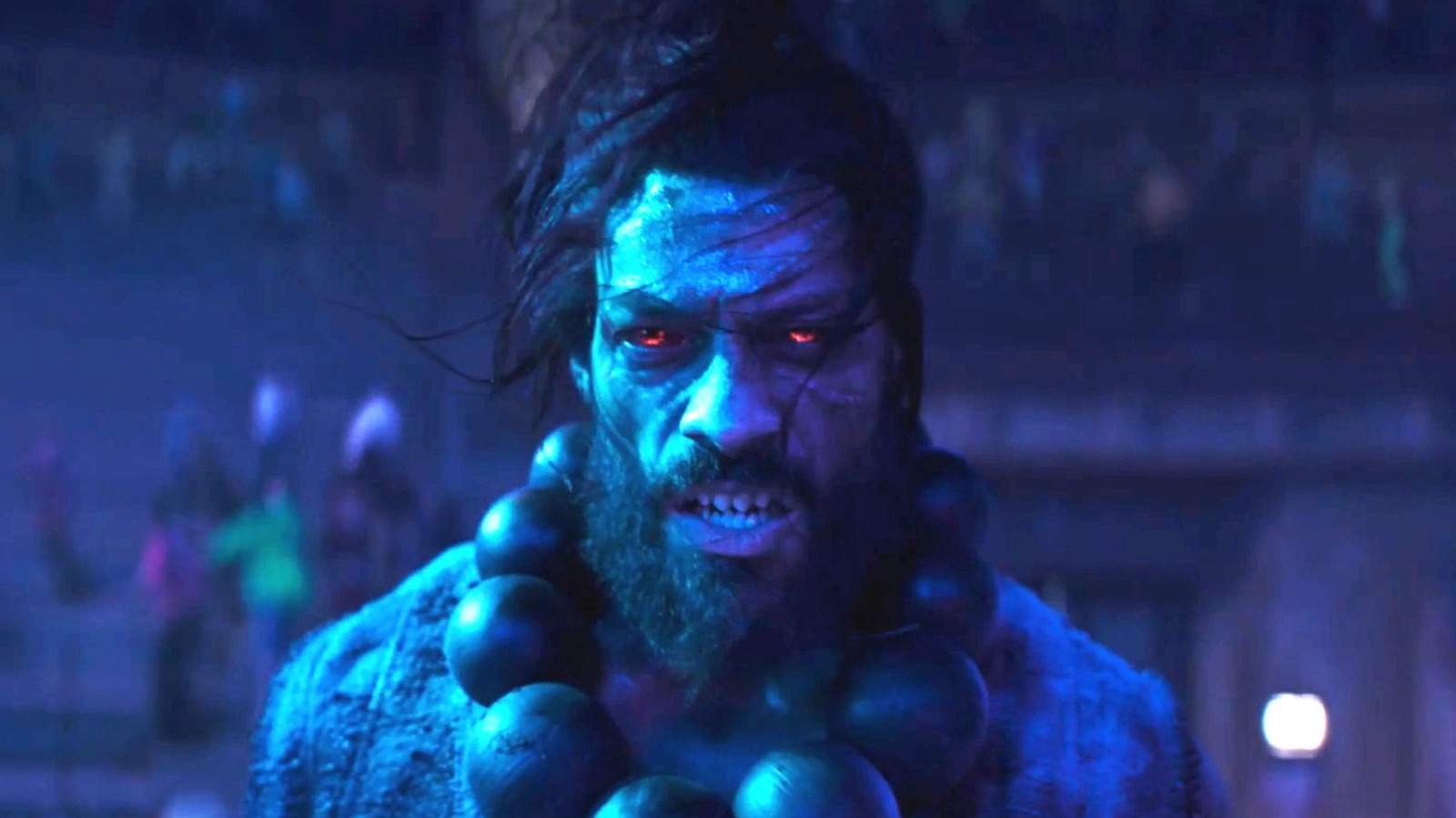
While genre-favorite character actor David Dastmalchian brings a chilling theatricality to the primary antagonist, M. Bison, viewers watching the film’s explosive third act may find themselves distracted by a different face lurking in the shadows. Heavily obscured beneath layers of intricate prosthetic makeup, traditional Japanese martial arts garb, and CGI enhancements, the franchise’s ultimate boogeyman, Akuma, makes a late-game entrance. Despite the digital and physical alterations, the imposing, hulking figure cut by the legendary warrior looks undeniably familiar.
The master of the Satsui no Hado—first introduced to arcade cabinets in 1994’s Super Street Fighter II Turbo—is brought to life by Joe Anoa’i, far better known to millions worldwide as WWE megastar Roman Reigns.
The Main Facts: Bridging the Squared Circle and the Silver Screen
The casting of Joe Anoa’i as Akuma marks a fascinating convergence of combat sports and blockbuster filmmaking. Akuma, known in Japan as Gouki, is a foundational pillar of Capcom’s fighting game lore. He is a merciless, brooding warrior who traded his humanity and soul in exchange for absolute mastery over a dark, destructive martial arts energy known as the Satsui no Hado (the Surge of Murderous Intent).
To embody a character whose entire visual design centers on terrifying physical dominance, a standard actor simply would not suffice. Paramount and Legendary needed someone who possessed genuine athletic pedigree, immense physical presence, and an intimidating aura capable of translating through heavy cinematic makeup.
Anoa’i fit the criteria perfectly. Standing at 6’3" and weighing in around 265 pounds, the undisputed "Head of the Table" of professional wrestling brings an authentic, terrifying gravity to the role. While Akuma’s signature glowing red eyes, wild gray-red hair, and ragged black gi are heavily accented by digital effects, Anoa’i’s unmistakable frame and physical intensity anchor the character in reality.
For Anoa’i, the role represents a monumental step forward in a burgeoning Hollywood career that has steadily evolved alongside his legendary dominance inside the WWE squared circle.
Chronology: The Evolution of Joe Anoa’i from Gridiron to Hollywood
To understand how a professional wrestler secured one of the most iconic villain roles in gaming history, it is necessary to examine the trajectory of Joe Anoa’i’s multifaceted career—a journey defined by athletic excellence, sports entertainment hegemony, and calculated steps into mainstream media.
1. Gridiron Roots and Early Athletic Beginnings (Pre-2010)
Long before he was commanding global audiences in packed sports stadiums, Anoa’i was a standout athlete on the football field. Hailing from the legendary Anoa’i wrestling dynasty (which includes cinematic icons like Dwayne "The Rock" Johnson, Yokozuna, and Rikishi), Joe played college football at the Georgia Institute of Technology. He was a cornerstone of the Georgia Tech Yellow Jackets defense and earned All-ACC honors in 2006. Following his college career, Anoa’i spent time in the NFL with the Minnesota Vikings and Jacksonville Jaguars, followed by a stint in the Canadian Football League (CFL) playing for the Edmonton Eskimos before pivoting away from professional football in 2008.
2. Ascent to WWE Superstardom (2010–2019)
Anoa’i signed a developmental contract with World Wrestling Entertainment (WWE) in 2010, reporting to Florida Championship Wrestling (FCW). He debuted on the main roster in November 2012 as a member of The Shield alongside Seth Rollins and Jon Moxley (Dean Ambrose). The faction instantly revolutionized the company.
As a singles competitor, Anoa’i evolved into "Roman Reigns," headlining multiple WrestleManias and capturing numerous world championships. His historic "Tribal Chief" persona, established during the pandemic era, cemented his status as one of the most compelling and dominant characters in the history of professional wrestling, a run that saw him hold the Undisputed WWE Universal Championship for over 1,300 days.
3. Crossing Over into Cinema (2019–Present)
As his stock in sports entertainment skyrocketed, Hollywood came calling. Anoa’i made his major feature film debut in 2019’s Fast & Furious spin-off, Hobbs & Shaw. Playing Mateo Hobbs—the brother of Dwayne Johnson’s Luke Hobbs—Anoa’i utilized his natural physicality and familial chemistry with Johnson to make a memorable live-action debut.
From there, his filmography expanded into voice acting and streaming comedies. He lent his booming voice to the WWE-affiliated animated film Rumble (2021) as Ramarilla, appeared in the David Spade comedy The Wrong Missy (2020), and voiced Zebro Zebraxton in the astronomical box-office smash Zootopia 2. Now, with his portrayal of Akuma in 2026’s Street Fighter, Anoa’i has secured his most high-profile cinematic role to date.
Supporting Data: The Athlete-to-Actor Pipeline
Anoa’i’s transition from sports entertainment to mainstream cinema places him within a rich, historic tradition of athletes who successfully transitioned from physical competition to the silver screen.
| Athlete-Actor | Notable Athletic Background | Breakout/Major Cinematic Role |
|---|---|---|
| Dwayne "The Rock" Johnson | NCAA Football National Champion, WWE | The Mummy Returns, Fast & Furious Franchise |
| John Cena | NCAA Division III All-American Football, WWE | Peacemaker, The Suicide Squad |
| Dave Bautista | Professional Wrestling (WWE World Champion) | Guardians of the Galaxy (Drax the Destroyer) |
| Joe Anoa’i (Roman Reigns) | NFL/CFL Football, Undisputed WWE Champion | Hobbs & Shaw, Street Fighter (Akuma) |
Data indicates that studios increasingly look toward combat sports athletes for physical franchise roles due to their built-in global fanbases, exceptional spatial awareness, and ability to execute demanding stunt choreography without relying entirely on stunt doubles. Anoa’i’s inclusion in Street Fighter aligns perfectly with this Hollywood strategy.
Official Responses and Industry Reception
The casting of Roman Reigns as Akuma initially sparked widespread debate across gaming forums and entertainment news outlets. Purists questioned whether a professional wrestler could capture the psychological depth and mythical menace of a martial arts master who has transcended human limits. However, early reactions following the film’s theatrical release have largely praised the creative gamble.
Director and studio executives have defended the casting choice, emphasizing that Akuma needed to feel genuinely dangerous to the film’s heroic ensemble.
"When you look at Akuma in the lore, he isn’t just a man; he’s an elemental force of nature," a production insider noted during the film’s press junket. "We needed an actor who could command the physical space of a room without saying a word. Joe brought a quiet intensity, a dedication to physical discipline, and a presence that made our stunt coordinators and lead actors instantly elevate their performances."
Fans on social media have similarly warmed up to the performance, highlighting how Anoa’i’s signature intensity—honed over a decade of high-stakes main-event matches in front of millions—translated seamlessly into the cinematic martial arts arena.
Implications: What Akuma Means for Reigns’ Future in Hollywood
The release of Street Fighter in theaters marks a critical inflection point for Joe Anoa’i’s career outside of the wrestling ring. While he remains tied to the sports entertainment industry that made him a household name, his role as Akuma proves he can transcend the "wrestler playing a version of themselves" trope that has historically limited athletes-turned-actors.
- Franchise Viability: By taking on a heavily stylized, CGI-heavy antagonist role, Anoa’i has demonstrated that he is willing to subvert his physical appearance for the sake of a character. This opens doors for future monster roles, superhero/villain franchises, and heavy-action epics.
- Upcoming Projects: Industry tracking confirms that Anoa’i is already attached to star in an upcoming high-octane action feature titled Action Force — The Divide, suggesting that Hollywood views him as a viable leading man in the action genre.
- The WWE-Hollywood Pipeline: Anoa’i’s success further cements the modern WWE performance center as an incubator for multi-hyphenate entertainers. Following in the footsteps of Dwayne Johnson, Dave Bautista, and John Cena, Anoa’i is proving that the transition from a WWE ring to a blockbuster movie screen is a viable, highly lucrative path.
As Street Fighter continues its box office run, audiences are left marveling at how a simple game of "spot the celebrity" under layers of prosthetics led them straight to the Tribal Chief. Whether Akuma returns for future sequels or remains a one-off cinematic terror, Joe Anoa’i has firmly carved out his legacy on both the canvas of the wrestling ring and the silver screen.
