
The State of the Imaging Industry: A Paradox of Shrinking Volumes and Rising Valuations
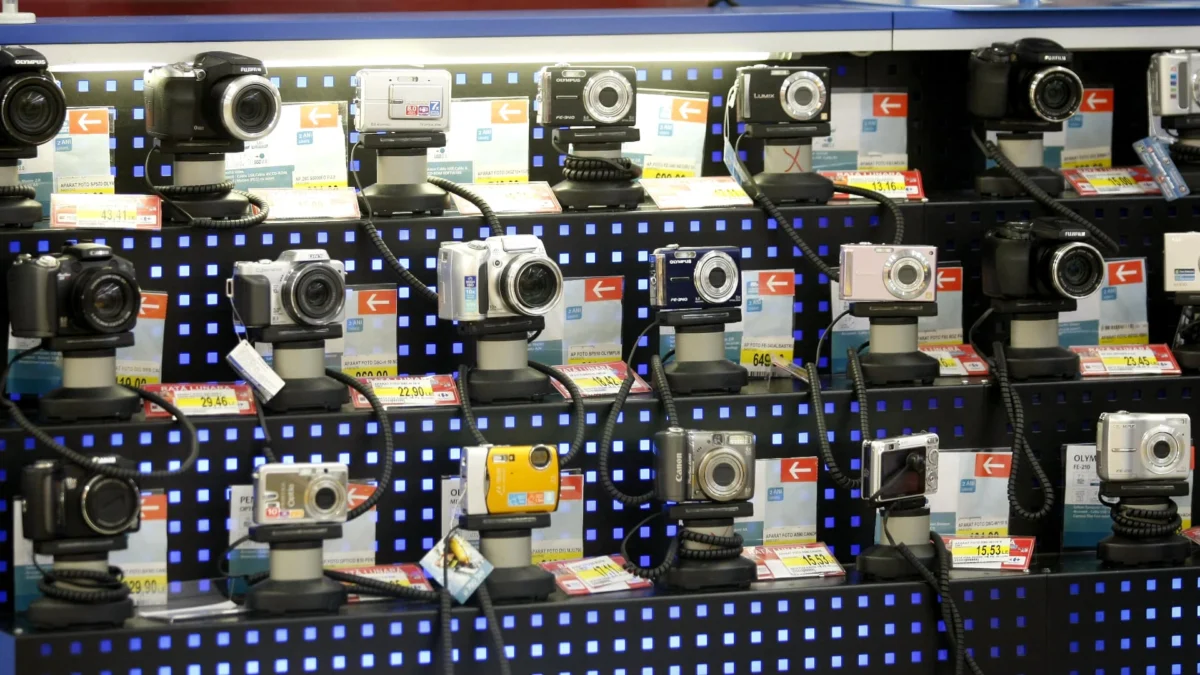
The global digital camera market is undergoing a profound structural transformation. According to the latest data released by the Camera & Imaging Products Association (CIPA), the industry is currently navigating a period defined by a paradoxical trend: while the total volume of camera shipments continues to slide, the financial value of the industry is swelling. This divergence suggests that the era of mass-market digital photography, dominated by high-volume, low-margin devices, has effectively ended, giving way to a premium-focused model that targets professionals, enthusiasts, and a revitalized segment of fixed-lens camera users.
As of August 2026, CIPA’s year-to-date data paints a complex picture of an industry in transition. While unit shipments have contracted by 3.2% compared to the same period in 2025, the total shipped value has surged by 3.7%, reaching approximately ¥572 billion (roughly $3.65 billion USD). This "price-up" strategy—fueled by inflation, increased R&D costs, and a pivot toward high-end mirrorless systems—has become the primary defense mechanism for manufacturers against a shrinking total addressable market.
Main Facts: The 2026 Landscape
The headline figures from CIPA are stark. Between January and August 2026, member companies shipped 5.7 million digital cameras globally. While the 3.2% drop in volume might appear modest, it reflects a consistent trend of consolidation.
The most critical development lies within the Interchangeable-Lens Camera (ILC) segment. Shipments of 4.01 million bodies represent a 9.3% decline, yet the value of these shipments actually rose by 1.5% to approximately ¥465 billion ($2.97 billion). This indicates that the average price per unit is climbing significantly. Specifically, mirrorless cameras—which now command 92% of all ILC units—have seen their average shipped value rise to roughly ¥122,000 ($778) per body, a 10% increase year-on-year.
Conversely, the rumored "DSLR resurgence" has failed to materialize. Once the bedrock of professional photography, DSLRs have plummeted by 35% in units and 37% in value, now accounting for less than 8% of ILC shipments. They are, for all intents and purposes, a legacy technology nearing the end of its commercial relevance.
Chronology: The Road to the August Data
To understand the current state of the market, one must look at the trajectory leading up to August 2026.
- Early 2026: CIPA integrated Kenko Tokina into its reporting statistics, a move that theoretically inflated the shipment numbers. Despite this inclusion, the raw data still shows a decline, suggesting that the "true" market contraction is significantly steeper than the official 3.2% figure implies.
- February 2026: At the start of the year, CIPA issued a optimistic forecast of 6.82 million ILC bodies for the full year. As the market hit the late summer, that target became mathematically unreachable. Achieving such a volume would require monthly shipments 40% higher than the year-to-date average, a feat that is effectively impossible given current production constraints and consumer demand cycles.
- Mid-2026: The market saw a distinct divergence between sensor sizes. Full-frame and larger sensors, which had previously driven the mirrorless gold rush, saw a sharp decline of 19.8% in units. Meanwhile, smaller-sensor ILC models showed resilience, dipping only 3.2% in volume while seeing a 14% gain in total value.
- August 2026: The most recent data reveals the "Fixed-Lens" surprise. While the industry fixated on mirrorless systems, fixed-lens cameras (often dismissed as remnants of the "point-and-shoot" era) surged by 15.3% to 1.69 million units.
Supporting Data: Regional Shifts and Lens Economics
The geographical distribution of these trends is equally revealing. Traditional strongholds for camera sales—the Americas, Europe, and China—have all seen significant pullbacks in ILC shipments, with China leading the decline at 20.8%.
However, growth is appearing in unconventional places. "Asia excluding Japan and China" recorded a 12.3% rise in shipments, and the Japanese domestic market itself grew by 6.7%. These regional variations suggest that while the Western appetite for interchangeable-lens systems is saturated or deterred by pricing, emerging markets or specific regional trends are sustaining the ecosystem.
The "Lens-to-Body" ratio remains a critical metric for industry health. Despite the drop in body shipments, lens sales remain robust. With 6.31 million lenses shipped (a 4.9% decline) and a value increase of 4.4% (reaching ¥340 billion), the ratio has climbed to 1.57. This means that for every camera body shipped, consumers are purchasing 1.57 lenses, up from 1.50 a year ago. This suggests that the current consumer base is comprised of "committed" photographers who are willing to invest in an ecosystem of glass, rather than casual users who buy a single kit lens and stop there.
Official Responses and Strategic Implications
While CIPA serves as the industry’s data clearinghouse, the individual manufacturers (such as Canon, Sony, Nikon, and Fujifilm) have been largely silent on the specifics of the August data. However, their strategic movements align with the report’s findings.
The industry’s pivot toward high-margin, "prosumer" gear is not just a reaction to falling demand—it is a calculated shift to protect profitability. By raising the floor on entry-level pricing and focusing on high-end video capabilities and AI-driven autofocus, manufacturers are ensuring that the shrinking number of customers provide a higher yield per transaction.
The Rise of Fixed-Lens Systems
The most intriguing implication is the 15.3% growth in fixed-lens cameras. Industry analysts point to two factors: the "TikTok/Influencer" aesthetic favoring retro-styled, high-quality fixed-lens compacts, and the general fatigue among travelers regarding the weight and bulk of ILC systems. This segment now accounts for nearly 30% of all CIPA-reported shipments, proving that there is still a massive appetite for dedicated imaging devices that prioritize portability over modularity.
The "Price-Up" Reality
The 10% increase in the value of mirrorless bodies is a double-edged sword. While it keeps revenues stable in an inflationary environment, it also creates a barrier to entry for younger generations. If the cost of entry for a decent mirrorless setup continues to climb, the industry risks becoming an insular hobby for an aging demographic, failing to capture the "mobile-native" generation that currently finds smartphone photography "good enough."
Conclusion: A Smaller, More Resilient Industry
The narrative of the camera industry in 2026 is one of survival through sophistication. The "boom" years of the early 2010s are gone, and the mass market has migrated entirely to smartphones. What remains is an industry that is smaller, more expensive, and increasingly reliant on a dedicated core of enthusiasts who value the tactile experience and optical performance that a dedicated camera provides.
The failure of the DSLR, the decline of large-sensor ILCs, and the unexpected vitality of fixed-lens cameras tell a story of a market finally finding its equilibrium. Manufacturers are no longer trying to outpace the smartphone; they are instead retreating into specialized niches where the smartphone cannot follow. As the industry moves into the final quarter of 2026, the focus will likely shift from chasing volume to maximizing the average revenue per user (ARPU), as the era of "camera for everyone" yields to the era of "premium tools for the few."
For the photography enthusiast, this means the equipment has never been better—or more expensive. For the manufacturers, the task is now to ensure that this shrinking market remains sustainable, profitable, and relevant in a world that is increasingly visual, yet decreasingly interested in the hardware used to capture the image.
