
Beyond the Commute: How Android Auto is Transforming Your Dashboard Into a Gaming Console
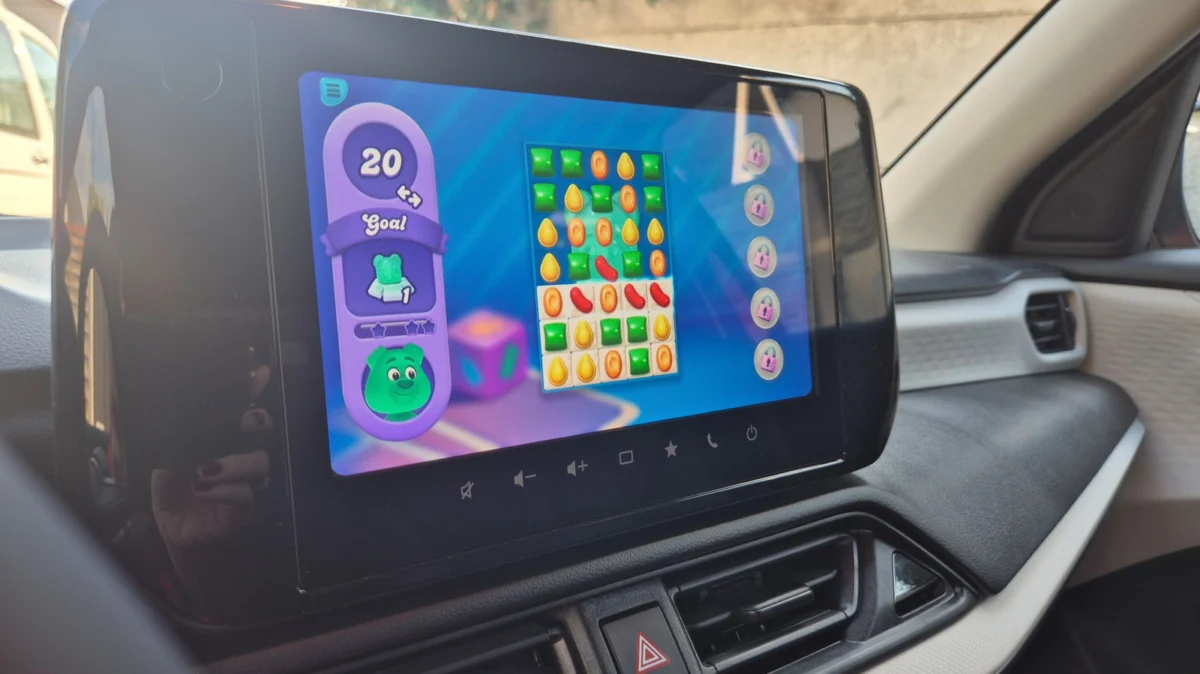
For decades, the car dashboard was a utilitarian space reserved for climate control, navigation, and audio. It was a place you interacted with to get somewhere else. However, following a significant update that saw game support officially exit beta in September 2026, the automotive interior is undergoing a paradigm shift. Android Auto is no longer just a conduit for GPS and music; it is evolving into a legitimate entertainment hub for the parked driver.
The Evolution of In-Car Entertainment: Main Facts
The integration of gaming into Android Auto marks a major milestone in the "connected car" ecosystem. As of late 2026, Google has fully opened the floodgates, inviting developers to optimize their mobile titles for the automotive interface. This is not a transition to "screen mirroring," which is often clunky and fraught with latency issues; rather, it is a native integration. Games are built specifically to interface with the Android Auto platform, ensuring that graphics are scaled correctly, touch inputs are responsive, and, crucially, safety protocols are baked into the core code.
The primary constraint remains safety: these games are strictly "parked-only" experiences. The system utilizes the vehicle’s own telematics to detect movement. If the gear shifter moves from "Park" to "Drive," or if the parking brake is disengaged, the game instantly suspends, and the interface reverts to the standard Android Auto home screen. This failsafe ensures that while your car is a playground during a charging session or a wait at soccer practice, it remains a serious piece of machinery while in motion.
A Brief History: From Beta to Broad Availability
The road to gaming on Android Auto has been a deliberate, step-by-step process.
- Early 2025: Rumors began to circulate regarding "GameSnacks," a collection of lightweight, HTML5-based games that Google began testing as a proof-of-concept within the Android Auto environment.
- Late 2025: Google launched a formal beta program for third-party developers, allowing a small subset of gaming studios to begin testing titles. The focus was on stability and verifying that the games would respect the vehicle’s "parked" state.
- September 2026: The beta officially concluded. Google opened the Android for Cars App Library to all developers, signaling that the platform was ready for prime time.
- Q4 2026: The ecosystem saw a rapid expansion, moving from simple web-based puzzles to more robust titles like Angry Birds 2 and Candy Crush Soda Saga, which have now become the flagship examples of the platform’s potential.
Current Library and Performance Data
As of the current landscape, there are just over 35 titles fully optimized for the Android Auto experience. The library is currently divided into three distinct categories:
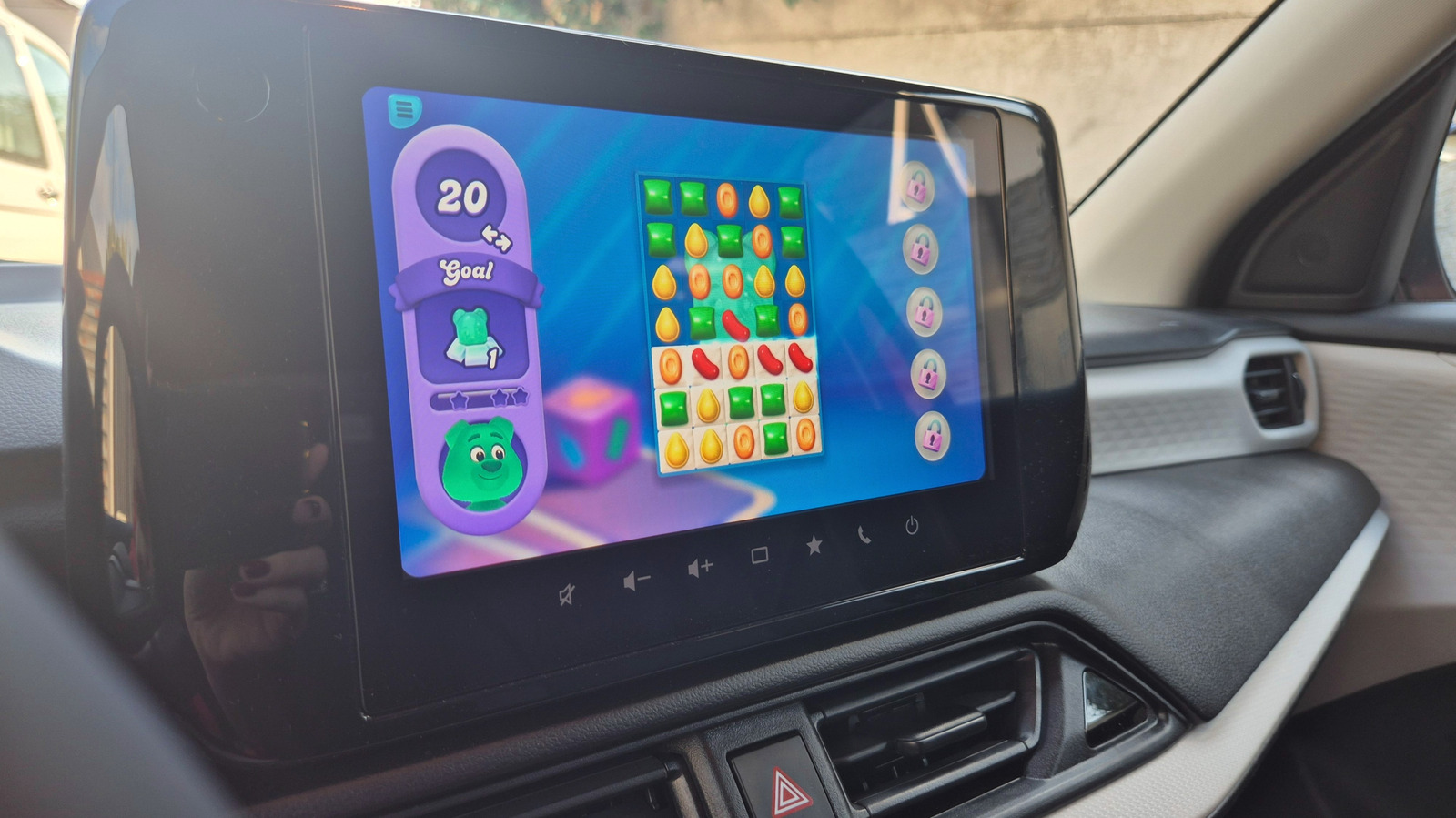
- Casual Puzzlers: Titles like Candy Crush Soda Saga take advantage of the high-resolution touchscreens found in modern infotainment systems. These are currently the most popular, as they require minimal hand movement and are easy to pause.
- Family-Oriented/Educational: A significant portion of the early library targets children. Games focused on basic math, letter recognition, and interactive coloring are designed to keep younger passengers occupied while the vehicle is stationary.
- Action/Racing: Titles such as Beach Buggy Racing and Angry Birds 2 represent the "high-performance" tier. While these titles are visually impressive, they highlight a current hardware hurdle: touch controls. Because many racing games were designed for the ergonomic grip of a smartphone, playing them on a fixed, vertical or horizontal dashboard screen can be fatiguing.
The Controller Factor
To mitigate the physical limitations of reaching for a dashboard, Google has integrated support for external game controllers. By connecting a Bluetooth controller to your smartphone, users can effectively turn their car into a mobile console. This creates a much more immersive experience, especially for titles like Beach Buggy Racing, which feel unintuitive when played via a touchscreen but fluid and satisfying with a physical joystick and buttons.
Official Stance and Safety Protocols
Google’s official stance on this rollout is centered on the concept of "productive downtime." In an era where electric vehicle (EV) adoption is at an all-time high, charging stops are a new reality of the commute. Google posits that the 20-to-40 minutes spent at a Supercharger or a fast-charging station shouldn’t be dead time.
"Our goal is to provide a seamless, enjoyable experience that turns the waiting period into a leisure period," a spokesperson for the Android Auto team noted during the September launch.
From a safety perspective, the "Locked While Moving" protocol is non-negotiable. Developers must use Google’s standardized APIs that monitor the car’s speed and gear status. If a developer attempts to circumvent this, their application is rejected from the Android Auto category in the Play Store. This rigid enforcement is designed to prevent distracted driving and satisfy the stringent safety requirements of automotive manufacturers.
The Technical Reality: Why No Mirroring?
A common question from users is: "Why can’t I just mirror my phone screen?" The answer lies in the divergence between mobile and automotive UI/UX.
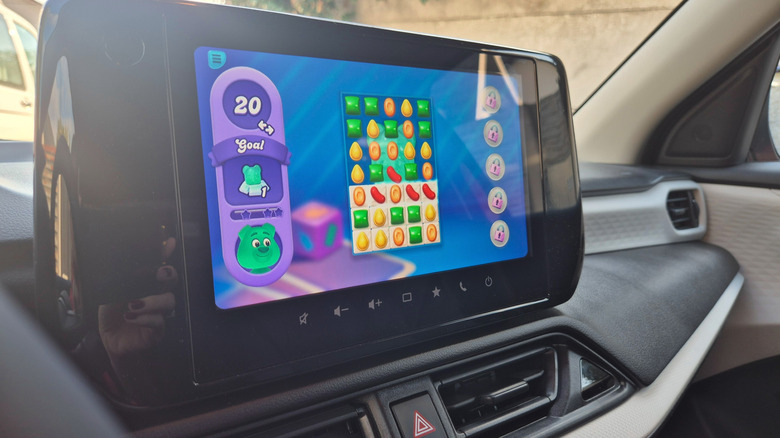
Phone screens are designed for vertical orientation, whereas most car displays are landscape, ultra-wide, or even portrait-oriented depending on the make and model. Mirroring often leads to black bars, stretched images, and text that is impossible to read from the driver’s seat.
Furthermore, native integration allows the game to pull data from the car’s sound system directly, ensuring that the audio experience is balanced and immersive. Native apps are also sandboxed, meaning they cannot interfere with the critical functions of the car, such as navigation updates or incoming emergency alerts, which must remain visible even if a game is active in the background.
Implications for the Future of Automotive UX
The introduction of games is merely the "tip of the spear" for the future of in-car infotainment. As cars move toward full autonomy, the dashboard will eventually transition from a "driver assistance" panel to a "passenger entertainment" suite.
1. The Rise of the "Third Space"
Sociologists and urban planners are already discussing the "Third Space"—the idea that the car is becoming an extension of the living room. As gaming becomes more sophisticated, we can expect to see streaming services, collaborative multiplayer games, and perhaps even productivity suites (like video conferencing) integrated into the dashboard.
2. Hardware Upgrades
The current generation of infotainment chips—many of which are based on mobile ARM architectures—are more than capable of running high-end 2D games. However, as the demand for 3D, console-quality graphics grows, we may see automotive manufacturers begin to advertise "Gaming Performance" as a metric, similar to how they currently advertise horsepower or battery range.
3. The Developer Economy
For independent developers, the Android Auto market represents a fresh frontier. With mobile gaming becoming increasingly saturated, the "Automotive Category" on the Google Play Store is a blue-ocean opportunity. Studios that can build simple, addictive, and car-friendly interfaces are currently finding high engagement rates, as drivers are looking for ways to maximize the utility of their existing hardware.
Conclusion: How to Get Started
For those looking to turn their next charging session or waiting period into a gaming session, the process is simple:
- Check Compatibility: Ensure your vehicle is running the latest version of Android Auto.
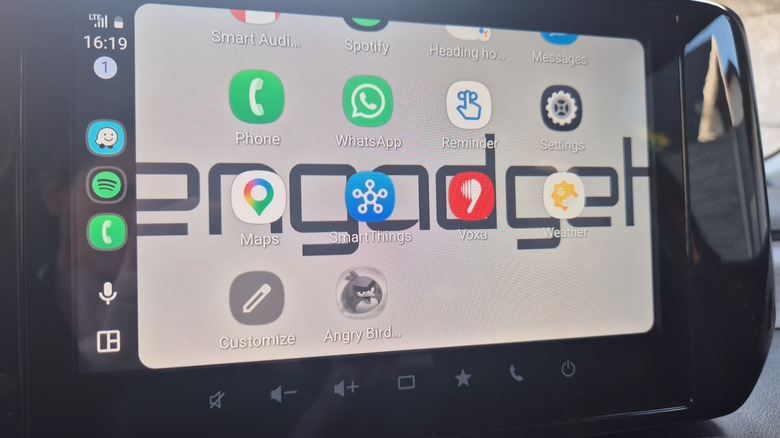
- Curate the Launcher: On your phone, navigate to Settings > Connected Devices > Android Auto > Customize Launcher. Ensure your desired games are checked.
- Connection: Connect your device. If you don’t see your games, check the app drawer on the car display.
- Explore: Visit the "Android Auto" category in the Google Play Store on your phone to browse the full, updated collection.
As we look toward the horizon, the marriage of automotive technology and gaming is only just beginning. While we may not be playing Call of Duty in our sedans just yet, the progress made in 2026 suggests that the days of staring blankly at a charging station are numbered. The car is no longer just a vessel for travel; it is rapidly becoming a vessel for play.
