
Neil Young Files $10 Million Lawsuit Against Trump 47 Coalition Over Unauthorized Use of "Rockin’ in the Free World"
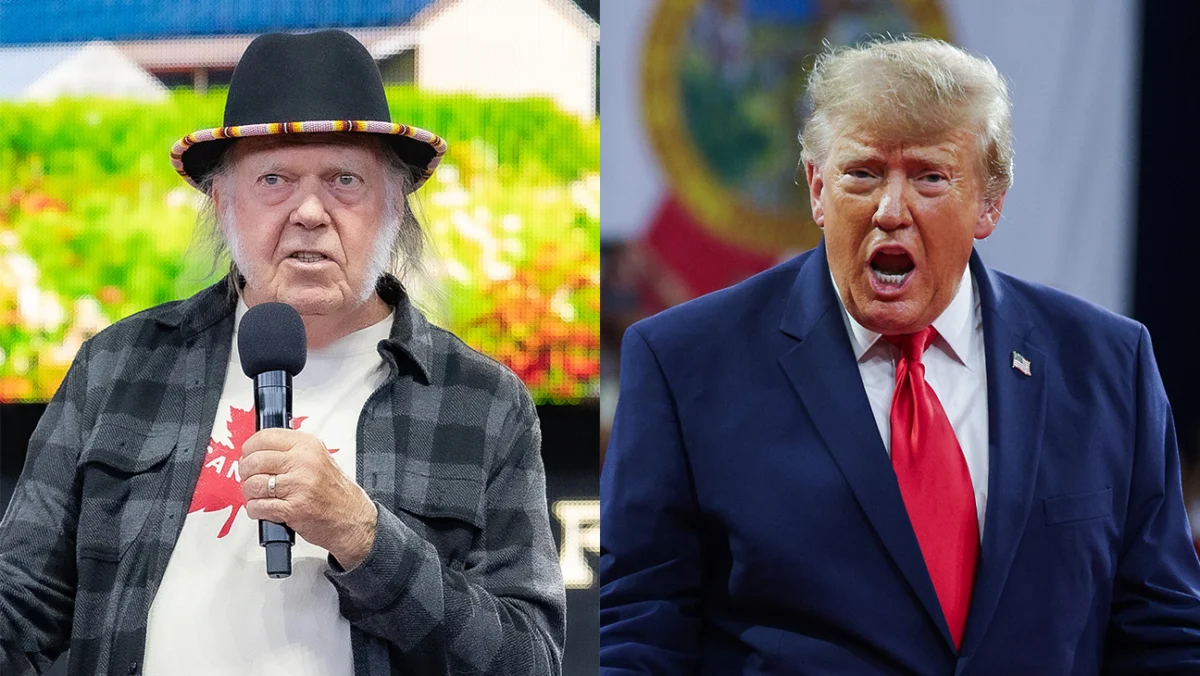
LOS ANGELES — Legendary singer-songwriter Neil Young has escalated his long-running intellectual property battle with Donald Trump, filing a sweeping federal copyright infringement lawsuit against the Trump 47 Coalition. The legal action, lodged in a federal court on Monday, targets the political action committee’s unauthorized broadcast and use of Young’s seminal 1989 protest anthem, "Rockin’ in the Free World," during a high-profile campaign rally.
Young is seeking $10 million in statutory damages, alleging that the campaign willfully bypassed licensing protocols and weaponized a deeply critical counter-cultural track for political advancement—a move his legal team describes as fundamentally antithetical to the song’s core message.
This high-stakes legal showdown marks the second time the Canadian-American rock icon has been forced to take legal action against Trump’s political apparatus over the exact same track. It also highlights a broader, ongoing friction between conservative political campaigns and the music community regarding the boundaries of public performance licensing, campaign stop practices, and the rights of artists to control how their art is utilized in the public square.
Main Facts of the Case
According to court documents filed on Monday, the focal point of the dispute is the Trump 47 Coalition’s recent deployment of "Rockin’ in the Free World" at a political rally. Young’s legal representation argues that the campaign utilized the track to energize crowds without securing the requisite performance licenses or the explicit personal permission of the artist—both of which are required under federal copyright law, regardless of whether a venue holds a blanket performance license from organizations like ASCAP or BMI, due to the distinct political nature of the usage.
The lawsuit goes far beyond a standard financial grievance, taking meticulous care to dismantle any notion that the song could serve as a celebratory campaign anthem. The complaint defines the track as:
“…a blistering anthem that contrasts the hollow promises of American political rhetoric with the harsh realities faced by the poor, homeless and forgotten.”
The legal filing elaborates on the dark, socially conscious imagery embedded in Young’s lyrics, contrasting it directly with the celebratory atmosphere of a political rally:
“The lyrics paint vivid street-level portraits — a mother discarding her baby, addicts lost in despair, garbage piling in the shadows of prosperity — while the repeated chorus delivers a savage irony, celebrating freedom that clearly isn’t shared by all. In short, the Song is the opposite of everything that Donald J. Trump stands for.”
By demanding $10 million in damages, Young’s legal team is signaling that the unauthorized use of intellectual property by major political organizations is not merely a bureaucratic oversight, but a serious infringement that carries significant financial and reputational consequences for creators.
Chronology of a Fractured Relationship: A History of Legal and Political Clashes
The legal battle between Neil Young and Donald Trump did not materialize in a vacuum; it is the latest chapter in a multi-year ideological and legal feud.
2015: The Initial Campaign Launch
The friction first surfaced publicly in June 2015 when Donald Trump descended the golden escalator at Trump Tower in New York City to officially announce his first presidential run. As Trump and his entourage made their way to the podium, "Rockin’ in the Free World" blared over the PA system.
Almost immediately, representatives for Young issued a public statement clarifying that the artist had not endorsed Trump and that the campaign had not sought or received permission to use the song. At the time, Trump’s campaign released a statement attempting to defuse the situation, noting that they had legally purchased a blanket license through ASCAP to play music at public events. However, out of respect for Young, the campaign agreed to stop using the track moving forward.
2020: The Tulsa Rally and First Lawsuit
The tension boiled over again in the summer of 2020 during the height of Trump’s re-election bid. The track was played repeatedly at campaign events, most notably during an indoor rally in Tulsa, Oklahoma.
Fed up with what he viewed as persistent and willful disregard for his intellectual property rights, Young filed a formal copyright infringement lawsuit in federal court against Donald J. Trump for President, Inc. in August 2020. That lawsuit sought up to $150,000 in statutory damages per infringement under the Copyright Act.
Crucially, that previous litigation was resolved swiftly. According to Monday’s new complaint, Trump’s 2020 campaign team "asserted no defense and immediately settled shortly after it was served, promising that it would never again use ‘Rockin’ in the Free World’ without a license and permission from Young."
2024–2025: Geopolitical Anxieties and Regional Tensions
Beyond domestic copyright battles, Young’s opposition to the Trump political ecosystem has manifested in personal anxieties and cross-border concerns. Last year, Young—who maintains dual citizenship in the United States and Canada—voiced public concern that a returning Trump administration might enact immigration or travel policies that could bar him from re-entering the U.S. while he was abroad on his European tour.
Supporting Data and Industry Context: The Battle Over Campaign Playlists
Young’s lawsuit against the Trump 47 Coalition is part of a much larger, systemic issue plaguing modern American politics: the recurring friction between politicians and musicians over campaign rally setlists.
Over the past decade, dozens of high-profile artists have publicly demanded that political campaigns—predominantly, though not exclusively, on the conservative side—cease and desist from using their music. The legal and operational mechanics behind these disputes usually hinge on the difference between standard public performance licenses and the legal doctrine of the "right of publicity" or "false endorsement."
The Mechanical Realities of Blanket Licenses
Music licensing organizations like the American Society of Composers, Authors and Publishers (ASCAP) and Broadcast Music, Inc. (BMI) sell blanket licenses to arenas, stadiums, and convention centers. These licenses typically cover the public performance of millions of songs, allowing venue owners to host concerts, sporting events, and political rallies without negotiating individual contracts for every single piece of music played over the loudspeakers.
However, artists and legal experts frequently point out that political campaigns often stretch the limits of these blanket agreements. When a song is used repeatedly as a walk-on theme for a candidate, or featured prominently in campaign video packages, it can create a legal gray area or run afoul of political exceptions within certain licensing frameworks. Furthermore, artists can issue specific objections through performance rights organizations via "consent decrees" or direct opt-outs, requiring campaigns to secure direct licensing permissions if they wish to avoid liability.
A Growing Roster of Disgruntled Artists
Neil Young is far from alone in his crusade against the Trump campaign’s musical selections. The intersection of modern rock, pop, and conservative politics has produced a lengthy roster of high-profile artist pushbacks:
- Bruce Springsteen: The legendary rocker has repeatedly clashed with conservative politicians over the unauthorized use of "Born in the U.S.A.," pointing out that the song’s critical look at the treatment of Vietnam War veterans makes it an inappropriate soundtrack for campaign rallies.
- Jack White: The White Stripes co-founder has been an outspoken critic of the Trump administration, frequently taking to social media to blast unauthorized uses of his music and condemning political figures who appropriate counter-cultural art.
- Pop Royalty Pushback: In recent election cycles, pop superstars including Sabrina Carpenter and Olivia Rodrigo have joined legacy acts in publicly denouncing the integration of their music into political messaging, reflecting a generational cross-section of artists protective of their brand integrity.
Official Responses and Legal Maneuvers
As of press time, representatives for the White House and the Trump 47 Coalition have not immediately responded to requests for comment regarding the federal lawsuit.
In past copyright disputes of this nature, political campaigns have typically fallen back on a few standard defenses:
- Venue Licensing: Asserting that the venue hosting the rally held valid performance licenses that legally covered the public broadcast of copyrighted musical works.
- Incidental Play: Arguing that pre-rally or walk-in music is part of the general ambient atmosphere generated by third-party event coordinators rather than a deliberate, direct endorsement by the candidate.
- First Amendment and Fair Use Arguments: Occasionally suggesting that the playback of popular music in a public political forum constitutes transformative or commentary-based use, though courts have historically been deeply skeptical of applying fair use protections to commercial music played at political fundraisers and rallies.
Given that Trump’s 2020 campaign opted to settle rather than litigate a nearly identical claim, legal analysts will be watching closely to see whether the Trump 47 Coalition attempts to mount a rigorous defense in court or seeks a swift financial settlement to clear the docket.
Broader Implications for Artists, Campaigns, and Intellectual Property Law
The outcome of Young v. Trump 47 Coalition could carry significant ramifications for how political campaigns manage their audio environments moving forward, as well as how copyright law intersects with political speech.
1. The Erosion of the "Campaign Playlist" Culture
For decades, political rallies have relied on bombastic, high-energy classic rock and pop tracks to build enthusiasm before a candidate takes the stage. However, as artists become increasingly politically polarized—and fiercely protective of their brand alignments—the traditional campaign playlist is becoming a legal minefield. Campaigns are increasingly forced to rely on lesser-known artists, royalty-free stock music, or explicitly supportive musicians willing to license their catalogs directly to political action committees.
2. The Financial Stakes of Unauthorized Use
By demanding $10 million in statutory damages, Neil Young is establishing a high financial deterrent. If successful, this lawsuit could encourage other artists whose work has been used without permission to seek substantial monetary damages rather than merely settling for public apologies or cease-and-desist compliance. This financial threat may force political operations to implement much stricter compliance protocols regarding what audio is played at live events.
3. The Definition of Artistic Integrity in Politics
At its core, the lawsuit underscores a philosophical battle over who controls the meaning of art once it enters the public sphere. For Young, "Rockin’ in the Free World" is a searing indictment of socioeconomic inequality and political hypocrisy. Seeing it utilized to soundtrack a political rally featuring the very figures the song critiques is, in his view, a direct violation of his artistic vision and moral stance.
As the legal proceedings unfold in federal court, the case will undoubtedly serve as a landmark test of intellectual property rights in the high-stakes arena of modern American politics, determining whether the courts will draw a sharper, more punitive line between political ambition and artistic ownership.
