
Zach Bryan Sets Attendance Record at Gillette Stadium Amidst Rising Tensions Over Political Expression in Live Music
Introduction: A Record-Breaking Weekend
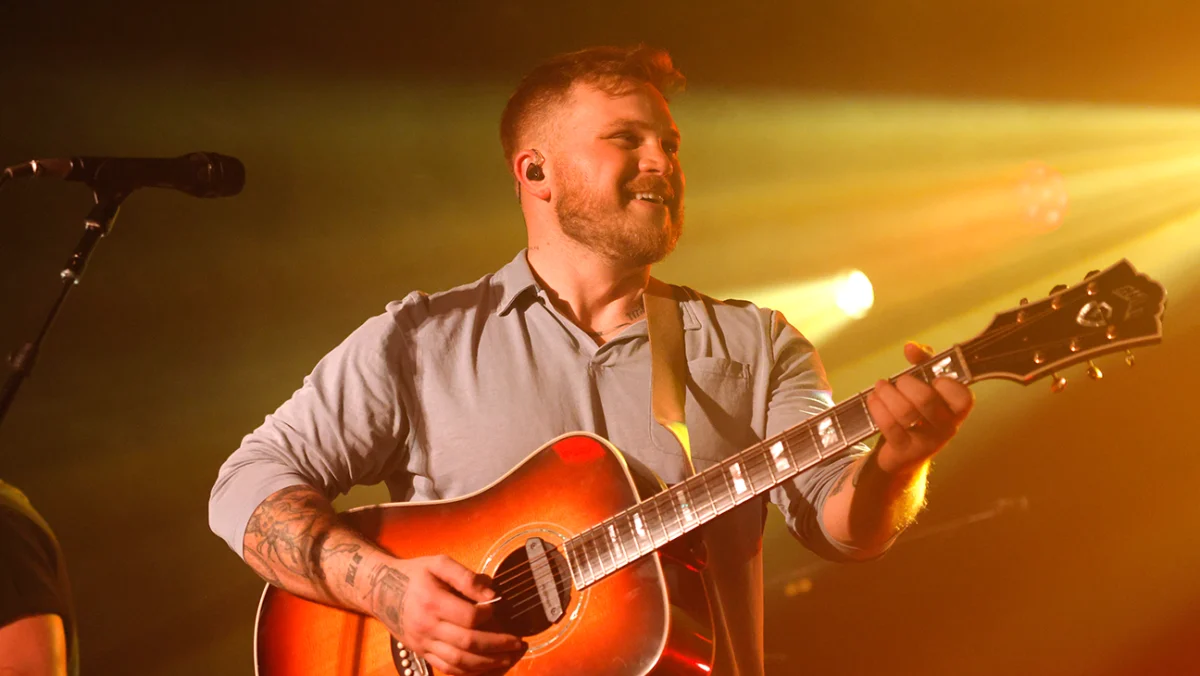
In a weekend defined by both musical achievement and underlying political friction, country music superstar Zach Bryan made a significant statement at Gillette Stadium. During his Friday and Saturday night performances as part of his The Quittin Time Tour, Bryan drew a staggering 73,538 fans, officially shattering the all-time attendance record for the Foxborough, Massachusetts venue.
However, the headline-grabbing statistic was accompanied by a pointed sartorial choice that has reignited a heated industry debate. Throughout his performances, Bryan appeared on stage wearing a shirt emblazoned with the words "Free Palestine." While the artist chose not to address the shirt or the ongoing humanitarian crisis in Gaza directly during his sets, the choice of attire was widely noted, particularly given the venue’s recent history with the intersection of live entertainment and geopolitical advocacy.
The Context: A Venue Under the Spotlight
The presence of the "Free Palestine" messaging at Gillette Stadium is particularly sensitive due to the venue’s recent role in a high-profile controversy involving rapper Macklemore. Last month, Macklemore was removed as a supporting act for Ed Sheeran’s Mathematics Tour—a decision that was directly linked to the rapper’s vocal pro-Palestine advocacy during his recent performances.
According to statements made by Macklemore, the pressure to drop him originated from venue owners, specifically identifying Robert Kraft, the owner of Gillette Stadium and the New England Patriots, as a key figure in an ultimatum issued to the tour’s promoters. Macklemore alleged that Kraft and other venue owners threatened to block Sheeran’s tour from playing their stadiums if the rapper remained on the bill.
The juxtaposition of Bryan’s silent protest at the very venue that stood at the center of the Macklemore controversy highlights a widening divide in how major concert venues, promoters, and artists navigate the complexities of modern political expression.
Chronology of the Controversy
To understand the significance of the weekend’s events, it is necessary to trace the timeline of the tension that has gripped the touring industry:
- September 2024: Following a series of speeches advocating for Palestinian liberation during his sets, Macklemore is removed from Ed Sheeran’s tour. The tour promoter cites pressure from venues, specifically naming Gillette Stadium, as the reason for the sudden change in lineup.
- Late September 2024: Macklemore publicly criticizes Robert Kraft, alleging the Patriots owner "rallied" other stadium owners to force his removal. Sheeran’s scheduled shows at Gillette Stadium are subsequently canceled, though officially due to severe weather conditions.
- October 2024: In a gesture of reconciliation and humanitarian aid, Macklemore invites Robert Kraft to match a $1 million donation intended to support relief efforts for the Palestinian people.
- Late October 2024: Robert Kraft responds to the challenge, announcing his intent to donate $2 million to humanitarian aid in the region, focusing on the broader crisis.
- November 2024: Zach Bryan performs at Gillette Stadium, wearing a "Free Palestine" shirt while setting a new attendance record.
Supporting Data: The Cost of Solidarity
The fallout from the Macklemore-Sheeran situation was not contained to a single tour. The controversy triggered a ripple effect throughout the live music industry, highlighting how artists and venues are struggling to define the boundaries of "acceptable" political speech.
Following the news of Macklemore’s removal, several other artists scheduled to support Sheeran—including Finneas, the Danish pop band Lukas Graham, and Irish singer Aaron Rowe—withdrew from the tour in solidarity. These departures underscored a growing sentiment among younger artists that silence on global humanitarian issues is no longer a tenable position for their careers.
Conversely, the commercial reality of the industry remains robust. Despite the political friction, Macklemore recently announced his own "Free Palestine" tour, which saw all three of his initial dates sell out immediately. This suggests that while venue owners may attempt to regulate speech within their properties, there is a substantial and dedicated audience for artists who prioritize political messaging.
Official Responses and Perspectives
The clash between venue management and artists has produced a flurry of official statements, each framing the debate through a different lens.
The Venue Perspective
Robert Kraft’s stance has been clear and uncompromising. In a statement released following the initial controversy, he noted: "Gillette Stadium has a longstanding commitment to providing a welcoming environment for all guests and ensuring that events held at our venue do not provide a platform for hate speech."
Kraft further justified the decision to exclude Macklemore by citing "a broader history of antisemitic rhetoric and imagery" that he believed was "deeply offensive and hurtful to the Jewish community." For Kraft, the decision was framed not as an attack on political speech, but as a commitment to protecting the venue’s atmosphere from language he deemed dangerous.
The Artist Perspective
Ed Sheeran, caught in the middle of the dispute, has attempted to maintain a neutral position, emphasizing his desire to focus on music. "I am trying in my career not to be a political commentator of any kind because I want my music and shows to be about unity, not division," Sheeran stated during a concert in Philadelphia.
However, even Sheeran acknowledged the complexity of the issue, adding: "What happened in Israel and at the Nova Music Festival on October 7th was horrific… What is happening in Gaza is catastrophic and unjustifiable, and disproportionate."
Implications for the Live Music Industry
The events at Gillette Stadium signify a permanent shift in the relationship between touring artists and stadium ownership. For decades, the primary concern of a venue owner was safety, logistics, and profitability. Today, the "political climate" of an artist has become a new, volatile variable in venue management.
The "Venue as Gatekeeper" Problem
The Macklemore situation has established a precedent where venue owners act as moral arbiters, deciding which political stances are permitted on their stages. This creates a difficult landscape for artists who view their platforms as essential tools for social advocacy. If major stadiums continue to blacklist artists based on their political views, the industry risks a fragmentation where certain artists are relegated to independent or smaller venues, effectively segregating the touring circuit based on ideology.
The Silence of Zach Bryan
Zach Bryan’s choice to wear the shirt without providing a vocal address is a tactical evolution in protest. By avoiding a microphone, Bryan may be attempting to circumvent the "hate speech" clauses that venues utilize to control the stage. He is exercising a form of personal expression that is harder for venue security to manage or justify removing, as it does not involve the use of the venue’s sound system to disseminate a message.
However, this also highlights a new era of risk management for artists. The fact that an artist of Bryan’s stature—who is not historically defined by political activism—would choose to wear such a message suggests that the pressure to comment on the conflict in Gaza has reached the mainstream of the American country music scene, a genre often insulated from such debates.
Conclusion: A New Frontier for Concerts
As the dust settles on the Gillette Stadium record-breaking weekend, the core issues remain unresolved. The music industry is entering a phase where the stage is no longer just a space for entertainment, but a focal point for global ideological friction.
Whether this leads to a "chilling effect," where artists refrain from political statements to secure bookings, or a "solidarity movement," where artists use their massive platforms to challenge venue policies, remains to be seen. What is clear is that the days of artists remaining neutral are rapidly fading. For venue owners like Robert Kraft, the challenge will be to balance their commitment to "welcoming environments" against the increasingly vocal demands of the performers who keep their stadiums full.
As fans continue to turn out in record numbers, the industry is forced to reckon with the reality that for many listeners, the music is inseparable from the person singing it—and the values they choose to wear on their sleeves.
