
Japan’s Cinematic Crossroads: Industry Leaders Demand Reform to Unlock Global Potential
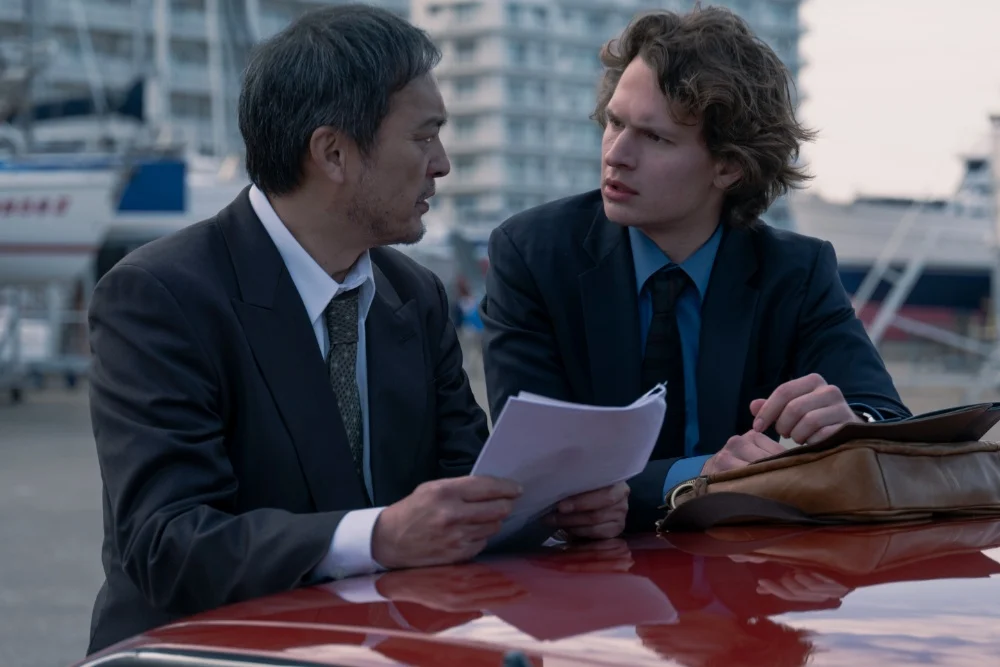
At the prestigious Tokyo International Film Festival (TIFF), a gathering of global production titans and Japanese government officials converged to address a critical question: Can Japan transform from a cinematic backdrop into a global production powerhouse?
During the Motion Picture Association (MPA) annual seminar, high-level producers and policy directors delivered a unified message to the Japanese government—the nation’s current incentive structure for international film and television production is, while well-intentioned, fundamentally flawed. As Tokyo prepares to consolidate its fragmented content-industry support under a single government entity by 2027, the stakes have never been higher for a country that is currently enjoying an unprecedented surge in global cultural interest.
The Core Conflict: Certainty vs. Subjectivity
The panel featured industry heavyweights including Alex Boden, the London-based producer of HBO Max’s Tokyo Vice, and Deb Richards, Netflix’s director of production policy. Their critique focused on the "IP360" incentive program, which currently offers a 50% rebate against Japanese spend. While the headline number is attractive, the experts argued that the program’s operational mechanics discourage the very investment it seeks to attract.
The Barrier of Minimum Spend
Boden, who spent nearly two years in Japan filming Tokyo Vice, highlighted a significant hurdle: the minimum spend requirement. Currently set at JPY 800 million (approximately $5.1 million), this threshold effectively bars the door to independent films and mid-sized co-productions, which typically operate on budgets between $1.5 million and $3 million.
The Problem with Opaque Approval
Perhaps more damaging than the financial thresholds is the approval process. Unlike the automatic, criteria-based systems found in competing territories, Japan utilizes a panel-based selection method.
"How does a producer know that they can count on the Japan incentive in advance?" Boden asked, noting that major projects like Martin Scorsese’s Silence, the hit series Pachinko, and the global phenomenon Shōgun all scouted extensively in Japan but ultimately moved production elsewhere due to the lack of financial certainty.
Deb Richards echoed these sentiments, labeling the process "opaque." She noted that applicants are often left guessing why they were rejected, forced to reverse-engineer criteria based on which projects eventually received funding. "You can have a lower incentive, that’s fine, as long as it’s certain," Richards asserted. "The criteria for the Japan incentive is simply not clear."
A Chronology of Policy: From Research to Reform
To understand the current frustration, one must look at the evolution of Japan’s incentive landscape over the last four years.
- 2020: The government launched a research program designed to test the viability of international location shoots, a program in which Tokyo Vice participated as a pilot project.
- 2023: The launch of the J-LOD (Japan Localization and Development) incentive, which marked a more concerted effort to attract foreign crews.
- Present Day: The implementation of IP360, which, while offering higher percentages, inherited the structural bottlenecks of its predecessors.
- 2027: The projected launch of a new, unified government body designed to bridge the gaps between the Ministry of Economy, Trade and Industry (METI), the Ministry of Internal Affairs and Communications, and the Agency for Cultural Affairs.
This trajectory reflects a government that is clearly attempting to modernize, yet, as former METI minister Amari Akira admitted, the country’s historical approach to content policy has been hindered by "siloed" thinking and slow execution.
Global Benchmarks: Learning from Australia and the UK
Paul Muller, the MPA’s Vice President of production policy for the Asia-Pacific region, offered a blueprint for reform by holding up Australia as a gold standard.
In Australia, international productions must spend at least AUD 20 million ($13.9 million) to qualify, but the system is transparent and predictable. Crucially, Australia mandates that 1% of a production’s budget be directed toward local training. Since this rule took effect in June 2023, the results have been transformative: AUD 20 million has been funneled directly into workforce development. Furthermore, the average cost of an hour of Australian television has surged from AUD 2 million to as much as AUD 6 million, indicating a rapid maturation of the domestic industry.
Muller emphasized that the "training levy" model—similar to the UK’s 0.5% ScreenSkills levy—could be the missing piece of the puzzle for Japan. By formalizing training, Japan would not only attract foreign crews but would actively upskill its domestic workforce, creating a sustainable ecosystem rather than a transient one.
Signs of Change: The "Value" of a Dynamic Industry
Despite the administrative friction, there is evidence that the tide is turning. Georgina Pope, Head of Production at Toho Tombo Pictures—a veteran of major international projects like A24’s Marty Supreme and Monarch: Legacy of Monsters—provided a more optimistic perspective from the ground level.
"I’m finding that Japan is really starting to realize the value of having a dynamic international film industry," Pope noted. She cited a recent breakthrough where her team successfully closed a major road in front of Tokyo City Hall for a large-scale car sequence—a feat that would have been considered nearly impossible a decade ago.
This sentiment is shared by Alex Boden, who described Japan as "the hottest country in the world right now." He warned, however, that the current momentum is fragile. "Everyone seems to be in Japan or visiting Japan tomorrow," Boden said. "If we let these years slip by without fixing the incentive, it will be a real missed opportunity."
The Official Response: The "Multiplication" Strategy
The Japanese government is not ignoring these concerns. Nakahara Hirohiko, director-general of the Cabinet Office’s Intellectual Property Strategy Promotion Secretariat, confirmed that a task force held its inaugural meeting on October 22.
The goal is ambitious: the administration of Prime Minister Takaichi Sanae has designated "Content" as one of 17 strategic fields for national growth. The roadmap is clear—the government aims to reach JPY 20 trillion ($127 billion) in overseas content sales by 2033.
Amari Akira, a key political architect of this vision, noted that while previous attempts to grow the industry were done through "addition," the current government is attempting to scale through "multiplication." This includes aggressive support for international co-productions and the implementation of robust anti-piracy measures to protect Japanese IP.
Implications: A Ten-Year Horizon
The implications of these potential reforms are massive. Japan currently stands at a crossroads where the global appetite for Japanese culture—from anime and gaming to live-action cinema—is at an all-time high.
If the government succeeds in breaking down ministerial silos and replacing subjective, opaque panels with transparent, automatic incentives, the economic impact could be staggering. As Paul Muller concluded, if the government delivers on these structural changes, the goal of reaching JPY 20 trillion in exports is not only feasible but "well within scope."
For now, the industry watches with bated breath. The talent is there, the locations are world-class, and the international demand is insatiable. Whether Japan can evolve its bureaucracy to match its creative potential remains the defining challenge of the next decade. As TIFF festival director Hisamatsu Takeo noted, Japan is increasingly the center of global attention—the task now is to ensure it remains there, not just as a location, but as a global hub for cinematic production.
