
The Grand Theft Auto 6 Phenomenon: How Rockstar’s Blockbuster is Costing the U.S. Economy Billions and Redefining Entertainment Marketing
By Global Gaming & Economic Desk
Published: November 2025
Main Facts
The cultural gravity of Grand Theft Auto 6 (GTA 6) has officially transcended the boundaries of the interactive entertainment industry, bleeding directly into the macroeconomic heartbeat of the United States. As millions of players prepare to dive back into the neon-soaked streets of Vice City, data analytics reveal an unprecedented exodus from the American workforce.
According to workforce management insights cited by Money.com from BambooHR, corporate human resources departments across the country experienced a dramatic, anomalous spike in paid time off (PTO) and vacation requests coinciding squarely with the game’s launch on November 19. When compared against historical time-off requests from previous years, organizations recorded a staggering 9% to 17% increase in leave applications for the third Thursday of November.
Economists are already sounding the alarm, projecting that the sudden surge in absenteeism will result in an estimated one billion-dollar loss in national economic productivity in the United States alone. While global financial impacts are still being tallied, analysts universally agree that GTA 6 is on track to shatter entertainment launch records, positioning itself as the largest, most economically disruptive product release in the history of interactive media.
Available initially for the PlayStation 5 and Xbox Series X|S, the title has triggered a cultural wave amplified by an aggressive, globe-spanning marketing blitz from developer Rockstar Games and parent company Take-Two Interactive. From multi-city takeovers and themed NBA games to fast-food partnerships and an upcoming proprietary alcoholic beverage line, GTA 6 is not just launching as a video game—it is arriving as an all-encompassing lifestyle brand.
Chronology of a Cultural Takeover
The path to the November 19 launch has been carefully engineered by Rockstar Games, rolling out across years of anticipation, strategic trailers, and immersive real-world activations that blurred the lines between fiction and reality.
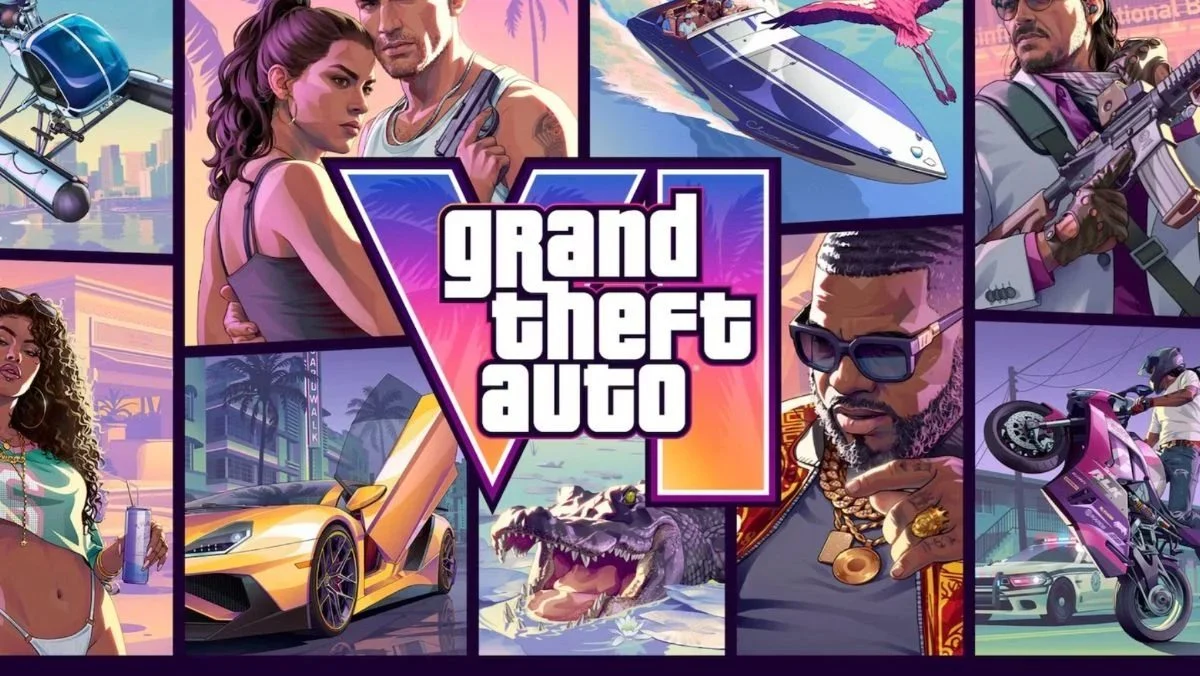
- Late 2023 – October 2026: Through a succession of record-breaking trailers and deliberate, highly publicized media drips, Rockstar steadily built white-hot anticipation. The trailers confirmed the return to modern-day Vice City and introduced protagonists Lucia and Jason, instantly cementing internet conversation dominance.
- Early November 2025 (The Global Takeover): Major metropolitan hubs—including Miami, New York, Los Angeles, and Paris—underwent a visual transformation. Buildings, billboards, and public transit were draped in unmistakable GTA 6 iconography. In Miami, fans were treated to real-world pop-ups of the franchise’s fictional fast-food chain, Burger Shot.
- Mid-November 2025 (The Beer Line Announcement): In an unexpected expansion of the franchise’s commercial footprint, Rockstar announced a trio of GTA 6-themed alcoholic beverages. Headlined by a brand-new label titled "No Mames Vice City," the sudden move into the beverage industry caught consumers and industry analysts entirely off guard, though specific distribution details remain heavily guarded.
- November 18, 2025 (The Vice City NBA Crossover): In a historic sports-marketing crossover, the Miami Heat hosted the Milwaukee Bucks at the Kaseya Center. The arena featured a completely custom, one-of-a-kind GTA 6-themed court, while players for the Miami Heat wore bespoke Vice City jerseys. Funded in part by a reported $975,000 marquee placement on top of the arena, the game served as the final promotional crescendo before launch day.
- November 19, 2025 (Launch Day): Grand Theft Auto 6 officially launches worldwide for PlayStation 5 and Xbox Series X|S, triggering massive digital queue lines, retail midnights, and nationwide workplace absenteeism. Rumors continue to circulate regarding an early 2026 port for personal computers (PC), though Rockstar Games has yet to issue a formal confirmation.
Supporting Data and Economic Impact
The intersection of video game releases and labor productivity has long been a subject of study for organizational economists, but GTA 6 represents an entirely new tier of disruption.
Data compiled by BambooHR and analyzed by financial journalists highlights clear statistical anomalies in workforce attendance for late November:
- 9% to 17% Spike: The surge in time-off requests for the third Thursday of November far exceeds seasonal norms, eclipsing traditional holiday-adjacent spikes outside of Thanksgiving week.
- $1 Billion Productivity Drop: Conservative economic models estimate that the sudden loss of labor hours, combined with reduced operational focus among remote workers who opted to "work" with a stream playing in the background, will extract roughly $1 billion from the U.S. GDP within launch week alone.
- Marketing Expenditure Highlights: Rockstar’s confidence is backed by capital. Notable expenditures include a nearly $1-million roof installation on the Miami Heat’s home arena, alongside international outdoor advertising campaigns across multiple continents.
Dr. Elena Vance, a labor economist specializing in consumer behavior shifts, notes that modern entertainment monoliths possess the pulling power traditionally reserved for major sporting events like the Super Bowl or global holidays. "We are no longer looking at niche hobbies," Vance explains. "Interactive media is the dominant cultural currency of the 21st century. When a product with the cultural weight of GTA 6 drops on a weekday, it acts as an economic pressure valve. People are simply prioritizing personal leisure over corporate output on a massive scale."

Official Responses and Industry Reactions
As the economic fallout and cultural saturation of GTA 6 dominate headlines, corporate responses have run the gamuts from amused resignation to preemptive policy adjustments.
Human resources departments in major urban tech and media hubs reported receiving unconventional excuses for leave ranging from "family medical emergencies involving Vice City" to blatantly transparent requests for "mental preparation for the Lucia and Jason saga." Rather than cracking down with strict disciplinary threats, many employers elected to lean into the cultural moment, offering flexible hours or warning employees to wrap up critical deliverables well ahead of the November 19 deadline.
Rockstar Games has maintained a disciplined, product-focused stance amid the hype. While executives have not publicly commented on the economic forecasts or the billion-dollar productivity losses, insiders close to the studio indicate that the overwhelming public response was precisely what the multi-year development cycle aimed to achieve.
Meanwhile, retail giants and platform holders—Sony and Microsoft—have reported record-breaking digital pre-loads, prompting network infrastructure providers to proactively manage bandwidth to prevent server outages. Internet service providers in several major markets braced for localized slowdowns as tens of millions of players attempted to download game files scaling well past historical storage footprints.
Implications for the Future of Entertainment and Labor
The launch of Grand Theft Auto 6 is much more than a commercial milestone for Rockstar Games; it serves as a watershed moment that will permanently alter how industries view the intersection of pop culture, marketing, and the global workforce.
1. The Evolution of Experiential Marketing
The rollout of GTA 6—spanning localized fast-food pop-ups, alcoholic beverage ventures, and bespoke NBA partnerships—establishes a new benchmark for multi-industry brand integration. Future entertainment properties will no longer rely merely on traditional trailers and digital banners; they will be expected to bleed into physical infrastructure, professional sports, and consumer goods.
2. Shifting Paradigms in Workplace Culture
The measurable billion-dollar dip in productivity forces corporate leadership to re-evaluate how they manage monumental cultural releases. As generations that grew up playing video games ascend into middle and upper management, the stigma of taking a day off for a digital release is rapidly dissolving. Future workforce planning may increasingly incorporate "event-based flexibility," acknowledging that rigid attendance policies during cultural phenomena are ultimately futile.
3. The Unprecedented Scale of Gaming Economics
With GTA 6 commanding budgets and marketing footprints that routinely dwarf Hollywood blockbusters, the financial stakes for AAA game development have reached astronomical heights. The success—or failure—of such projects carries systemic weight not just for parent companies like Take-Two Interactive, but for the hardware ecosystems, retail sectors, and advertising agencies tied to their orbits.
As the dust settles on launch week, the long-term economic and cultural reverberations of GTA 6 will be studied for years to come. For now, millions of Americans are safely locked away in their living rooms, exploring the sun-drenched avenues of Vice City—leaving economists and employers to ponder just how much a billion-dollar escape is truly worth.
