
The Theranos Enigma: How ‘You Can See Everything’ Became the Year’s Most Provocative Cinematic Event
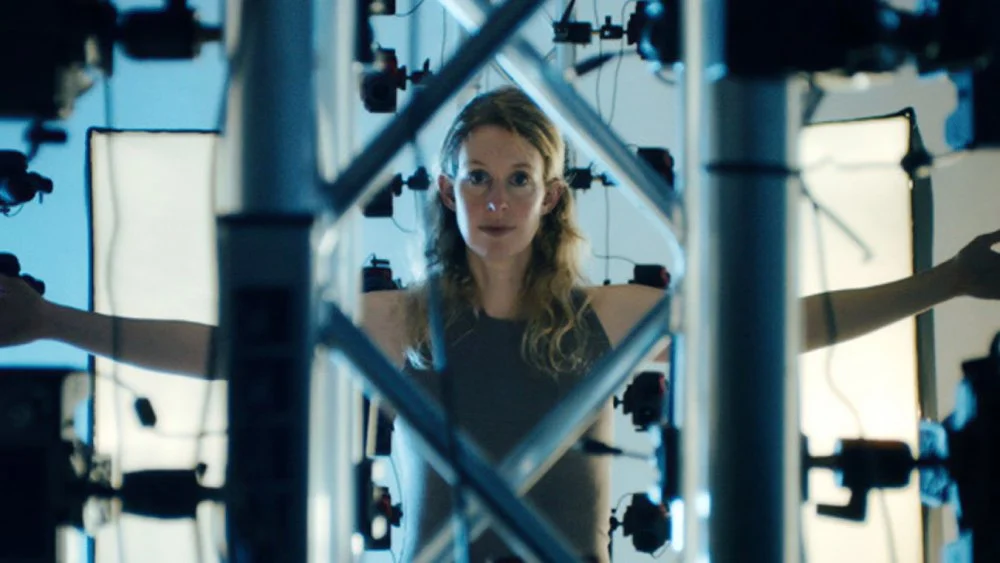
The documentary landscape has been fundamentally altered by the arrival of You Can See Everything, the haunting, genre-defying collaboration between visionary satirist Nathan Fielder and documentarian Lance Oppenheim. Centered on the final days of Elizabeth Holmes—the disgraced founder of the defunct health-tech giant Theranos—before she began her 11-year prison sentence, the film has transcended its niche subject matter to become a global cultural phenomenon.
Following a high-profile world premiere at the Telluride Film Festival and a subsequent buzz-heavy run at the New York Film Festival, the film is now embarking on an ambitious international tour. The latest milestone in this rollout is a high-profile berth at the 44th Torino Film Festival, where both Fielder and Oppenheim are expected to attend, signaling the film’s transition from a domestic curiosity to an international artistic touchstone.
A Chronology of a Cultural Phenomenon
The trajectory of You Can See Everything has been as rapid as it is unprecedented. The project, which was shrouded in secrecy during its development, first made waves at the Telluride Film Festival. Critics were immediately struck by the directors’ unique approach: rather than a traditional “talking head” exposé, Fielder and Oppenheim opted for an intimate, deeply stylized exploration of Holmes’ psyche during her final month of freedom.
Following its U.S. debut, the film moved through the prestigious autumn festival circuit, acting as a centerpiece at the New York Film Festival. This curated exposure served as the perfect springboard for its theatrical release. In the United States, the film defied industry expectations, opening to a staggering $15.6 million. Even more remarkably, it maintained its momentum with a $19.5 million second weekend—a rare feat for a documentary, cementing its status as one of the most commercially successful non-fiction films in recent history.
The film is now transitioning to the overseas festival circuit. Its itinerary includes high-profile stops at Amsterdam’s International Documentary Film Festival (IDFA) and the Stockholm International Film Festival in mid-November. The tour will culminate with its Italian premiere at the Torino Film Festival, taking place from November 24 to December 2, 2026.
The Torino Connection and Official Acclaim
The inclusion of You Can See Everything in the Torino Film Festival lineup is a major coup for artistic director Giulio Base. Now in his third year at the helm, Base has sought to elevate the festival’s profile by securing films that challenge the traditional boundaries of storytelling.
In an official statement regarding the selection, Base was effusive in his praise, framing the documentary as a watershed moment for contemporary cinema. “There are films that make me fall in love with cinema all over again and remind me why I’ve dedicated so much of my life to it,” Base remarked. “You Can See Everything is one of them: a true masterpiece, bold and unsettling, that turns the boundary between truth and mise-en-scène into a dizzying visual adventure.”
Base’s endorsement highlights the specific allure of the film: it does not merely document the downfall of a corporate titan; it interrogates the nature of reality itself. By blurring the lines between objective truth and curated performance—a hallmark of Fielder’s previous work in The Rehearsal—the film invites audiences to question what they are actually witnessing when they look at Elizabeth Holmes.
Global Distribution and the "A24 Effect"
The film’s international footprint is being managed through a complex web of high-profile distribution deals. In Italy, the film has been secured by I Wonder Pictures, led by Andrea Romeo. Known for its sophisticated catalog and close ties to the powerhouse studio A24, I Wonder Pictures is positioned to handle the film’s release with the gravity it demands, though an official Italian release date has yet to be finalized.
The strategy for the U.K. and Ireland is more immediate; A24 is self-releasing the film in those territories on November 20. This move reflects A24’s confidence in the film’s ability to attract a broad, crossover audience.
For the remainder of the globe, Sony Pictures Worldwide has acquired the distribution rights. The reach of this deal is expansive, covering Latin America, Scandinavia, South Africa, Germany, Austria, Greece, the Middle East, Israel, South Korea, and Southeast Asia. While specific release dates for these regions remain forthcoming, the acquisition suggests that the industry expects the film’s success to be a global, rather than merely domestic, phenomenon.
Implications: The New Era of Non-Fiction
The success of You Can See Everything carries significant implications for the documentary genre. Traditionally, documentaries focused on public figures like Holmes have leaned toward investigative journalism or procedural recaps. Fielder and Oppenheim, however, have opted for a more psychological, experiential approach.
By prioritizing the "dizzying visual adventure" mentioned by Giulio Base, the film has demonstrated that audiences are hungry for non-fiction that feels as crafted and deliberate as prestige narrative fiction. The $35 million-plus earned in the U.S. alone within two weeks proves that the documentary format is no longer confined to educational or niche audiences. It is a commercial juggernaut capable of dominating the cultural conversation.
Furthermore, the film’s focus on the final 30 days of Holmes’ life—a period of intense legal and personal isolation—offers a study on human fragility that resonates deeply in our post-truth era. The "buzzy" nature of the film, as described by early reviews, stems from the audience’s inability to discern where the "performance" of Elizabeth Holmes ends and her true self begins.
Looking Ahead: The Future of the Festival Circuit
As the film industry looks toward the late-2026 festival season, all eyes are on Turin. The 44th edition of the Torino Film Festival is expected to provide a platform for further analysis of the film’s technical achievements. With the full lineup scheduled to be announced this coming Thursday, the inclusion of You Can See Everything sets a high bar for the quality of programming that festival attendees can expect.
For those following the saga of Theranos, the documentary serves as a coda to a story that has already been told through books, podcasts, and miniseries. Yet, by choosing to focus on the liminal space of the final month before incarceration, Fielder and Oppenheim have managed to breathe new, albeit unsettling, life into the narrative.
Whether the film will maintain its momentum through the international awards season remains to be seen. However, given its performance at the box office and the high praise from festival directors across Europe, You Can See Everything is already cemented as a landmark work. It represents a new, experimental frontier for documentary filmmaking—one where the camera is not just a witness, but an active participant in the distortion of truth.
As the film makes its way from the streets of Amsterdam to the theaters of Seoul and the cinemas of Rome, one thing is certain: the world is still watching Elizabeth Holmes, and thanks to Fielder and Oppenheim, we are seeing her more clearly, and more disturbingly, than ever before.
