
When the Final Frontier Meets a Galaxy Far, Far Away: Sci-Fi Author Andy Weir’s Wild Star Wars and Star Trek Crossover Pitch
Introduction and Main Facts
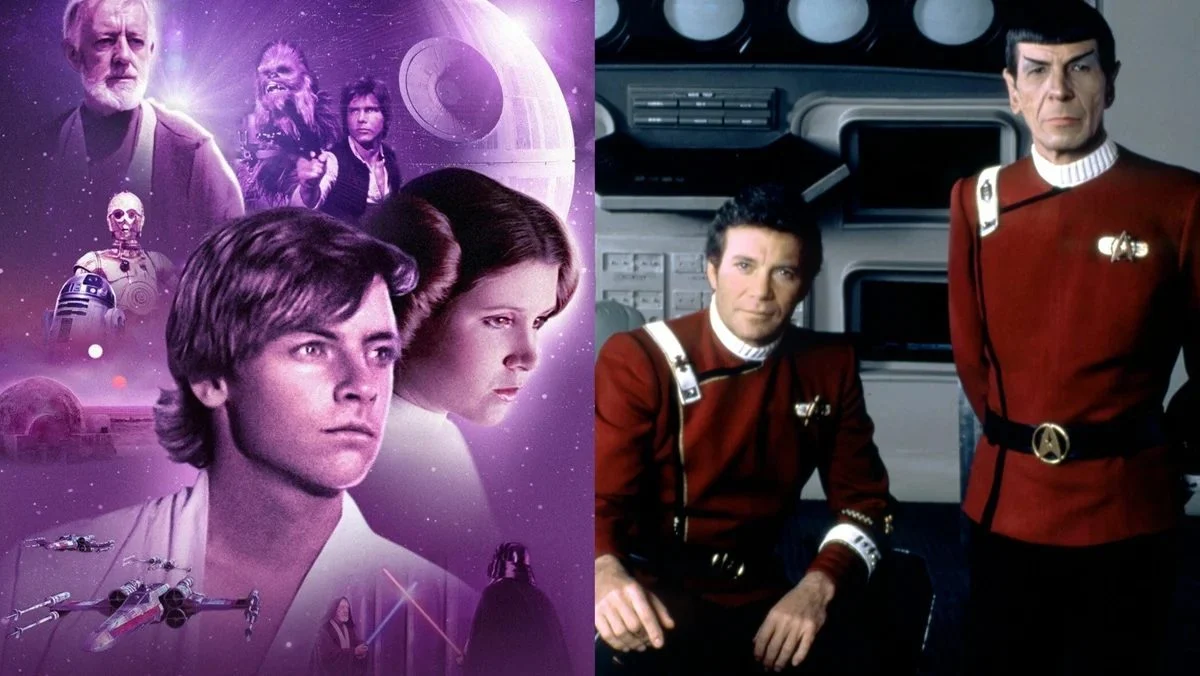
Pop culture history is built on the foundation of the unthinkable becoming reality. Over the decades, audiences have cheered as Godzilla clashed with Kong, Freddy Krueger traded blows with Jason Voorhees, and the heroes of Marvel and DC universes shared panel space. Yet, despite commanding two of the most lucrative and enduring fanbases in the history of science fiction, Star Wars and Star Trek have never officially crossed paths.
Aside from sharing the word “star” at the front of their titles, their universes appear fundamentally incompatible. Star Wars is a mythic space fantasy driven by space wizards, laser swords, and a mystical energy field known as the Force, all set in a galaxy operating under a quasi-feudal system "a long time ago." Conversely, Star Trek is rooted in hard-ish science fiction, futuristic optimism, interstellar diplomacy, Starfleet regulations, and the Prime Directive, set in a recognizable future timeline of Earth.
However, renowned science fiction author Andy Weir—best known for penning hard-science bestsellers like The Martian and Project Hail Mary—has given the concept of a crossover deep thought. During a recent interview with Inverse, Weir laid out a remarkably detailed, delightfully chaotic pitch that bridges the climaxes of two monumental films: Star Wars: Episode IV – A New Hope (1977) and Star Trek II: The Wrath of Khan (1982).
According to Weir’s narrative blueprint, a localized dimensional collapse fuses the destruction of the first Death Star with the detonation of the Genesis Device, creating a stable wormhole that intertwines the fates of the USS Enterprise, Luke Skywalker, and Darth Vader.
Chronology of the Pitch: How Two Universes Collide
To understand Weir’s premise, one must examine the specific turning points he has chosen from both cinematic milestones. The convergence begins at the exact historical moments that define the climaxes of A New Hope and The Wrath of Khan.
Step 1: The Yavin/Mutara Wormhole
In Star Wars, the Rebel Alliance achieves a miraculous victory when Luke Skywalker destroys the Galactic Empire’s Death Star above the gas giant Yavin Prime. Simultaneously, in the Star Trek universe, the genetically engineered tyrant Khan Noonien Singh triggers the catastrophic Genesis Device inside the Mutara Nebula, resulting in the creation of a protoplanetary nebula and immense spatial distortion.
Weir posits that the sheer energy unleashed by both events simultaneously creates a tear in the fabric of space-time, forging the "Yavin/Mutara wormhole." This bridge connects the two previously isolated continuums, allowing matter, energy, and starships to pass between them.
Step 2: The Enterprise Encounters Darth Vader
As the USS Enterprise investigates the anomaly on the Star Trek side of the wormhole, it detects scattered debris and escaping starfighters from the Battle of Yavin. Among the wreckage floating through space are Luke Skywalker and his lifelong nemesis, Darth Vader, both piloting their respective ships.
The Enterprise intercepts the dark lord of the Sith, bringing his damaged TIE Advanced x1 fighter into the ship’s bay. Upon beaming Vader aboard, the crew is immediately horrified by his condition. Recognizing the extensive, brutal cybernetic integrations keeping the Sith Lord alive, Captain James T. Kirk hands Vader over to ship’s surgeon Dr. Leonard "Bones" McCoy.
Step 3: The Redemption of Anakin Skywalker
In Starfleet sickbay, Dr. McCoy applies 23rd-century medical technology to Vader’s mutilated body. Using advanced Federation cybernetics and cellular regeneration techniques, McCoy purges the mechanical torture devices engineered by Emperor Palpatine and heals Vader’s respiratory system.
The result of this medical intervention is profound: the cybernetic shackles are removed, and Darth Vader ceases to exist. In his place, Anakin Skywalker is restored to life, free from the dark side’s corruption.
Step 4: Spock’s Force Ghost and Sulu’s Awakening
Meanwhile, the USS Enterprise crosses through the wormhole into the Star Wars galaxy. Because this crossover hinges on the conclusion of The Wrath of Khan, Captain Kirk and his crew must grapple with the devastating loss of Mr. Spock, who famously sacrifices himself to save the ship earlier in the film.
However, entering the mystical, Force-laden environment of the Star Wars universe triggers an unexpected metaphysical reaction. Spock’s consciousness does not simply fade; instead, the Vulcan science officer ascends, manifesting as a fully realized Force ghost.
At the same time, exposure to the ambient energy of the Star Wars galaxy unlocks latent psychological and physiological changes in the Enterprise crew. Most notably, helmsman Hikaru Sulu discovers that he possesses inherent Jedi abilities, which spontaneously manifest once he crosses the galactic threshold.
Supporting Data: The Mechanics of Crossovers
While Weir’s pitch sounds like fever-dream fanfiction, looking at the history of multimedia crossovers reveals that such outlandish concepts are commercially and creatively viable. Major media conglomerates have frequently partnered to produce crossover comic books and novels, proving that fans have an insatiable appetite for the impossible.
| Crossover Title | Participating Franchises | Medium | Reception |
|---|---|---|---|
| Star Trek / X-Men | Paramount & Marvel | Comic Book | Highly praised for character interactions |
| Batman/Teenage Mutant Ninja Turtles | DC Comics & Nickelodeon | Comic Book & Film Adaptation | Critical and commercial hit |
| Star Trek / Planet of the Apes | IDW Publishing & 20th Century Fox | Comic Book | Cult favorite among pulp sci-fi fans |
| Aliens vs. Predator | 20th Century Fox | Comic Book & Feature Film | Global multimedia franchise |
The data shows that when intellectual properties of this magnitude collide, the resulting narratives do not need to alter official canon to be successful. Instead, they function as self-contained "Elseworlds" or "What If?" scenarios that allow creators to play sandbox games with legendary characters. Weir’s pitch fits squarely into this tradition of playful, high-concept experimentation.
Official Responses and Industry Context
Neither Lucasfilm (owned by The Walt Disney Company) nor Paramount Pictures (home of the Star Trek franchise) has formally responded to Weir’s viral interview statements. Given the strict corporate guardianship both studios maintain over their respective intellectual properties, an official film or television adaptation remains virtually impossible.
Corporate synergies rarely stretch to cross-studio collaborations unless extraordinary financial incentives align—such as the historic 1988 live-action/animation hybrid Who Framed Roger Rabbit, which famously united Disney’s Mickey Mouse and Warner Bros.’ Bugs Bunny on screen.
However, creators and comic book publishers have historically shown a greater appetite for crossing institutional boundaries. Major milestones in crossover history demonstrate that legal hurdles, while daunting, can be cleared when publishers recognize the marketing potential.
Andy Weir’s comments highlight a broader cultural shift: even master craftsmen of hard science fiction, renowned for meticulous technical accuracy in works like The Martian, maintain a deep affection for the absurd, gleeful joy of classic crossover fanfiction.
Implications for Fandom and the Future of Media
The internet reaction to Weir’s pitch—championed heavily by pop culture outlets like Nerdist—raises interesting questions about how franchises engage with their audiences in the modern era.
1. The Power of "What If" Storytelling
Modern fandom thrives on speculative fiction. Platforms like YouTube, Reddit, and TikTok are saturated with AI-generated trailers, fan-made scripts, and theoretical matchups between fictional characters. Weir’s pitch taps directly into this zeitgeist, proving that the boundary between professional creators and passionate fans is increasingly porous.
2. The Comic Book Medium as a Safety Valve
As Nerdist pointed out in its critical analysis of the pitch, bringing Weir’s concept to life as a live-action film or prestige television series would likely be a mistake. The tonal whiplash of merging gritty Imperial oppression with optimistic Starfleet diplomacy would alienate purists on both sides.
However, a prestige, one-off comic book miniseries would serve as the ideal medium. Freed from the multi-billion-dollar pressure of cinematic canon, a comic book could lean fully into the campy, awe-inspiring absurdity of the premise.
Industry observers have frequently noted that legendary comic artists like Alex Ross—known for his hyper-realistic, painterly style applied to classic comic icons—would likely jump at the chance to paint Darth Vader standing alongside Captain Kirk on the bridge of the Enterprise.
Conclusion
Andy Weir may have written some of the defining hard-science thrillers of the 21st century, but his heart clearly beats with the rhythm of classic space opera. While we may never see Kirk hand a lightsaber to Spock’s Force ghost, or watch Dr. McCoy cure the dark side with 23rd-century medicine, the thought experiment serves as a reminder of why we fell in love with science fiction in the first place: to imagine worlds without limits, where anything, no matter how wild, is possible.
