
Unleashing the Beast: Inside Jacob Rainer’s High-Concept Action-Horror Spec Script, Wildman
Main Facts
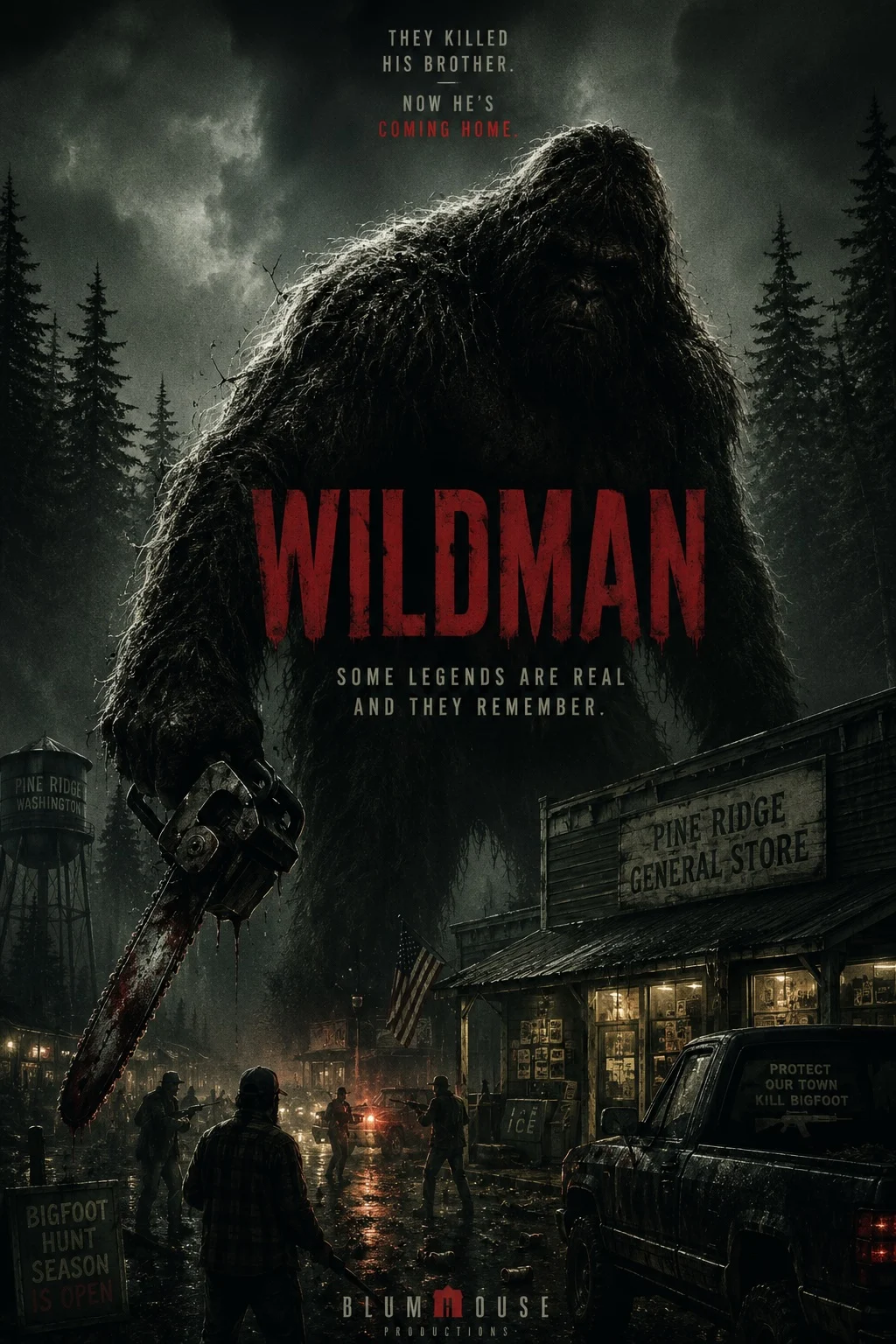
The screenwriting landscape is no stranger to eccentric pitches, but few have captured the collective imagination quite like Wildman, a 121-page action-horror spec script written by Jacob Rainer. Originating from the grueling six-month incubator known as the Blood & Ink Horror Screenplay Contest, Wildman was forged from a logline that instantly set industry forums ablaze:
When his brother is gunned down by a murderous gang, reclusive Joel must leave his hidden mountain home to get revenge. His quest for justice sets him on a collision course with a homicidal cop, stone-cold psychopaths, and a bloodthirsty militia, but Joel won’t stop until he’s torn them all limb from limb. Also, Joel is a Bigfoot.
The script has officially emerged as a standout entry in the ongoing Blood & Ink competition review cycle. Blending high-octane B-movie carnage with creature-feature mythos, Rainer’s script delivers unforgettable imagery—most notably, a chainsaw-wielding cryptozoological avenger laying waste to an entire bar full of backwoods rednecks. While critics point out structural bloat and pacing issues common to overlong thrillers, Wildman has cemented its place as a wildly audacious piece of genre fiction that showcases the power of distinct authorial voice in an era dominated by formulaic storytelling.
Chronology of a Spec Sensation
The journey of Wildman from a wild internet pitch to a top-tier contender in the Blood & Ink contest illustrates the unique mechanics of modern crowdsourced screenwriting incubators.
The Pitch Phase
Six months prior to the review, the Blood & Ink contest opened its doors through a rigorous vetting process. Writers were required to pitch their concepts directly in online comment threads, earning either an immediate greenlight from contest organizers or a threshold of at least 15 upvotes from the community. Rainer’s explosive Bigfoot-revenge logline cleared this hurdle with ease, instantly establishing itself as one of the splashiest, most-discussed concepts of the four-week pitch window.
The Writing Trench
Selected alongside roughly 90 other writers, Rainer was given a strict six-month window to draft, refine, and complete the screenplay. The resulting 121-page manuscript immediately polarized and captivated readers upon delivery, standing out for its unapologetic commitment to pure, unadulterated genre thrills.
The Critical Assessment
As contest administrators began reading through the submissions to curate a definitive Top 10 list, Wildman was selected for an early, in-depth public review. While praised for its bravura action sequences and fearless creative choices, reviewers noted that the narrative’s length presented a significant hurdle, landing it squarely in the "mixed bag" category despite its undeniably high entertainment value.
Supporting Data and Narrative Breakdown
To understand why Wildman has generated such intense debate among screenwriting analysts, one must examine its structural anatomy and narrative beats.
The Premise and Inciting Incident
Set deep in the rugged, isolated forests of Washington State, the story introduces viewers to a quiet, level-headed local sheriff named Cale Dyer, who acts as a rare voice of reason in a community otherwise consumed by bloodlust and local folklore. The local ecosystem is infested with hyper-aggressive elements: rogue militiamen, bitter war veterans, and a predatory clique of locals.
Among them, a man named Luke acquires a rare, illicit "Bigfoot call"—a mechanical knocking device designed to lure the creatures out of hiding. Pressured by his peers, Luke tests the device in the deep woods.
Unbeknownst to them, the forest is home to a secluded, utopian enclave shared by two Bigfoot brothers: Joel and the younger, world-curious Ethan. Lured by the unnatural knocking sound into an open clearing, Ethan is ruthlessly gunned down by camouflaged rednecks. Joel arrives moments too late, witnessing his brother’s murder and locking faces with the perpetrators before launching a brutal, single-minded campaign of vengeance.
The Escalation of Violence
Following the initial ambush, Joel is wounded and temporarily sheltered by an elderly farming couple. When the militia tracks him to the farm, Joel slips away, pivots his strategy, and takes the fight directly to the town. Securing a chainsaw from the farm, he initiates a legendary sequence: a chainsaw-wielding Bigfoot systematically obliterating a local bar filled with hostile men.
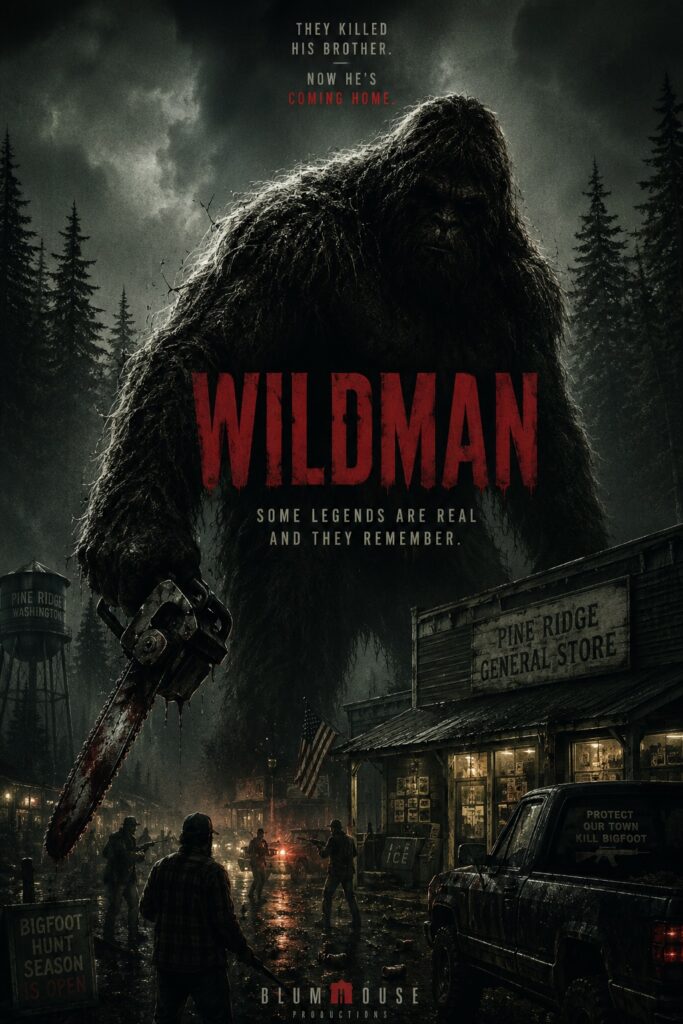
The narrative culminates in a desperate race against time as Joel fights through wave after wave of armed opposition to retrieve his fallen brother’s body.
Page Count and Pacing Realities
At 121 pages, Wildman pushes the boundaries of conventional thriller pacing. Script analysts have consistently flagged the length as the script’s primary vulnerability. In thriller writing, momentum is paramount; every superfluous page increases the risk of reader fatigue. While Rainer successfully delivers high-concept set pieces, the bloated first and second acts weigh down what should theoretically be a lean, lightning-fast revenge narrative.
Official Responses and Critical Analysis
Reviewers and industry observers have offered a nuanced evaluation of Rainer’s script, balancing heavy praise for its ambition against constructive warnings regarding its execution.
The Triumph of "Movie Scenes"
Despite structural criticisms, critics agree that Wildman possesses what industry veterans call "movie scenes"—moments so visually arresting and inherently cinematic that producers can instantly visualize them playing out before a packed theater audience. Drawing comparisons to classic screenwriting wisdom popularized by Blake Snyder’s Save the Cat!—where unexpected, high-concept visual choices define a project’s marketability—the general store massacre and the chainsaw bar rampage elevate the script far above standard creature-feature fare.
The Critique of Overcomplication
The primary critique leveled against Wildman is its narrative complexity. Analysts argue that a Bigfoot revenge movie should operate with the frictionless efficiency of a John Wick film. By introducing an expansive roster of supporting characters, intricate town politics, and an overly padded origin-story preamble, Rainer risks diluting the core emotional engine of the piece: a primal, unstoppable force seeking retribution.
The Power of Authorial Personality
Beyond the mechanics of plot, the review highlights a profound lesson regarding the evolution of writing in the modern era. The manuscript serves as a case study in authorial personality.
When describing action, setting, or character dynamics, writers have infinite linguistic choices. Rainer’s prose is infused with a distinct, passionate voice that signals genuine engagement with the material. Stripping away this personality results in clinical, purely logical prose—a pitfall that threatens modern writers.
Implications: The Future of Spec Writing in the Age of AI
The reception of Wildman carries broad implications for aspiring screenwriters navigating an increasingly automated and homogenized literary marketplace.
The AI Threat to Plain Prose
As generative artificial intelligence tools become more sophisticated, the market is increasingly flooded with screenplays written in clean, grammatically correct, yet utterly soulless prose. AI can efficiently construct logical scene descriptions, but it fundamentally lacks a lived-in, unique human voice. Wildman demonstrates that injecting authentic personality and stylistic flair into action descriptions acts as a vital differentiator, proving to readers and producers that a human creator cares deeply about the material on the page.
Strategic Spec Scripting
Furthermore, the critique of Wildman sheds light on the stark differences between writing to sell versus writing for general assignment work or representation. For a spec script to break through the "one-in-a-million" barrier and achieve true viral buzz, it must lean aggressively into its most unique conceptual elements.
For Rainer, the ultimate prescription involves radical trimming: cutting the page count down to a lean 85–90 pages, stripping away unnecessary dialogue, and maintaining an unrelenting, single-minded focus on the protagonist’s perspective.
Final Verdict
Despite requiring targeted structural rewrites, Wildman has firmly secured its spot in the Blood & Ink Top 10. By daring to cross lines that other writers fear to touch—embracing uninhibited genre excess and visceral bloodshed—Jacob Rainer has crafted a memorable spec script that proves fortune favors the bold, provided they have the discipline to keep their storytelling razor-sharp.
