
The Rogue Gambit: How Inde Navarrette Used Subtle Subtext to Tease Her MCU Casting
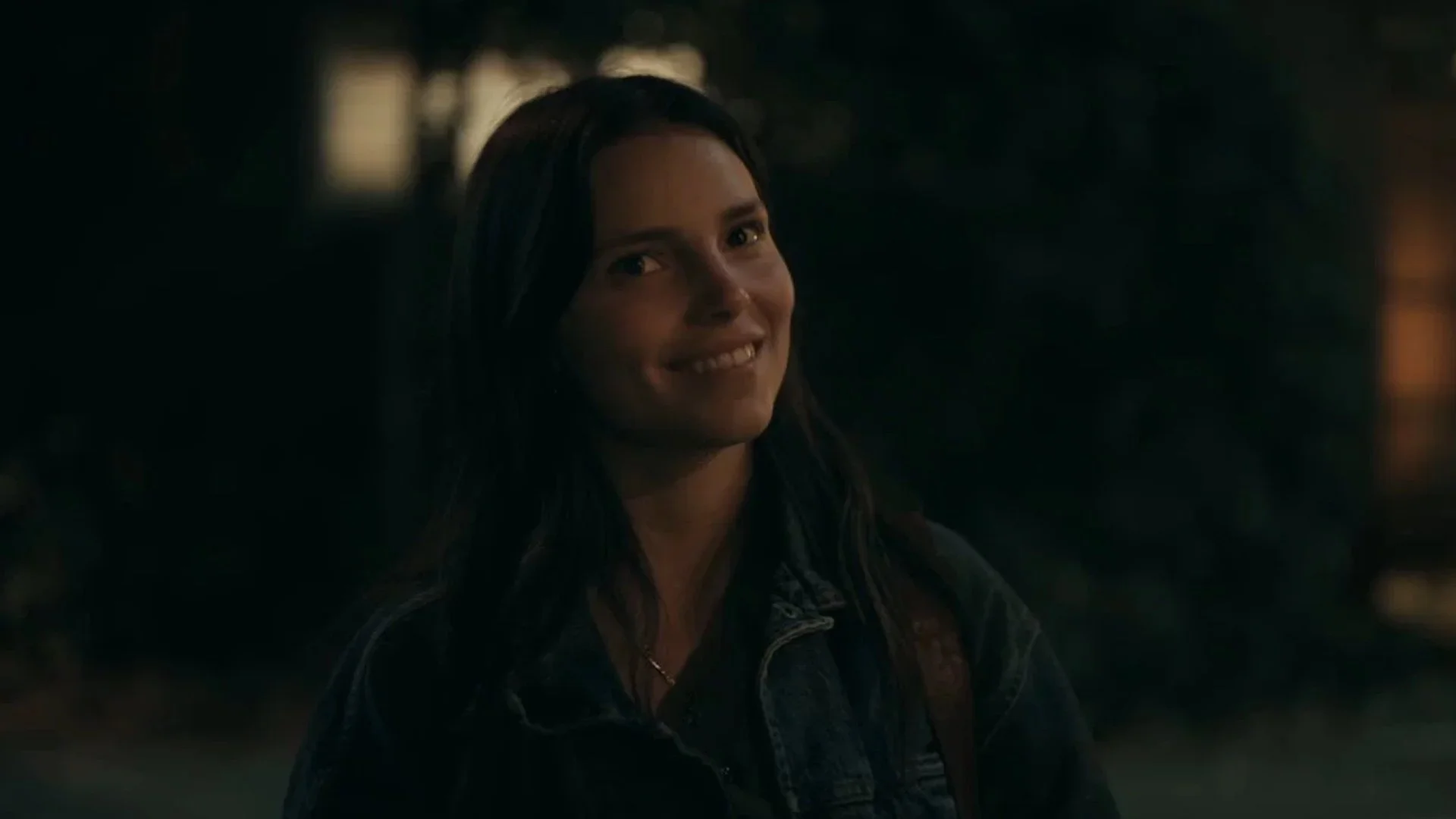
In the high-stakes world of Marvel Cinematic Universe (MCU) casting, secrecy is the gold standard. Actors are often bound by ironclad non-disclosure agreements, leading to a game of cat-and-mouse between talent and the fervent, eagle-eyed fanbase. Recent casting announcements for Marvel Studios’ upcoming X-Men reboot have proven that sometimes, the truth is hidden in plain sight. Obsession star Inde Navarrette, officially tapped to portray the iconic mutant Rogue, recently revealed that she had been actively signaling her role to audiences months before the D23 announcement—only for the hints to vanish into the ether of internet speculation.
The Chronology of a Casting Secret
The seeds of the reveal were planted long before the official unveiling at D23. In July, rumors began to swirl regarding the upcoming X-Men film, which is being spearheaded by director Jake Schreier. Navarrette, who had been vocal about her professional trajectory, confirmed during a press junket that she had held meetings with the director.
For the average observer, this was merely a confirmation of interest. However, for the hardcore comic book community, the search for clues began in earnest. During an earlier interview, when asked about which characters she found compelling within the X-Men mythos, Navarrette remarked, "Mystique has always been super cool."
At the time, the comment was interpreted as a straightforward expression of fan appreciation or perhaps a wish-list casting choice. Fans speculated that the actress might be aiming for the role of the enigmatic, blue-skinned shapeshifter. It was a logical deduction—a popular character, a high-profile role, and a direct quote from the actress. However, when the lights dimmed at D23 and the cast list was finally projected, the surprise was palpable: Navarrette was not playing Mystique. She was revealed as Rogue.
Decoding the Clue: The Navarrette-Mystique Connection
In a subsequent interview with Collider, Navarrette clarified that her earlier comments were not a redirection tactic designed to mislead, but rather a calculated attempt to engage with the most die-hard elements of the X-Men fandom.
"I did know, but that wasn’t a lie," Navarrette explained, addressing the apparent contradiction between her words and her final casting. "The way that character is, it’s so complicated, and it’s so nuanced when you have the originality of the story. Her and Rogue are also very similar, you know what I mean, if you’ve read the comics. So I was not lying. I was dropping hints, and I was like, ‘If anybody’s picking up what I’m putting down?’, but nobody did."
The "hint" relies on a deep-cut understanding of X-Men lore. In the source material, Mystique (Raven Darkhölme) serves as the adoptive mother to Rogue (Anna Marie). Their relationship is one of the most volatile and defining dynamics in the franchise’s history, characterized by manipulation, a desperate search for belonging, and deep-seated trauma. Navarrette’s logic was that by highlighting the "cool" factor of the mother-figure, she was signaling her proximity to the character of the daughter. To a reader of the Chris Claremont-era Uncanny X-Men, the mention of Mystique is inextricably linked to the narrative arc of Rogue.
Supporting Data: Examining the Mutant Dynamic
To understand why Navarrette’s hint was as brilliant as it was overlooked, one must examine the thematic architecture of these two characters.
Thematic Parallels
Both Rogue and Mystique exist in a moral gray area. Mystique is defined by her ability to assume any identity, a physical manifestation of her internal lack of self-identity. Rogue is defined by her inability to touch others without absorbing their consciousness, a physical manifestation of her isolation. Both characters are constantly navigating the boundaries of "self" versus "other."
The Power Set Connection
The technical link between the two is equally compelling. Mystique’s power is a mimicry of form; Rogue’s power is a mimicry of essence (powers, memories, and personality). In many comic runs, Rogue’s struggle to maintain her own identity after absorbing others mirrors the existential dread that Mystique faces while maintaining her various disguises. By bringing up Mystique, Navarrette was highlighting the psychological landscape that she would eventually inhabit as Rogue.
The Lore of the "Mother-Daughter" Conflict
The MCU has historically thrived on complex family dynamics—from the internal strife of the Odinson family in Thor to the fractured brotherhood in Black Panther. By leaning into the history of Mystique as an antagonist-turned-guardian, the X-Men reboot has an opportunity to ground the character of Rogue in a deeply personal conflict that transcends the usual superhero tropes of "saving the world."
Official Responses and Industry Context
The casting of the X-Men reboot has been a focal point of industry discourse since Disney’s acquisition of 21st Century Fox. Director Jake Schreier, known for his ability to blend character-driven drama with genre elements, has made it clear that this new iteration of the X-Men will focus heavily on interpersonal relationships.
"I’m always looking to cast people who can bring a sense of history to a role," Schreier noted in previous press discussions. Navarrette’s casting suggests that the production is prioritizing actors who understand the source material’s subtext. Her ability to navigate the press cycle while maintaining the secret—and actually dropping a breadcrumb trail—demonstrates a level of commitment to the lore that the studio likely views as a major asset.
Implications for the MCU’s X-Men Reboot
The inclusion of Navarrette alongside a star-studded ensemble cast—which includes Sadie Sink, Kit Connor, Adam Driver, and Christopher Abbott—indicates that Marvel is aiming for a grounded, character-focused reboot.
A Departure from the Past
The previous iterations of the X-Men franchise (produced by Fox) struggled at times to balance the sheer volume of characters. By focusing on the specific relationship dynamics—such as the potential inclusion of the Mystique-Rogue backstory—Marvel Studios can ensure that each character has a clear, understandable, and emotional arc.
The "Rogue" Narrative Arc
With the MCU’s history of long-form storytelling, we can expect Rogue’s evolution to be a multi-film process. Will we see her start as a member of the Brotherhood of Evil Mutants under Mystique’s tutelage, as she did in the comics? If so, Navarrette’s public "hint" takes on even more significance. It suggests that the actress isn’t just playing a character; she is preparing for a journey that begins with a dark mentorship.
The 2028 Horizon
With the film scheduled for release on May 5, 2028, the production team has significant lead time to develop the internal logic of this universe. The fact that an actor of Navarrette’s caliber was already discussing the nuances of the characters months before the cast announcement implies that the scripts are likely deep in development, with a heavy emphasis on character history.
Conclusion: A Lesson in Fandom
Inde Navarrette’s "Rogue Gambit" serves as a reminder that in the age of the MCU, the audience is an active participant in the narrative. While her hint went largely unnoticed, it highlights the importance of the comic book source material in the modern blockbuster landscape.
As we look toward the 2028 release of X-Men, the challenge for the audience will be to look past the surface-level announcements. Navarrette has proven that the truth might be sitting in an interview quote, a social media post, or a passing comment about a favorite character. As for Rogue, the stage is set for a performance that will surely draw on the complexity of her origins—a performance that, in hindsight, the actress was ready to discuss long before the cameras started rolling.
The era of the mutant in the MCU has officially begun, and if the casting process is any indication, it will be a deep, intricate, and meticulously planned exploration of what it means to be an outsider. Fans would do well to pay attention to the subtext—because, as Navarrette discovered, the best clues are the ones that sound like simple, honest opinions.
