
The Crucible of Collaboration: The High-Stakes Chaos Behind ‘Who’s Afraid of Virginia Woolf?’
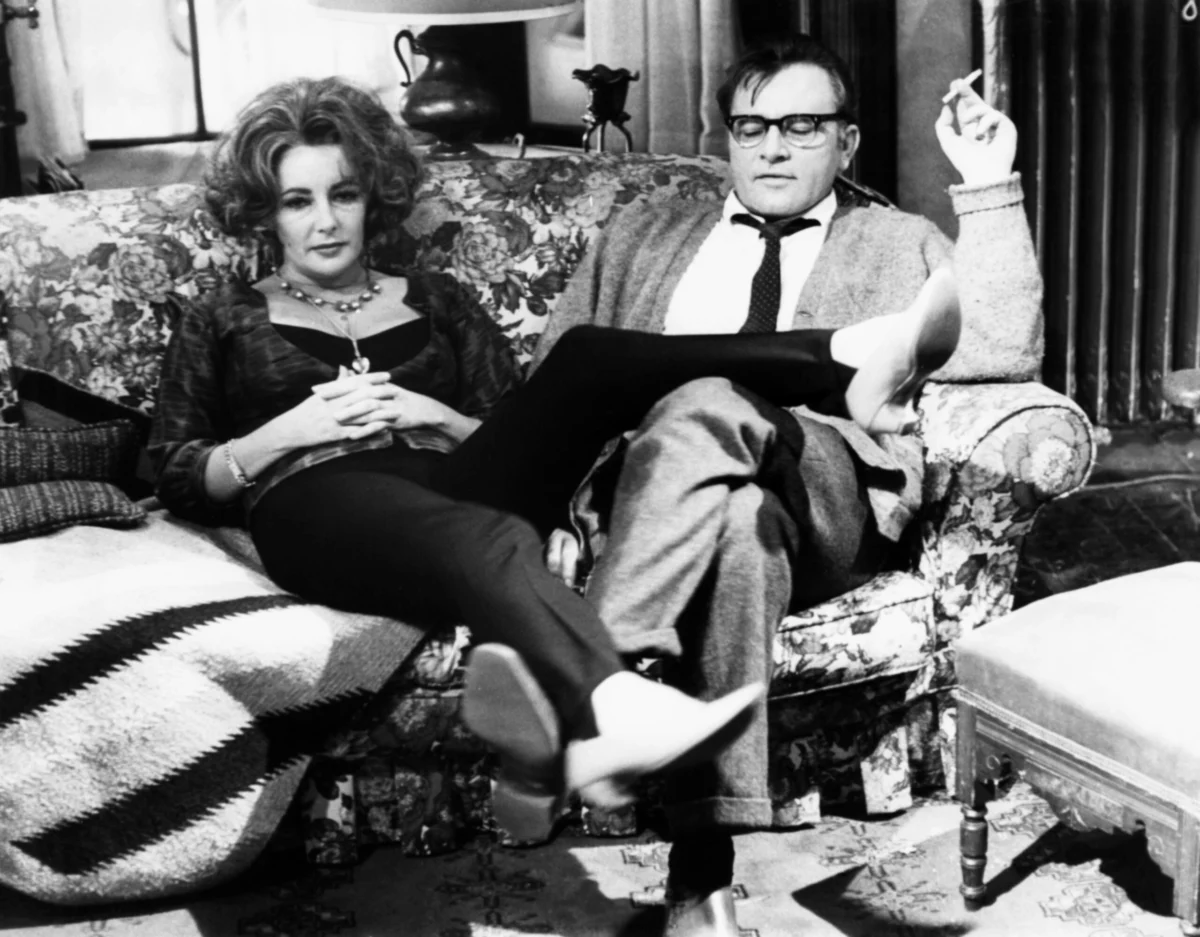
In the annals of Hollywood history, few directorial debuts have carried as much weight—or generated as much vitriol—as Mike Nichols’ 1966 adaptation of Edward Albee’s Who’s Afraid of Virginia Woolf?. It was a project defined by existential risk: for Elizabeth Taylor, it was a baptism by fire to prove her dramatic mettle; for producer Ernest Lehman, a pivot from legendary screenwriter to fledgling producer; and for Nichols, a make-or-break transition from the intimacy of Broadway to the monolithic machinery of a major studio.
The film, which would ultimately become a landmark in American cinema, was born from a toxic, high-pressure environment that nearly imploded before a single frame reached the theaters. Newly unearthed details from Philip Gefter’s book, Cocktails with George and Martha: Movies, Marriage, and the Making of "Who’s Afraid of Virginia Woolf?", pull back the curtain on the power struggles, ego clashes, and near-catastrophic administrative failures that nearly cost Nichols his career.
The High Stakes: A Trio Under Pressure
The film’s production was a study in professional vulnerability. Elizabeth Taylor, already a global icon, faced the grueling task of portraying the middle-aged, venomous Martha—a role so demanding it required a departure from her established screen persona. For Ernest Lehman, whose credits included the architectural precision of North by Northwest and Sweet Smell of Success, the film was a gamble on his ability to transition from the typewriter to the producer’s chair.
However, the spotlight shone brightest on Mike Nichols. Having conquered Broadway, he arrived in Hollywood as the "boy genius" who was yet to be tested by the industry’s studio system. The question looming over the Warner Bros. lot was simple: was his stage success a fluke, or did he possess the fortitude to helm a feature film? Choosing to shoot the film in stark, unforgiving black-and-white—a move dismissed as archaic by studio head Jack Warner—was the first of many rebellious decisions that set the production on a collision course with the establishment.

Chronology of a Breakdown: From Deadline to Dismissal
The tension reached its zenith in the winter of 1966. On January 5, Jack Warner issued a memo that sent shockwaves through the production team. He demanded that the final cut of the film be shipped out of the state by March 1 to satisfy a tax deadline. The memo claimed that composer Alex North—a industry stalwart behind the scores for A Streetcar Named Desire and Spartacus—had agreed to this impossible timeline.
When Lehman contacted North, he discovered the composer had not even seen the footage, let alone begun writing the score. This lack of communication was the first fracture in the foundation. Nichols, prone to volatile outbursts, confronted Warner in his office, eventually forcing the studio head to retreat from the March 1 deadline.
The victory, however, did not soothe the tensions behind the scenes. Nichols turned his wrath on his producer, Lehman. In a series of vitriolic exchanges, Nichols attacked Lehman’s character, accusing him of being "sneaky and dishonest" while simultaneously projecting his own insecurities onto the producer. Lehman, maintaining a professional, if weary, composure, documented these sessions in his journals, noting the irony of a director who demanded absolute control while claiming to be the victim of systemic exclusion.
The Composer Conflict: Artistic Vision vs. Studio Protocol
The relationship with Alex North became the final straw. By early February, the editing room had become a battlefield. Nichols, favoring a minimalist, avant-garde approach to the score, found himself at odds with North’s traditional Hollywood sensibilities. Nichols insisted on hearing musical themes played on the piano before any composition began, a requirement North viewed as an affront to his artistic autonomy.

On February 8, when Jack Warner re-imposed an aggressive February 15 deadline for the final edit to accommodate the scoring process, the situation spiraled. Without consulting Lehman, Nichols unilaterally fired North. He then bypassed his producer to lobby for a replacement, first suggesting André Previn, and eventually pushing for his close friend Leonard Bernstein. As film editor Sam O’Steen later recounted, Nichols’ disregard for the existing contract with North and his refusal to respect the studio’s financial commitments finally pushed Warner to the brink. Nichols was, for a time, effectively kicked off his own production.
Behind the Scenes: Psychological Projection and Power Dynamics
The psychological underpinnings of the conflict between Nichols and Lehman serve as a case study in creative friction. Nichols’ laundry list of complaints against Lehman—that he was self-interested, publicity-hungry, and emotionally manipulative—mirrored his own behavior during the production. The "verbal slap-downs" followed by abrupt, superficial reconciliations were symptomatic of a director attempting to exert dominance over a process he was struggling to contain.
Lehman’s record of these events provides a rare, objective look at the "sneaky and dishonest" techniques Nichols employed. By framing his own aggressive outbursts as righteous passion for the film, Nichols managed to maintain his status as a visionary director, even as he systematically alienated his closest collaborators. The dichotomy between the film’s eventual brilliance and the chaotic, often mean-spirited nature of its creation suggests that the raw, visceral energy on screen was a direct byproduct of the emotional carnage off-screen.
Implications for Modern Filmmaking
The production of Who’s Afraid of Virginia Woolf? stands as a reminder that the "Auteur Theory" often comes at a human cost. While the film is hailed as a masterpiece that challenged the Hays Code and pushed the boundaries of American cinema, the path to that success was paved with broken contracts, bruised egos, and the near-sabotage of professional relationships.

For contemporary filmmakers, the saga offers several key takeaways:
- Communication is the Bedrock of Creativity: The entire conflict with Alex North could have been avoided with transparent communication between the studio, the producer, and the creative team.
- The Perils of Unchecked Ego: Nichols’ success allowed him to operate with a degree of impunity that, while it yielded great art, nearly caused the project to collapse. The balance between vision and collaboration is fragile.
- Studio vs. Artist: The tension between Jack Warner’s fiscal pragmatism and Nichols’ artistic perfectionism remains a fundamental conflict in Hollywood. Understanding the limitations of the studio system is a skill as vital as directing itself.
Conclusion: The Legacy of a Turbulent Masterpiece
Despite the chaos, the internal strife, and the near-firing of its director, Who’s Afraid of Virginia Woolf? arrived as a seismic event in 1966. It proved that audiences were ready for mature, challenging, and psychologically complex narratives. The film’s success validated Nichols’ instincts, effectively securing his future in Hollywood.
However, the "making-of" story, as detailed by Philip Gefter, forces us to re-evaluate the price of such success. It suggests that behind every iconic performance—like that of Taylor and Richard Burton—lies a history of, at times, desperate, irrational, and deeply human struggle. The film did not succeed in spite of the drama; in many ways, the intensity of the behind-the-scenes conflict provided the very fuel that allowed the film to burn with such unsettling, authentic power. As we look back on this piece of cinema history, we are reminded that the most enduring art is often born from the most unsustainable circumstances.
