
The Democratization of Visual Effects: How Beeble’s SwitchX is Transforming the OpenArt VFX Platform
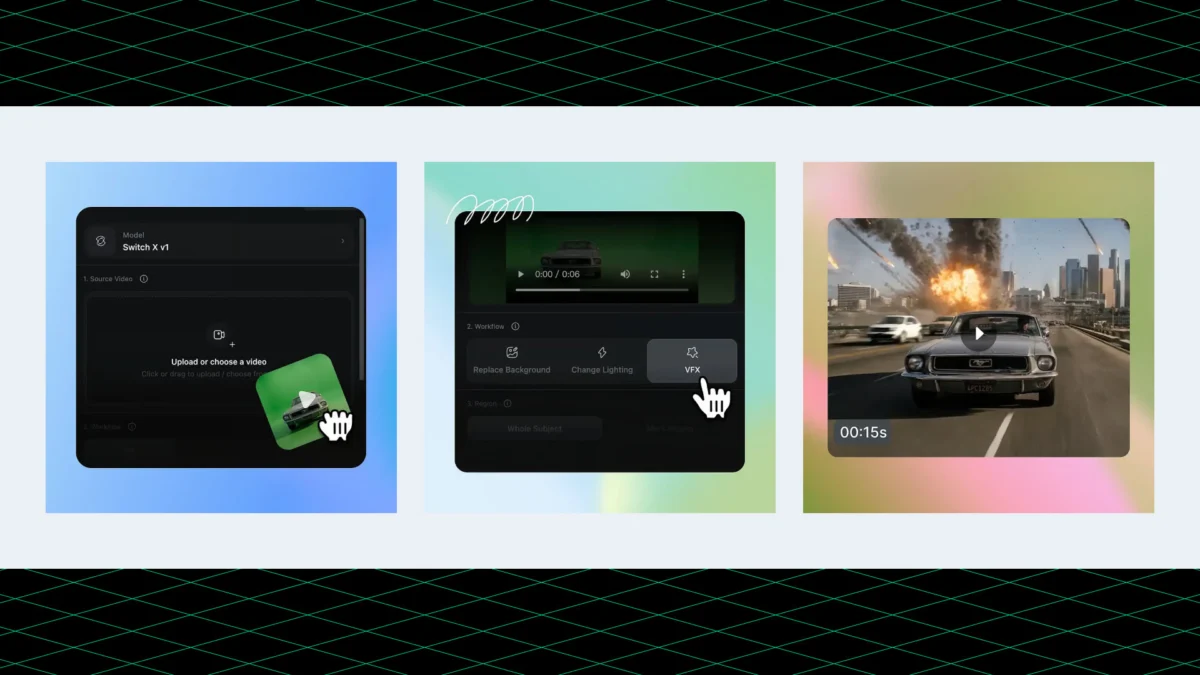
In the rapidly evolving landscape of generative AI, the divide between professional studio-grade visual effects and consumer-accessible tools has long been a chasm of technical complexity. Today, that gap is narrowing significantly. Beeble, a deep-tech firm specializing in AI-driven relighting and video transformation, has announced a strategic partnership with the creative AI platform OpenArt. At the heart of this collaboration is SwitchX, a sophisticated video-to-video model designed to bring high-fidelity, frame-by-frame visual editing to a global audience.
This integration marks a pivotal moment for video creators, enabling them to execute complex tasks—such as precise subject isolation, background replacement, and atmospheric relighting—without the traditional requirements of green screens, labor-intensive rotoscoping, or expensive, proprietary compositing software.
The Core Innovation: What is SwitchX?
At its most fundamental level, SwitchX is an AI engine engineered for "surgical" video manipulation. Unlike generative models that hallucinate new content from text prompts, SwitchX is purpose-built for high-fidelity transformation of existing footage.
The technology allows users to take a pre-recorded clip and target specific regions for modification. Whether a creator needs to change the lighting of a scene to match a different time of day or isolate a subject to transplant them into an entirely new environment, SwitchX handles the heavy lifting. By operating at the frame level while maintaining temporal consistency—a historical "holy grail" for AI video editing—the model ensures that the final output remains coherent, avoiding the flickering and artifacting that often plague lesser AI tools.
Key Capabilities:
- Precision Subject Isolation: Effortlessly separate subjects from backgrounds without manual masking.
- Full-Frame Relighting: Modify the lighting conditions of an entire scene to shift mood, tone, or environmental consistency.
- Masked Region Edits: Apply targeted visual effects to specific portions of the frame while keeping the rest of the composition untouched.
A New Era for OpenArt: The Launch of the VFX Suite
OpenArt, already recognized for its intuitive interface and expansive AI creative tools, has officially integrated these capabilities into its newly launched "OpenArt VFX" suite. This launch is a direct response to a persistent frustration among creators: the disconnect between AI video generation (which often starts from scratch) and the needs of filmmakers who possess real-world, camera-captured footage.
The OpenArt VFX platform is designed to minimize the friction of post-production. By providing a streamlined interface where users can upload a clip and apply sophisticated transformations in minutes, the platform effectively moves high-end VFX from the realm of the "expert" to the realm of the "accessible."
Chronology of Development: From Concept to Integration
The journey toward this collaboration is reflective of the accelerated pace of AI development in 2024.
- Phase 1: R&D at Beeble. Beeble spent months refining the SwitchX model, focusing specifically on high-fidelity subject tracking and light-mapping. The goal was never to create "AI-generated art" in the traditional sense, but to create "AI-assisted production" tools.
- Phase 2: The Infrastructure Challenge. OpenArt spent significant time identifying a partner capable of handling the heavy compute requirements of video processing while maintaining the visual integrity expected by professional creators.
- Phase 3: Integration and Beta Testing. The synergy between Beeble’s model and OpenArt’s frontend was tested to ensure that the "three modes, one upload" promise held true under varied lighting conditions and camera movements.
- Phase 4: Global Launch. The official rollout of OpenArt VFX marks the transition from closed-environment testing to a public-facing, scalable creative suite.
Supporting Data: Why "Real-World Footage" Matters
Market analysis suggests that while AI video generators like Sora or Runway Gen-2 capture headlines for their ability to synthesize new realities, there is a massive, underserved market for tools that process existing assets.
According to recent industry trends, the majority of professional video work—advertising, social media marketing, and independent filmmaking—relies on footage captured on real cameras (DSLRs, mirrorless, or mobile devices). These users do not want to replace their footage with AI-generated simulations; they want to enhance what they have already shot.
SwitchX addresses this by:

- Reducing Workflow Time: What typically takes hours of manual masking and color grading can now be achieved in minutes.
- Cost Efficiency: By eliminating the need for green screens and complex studio setups, creators can achieve professional results on a budget.
- Preserving Creative Intent: Because the model works on the user’s source material, the unique performance, camera angle, and lens characteristics of the original footage are preserved.
Official Perspectives: Bridging the Gap
The leadership at both Beeble and OpenArt views this partnership as a fundamental shift in how creative labor is distributed.
"OpenArt VFX represents a major step toward making professional-grade video transformation accessible to every creator," says Coco Mao, CEO and Co-Founder of OpenArt. Mao emphasizes that the partnership was born out of a realization that the market was flooded with "generation" tools but starved for "editing" tools. "Many AI tools can generate video, but very few are designed for footage already shot on a real camera. SwitchX made professional-quality editing and advanced VFX work seamless and accessible."
Hoon Kim, CEO and Co-Founder of Beeble, echoes this sentiment, focusing on the democratization of the production process. "We built SwitchX to remove the technical barriers between imagination and production," Kim stated. "Seeing OpenArt bring these capabilities to millions of creators is exactly the kind of creative future we envisioned."
Implications for the Creative Industry
The implications of this technology extend far beyond the immediate convenience of a new software tool.
1. The Death of the "Green Screen" Constraint
For independent filmmakers, the logistical hurdle of securing a green screen studio is often a project-killer. By moving the "extraction" and "compositing" processes into the software domain via AI, Beeble and OpenArt are effectively giving creators the power of a studio in the palm of their hand.
2. The Rise of the "Prosumer" VFX Artist
We are witnessing a shift in the hierarchy of VFX production. Tasks that once required a dedicated team of compositors and roto-artists can now be managed by a single editor. While this may cause disruption in traditional service-based VFX pipelines, it creates an explosion of potential for solo creators, YouTubers, and independent agencies who can now punch significantly above their weight class.
3. The Ethical and Creative Workflow
As AI becomes more deeply integrated into the editing suite, the industry will need to grapple with questions of authorship and authenticity. However, in the context of tools like SwitchX, the "AI" acts more as an intelligent brush than a replacement for the artist. The user is still the director of the scene; the software merely executes the labor-intensive cleanup and adjustment.
Conclusion: The Road Ahead
The integration of Beeble’s SwitchX into the OpenArt VFX platform is a testament to the maturation of AI in the post-production space. As we look toward the future, the threshold for what constitutes "professional quality" is moving, and the tools available to achieve that quality are becoming more intuitive.
By focusing on the needs of the filmmaker—rather than the whims of the generative prompt—Beeble and OpenArt have carved out a space that values the original vision of the creator. As these tools continue to evolve, the distinction between "filmmaking" and "AI-assisted filmmaking" will likely disappear entirely, leaving only the story as the final measure of a project’s success.
For the millions of creators currently exploring the potential of AI, this partnership offers a clear, functional path forward: stop worrying about the technical complexity of the edit, and start focusing on the creative potential of the image. The green screen may not be dead, but for many, it is no longer a requirement for greatness.
