
From Viral Phenomenon to Animated Icon: Owen Dennis and the Making of the Among Us Series
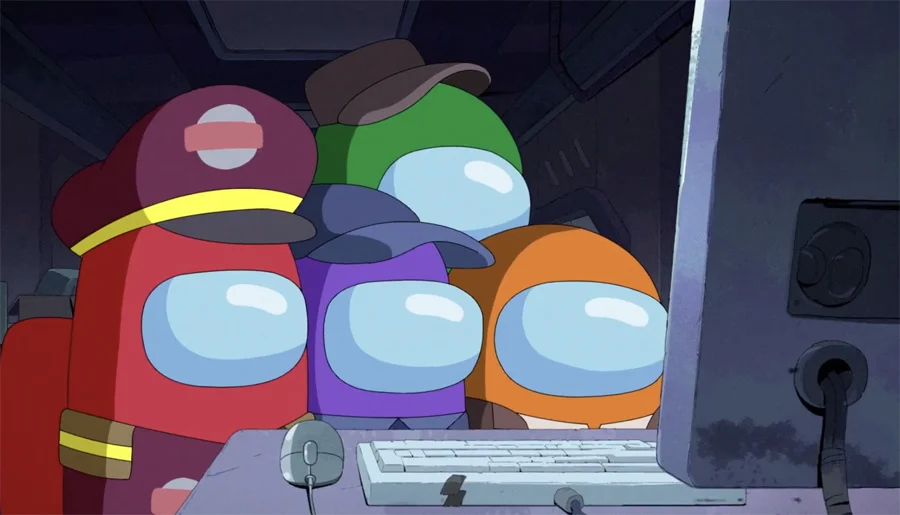
The digital landscape of the 2020s was defined by a handful of cultural touchstones, but few captured the collective anxiety and humor of the era quite like Among Us. What began as a niche mobile game about social deduction evolved into a global obsession. Now, the franchise has made a definitive leap to the screen, with a new animated adaptation currently streaming on Paramount+.
Helmed by Owen Dennis—the visionary creator behind the acclaimed Infinity Train—the series promises more than just a literal translation of gameplay. It is an exploration of human psychology, the fragility of trust, and the comedic potential of minimalist character design. In an exclusive interview, Dennis peels back the curtain on how he translated a game of sabotage into a sophisticated, character-driven animated experience.
The Genesis: From Pandemic Pastime to Paramount+
The journey of Among Us from a screen-based game to a television series was as organic as it was unexpected. For Owen Dennis, the game was a backdrop to the pandemic—a piece of pop culture he observed from a distance before becoming the primary architect of its narrative expansion.
“Like everybody, I had definitely heard of the game and played it a few times,” Dennis recalls. He recounts a poignant moment during the height of the lockdowns when his neighbors held a birthday celebration, with cars adorned in Among Us imagery driving past his home. At the time, the project was merely a glimmer in his mind, leading him to reflect on the surreal irony of his position: “These people have no idea I’m about to make a show about this.”
The challenge was clear: how to convert a game defined by repetitive, round-based mechanics into a cohesive long-form television narrative. The solution, according to Dennis, lay in respecting the source material while refusing to be shackled by it. By meticulously recreating the specific, jittery movement patterns of the game’s characters in the show’s premiere, Dennis provided a nod to the dedicated fanbase, ensuring the series felt authentic to the "crewmate" experience.
Core Philosophy: Building a Narrative of Paranoia
At its heart, Among Us is a psychological study. The core loop of the game—transporting an energy source while attempting to identify a saboteur—serves as the perfect vessel for an exploration of trust.

“What I wanted to do is make the show an exploration of trust and why we trust people and why we don’t trust other people,” Dennis explains. This theme is the engine of the series. He notes that the game’s inherent paranoia—the irrational suspicion that arises simply because you haven’t seen a player in a specific room—is a compelling narrative device.
“If that were real-life, that’s an insane thing to think about somebody,” Dennis observes. By externalizing this internal conflict, the show forces the audience to question the reliability of the ensemble cast. The goal is to move beyond the "who did it" mystery and toward a deeper inquiry: how does the looming threat of betrayal alter our relationships and our fundamental morality?
The Visual Language of Expression
One of the most daunting aspects of adapting Among Us is the character design. The crewmates are, by design, faceless, limbless, and simplified blobs. Translating this into a medium that relies on emotive storytelling required a radical visual departure from the game’s static look.
Dennis prioritized a collaborative approach, inviting artists with distinct, varied backgrounds to contribute to the visual language of the show. By pulling inspiration from disparate sources—ranging from the moody, shadow-heavy aesthetics of Mike Mignola (Hellboy) to the grounded, slice-of-life charm of Rocket Power and the stylistic simplicity of My Neighbors the Yamadas—the team created a look that stands apart from the game.
“We have characters with no faces, so how do you make them expressive?” Dennis asks. The answer was to empower the board artists and animators to push the limits of physical acting. By stripping away the ability to rely on facial micro-expressions, the production leaned into body language, staging, and silhouette. The result is a series where emotions are conveyed through movement and atmosphere, allowing the art to be as expressive as it is stylized.
An Ensemble of High-Caliber Talent
The success of any ensemble comedy rests on the chemistry of its cast, and the Among Us series boasts an embarrassment of riches. Featuring the vocal talents of Elijah Wood, Yvette Nicole Brown, Randall Park, Dan Stevens, and Wayne Knight, the series provides a platform for these actors to move outside their traditional comfort zones.

Dennis notes that the casting process was remarkably fluid, as the actors were eager to dive into the surreal, high-stakes environment of the ship. Unlike other projects that mandate a strict adherence to a specific tone, the Among Us series allowed for a "grounded but weird" approach.
“They would get super into these characters,” Dennis says. “We were able to push it to extremes here and there and get to see actors who don’t normally do that get to get a little weird.” This versatility is crucial for a show that demands its audience care about characters who are, as Dennis admits, intentionally designed to look "a little stupid."
The Science of Confident Comedy
Dennis holds a firm, uncompromising view on the structure of humor. He advocates for "confident comedy"—a style that prioritizes joke structure and natural timing over referential gags or self-conscious "lampshading."
“Nothing makes me more annoyed than comedy that tells you what the joke is,” he asserts. For Dennis, the "lowest hanging fruit" is the meta-commentary that occurs when a show stops to acknowledge its own humor. He avoids the trend of having characters explain why a situation is funny or using sarcastically detached dialogue to undercut a punchline.
His philosophy is straightforward: if a joke is good, it stands on its own. By refusing to hold the audience’s hand or point to the comedy, the show fosters a smarter, more immersive experience. This boldness is what gives the show its distinct, unapologetic voice, ensuring that the humor is a byproduct of the situation rather than a series of forced, cynical interjections.
Implications: The Future of Game-to-TV Adaptation
The success of the Among Us series has broader implications for the future of video game adaptations. For years, the industry struggled with the "curse" of game adaptations, often failing by either being too derivative or straying too far from the source material. Dennis’s approach suggests a third path: using the game’s core hook as a foundation for an original, character-driven story.

The show succeeds because it is willing to treat the absurdity of its premise with absolute sincerity. By humanizing the crewmates—giving them arcs, goals, and vulnerabilities—Dennis creates an emotional stakes system that pays off when characters are inevitably removed from the equation.
“The thing I think is very funny is when you take characters that look like these Among Us characters, which look—let’s admit, they look kinda stupid—and make people feel emotions about them,” says Dennis.
By prioritizing emotional resonance over simple fan service, Among Us on Paramount+ sets a new standard for how interactive media can be expanded into narrative television. It is a show that doesn’t just ask the audience to watch; it asks them to analyze the nature of their own connections. As the series continues to unfold, it stands as a testament to the idea that even the simplest, most ridiculous concepts can become vehicles for profound, funny, and deeply human storytelling.
