
A Festive Fright: Martin Freeman and Jim Broadbent to Star in Mark Gatiss’s Adaptation of Dickens’s "The Bride’s Chamber"
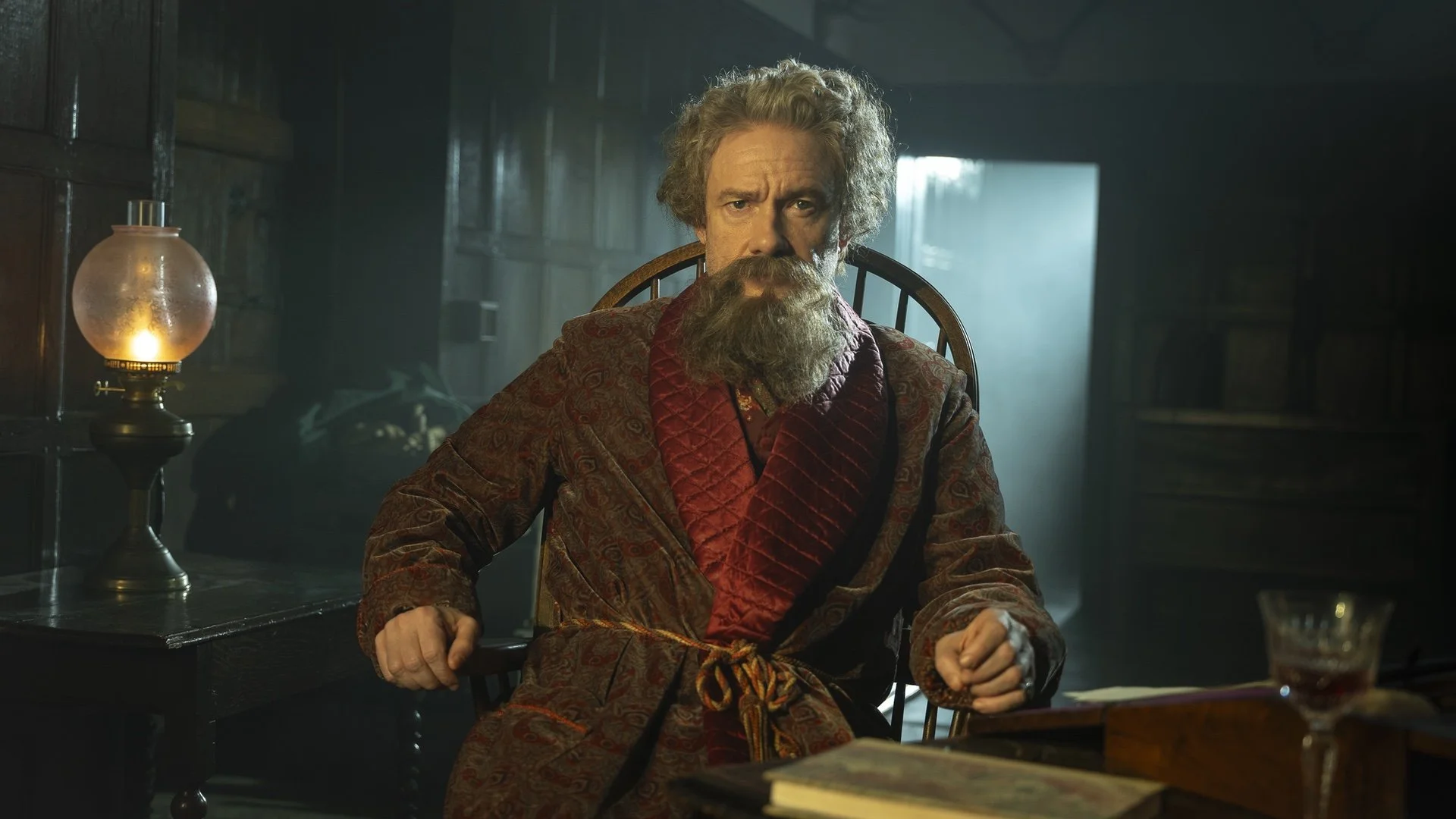
The BBC has unveiled the centerpiece of its upcoming holiday schedule, confirming that the annual tradition of a Mark Gatiss-penned ghost story will continue this year with a chilling adaptation of an obscure Charles Dickens tale. Titled The Bride’s Chamber, the production features a high-profile cast led by veteran British actors Martin Freeman and Jim Broadbent, marking the ninth installment in Gatiss’s acclaimed series of festive literary hauntings.
As the nights draw in and the temperature drops, the BBC is pivoting away from traditional Yuletide cheer to embrace the macabre. By opting for one of the most unsettling, lesser-known narratives in the Dickens canon, the broadcaster is doubling down on its commitment to atmospheric, Victorian-era horror—a genre that has become a staple of the network’s December programming.
The Narrative: A Descent into Victorian Obsession
Originally published in 1858, The Bride’s Chamber is a rare and particularly grim entry in Dickens’s bibliography. Unlike the redemptive arcs found in A Christmas Carol, this story delves into the darkest recesses of human greed and obsession. Set in the same year as its original publication, the plot centers on a scorned and vengeful suitor who systematically manipulates a young woman into a marriage of convenience, driven entirely by his avaricious desire to secure her inheritance.
However, the protagonist’s schemes prove to be his undoing. Rather than achieving the wealth and status he craves, he finds himself ensnared in a nightmarish, supernatural purgatory of his own design. It is a classic gothic setup—a cautionary tale of hubris, isolation, and the inescapable weight of one’s own moral failures—perfectly suited for the long, dark evenings of the Christmas season.
A Legacy of Literary Terror
For Mark Gatiss, The Bride’s Chamber represents a continuation of a highly successful creative tenure. Over the past decade, the Sherlock co-creator has curated a series of ghost stories that bridge the gap between classic literature and modern television production.
His previous adaptations have spanned the works of legendary masters of the macabre, including E.F. Benson’s The Room in the Tower, E. Nesbit’s Woman of Stone, and the chilling Arthur Conan Doyle narrative Lot No. 249. By selecting The Bride’s Chamber, Gatiss is venturing into "Dickens rarity" territory, a move that highlights his commitment to uncovering stories that are as intellectually intriguing as they are terrifying.
"It’s unusual to find a Dickens rarity, but this is it," Gatiss remarked during the project’s announcement. "A weird and nasty little treasure which lurks within a work co-written with the great Wilkie Collins. A lonely inn, an incognito traveller, and a ghastly tale of warped obsession. Merry Christmas!"
The Cast: A Reunion of British Titans
The production boasts an ensemble cast that anchors the supernatural elements in grounded, powerhouse performances. Martin Freeman, globally recognized for his work as Bilbo Baggins in The Hobbit and his iconic turn as Dr. John Watson in the BBC’s Sherlock, brings a seasoned intensity to the production. His presence in the film also marks a significant reunion, as he and Gatiss have collaborated extensively over the last two decades.
Joining Freeman is Academy Award-winner Jim Broadbent, a titan of the British stage and screen whose recent work in The Unlikely Pilgrimage of Harold Fry and the Bridget Jones franchise has showcased his immense emotional range. While the two actors have shared professional history—both appearing in Game of Thrones and having worked with Gatiss on various BBC projects—their collaboration in The Bride’s Chamber is expected to be a highlight of the season.
The supporting cast is equally impressive, featuring Adrian Scarborough (The Chelsea Detective), Joe Armstrong (Happy Valley), India Fowler (Fear Street: Prom Queen), and Lewis Shepherd (Dear England). This roster of talent ensures that, despite the supernatural themes, the drama will be driven by the nuanced character work that has become a hallmark of British prestige television.
Chronology of Production
Principal photography for the special was conducted earlier this year, with the production team selecting Ingatestone Hall in Essex as the primary location. The historic estate, with its Tudor architecture and sprawling, moody grounds, provided the perfect visual backdrop for the Victorian misery and claustrophobic terror central to the story.
Following the completion of filming, the project entered post-production under the stewardship of Adorable Media. Isibeal Ballance, serving as producer, has worked closely with BBC commissioning editor Mark Bell to ensure that the tone remains consistent with the previous eight installments of the series. BBC Studios has been tapped to handle international distribution, reflecting the global appeal of Dickensian gothic horror.
The BBC’s Wider Dickensian Strategy
The commitment to Charles Dickens extends well beyond The Bride’s Chamber. The BBC’s winter schedule is heavily invested in the author’s legacy. Alongside the supernatural special, the network is preparing a three-part documentary that explores the influence of Victorian London’s nocturnal life on Dickens’s vivid imagination.
Furthermore, the BBC has greenlit a high-profile, multi-part adaptation of A Tale of Two Cities, starring Kit Harington. This dual approach—highlighting both the author’s classic narratives and the darker, more obscure corners of his imagination—suggests a concerted effort to keep Dickens relevant for modern audiences through varying tones and formats.
Implications for the Festive Landscape
The success of these annual ghost stories has fundamentally altered how audiences view Christmas television in the UK. While traditionally a time for light comedy and festive sentimentality, the BBC has successfully carved out a niche for "unpleasant" or unsettling viewing that has resonated with a significant portion of the viewership.
The Bride’s Chamber is not merely a ghost story; it is a testament to the enduring power of Victorian gothic literature to provoke, disturb, and entertain. By casting actors of the caliber of Freeman and Broadbent, the BBC elevates the genre, signaling that these specials are not merely filler, but serious dramatic undertakings.
As the project prepares for its debut on BBC Two and BBC iPlayer, industry analysts suggest that this strategy of "counter-programming" against the sugary sentimentality of other holiday specials is a winning formula. It taps into a primal desire for a good scare, particularly when the cold weather outside mirrors the chilling atmosphere on screen.
Final Reflections
In an era of rapid content consumption, the persistence of the BBC’s ghost story tradition offers a moment of deliberate, atmospheric storytelling. Whether it is the haunted corridors of a lonely inn or the psychological unraveling of a greedy suitor, The Bride’s Chamber promises to be a quintessential addition to the canon of British holiday television.
With the combination of Gatiss’s sharp, evocative writing, the star power of Freeman and Broadbent, and the atmospheric weight of a genuine Dickens rarity, the BBC seems poised to deliver another chilling, memorable, and "wonderfully unpleasant" Christmas experience. For those who prefer their seasonal viewing with a side of Victorian menace, the upcoming release is already shaping up to be the most talked-about event of the winter season.
