
Animated Noir Meets Corporate Satire: Brad Bird’s Decades-In-The-Making ‘Ray Gunn’ Arrives via Netflix and Skydance
Main Facts
After decades of gestation, visionary animation director Brad Bird has finally brought his long-awaited passion project, Ray Gunn, to the screen. Released through a partnership between Skydance Animation and Netflix, the film represents a fascinating intersection of classic hard-boiled detective fiction, retro-futuristic world-building, and biting corporate satire.
Set in "Metropia"—a sprawling, alternate-future metropolis envisioned through the design lens of 1939—the movie follows tough-talking private investigator Raymond Gunn as he navigates a complex underworld of alien-human coexistence, murder, and high-stakes media conglomerates. The film features a star-studded voice cast, led by Sam Rockwell as the titular detective, Tom Waits as his cyclopsian alien partner Eye-Ra, and Scarlett Johansson as Venus Nova, a volatile multimedia pop superstar whose existence is entirely commodified by the monolithic corporation Megamax.
Despite arriving with a sense of visual wonder and inventive genre-blending, Ray Gunn walks a peculiar tightrope. While it champions the autonomy of artists against the soul-crushing machinery of massive conglomerates, its anti-corporate messaging lands in theaters during a fascinatingly ironic cultural window—namely, the wake of massive entertainment industry consolidation, including high-profile studio mergers and the expansion of mega-studios like Skydance.

Chronology: From Concept to Screen
The journey of Ray Gunn spans more than twenty years, reflecting the notoriously slow and arduous path of original, non-franchise animated features in Hollywood.
- Early Development (Early 2000s): Long before he helmed Pixar’s The Incredibles or live-action blockbusters like Mission: Impossible – Ghost Protocol, Brad Bird conceptualized Ray Gunn as a unique blend of 1940s detective noir and science fiction. However, the industry at the time was heavily reliant on traditional family-friendly formats, and the project struggled to find financial backing that would allow Bird the creative freedom he required.
- The Skydance Partnership (2021): Skydance Animation officially signed Brad Bird and Ray Gunn into its production pipeline, offering the acclaimed filmmaker a rare opportunity to revive his decades-old concept. Under the leadership of Skydance Animation, the project found a renewed sense of momentum, even as the studio itself underwent significant corporate evolution and leadership branding under John Lasseter.
- The Netflix Acquisition: Recognizing the potential for bold, auteur-driven animated projects, Netflix stepped in to handle the distribution of Ray Gunn, aligning with the streaming giant’s ongoing strategy to back high-concept adult animation.
- The Theatrical and Streaming Rollout: Netflix has scheduled a limited theatrical release for Ray Gunn on Friday, December 4, followed by a global streaming premiere on Friday, December 18.
Supporting Data and Production Details
Ray Gunn distinguishes itself through a meticulous visual and auditory design that sets a high bar for contemporary computer-animated features.
Aesthetic and World-Building
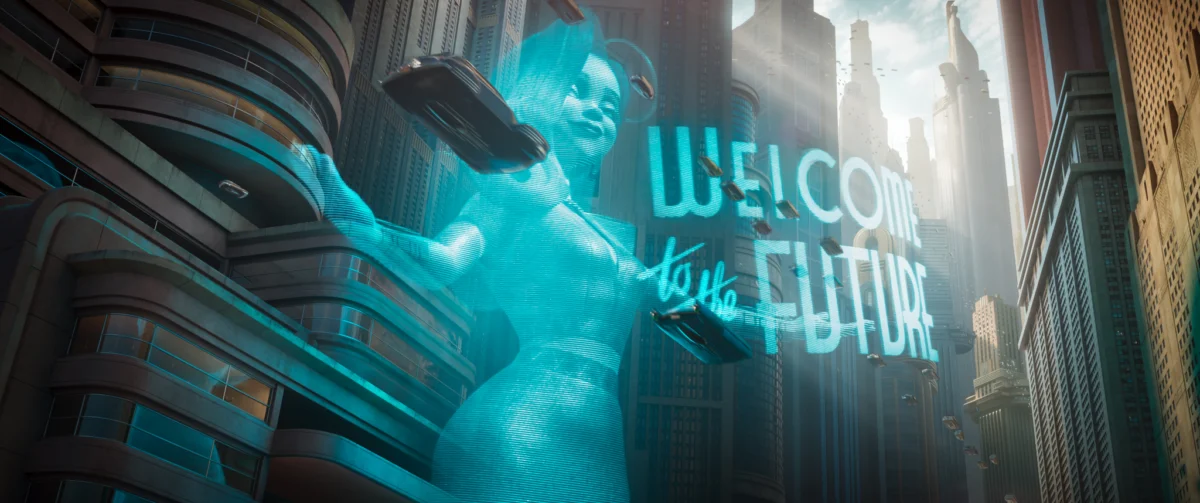
Bird describes the aesthetic of Metropia as "almost like taking Art Deco but putting it in a wind tunnel so all the curves were smooth." Visually, the city evokes a fusion of mid-century Miami architecture and the grand skyscrapers of old New York, peppered with retro-futuristic elements like flying cars and CitiBike-style jetpacks. Unlike the grimy, dystopian alleyways of Ridley Scott’s Blade Runner, Metropia is bright, tangible, and visually dazzling—though it conceals a deeply cynical core.

Voice Cast and Characters
- Raymond Gunn (Sam Rockwell): A world-weary, hard-boiled private investigator and former police officer whose personal moral code forced him off the official force.
- Eye-Ra Kadok (Tom Waits): A cyclopsian alien who serves as Ray’s loyal professional partner and best friend, representing the tenuous and often prejudiced integration of non-human species in Metropia.
- Venus Nova (Scarlett Johansson): An omnipresent multimedia icon whose massive holographic advertisements dominate the city’s skyline. Venus is caught in a toxic symbiotic relationship with Megamax, the entertainment conglomerate run by her own ex-husband, which seeks to sanitize and control her chaotic, headline-making behavior.
Official Responses and Creative Insights
In production notes and interviews surrounding the film’s release, Brad Bird has emphasized the thematic weight placed on the friction between artistic integrity and commercial exploitation.
While the film’s script—co-written by Bird and Matthew Robbins—delves heavily into systemic corruption and the commodification of pop stars, it also touches upon the personal alienation of its protagonist. Bird’s signature style of fast-paced dialogue, moral ambiguity, and high-stakes action shines through, though critics note that the sheer volume of subplots occasionally strains the narrative structure.
Executives at Skydance Animation and Netflix have framed Ray Gunn as proof of their commitment to supporting auteur-driven visions. In an era where major studios routinely prioritize established intellectual property and cinematic universes over original storytelling, the greenlighting of a high-budget, adult-skewing noir animation project is viewed by industry observers as a calculated gamble on prestige animation.

Implications for the Industry
The release of Ray Gunn carries broad implications for the future of adult-oriented animation and the shifting dynamics of media conglomerates.
The Irony of Anti-Corporate Messaging
One of the most heavily discussed aspects of Ray Gunn is its overt condemnation of corporate greed, media monopolies, and the ruthless exploitation of creative talent. Megamax, the fictional conglomerate that controls Metropia’s culture, functions as an obvious allegory for real-world entertainment giants. However, releasing this critique through the machinery of a modern mega-studio apparatus—complete with the prominent branding of Skydance—creates a stark meta-textual irony. As the entertainment landscape undergoes historic consolidation, films that rail against corporate overreach serve as a curious paradox within the contemporary studio system.
A Test for Adult Animation Outside of IP
For years, the theatrical animation market has been heavily dominated by sequels, reboots, and pre-packaged intellectual property from Disney, Illumination, and DreamWorks. By backing a wholly original, hard-boiled noir detective story aimed squarely at adults, Netflix and Skydance are testing the boundaries of what audiences will accept outside of traditional family fare. While some critics argue that Ray Gunn might have found more breathing room as a serialized streaming television show rather than a feature film laden with rushed subplots, its mere existence proves that original ideas can still command major studio resources.

Ultimately, Ray Gunn earns a respectable B- grade: a visually stunning, brilliantly cast, and conceptually rich endeavor that occasionally stumbles under the weight of its own ambition, yet stands proudly as a rare monument to original cinematic storytelling in an increasingly risk-averse industry.
