
Beyond the Threshold: Rob Savage and Jessica Chastain Unpack the Bizarre, Heart-Wrenching Domestic Horror of ‘Other Mommy’
Main Facts
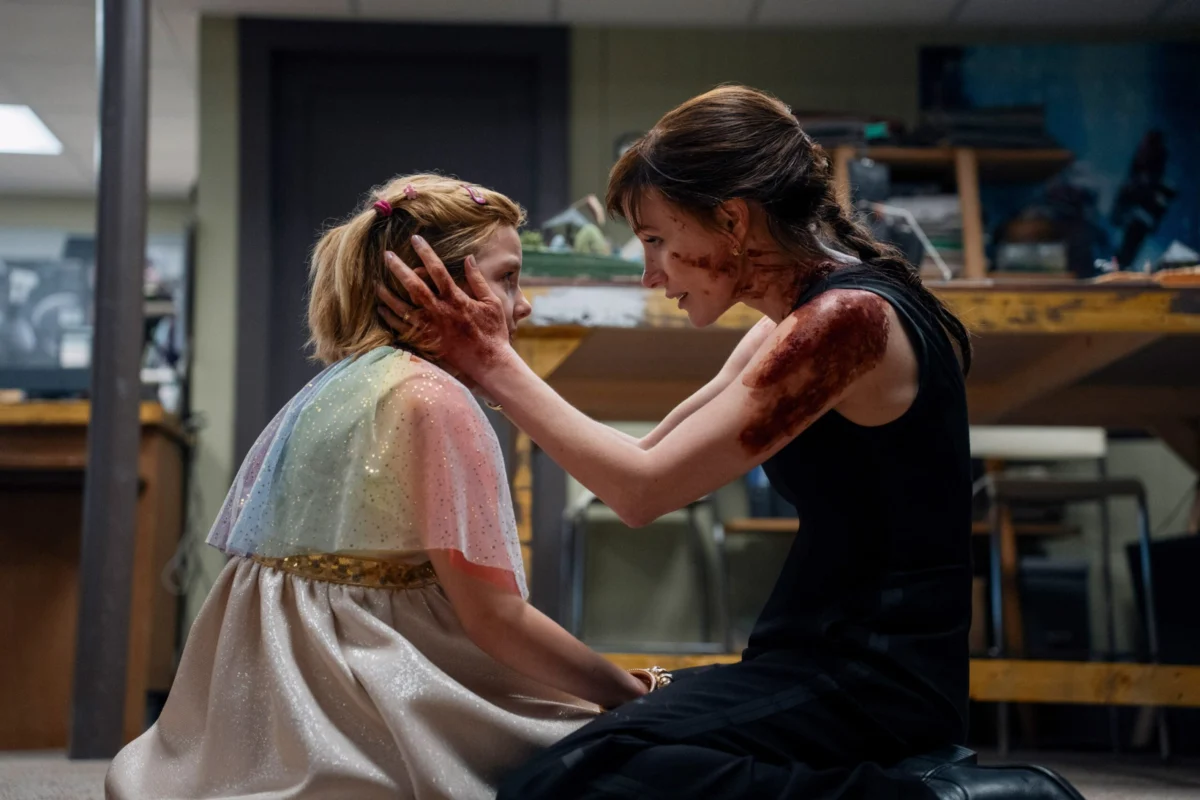
Universal Pictures’ Other Mommy introduces audiences to a singularly tragic and deeply unsettling entity: a supernatural parasite that does not merely wish to maim or murder, but hungers for absolute emotional integration. Adapted by director Rob Savage from Josh Malerman’s acclaimed 2024 horror novel Incidents Around the House, the film stars Academy Award winner Jessica Chastain in a dual tour-de-force as both a emotionally detached mother, Ursula, and the contorting, impossible apparition attempting to replace her.
At the center of the household’s psychological fractures is eight-year-old Bela, played with remarkable poise by newcomer Arabella Olivia Clark. Supported by Jay Duplass as Russ, the film charts a surreal, relentlessly escalating home-invasion nightmare where the intruder is less a traditional slasher villain and more an embodiment of pure, pitch-black desperation.
Distributed by Universal Pictures and featuring a screenplay by Nathan Elston that diverges boldly from Malerman’s original text, Other Mommy is currently playing in theaters worldwide. It has earned a critical Grade of C+, characterized by reviewers as a hypnotic, visually extravagant, yet frequently exhausting exercise in maximalist domestic horror.

Chronology of the Nightmare: From Imaginary Friend to Full-Scale Incursion
The narrative unfolds through a carefully calibrated escalation of domestic unease, shifting from subtle psychological friction to all-out supernatural chaos.
- Phase One: The Cautious Curiosity. The film opens on the fragile status quo of the family unit. Eight-year-old Bela, navigating an environment where adult communication is opaque and fractured, encounters a mysterious presence lurking in the corners of her home. Initially, the child treats the entity with the cautious, benign curiosity usually reserved for an imaginary friend.
- Phase Two: The Kitchen Entrance and Escalation. The illusion of harmlessness shatters definitively with Other Mommy’s grand kitchen entrance—a sequence destined to become a defining moment in modern horror cinema. Utilizing impossible anatomy, the entity twists its body into non-Euclidean shapes, stretches its neck around sharp angles, and squeezes into cramped spaces. Instead of hiding in the shadows, the creature normalizes its presence, weaving itself into the architectural and psychological fabric of the household like a piece of surreal, modern furniture.
- Phase Three: Intervention and Bureaucracy. As the haunting threatens to tear the family apart, the human characters attempt to combat the paranormal through formal, almost bureaucratic means. Enter Dichen Lachman as Lois Anthony, whose deadpan, "Chris Hansen for ghosts" intervention introduces a delightfully absurd procedural element to the terror.
- Phase Four: The Road Trip and Metaphysical Collapse. Abandoning the safety of their home, the family embarks on a desperate road trip to escape the entity. However, the physical geography of the world begins to buckle. Giant manifestations, surreal balloon-popping sequences on ceilings, and uncanny ball-pit dimensions transform the third act into an aggressively artificial, dreamcore-inspired descent into madness.
- Phase Five: The Confession and Climax. The film culminates in a powerful, emotionally complex monologue delivered by Chastain’s Ursula, subverting traditional horror tropes by confronting the messy, shameful truths of parental guilt and sacrificial love.
Supporting Data and Production Insights
The production of Other Mommy represents a major stylistic evolution for director Rob Savage, whose 2020 lo-fi pandemic breakout Host weaponized the rigid, compressed limitations of a Zoom screen. In contrast, Other Mommy explodes outward with an appetite for unbounded spatial spectacle.
| Production Metric / Element | Detail |
|---|---|
| Studio / Distributor | Universal Pictures |
| Source Material | Incidents Around the House (2024 novel by Josh Malerman) |
| Director | Rob Savage |
| Screenwriter | Nathan Elston |
| Key Cast | Jessica Chastain (Ursula / Other Mommy), Arabella Olivia Clark (Bela), Jay Duplass (Russ), Dichen Lachman (Lois Anthony), Arian Moayed (Uncle Frank) |
| Theatrical Release Date | October 2026 |
| Critical Consensus | C+ (A visually mesmerizing, emotionally rich, but structurally overstuffed experiment in domestic horror) |
Visual effects play a critical role in establishing the film’s distinct tone. Rather than relying solely on computer-generated gore, the creature design blends practical contortionism with unsettling digital imagery that evokes the aesthetics of internet "dreamcore" and artificial intelligence-generated media. The film’s second half heavily utilizes brightly colored ball-pit balls and sterile, liminal spaces—drawing direct visual comparisons to indie internet horror sensations like Skinamarink and The Backrooms.

Official Responses and Creative Intentions
Speaking on the unique challenges of adapting Malerman’s novel, the creative team focused heavily on internalizing the tragedy of a monster driven by a desire for love rather than standard malice.
Rob Savage noted in early promotional cycles that his primary goal was to subvert the traditional "haunted house" template by shifting the focus from external jumpscares to an intimate, uncomfortable exploration of belonging. The director aimed to make the audience empathize with a creature whose desperation mirrors the very human fears of displacement and emotional abandonment.
Jessica Chastain, who has built an impressive cinematic resume exploring distressed motherhood in films like The Tree of Life, Take Shelter, and Mama, embraced the dual challenge of playing both the flawed human mother and the grotesque, weeping entity. In production notes, Chastain highlighted the psychological tightrope of portraying a monster whose most terrifying weapon is not its elongated limbs, but the raw, unfiltered sorrow, fear, and rage reflected in its eyes.

Arabella Olivia Clark, praised widely for anchoring the film’s escalating absurdities, discussed the collaborative dynamic on set, noting that working opposite Chastain and Duplass allowed her to maintain emotional agency even as the special effects grew physically and spatially overwhelming.
Implications: The Evolution of Modern Horror and Cinematic Excess
The release of Other Mommy carries significant implications for both the horror genre at large and the career trajectory of Rob Savage.
1. The Shift Toward "Dreamcore" and Liminal Horror
With its intentional embrace of artificial-looking spaces, unsettling geometries, and digital-age surrealism, Other Mommy signals a growing Hollywood appetite for aesthetics born on the internet. By channeling the uncanny valley of "dreamcore" and The Backrooms, Savage proves that studio horror can successfully integrate Gen-Z internet folklore into mainstream narratives without sacrificing artistic merit.

2. Redefining the Monster Archetype
Traditional supernatural horror relies on clear binaries: the pure victim versus the unthinking, malicious predator. Other Mommy blurs these lines deliberately. By giving the monster a desperate, almost pathetic desire to be invited into a child’s heart, the film forces audiences to interrogate the nature of possession. It suggests that psychological intrusion often begins where emotional neglect leaves off—a theme reinforced by Arian Moayed’s character, Uncle Frank, patronizing Bela and inadvertently paving the way for the entity’s seductive appeal.
3. Savage’s Directorial Trajectory
Savage’s swift progression from the micro-budget Zoom-horror of Host to studio projects like The Boogeyman and now the extravagant, boundary-pushing canvas of Other Mommy establishes him as one of contemporary cinema’s most adaptable genre architects. While critics noted that Other Mommy occasionally suffers from an appetite for spectacle that outpaces its storytelling patience, the film cements his willingness to take massive creative risks.
Ultimately, Other Mommy may prove too structurally unwieldy and stylistically eccentric for mainstream audiences seeking conventional frights. Yet, its unforgettable imagery, powerhouse central performances, and willingness to dive headfirst into the abyss of domestic melancholy ensure that it will remain a fiercely debated and deeply memorable entry in the modern horror canon.
