
Crafting the Sonic Universe of ‘Kpop Demon Hunters’: How Sound Designer Michael Babcock Merged K-Pop Production with Supernatural Audio
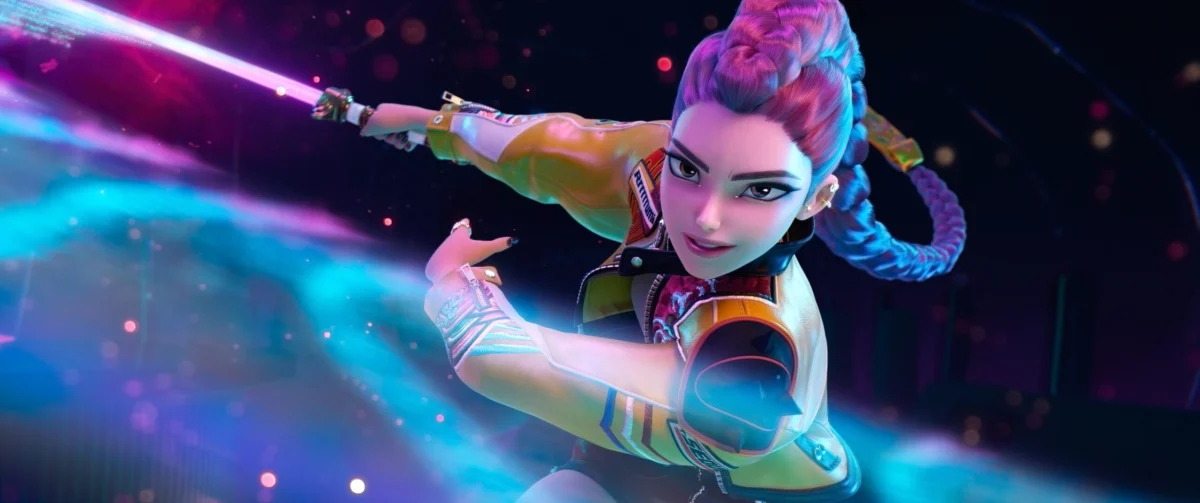
In the fast-paced, high-stakes realm of modern animated filmmaking, the margin for error in sound design is razor-thin. Like the mythological figure of Icarus, it is always possible for movie audio to fly too close to the sun; load a single moment with too many competing audio layers, and the sonic landscape quickly melts into a muddy, indecipherable mess.
Avoiding this acoustic trap was the primary mandate for the creative team behind Netflix’s animated feature Kpop Demon Hunters. Beyond working tirelessly to transform the film’s musical numbers into legitimate, chart-topping pop bops, the filmmakers brought supervising sound editor and re-recording mixer Michael Babcock onto the project exceptionally early—before the animation phase had even begun.
This proactive collaboration between Babcock and directors Chris Appelhans and Maggie Kang established a cohesive auditory language long before pencils touched paper or digital models were rigged. The result is a masterclass in animation sound design, seamlessly blending the ultra-polished, intricate production techniques of the global K-pop phenomenon with the chaotic, high-stakes requirements of an otherworldly action-comedy.
The Genesis of the Soundscape: Pre-Animation Collaboration
From the outset, Babcock, directors Chris Appelhans, and Maggie Kang recognized that the movie’s success hinged on how well its dual worlds—the glittering, high-production reality of the pop music industry and the gritty, high-stakes realm of supernatural combat—interacted. They needed to figure out the specific demonic voices for the evil boy band, the Saja Boys, and map out how HUNTR/X lead singer Rumi (voiced by Arden Cho) would vocalize her stress, fear, and triumph.
Drawing on his own background as a musician, Babcock dove headfirst into studying the architectural makeup of K-pop and contemporary pop music. He quickly realized that the genre’s signature aesthetic—characterized by pristine vocal stacks, hyper-clean production, and meticulous sonic layering—offered a blueprint for how to approach the film’s fantastical elements.

“K-pop music is very intricate and has a certain polished sound to it,” Babcock said in an interview. “So it really gave me the excuse to listen to a bunch of different K-pop music and pop music.”
To capture the unsettling, dual-nature resonance of the demonic Saja Boys, Babcock experimented with advanced vocal processing techniques, drawing inspiration from cutting-edge pop artists like Billie Eilish and Imogen Heap. By studying how these artists manipulate vocal textures, Babcock constructed a sonic signature for the villains that felt both contemporary and chillingly unnatural.
“I took a lot of treatments, the jumping-off points they use—everything from reverbs to how they layer voices, how they do the harmony because, I mean, harmony is a big theme in the whole movie,” Babcock explained. “The demon voices have a very specific treatment on it, a combination of reverb, delays, and chorusing-type things, which are all production tricks actually used in K-pop.”
Chronology of Audio Development: From Tuning Forks to Demonic Tigers
The integration of musicality into the sound design extended far beyond character dialogue. Every magical element in the film—especially HUNTR/X’s combat gear and the mystical animal familiars used by Rumi and Ji-noo (Ahn Hyo-seop) to communicate across enemy lines—was constructed with a rigorous musical geometry.
Babcock’s core mandate was ensuring that during high-octane action sequences, every sound effect locked onto the underlying beat of the soundtrack.

The Tuning Fork Innovation
For the physical weaponry wielded by the demon hunters, Babcock wanted to avoid the generic, overly processed metallic clangs typical of action films. He sought an organic origin that would still resonate with the musicality of the soundtrack.
“They’re in the beat. If there are any kind of hits, anywhere in any of the songs, they’re to the beat. So that’s a lot of fun,” Babcock noted. “But also finding an organic way to do that and not take away from those great songs—for example, the swords, I’m super proud of them. I didn’t want them to sound too processed, for them to have some organic genesis to them, so I went on Amazon and bought a bunch of tuning forks, and we manipulated those. They kind of sound like swords when they resonate.”
Animating the Unassunming: Derpy and Sussie
Paradoxically, some of the most complex sound design challenges on Kpop Demon Hunters came from its cutest and most unassuming characters. The mysterious spirit animal messengers dispatched by Ji-noo—a tiger and a magpie that serve as modern-day narrative callbacks to Korean folklore representations of nobles and commoners—needed to feel otherworldly without crossing into outright terror.
Affectionately nicknamed "Derpy" and "Sussie" behind the scenes, these creatures required delicate audio engineering.
“Particularly Derpy—they never say the name, but Derpy was a combination. You can’t make that creature too scary. There’s a cuteness to how it was animated,” Babcock explained. “So it’s actually harder on the sound design side to make something cute than it is to make it scary. A lot of Derpy is animal sounds layered with me manipulating my voice to be able to get the character to emote.”

Supporting Data and Technical Breakdown
The technical execution of Kpop Demon Hunters represents a convergence of traditional Foley artistry, advanced digital signal processing (DSP), and music production theory.
- Early Integration Timeline: Unlike traditional workflows where sound design is applied late in post-production, Babcock’s team was embedded in the creative pipeline before animation officially began, allowing audio cues to dictate spatial and visual timing.
- Vocal Processing Matrix: The Saja Boys’ vocal profiles utilized up to 16 distinct audio layers per word, incorporating pitch-shifting, micro-delays, and stereo-widening plugins common in modern digital audio workstations (DAWs) like Pro Tools and Ableton Live.
- Instrumentation Sources: Physical Foley creation relied on unconventional sources, including over two dozen customized Amazon-sourced tuning forks of varying frequencies to generate metallic resonance without digital artifacts.
- Rhythmic Synchronization: Action choreography frame rates were mapped directly to common K-pop song tempos (ranging from 110 to 135 BPM), ensuring impact sounds inherently served as rhythmic percussive hits.
Official Statements and Industry Insights
Throughout the production, the driving philosophy for the sound department was emotional resonance. For Babcock, navigating the sheer density of audio elements required strict discipline, turning what could have been a cacophonous disaster into a harmonious auditory experience.
“This movie had some of the most challenging scenes, sonically, I’ve ever worked on,” Babcock reflected. “Being able to be rhythmic with certain things and be very strategic with sounds—the whole end of the movie, from the Saja Boys doing ‘My Idol’ to the finale, that’s one of the most fun, intensely wonderful, emotional things I’ve ever mixed in my career.”
The balancing act required a deep respect for the music itself. Rather than drowning out the film’s original tracks with heavy-handed sound effects, Babcock’s team treated the soundscape as an extension of the musical composition.
“There’s actually more sound design than I thought we’d get away with, and it doesn’t sound different than how you’d hear the songs on the album,” Babcock observed. “It’s a combination of being exactly precise and, frankly, tasteful, between the music and anything else going on.”

Broader Implications for Animated Filmmaking
The approach pioneered on Kpop Demon Hunters signals a potential shift in how Hollywood approaches music-driven animation. Historically, animated features with heavy musical components have operated in silos: songwriters produce the tracks, composers handle the score, and sound editors build the effects track separately.
By dissolving these traditional boundaries and bringing a supervising sound editor into the pre-production room alongside the directors and songwriters, Kpop Demon Hunters proves that audio can function as an integrated ecosystem.
When sound effects, musical beats, dialogue processing, and narrative emotional arcs speak the exact same language, the viewer’s immersion deepens exponentially. As streaming services and studios continue to chase hybrid genres—particularly those crossing global pop cultures with high-concept fantasy—the methodology established by Michael Babcock, Chris Appelhans, and Maggie Kang offers a blueprint for future sonic world-building.
Ultimately, Kpop Demon Hunters demonstrates that when sound design flies close to the sun with precision, restraint, and an unwavering commitment to rhythm, it doesn’t melt—it burns brighter than ever.
