
Disney’s High-Stakes Gamble: How ‘Avengers: Endgame — Encore’ and ‘Infinity Vision’ Are Redefining the Theatrical Experience
By Media & Entertainment Desk
Published: October 2026
Main Facts
Walt Disney Studios is celebrating a major domestic box office victory, though the real triumph lies beneath the surface numbers. Over the weekend, the studio’s theatrical re-release Avengers: Endgame — Encore captured the No. 1 spot at the North American box office, pulling in a formidable $26 million despite the original feature having premiered seven years prior.
Yet, the figure generating the most excitement inside Disney’s corporate headquarters is not the overall gross, but rather the $13.5 million generated specifically on "Infinity Vision" screens.
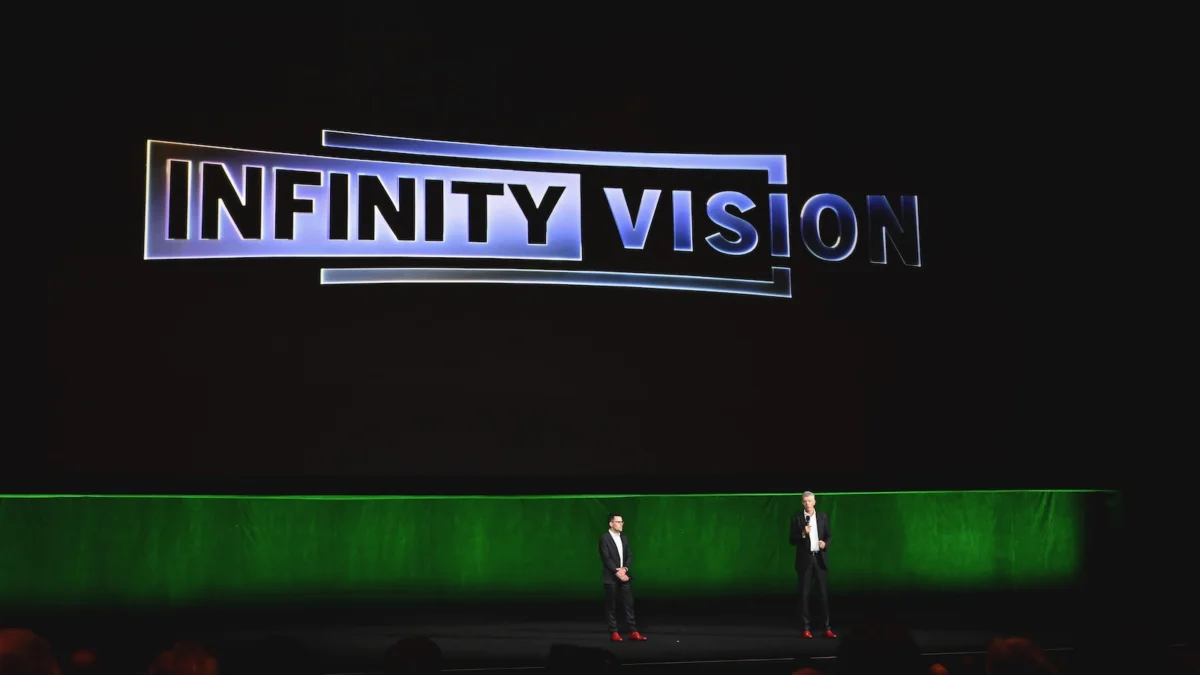
Infinity Vision is Disney’s newly minted branding designation applied to cinema auditoriums that meet the studio’s rigorous internal audio and visual standards. It is not an proprietary physical format, nor does it represent a standalone Premium Large Format (PLF) system like IMAX or Dolby Cinema. Rather, Infinity Vision was born out of stark competitive necessity. When Avengers: Doomsday hits theaters on December 18, it will be shut out of IMAX screens worldwide. Those premium auditoriums are already contractually locked down by Warner Bros. for Denis Villeneuve’s highly anticipated Dune: Part Three, which was shot natively on IMAX cameras and holds primary claim to the format.
Faced with the prospect of losing its premier giant-screen footprint during the holiday season, Disney crafted Infinity Vision to establish its own stamp of visual and acoustic excellence. By rolling out the branding first with Avengers: Endgame — Encore, the studio aimed to test consumer appetite, educate moviegoers, and prove that auditoriums bearing the Infinity Vision label could drive massive ticket sales without the direct backing of traditional PLF giants.
Chronology
The genesis of Infinity Vision and the strategic maneuvers leading up to the holiday box office clash followed a carefully calculated timeline:

- Spring 2026: During CinemaCon 2026, major studios outline their late-year slates. Warner Bros. solidifies the December 18 release date for Dune: Part Three on IMAX screens, leaving Disney’s upcoming Avengers: Doomsday without access to the format.
- Summer 2026: Disney announces the creation of "Infinity Vision"—a quality-assurance certification program designed to highlight auditoriums meeting specific sight and sound criteria.
- Early Autumn 2026: Disney launches an aggressive marketing campaign, including dedicated ticketing banner integration and a comprehensive consumer-facing website detailing Infinity Vision FAQs to cultivate brand awareness.
- Mid-October 2026: Disney opens early pre-sales exclusively for Infinity Vision-certified screens for Avengers: Doomsday, racking up massive initial traction. Concurrently, the studio announces the theatrical re-release of Avengers: Endgame — Encore as a live-fire test for the new branding.
- The Re-Release Weekend: Avengers: Endgame — Encore opens across more than 3,000 domestic screens, with over 1,300 officially certified under the Infinity Vision banner, culminating in a $26 million overall weekend and a $13.5 million haul from the branded screens alone.
Supporting Data
The initial performance metrics of Infinity Vision indicate that the studio’s early promotional efforts have struck a chord with core moviegoers.
- Screen Share vs. Box Office Yield: Avengers: Endgame — Encore debuted across roughly 3,000 locations, with 1,300-plus screens certified for Infinity Vision. This means roughly 43 percent of the film’s total playing footprint generated 52 percent ($13.5 million) of its total $26 million domestic gross.
- Pre-Sales Momentum for Doomsday: Industry data reveals that a staggering 73 percent of all pre-sales for Avengers: Doomsday—which has already crossed the $50 million pre-sale threshold—have been secured on Infinity Vision screens.
- Exhibitor Upgrades: Major theater chains are actively pursuing certification to capture the high-spending demographic. For instance, several international circuits, including Cinemark locations in Latin America, are expediting hardware and acoustic upgrades—such as implementing Dolby 7.1 audio systems—to meet Disney’s strict criteria.
- Pricing Mechanics: Crucially, Disney does not dictate consumer ticket pricing for Infinity Vision screenings. An upcharge is only applied if the individual theater exhibitor has already classified the specific auditorium as an in-house PLF screen, keeping the barrier to entry flexible for consumers.
Official Responses
Speaking exclusively to IndieWire, Andrew Cripps, Disney’s Head of Theatrical Distribution, emphasized that launching a completely new consumer brand requires patience, collaboration, and iterative learning.
"I think we’re all going to learn more about this," Cripps told IndieWire. "This is the first time out for Infinity Vision. We have marketed it, and we’ve had our exhibitor partners very engaged with this. If you go on the ticketing websites, there’s Infinity Vision banners on them. We’ve set up an Infinity Vision website with frequently asked questions so people can understand. But as you know, it takes a while to launch a brand and a new concept. So hopefully over time, people will become familiar with it and seek out Infinity Vision theaters."
Addressing the early consumer response to the brand’s premiere, Cripps expressed profound satisfaction with how ticket buyers gravitated toward the upgraded auditoriums.
"We want those first audiences to see it in the best possible environment, and the fact that they’re snapping up the biggest and best screens is a very positive thing," he noted.
Looking forward, Cripps stressed that the strategy is not intended to be a hostile rival to IMAX—especially since several upcoming Disney titles are already locked in for IMAX releases next year. Instead, it is an ongoing collaborative experiment with theater owners.

"Long-term expectations are still evolving," Cripps added. "We’ll learn with every release that we have. We’re doing a deep dive with all of our markets around the world, and with our exhibitor partners, and we will get to a good place with all of this."
Implications
The introduction and successful trial run of Infinity Vision carry profound implications for the future of movie exhibition, studio marketing, and premium formatting dynamics:
1. Shifting Power Dynamics Between Studios and Exhibitors
For decades, third-party formatting brands like IMAX and Dolby Laboratories have held immense leverage over Hollywood studios, dictating which blockbusters secure prime projection real estate. By creating an exhibitor-agnostic certification standard, Disney is reclaiming control over the presentation quality of its films. If Infinity Vision proves capable of moving millions of tickets independently of IMAX, studios gain a powerful new tool to incentivize theater operators to upgrade their physical infrastructure.
2. Redefining "Premium" Without Proprietary Hardware
Historically, premium formats required distinct, often expensive proprietary projection systems (such as IMAX 70mm or dual-laser setups). Infinity Vision democratizes the concept of premium presentation by focusing on a holistic threshold of audio-visual standards that many existing modern multiplex auditoriums already meet or can easily achieve with minor adjustments. By tying this standard directly to ticketing apps and pre-sale windows, Disney has trained consumers to actively seek out higher-quality auditoriums without necessarily forcing them to pay an inflated premium price across the board.
3. A Blueprint for Future Tentpoles
While Disney has not yet announced additional films slated for Infinity Vision beyond Avengers: Doomsday, the infrastructure is now in place for a permanent branding fixture. If the 73 percent pre-sale split for Doomsday translates into massive opening weekend figures this December, rival studios may look to adopt similar quality-assurance branding frameworks. For the exhibition sector, the initiative serves as a welcome shot in the arm, encouraging theater chains to modernize aging screens to secure vital studio backing and capture the loyalty of premium-seeking cinephiles.
