
Echoes of the Analog: An In-Depth Analysis of Josh Tanner’s Posthumous
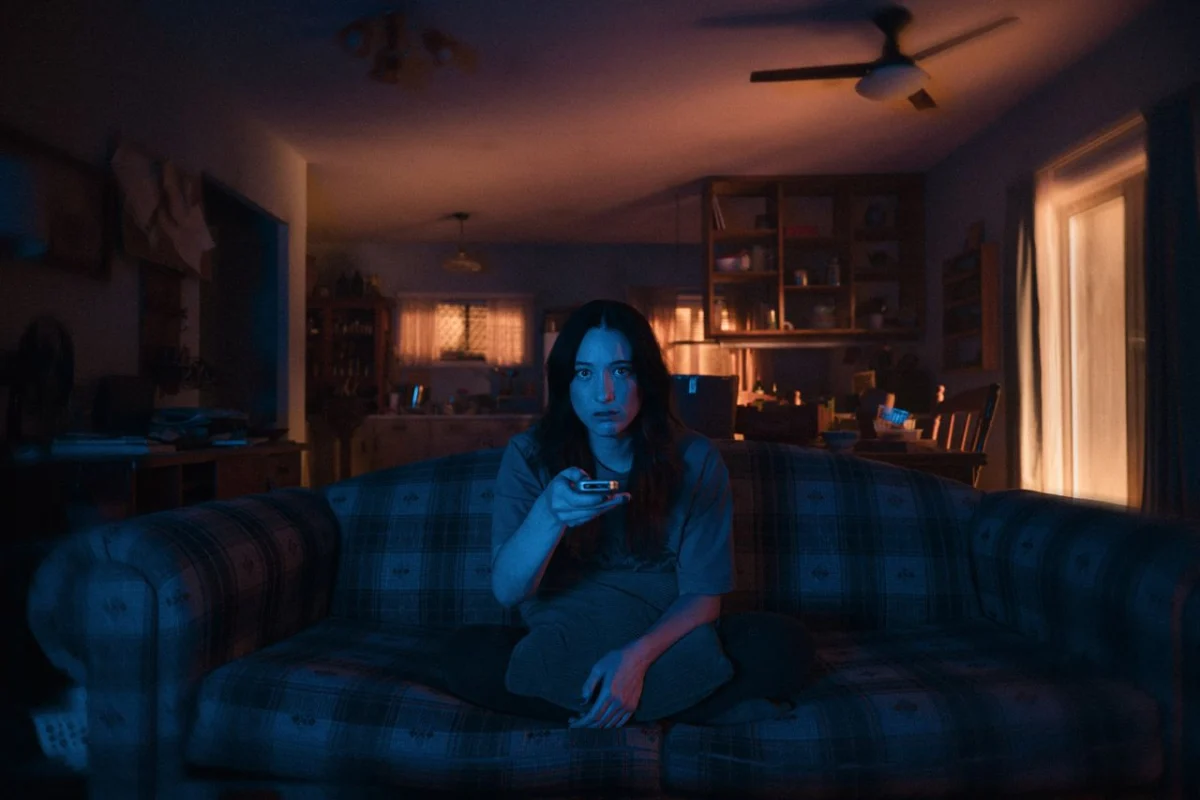
In the landscape of modern supernatural horror, the "scary face" has become a currency of its own. Since James Wan redefined the genre with the visceral, puppeteered terror of Saw and the jump-scare precision of Insidious, a legion of filmmakers has sought to replicate that specific brand of auditory and visual assault. Josh Tanner’s latest feature, Posthumous, arrives at this crowded table with a terrifying centerpiece entity, yet it struggles to find a unique identity within the well-worn hallways of the haunted house subgenre. While the film showcases technical proficiency and a compelling lead performance, it remains tethered to tropes that feel increasingly like relics of a bygone era.
The Premise: Grief, VHS, and Inherited Trauma
At the heart of Posthumous is Zoe, played with surprising nuance by Sophie Lowe. Following a tumultuous argument with her boyfriend, Alex (Remy Hii), Zoe seeks refuge in her father’s home on the night of her birthday. What begins as a solitary, maudlin evening of reflection quickly descends into a supernatural descent into her own family history.
Zoe’s mother, played by Kira-Che Heelan, passed away during childbirth, but she left behind a legacy of analog media: a series of VHS tapes intended to be watched by Zoe on every birthday until she reached her thirties. As Zoe begins to screen these tapes, the film pivots from a quiet character study into the realm of analog horror. The tapes are not merely mementos; they are repositories of grief, obsession, and, as the plot unfolds, something far more sinister.
Tanner, working alongside co-writer Jade Van Der Lei, uses these grainy, flickering images to bridge the gap between human tragedy and supernatural interference. The tapes serve as the catalyst for a mystery that challenges Zoe’s perception of her mother’s death and forces her to confront her father, Neil (David Roberts), who remains stubbornly—and perhaps suspiciously—resistant to discussing the past.
A Chronology of Escalation: From Atmosphere to Chaos
The structure of Posthumous is divided into two distinct halves, each utilizing different narrative strategies.
The Atmospheric First Half
In the film’s opening act, Tanner demonstrates a patient hand. The tension is built through silence, the hum of the VCR, and the inherent uncanniness of watching a deceased parent speak across time. The focus remains on Zoe’s internal struggle—her desire to unravel the mystery of her mother’s death serves as a convenient distraction from the lack of direction in her own adult life. Here, the film is at its strongest, utilizing the "analog horror" aesthetic to create a sense of unease that feels grounded in the character’s genuine, palpable grief.
The Second Half: The "Kitchen Sink" Approach
As the narrative progresses, the slow-burn atmosphere is jettisoned in favor of an escalation that feels somewhat desperate. Tanner leans heavily into the tropes of the genre: jump scares, distorted entities, and architectural anomalies that echo the "sacred geometry" seen in films like The Night House. While the technical execution is competent, the film begins to lose its narrow focus. The mystery of the tapes gives way to a bombardment of supernatural imagery—spectral apparitions, "Spirit Halloween-esque" manifestations, and a frantic pace that leaves little room for the audience to process the emotional stakes established early on.
Supporting Data: The Genre Landscape
To understand Posthumous, one must look at the giants in whose shadows it stands. The film is a clear descendant of the "Jump Scare Era" pioneered by Wan, but it also attempts to tap into the high-concept, elevated horror popularized by A24 and other boutique studios.
- The "Scary Face" Factor: As critic Owen Gleiberman famously noted, the modern horror industry is obsessed with the "face." Posthumous delivers on this front, featuring a creature design that is undeniably effective in the moment. However, when compared to the masterclass of tension seen in The Night House or the thematic depth of Hereditary, the horror elements in Posthumous feel like a collection of greatest hits rather than a new composition.
- Performance Metrics: Sophie Lowe’s performance is the film’s anchor. In a genre that often relegates its protagonists to mere victims of circumstance, Lowe imbues Zoe with agency. Her reactions are not merely screams; they are calculations. She approaches the supernatural phenomena with the intent of a detective, providing a necessary human connection to the chaotic visuals.
Official Perspectives and Creative Intent
In interviews surrounding the film’s festival run, including its appearance at the Brooklyn Horror Fest, Josh Tanner has expressed a desire to blend the intimacy of personal trauma with the "loud, visceral fun" of traditional horror.

"The goal was to create a space where the technology of the past—the VHS tape—becomes a bridge to a distorted, supernatural reality," Tanner noted during early screenings. However, critics have pointed out that while the intent is clear, the execution is hampered by a lack of narrative originality. The script, while earnest in its treatment of grief, often defaults to clichéd character dynamics. The father figure, Neil, is particularly emblematic of this, acting as a "genre-locked" character who refuses to acknowledge the horror until it is far too late, a trope that has become a parody of itself in recent years.
Implications: The State of Supernatural Horror
The release of Posthumous serves as a case study for the current state of supernatural horror. We are living in a period of "competent saturation." Filmmakers are more technically skilled than ever, and the ability to produce a "scary" movie—complete with sound design, color grading, and creature effects—has become standardized.
Why "Competent" is No Longer Enough
The primary critique of Posthumous is that it is, unequivocally, a "competent" film. It hits all the beats required of a supernatural thriller. Yet, in an era where audiences are inundated with content, competency is no longer the benchmark for success. The films that truly resonate today are those that break the mold—those that find a new language for fear.
By relying on the "sacred geometry" tropes and the "distorted tape" aesthetic, Posthumous risks being categorized as a derivative work. The film proves that Josh Tanner has the "sauce," as the saying goes—the ability to direct a scene, manage pacing, and elicit performances—but it also highlights the need for a more daring approach to storytelling.
Looking Toward the Future
The film’s final act, featuring a unique and genuinely "gnarly" creature design, suggests that Tanner has a distinct visual voice waiting to be unleashed. The path forward for directors in this space lies in the marriage of this visual flair with a premise that hasn’t been "done to death."
If Posthumous is to be remembered, it will be for its performances and its successful use of analog texture, rather than its contribution to the mythology of the genre. It is a film that functions perfectly as a momentary jolt—a thrill for a Friday night—but it lacks the staying power to linger in the cultural consciousness.
Final Assessment
Posthumous is a film caught between two worlds: the intimate, character-driven drama it wants to be, and the loud, jump-scare-laden horror movie it feels obligated to be. Sophie Lowe’s performance prevents the film from feeling hollow, and the analog horror elements provide a unique aesthetic, but the narrative backbone is fragile.
Ultimately, the film serves as a reminder that horror is a genre of constant iteration. To succeed in the current landscape, it is not enough to simply assemble the pieces of the past—one must assemble them in a way that feels urgent, necessary, and above all, new. Posthumous is a solid, albeit familiar, addition to the genre that will satisfy those looking for a quick scare, even if it fails to leave a lasting mark on the horror canon. It is a testament to the fact that while the "scary face" will always have a place in the genre, the soul of horror lies in the story that sits behind the mask.
