
Empowering the Next Generation of Storytelling: A Deep Dive into Autodesk Flow Studio’s 3D Editor

In the rapidly evolving landscape of digital content creation, the line between traditional film production and real-time 3D animation continues to blur. As studios face increasing pressure to deliver high-fidelity visuals within tighter production schedules, the need for integrated, intuitive tools has never been more critical. Enter Autodesk Flow Studio—a platform designed to bridge the gap between creative vision and technical execution. With the launch of its advanced 3D Editor and Canvas features, Autodesk is positioning itself at the forefront of a new era in virtual production, offering artists and directors a centralized hub to orchestrate complex cinematic scenes with unprecedented control.
The Evolution of the Digital Canvas: Core Features and Functionality
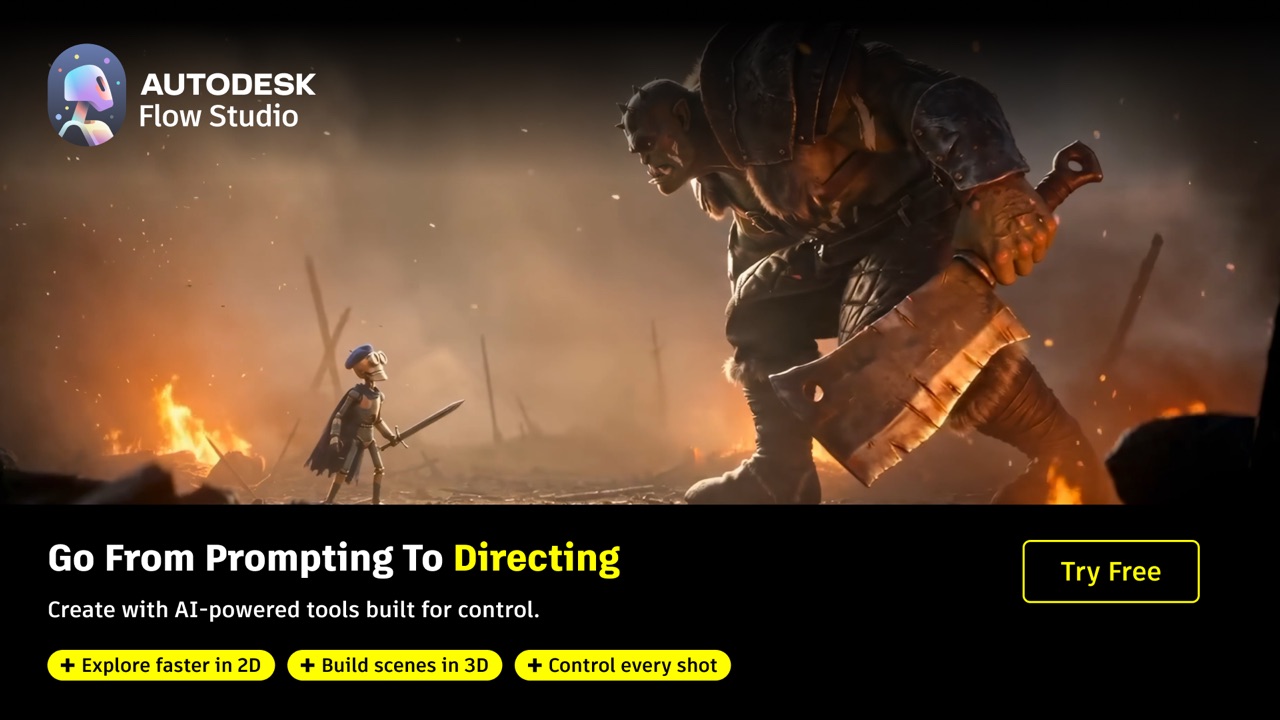
At the heart of the latest update to Autodesk Flow Studio is the 3D Editor and Canvas—a dual-environment system that allows creators to build, stage, and direct entire scenes without the friction of jumping between disparate software packages.
The primary innovation lies in the "unified stage" concept. Traditionally, a production pipeline would require distinct software for character rigging, environmental modeling, camera blocking, and final rendering. Flow Studio collapses these silos. By providing a persistent 3D canvas, artists can manipulate characters, adjust lighting, block out complex camera movements, and view live updates to the world-building process in a single interface.
This environment is designed to be "director-centric." Instead of forcing a technical workflow, the UI focuses on the shot—framing, character performance, and spatial storytelling. By leveraging Autodesk’s long history in CAD and high-end 3D animation, the tool provides a level of precision that ensures "every detail is exactly as you intend," reducing the "guesswork" that often plagues the pre-visualization and layout phases of animation.
A Chronology of Innovation: The Path to Flow Studio
To understand the significance of the current release, one must look at the trajectory of Autodesk’s "Flow" initiative. For years, the industry leader—known for industry standards like Maya and 3ds Max—has sought to solve the "data silo" problem.
- Early Development (Pre-2024): Autodesk identified that the most significant bottleneck in media and entertainment (M&E) production was the transfer of assets between departments. The initial conceptualization of Flow focused on cloud-based asset management and connectivity.
- The Foundation (2025): The introduction of the Flow platform allowed for better collaboration, but the creative tools remained largely external. Autodesk began integrating lightweight 3D viewing capabilities into the cloud ecosystem.
- The Current Phase (Late 2026): The launch of the 3D Editor and Canvas represents the transition from a management platform to an active creative toolset. By enabling real-time editing within the browser-based Flow environment, Autodesk has effectively brought professional-grade scene assembly to a more accessible, cloud-native space.
Supporting Data: Why Integrated Workflows Matter
The industry shift toward real-time and cloud-native workflows is driven by hard economic and logistical data. According to recent industry surveys within the M&E sector, the average animated feature film production involves thousands of iterations per shot.
- Reduced Friction: Studies suggest that artists lose approximately 15% to 20% of their total work hours to file conversion, software re-linking, and export-import processes. By keeping the workflow within the Flow Studio ecosystem, Autodesk claims to minimize these "hidden costs" of production.
- Collaborative Velocity: In a globalized market where teams are often distributed across multiple time zones, the ability to view and modify a 3D scene in real-time within a browser is transformative. The "Canvas" feature allows for synchronous feedback, which can decrease the revision loop cycle by an estimated 30% compared to traditional asynchronous file sharing.
- Accessibility: By lowering the barrier to entry for high-end 3D scene staging, Autodesk is opening doors for independent studios and boutique agencies that previously lacked the infrastructure to manage massive 3D pipelines.
Official Perspectives: The Autodesk Vision
Autodesk has framed the launch of the 3D Editor as a response to the growing demand for "creative autonomy." The company’s messaging highlights that while technology should be powerful, it should not be burdensome.
"The goal is to stage a scene exactly as a director sees it in their mind’s eye," says an Autodesk representative. "When you remove the technical hurdles, you aren’t just speeding up production; you are preserving the creative intent. We are moving toward a future where the tool is invisible, and the story is the only thing that matters."

The decision to offer a free trial period reflects a strategic push to gain market share among independent creators and smaller studios. By putting the tool directly into the hands of the end-user, Autodesk is signaling confidence that once artists experience the fluidity of the 3D Canvas, they will integrate it into their permanent workflow.
Implications for the Future of Filmmaking
The implications of the Flow Studio update are profound, particularly for the fields of virtual production and real-time rendering.
The Democratization of 3D
As 3D production becomes more accessible, we are likely to see an explosion in high-quality, mid-budget content. The ability to stage scenes with the level of professional control previously reserved for multi-million dollar blockbuster productions allows smaller teams to compete on visual quality.
The Death of the "Final Render" Bottleneck
Historically, the "final render" was the finish line. With the 3D Editor’s real-time capabilities, the process becomes iterative and continuous. We are moving toward a paradigm where a scene is "always ready," allowing directors to make late-stage creative decisions without needing to re-render entire sequences.

A New Standard for Collaboration
The cloud-first approach means that studios no longer need to maintain massive, expensive on-site server farms for every stage of the animation process. This lowers the capital expenditure required to start a studio, potentially decentralizing the animation industry away from traditional production hubs like Los Angeles and Vancouver.
Final Considerations: Looking Ahead
As Autodesk continues to iterate on the Flow Studio ecosystem, the community will be watching closely to see how these tools integrate with existing software like Maya and 3ds Max. The "Flow" brand is clearly the umbrella under which all future Autodesk innovation will reside, suggesting a future where software is less about "standalone applications" and more about "connected services."
For those in the industry—whether you are a seasoned technical director or an independent animator—the message is clear: the era of the isolated digital workstation is ending. The future is connected, cloud-native, and, most importantly, focused on the immediate, intuitive assembly of 3D worlds.
To explore the platform and see these features in action, visit the Autodesk Flow Studio website to begin your free trial. As the landscape of visual effects and animation continues to evolve, tools like the 3D Editor serve as the scaffolding upon which the next generation of visual stories will be built.

Note: For further reading on the history and technical evolution of visual effects, readers are encouraged to explore industry-standard resources, such as in-depth analyses of iconic films like "Avengers: Endgame," or engage with curated community platforms dedicated to the craft of "Before and After" visual storytelling. Whether through professional publications or limited-edition creative merchandise, the passion for the art of animation remains the driving force behind these technological leaps.
