
From Reluctant Outsider to Franchise Royalty: How Robert Picardo Became a Star Trek Icon Despite His Initial Aversion
Main Facts
The Star Trek franchise is globally celebrated for its overarching themes of optimism, unity, diversity, and the relentless pursuit of knowledge across the cosmos. However, the space-faring universe of Starfleet is not universally beloved—even, paradoxically, by some of the actors who became pillars of its success.
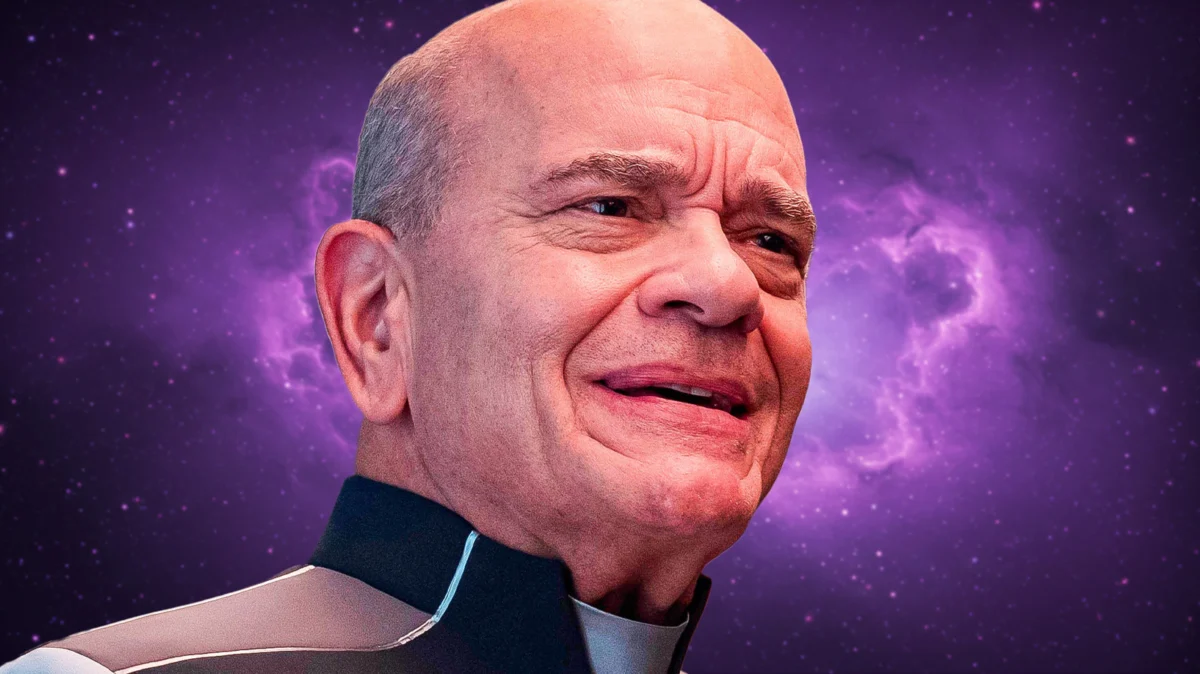
Perhaps the most famous example of this dynamic is Robert Picardo, best known for portraying the Emergency Medical Hologram (EMH), simply known as "The Doctor," on Star Trek: Voyager. Picardo recently opened up about his journey into the franchise during an exclusive interview at New York Comic Con. Far from being a lifelong fan hoping to land a coveted role in sci-fi history, Picardo admitted he was initially indifferent to the franchise, actively tried to talk producers out of hiring him, and even attempted to audition for a different character entirely.
Despite his initial skepticism, Picardo’s distinct perspective allowed him to craft one of the most enduring, complex, and beloved characters in modern television science fiction. His journey from a reluctant television actor looking for a steady paycheck to a Star Trek icon—a role he recently reprised in the upcoming series Star Trek: Starfleet Academy—is a testament to how creative resistance can occasionally forge lightning in a bottle.
Chronology: The Winding Road to the USS Voyager
Pre-Audition Indifference and Seeking Employment
Before stepping onto the Paramount lot in the mid-1990s, Robert Picardo’s relationship with Star Trek can best be described as a blank slate tinged with professional distance. In the entertainment industry, actors often audition for properties simply to secure employment rather than out of fandom. For Picardo, the creation of Star Trek: Voyager was just another job opening on the casting sheets.
"I literally didn’t care [about ‘Star Trek’ before auditioning]. I wanted a good job," Picardo recalled during his New York Comic Con panel. Rather than studying past iterations of the franchise or familiarizing himself with the socio-political lore of the United Federation of Planets, Picardo approached the casting office with a sense of creative independence that ultimately worked to his advantage.
Attempting to Dodge the Doctor
When Picardo was first called in to read for the role of the Emergency Medical Hologram, his immediate reaction was hesitation. Fearing that the role of a stiff, holographic physician would offer little room for comedic or dramatic flexibility, he tried to maneuver his way out of it.
In a surprising revelation, Picardo admitted that he attempted to talk casting directors out of the medical role so he could read for a character that required extensive prosthetic work. He initially targeted Neelix, the enthusiastic, morale-boosting Talaxian eventually played by actor Ethan Phillips.
"I did everything I could to talk my way out of hiring me. I turned down the audition for the Doctor and read for Neelix, because I thought it was funnier," Picardo said. With his signature comedic timing, he reflected on the near-miss of spending years beneath heavy prosthetics: "I came this close to spending 6,000 hours of my life in a makeup chair. Dodged that bullet."
Embracing the Holographic Persona
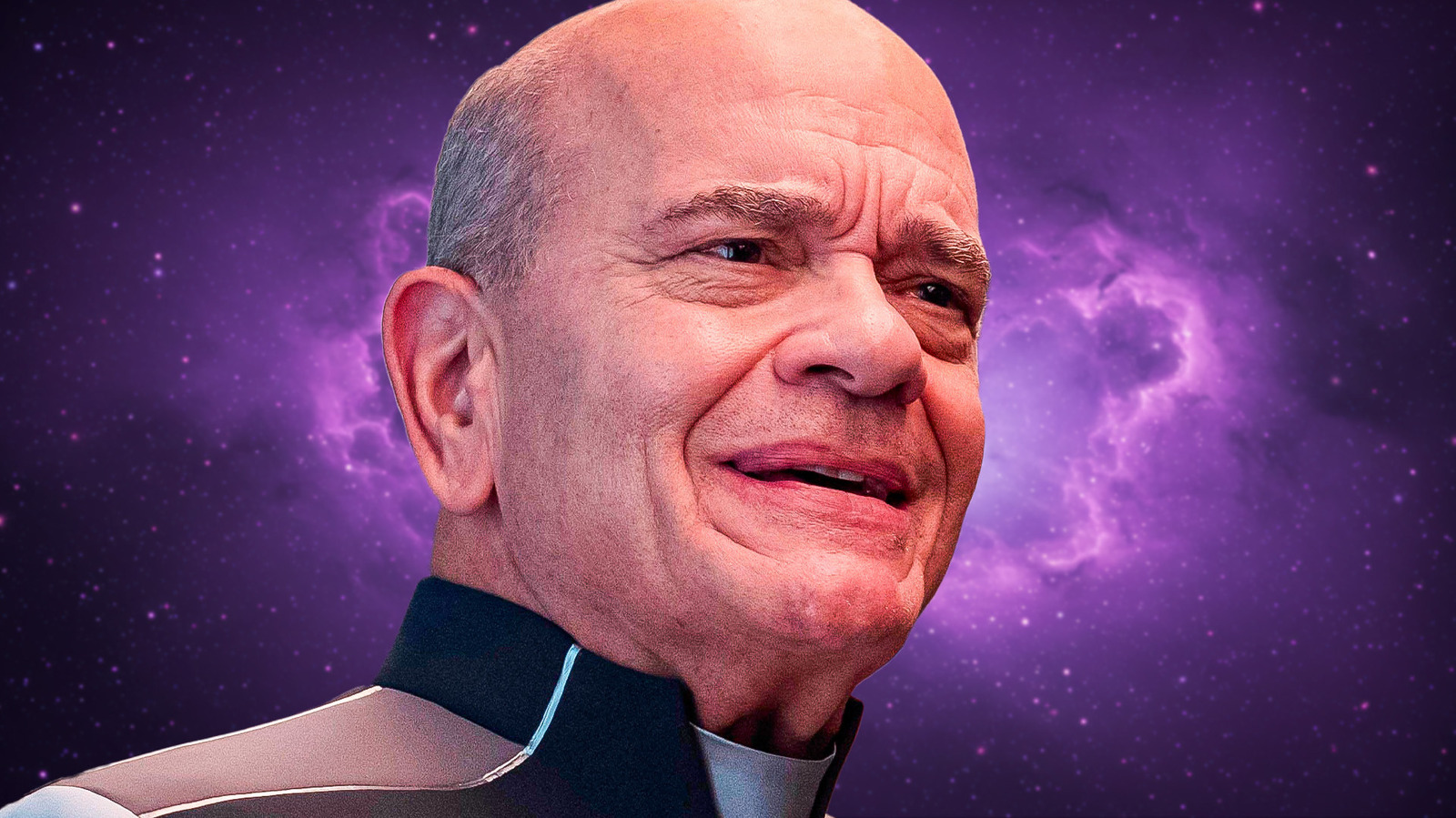
Producers recognized something unique in Picardo’s audition and ultimately brought him back to read for the EMH. Once cast, Picardo had to find a way to make a character composed entirely of hard light and digital subroutines feel deeply human.
Rather than playing the Doctor as a standard, emotionless computer interface, Picardo leaned into the comedy and tragedy of a sentient program trapped in a loop of servitude. Over the seven seasons of Voyager, the character evolved from a restricted medical subroutine activated only during crises into a multi-dimensional individual with artistic aspirations, complex ethical dilemmas, and a famously sharp tongue.
Even when producers introduced the mobile emitter—a 29th-century device that allowed the Doctor to leave sickbay and walk freely around the ship, a creative choice Picardo himself initially pushed back against—the character’s core temperament remained delightfully unchanged.
Supporting Data and Character Psychology
To understand why the Doctor resonated so deeply with audiences, one must examine the unique parameters of his existence. As an Emergency Medical Hologram, the Doctor was never meant to have a permanent identity. He was designed as a tool, an appliance to be switched on when crew members were injured and switched off when the crisis passed.
This existential vulnerability formed the bedrock of Picardo’s performance. During his interview, the actor detailed the intellectual framework he used to construct the character’s famously irritable personality:
"I started to understand the Doctor — what his bad attitude was, that he had the power of this incredible knowledge, and the vulnerability that any idiot could turn him on and off like a light switch. That p**ed him off. I got it. I thought of Paradise Lost*, [how] the key to Lucifer’s fall is his ‘sense of injured merit.’ So the Doctor had that. And the other half was Humpty Dumpty."
This bizarre yet brilliant synthesis of John Milton’s fallen angel and Lewis Carroll’s fragile nursery rhyme character gave the Doctor his distinct flavor. He possessed the intellect and pride of a celestial being cast down into a menial station, combined with the extreme fragility and defensiveness of someone terrified of being shattered.
This psychological depth translated into concrete metrics of success for the series:
- longevity: The Doctor remains one of the few characters from Star Trek: Voyager to make major narrative transitions into subsequent iterations of the franchise.
- Cultural Impact: Despite initial fan skepticism regarding the premise of Voyager, the Doctor quickly topped audience polls as a fan-favorite character throughout the late 1990s.
- Franchise Continuity: Picardo’s continued involvement bridges the gap between 1990s syndicated television and the modern streaming era of Star Trek, evidenced by his return in Star Trek: Starfleet Academy.
Official Responses and Industry Perspectives
The relationship between actors and long-running sci-fi franchises is frequently complex. While some performers grow up dreaming of wearing Starfleet uniforms, others approach the work through a purely theatrical lens. Industry veterans often note that actors who are slightly detached from the pop-culture mythology of a franchise can sometimes deliver more grounded, authentic performances because they are not trying to imitate previous actors or pander to fan expectations.
Picardo’s transition from a "Star Trek hater"—or, more accurately, a dispassionate working actor—to an adored ambassador of the franchise illustrates a broader Hollywood phenomenon: the evolution of the reluctant star.
Producers and showrunners have frequently praised Picardo’s professionalism on set. While he may have joked about wanting to avoid the makeup chair or steering clear of the science fiction genre, his commitment to the craft elevated the scripts he was given. The Doctor’s musical numbers, ethical battles for holographic rights ("Author, Author"), and psychological growth stands as some of the finest writing in the Voyager canon, largely anchored by Picardo’s steadfast dedication to the character’s internal logic.
Implications for the Star Trek Franchise
Robert Picardo’s journey holds significant implications for how modern television franchises cast and develop characters.
1. The Value of Outsider Perspectives
By casting an actor who was indifferent to the sacred cows of Star Trek lore, the production team avoided the trap of self-conscious nostalgia. Picardo played the Doctor not as an archetype within a grand sci-fi tapestry, but as a frustrated individual trapped in an impossible workplace environment. This grounded approach helped Voyager find its unique comedic and dramatic voice.
2. Longevity and Streaming-Era Continuity
As the Star Trek universe expands across streaming platforms through networks like Paramount+, maintaining continuity with older series is vital for fan retention. Projects like Star Trek: Starfleet Academy rely heavily on legacy actors to bridge generations. Picardo’s willingness to return to the universe—despite his initial reluctance decades ago—proves that the cultural footprint of the franchise eventually wins over even the most skeptical of performers.
3. Redefining Artificial Intelligence in Science Fiction
Long before modern discussions surrounding artificial intelligence dominated public discourse, Voyager explored the rights of sentient programs through the Doctor. Picardo’s interpretation of a digital entity struggling against arbitrary shutdowns and systemic disrespect anticipated real-world debates regarding machine consciousness, ethics, and personhood.
Conclusion
Robert Picardo’s path to becoming a Star Trek icon is a masterclass in unexpected professional alignment. What began as a mere audition for a paycheck evolved into a defining television role that helped shape the emotional core of Star Trek: Voyager. By drawing upon literary touchstones like Paradise Lost and channeling a healthy dose of professional skepticism, Picardo turned an accidental casting choice into an enduring piece of science fiction history—proving once and for all that sometimes, the best people for the job are the ones who try to avoid it.
