
The Pulse of Studio 8H: How Jon Batiste Scored the Controlled Chaos of "Saturday Night"
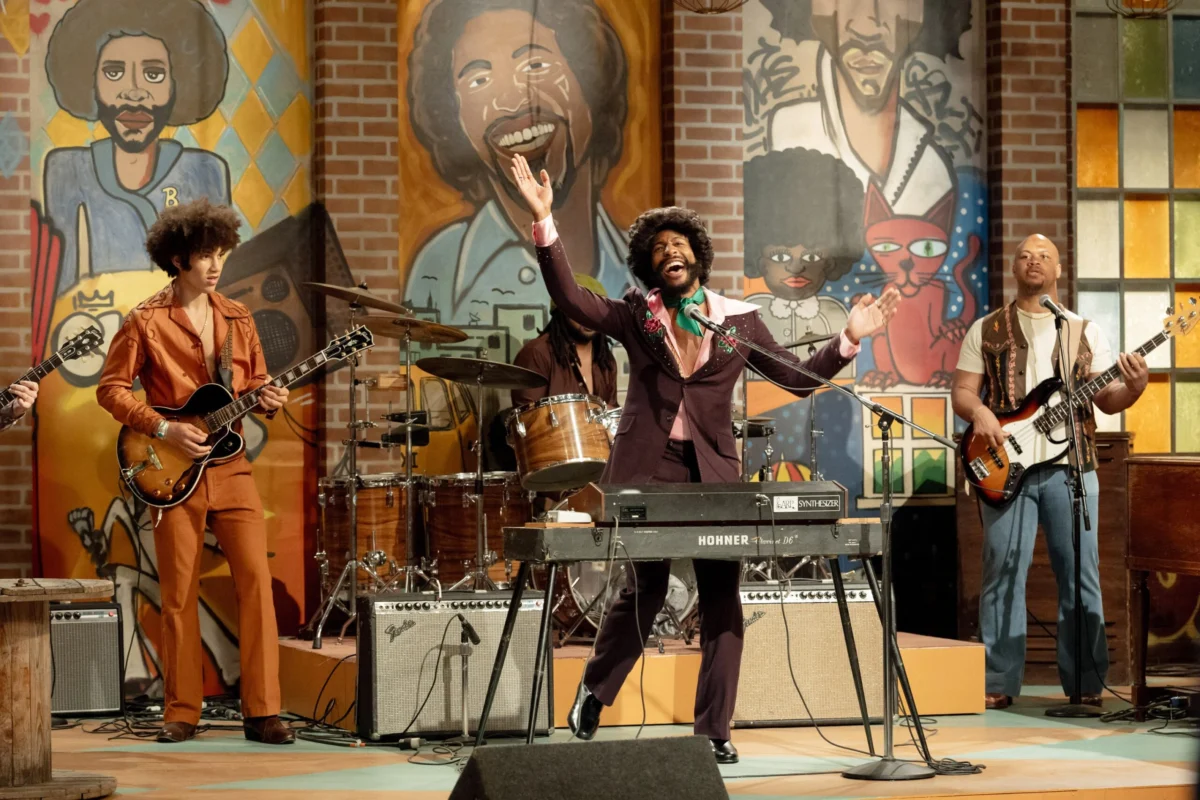
The magic of cinema often relies on the invisible architecture of a musical score—the strings that swell to signal heartbreak, or the brass that punctuates triumph. However, in Jason Reitman’s Saturday Night, the film chronicling the frenetic, history-making 90 minutes leading up to the 1975 premiere of Saturday Night Live, the music serves a far more volatile purpose. It is not merely a background accompaniment; it is the heartbeat of a ticking time bomb.
Composed by the multi-hyphenate musical visionary Jon Batiste, the score for Saturday Night represents a departure from traditional scoring practices. Eschewing the isolation of a recording booth, Batiste and his hand-picked ensemble composed and recorded the music live on set, mirroring the improvisational, high-stakes energy of the show’s original cast. By doing so, they captured the palpable, suffocating tension of the final countdown to showtime—a force Batiste describes as the true antagonist of the film.
The Architecture of Anxiety: A Chronology of Creation
The production of Saturday Night was defined by a compressed, high-pressure timeline, a condition that Reitman and his team intentionally cultivated to mirror the actual experience of Lorne Michaels and his writers in 1975. For Batiste, this wasn’t just a stylistic choice; it was the foundation of his creative process.
The Daily Ritual
Throughout the shooting schedule, the ritual became consistent: as the cameras cut and the day’s filming wrapped, the set would transition. While the actors shed their 70s-era personas, Batiste and his band—often still in costume, having played the film’s musical guests like Billy Preston—would settle in to work.

Working with rough, work-in-progress edits provided by Reitman and his editorial team, Batiste didn’t rely on complex MIDI mockups or polished, pre-written compositions. Instead, he utilized the "oral tradition"—a pedagogical method deeply rooted in his New Orleans upbringing. He would verbalize musical concepts to his band, sketching out textures and rhythms in the moment.
The "First Take" Philosophy
This approach led to a remarkable result: the majority of the music heard in the final cut of Saturday Night consists of the very first takes recorded on set. This raw, unvarnished quality provides the film with an auditory authenticity that mirrors the "live" nature of the broadcast depicted on screen. By refusing to over-polish the tracks, Batiste ensured that the score retained the "pocket of presence" that he believes is essential to capturing the spirit of a moment that can never be repeated.
Supporting Data: The Musical Language of the Diaspora
To understand why Batiste’s score feels so distinct, one must look at the diverse musical lineages he tapped into. Batiste’s philosophy is built upon the African diasporic tradition, where musical knowledge is passed down through direct, oral interaction rather than static notation.
The New Orleans Influence
Batiste, an alumnus of the prestigious New Orleans Center for Creative Arts (NOCCA), credits his approach to the "elders" who shaped his education. Legends like the late Alvin Batiste, Ellis Marsalis, and Kid Jordan instilled in him the belief that music is a collaborative, living organism.

"The African diasporic tradition of learning music and passing on wisdom from the elders is an oral tradition," Batiste explained. "Yeah, you learn music from a page and from books, but you also learn it orally by sitting in a circle with an elder." This methodology, which Batiste calls "unbroken," allowed him to command his band with a fluidity that mimics the way a jazz ensemble navigates a standard.
An Eclectic Soundscape
The sonic palette of Saturday Night is a tapestry of American musical history. Batiste intentionally blended:
- Afro-Latin Percussion: By incorporating the skills of percussionist Pedrito Martinez, the score gains an rhythmic intensity that feels both worldly and distinctly New York.
- The Brooklyn Church Tradition: With organist Cory Henry, Batiste integrated the soulful, expansive sounds of the city’s historic gospel scenes—a nod to the spiritual and cultural backbone of the borough where many of the original SNL cast members found their rhythm.
- Cinematic Homage: Batiste draws inspiration from iconic, non-traditional scores like American Graffiti, Duke Ellington’s jazz-noir work on Anatomy of a Murder, and the sharp, anxious electronic pulses of Trent Reznor and Atticus Ross in The Social Network.
Official Perspectives: Breaking the Paradigm
In his discussions regarding the film, Batiste expressed a desire to see more composers move away from the "orchestral, composerly" tropes that have dominated Hollywood for decades.
Reimagining the Score
"It’s normal to think of a score as orchestral, composerly," Batiste noted. "Where the strings and the timpanis and all those devices tell you how to feel emotionally, and they’re your cue in a way that we’re very familiar with. And anytime someone breaks that paradigm, it’s pretty wonderful."

For Batiste, the "wonderful" part of Saturday Night was the integration of room tone. Because the music was recorded in the same environments where the dialogue was captured, the acoustic signature of the score matches the acoustic signature of the scenes. There is no artificial "gloss" added in post-production; the music feels like it is physically inside the room with the characters.
Pushing the Norms of Balance
One of the most radical aspects of the film’s sound design is the willingness to let the music conflict with the dialogue. Batiste and Reitman worked to challenge the industry standard that dialogue must always be the loudest, clearest element in the mix. By allowing discordant, howling, or rhythmic cues to push against the spoken word, they effectively replicated the sensory overload of a production studio minutes before a live broadcast.
The Implications: A New Standard for "Presence"
The success of the Saturday Night score carries significant implications for the future of film composition. It suggests that modern audiences are hungry for "presence"—a feeling that the music is a participant in the action rather than a commentator on it.
The Impermanence of the Moment
Batiste emphasizes that the most profound aspect of this project was the shared consciousness of the cast, crew, and musicians. "That’s what I love about this that I would take to other movies," he says. "You compose to find what that pocket of presence is, so that the score feels deeply integrated."

The implication here is that the future of film scoring may move away from the isolated genius in a studio and toward a more communal, collaborative model. By bringing the composer into the fold of the production, filmmakers can capture a level of raw, kinetic energy that is simply unattainable when the music is added months later in a sterile environment.
A Legacy Continued
Ultimately, Saturday Night is a tribute to the legacy of those who dared to disrupt the status quo. Just as Lorne Michaels and his crew of outsiders challenged the television establishment in 1975, Batiste’s score challenges the conventions of film scoring in 2024.
By grounding his work in the oral traditions of his elders while simultaneously embracing the modern, experimental spirit of contemporary cinema, Jon Batiste has created something rare: a soundtrack that doesn’t just support the story, but one that actively breathes alongside it. It is a score that is, quite literally, alive. As the credits roll, the audience is left with the lingering impression that they haven’t just watched a movie about the birth of a show; they have participated in the very, frantic, and beautiful act of creation itself.
