
Introduction: The Selective Evolution of Mike Faist
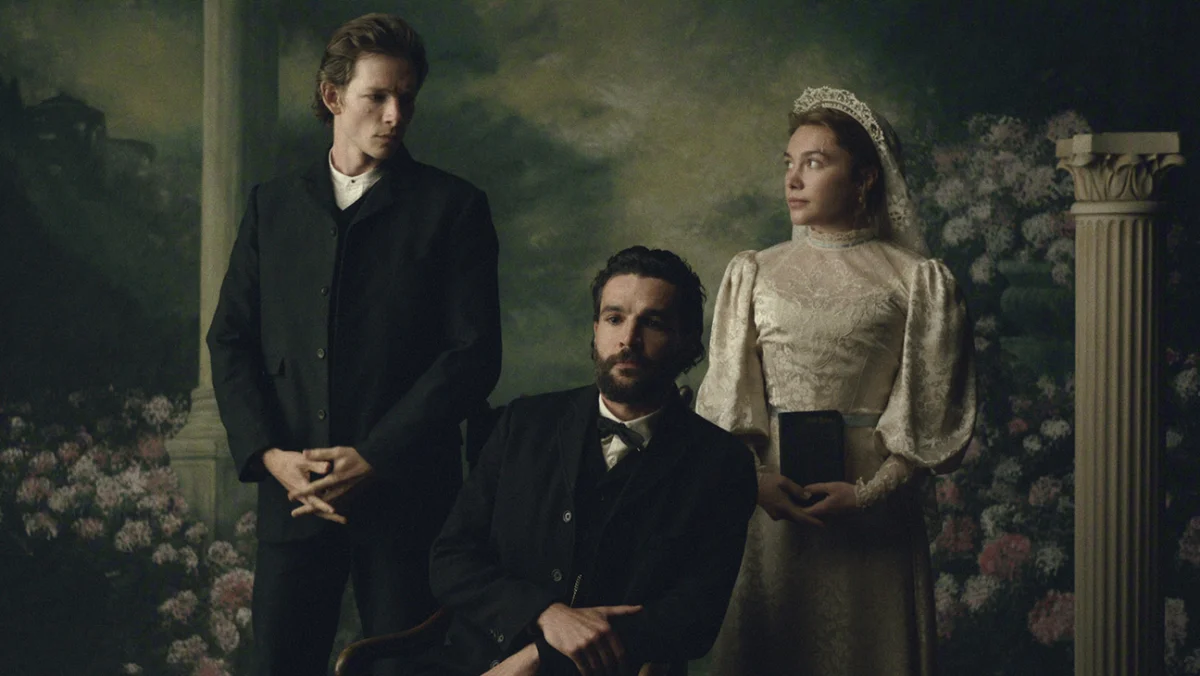
In an industry where young actors often feel compelled to say yes to every casting call to maintain momentum, Mike Faist is rewriting the rules. Since his breakout performance as Riff in Steven Spielberg’s 2021 adaptation of West Side Story, the Ohio native has cultivated a reputation for rigorous selectivity. For Faist, life in the frenetic machinery of Hollywood is too valuable to squander on projects that lack fertile creative soil.
His selective path recently led him to New Zealand to star as Charles Trask in Zoe Kazan’s ambitious Netflix miniseries adaptation of John Steinbeck’s literary masterpiece, East of Eden. Premiering on October 1, the sweeping family drama marks Faist’s first television role since a powerhouse 2024 that included standout turns in Luca Guadagnino’s Challengers and Jeff Nichols’ The Bikeriders. For an actor who views his career as the literal sum of his choices, stepping into the sprawling, dust-swept world of Steinbeck’s nineteenth-century epic was both a daunting leap and an artistic inevitability.
Main Facts: Stepping into the Legacy of East of Eden
Zoe Kazan’s East of Eden miniseries is a sweeping, multi-generational retelling of the biblical Cain and Abel allegory, unfolding against the backdrop of the turn of the 20th century. The narrative kicks off in 1899, when estranged brothers Adam Trask (played by Christopher Abbott) and Charles Trask (Mike Faist) encounter a mysterious, near-fatally beaten woman named Cathy Ames (Florence Pugh) dumped on their doorstep.
Unlike Elia Kazan’s iconic 1955 film—directed by Zoe’s grandfather, which famously focused only on the fourth and final section of Steinbeck’s novel centering on the fraternal twins Aron and Cal—this new adaptation attempts to capture the full scope of the multi-generational family saga.
At the center of Faist’s performance is Charles Trask, a man consumed by deep-seated isolation, fraternal jealousy, and a crushing sense of inherited shame. As Charles wrestles with his father’s blatant favoritism toward Adam and the subsequent arrival of the manipulative Cathy Ames, Faist’s nuanced portrayal brings a raw, psychological depth to the classic antagonist.

Chronology: From James Dean Inspirations to Netflix’s Epic
Formative Years and Early Influences
Faist’s relationship with East of Eden runs deep. When he first packed his bags and moved to New York City at the age of 17 to pursue a career in acting, he heavily immersed himself in the cinematic history of James Dean. Dean’s explosive, star-making performance as the wayward teenager Cal Trask in Elia Kazan’s 1955 film permanently shaped Faist’s artistic sensibilities. The raw emotion displayed by Dean later served as a direct inspiration for Faist when he took on the role of Jack Twist in the 2023 West End production of Brokeback Mountain.
The Casting Call and the "Dread" Indicator
When Zoe Kazan reached out with an offer to play Charles Trask, Faist faced the classic actor’s dichotomy.
"The two things that go through your mind when you get that call about something as exciting as [East of Eden] are, Hell yes — and also, Oh God, I can’t believe I have to go do this thing now," Faist reveals.
That immediate feeling of dread, he notes, is usually the precise indicator that signals it is time to dive into the deep end of a challenging character. Eager to work alongside a stellar cast that included Christopher Abbott, Hoon Lee, and Florence Pugh, Faist packed his bags for New Zealand to tackle the literary adaptation.
Supporting Data: Deconstructing the Trask Family Psychology
One of the most fascinating layers of the East of Eden narrative involves the systemic psychological abuse inflicted by the family patriarch, Cyrus Trask (portrayed by Tracy Letts). In the source material and early narrative beats, Cyrus consistently favors Adam—enlisting him in the Army while leaving Charles, the inherently superior soldier, behind to manage the family farm.

Traditionally, this dynamic is viewed purely through the lens of the Cain and Abel allegory, given that Cain was a tiller of the ground. However, rigorous dramatic analysis of the series reveals a much darker, ego-driven motivation behind Cyrus’s decisions.
Unmasking the Patriarch’s Lies
In a 1889 sequence, Adam returns home after five years of military service. Cyrus, a heavily decorated veteran who lost a leg during the Civil War, proudly boasts in a Washington, D.C. office that his son is leaving the Army as a humble private, just as he once was. When Adam politely corrects him, noting he is actually a corporal—one rank higher—Cyrus aggressively brushes the correction aside and later bristles when Adam chooses to extend his service.
Years later, in 1899, the brothers uncover a devastating truth: Cyrus’s entire war record was a fabrication, and he had embezzled upwards of $100,000 from veterans’ funds.
Protecting the Male Ego
This revelation radically recontextualizes Cyrus’s treatment of his sons. Faist and critics alike converge on a compelling interpretation: Cyrus deliberately chose Adam for the military because his lack of natural soldierly instincts ensured he would never surpass his father’s fictional legacy. Charles, conversely, possessed the raw talent and tactical capability to build a military career that could easily eclipse Cyrus’s manufactured glory.
"You were able to answer why the lie existed, which was to protect the male ego," Faist acknowledges when discussing this psychological reading of the text.

Official Responses: The Mechanics of Character and Adaptation
Faist’s preparation for Charles Trask required him to look inward at the physical and emotional manifestations of prolonged isolation. Because Charles was essentially "banished into the abyss" to run the farm while carrying the heavy burden of paternal rejection, his development was stunted.
"To be consumed by shame while growing up from a boy to a man, but not really being able to grow up — there’s a stuntedness," Faist explains. "What does it feel like if you’re actually carrying around shame for that long? What does that do to you? How do you walk? How do you talk? How do you actually view yourself if you never interact with people and you don’t like yourself? So the voice just came out of that."
When Cathy Ames finally arrives at the Trask doorstep, Charles instantly recognizes a kindred spirit. While the men in the valley typically fall instantly under Cathy’s manipulative spell, her routine completely fails against Charles. As Faist notes, "Maybe kind recognizes kind. I see who you are because that same thing exists within me."
Implications: The Enduring Appeal of the Character Triangle
The arrival of Cathy Ames solidifies a complex psychological triangle between Charles, Adam, and Cathy—a dynamic exploring human desire, regret, and choice. Faist, who is no stranger to triangular character dynamics following his work in Challengers, reflects deeply on why audiences remain forever captivated by these fictional geometry problems.
Drawing parallels between love triangles and time-travel narratives, the core appeal lies in the human obsession with regret and alternative paths.

"We only get one shot on this planet to do any of the things. There are choices. Every day is a choice," Faist notes. "What are we going to do today? How do we react when a person pisses us off? Do we let it go and be an adult? Or do we tap into a more primal aspect of ourselves and snap back? Every moment of our days and our lives is just a series of these built-up choices."
Looking Ahead
While Faist kept his cards close to his chest regarding upcoming production slates and rumors surrounding potential collaborations—such as a rumored reunion with Luca Guadagnino on Sgt. Rock—his artistic trajectory remains razor-sharp. Having been raised on the cinematic masterpieces of Steven Spielberg, George Lucas, Martin Scorsese, and Francis Ford Coppola, Faist continues to approach his career with the reverence of a lifelong student of film.
For now, audiences can watch Mike Faist deliver a masterclass in internalized shame and brooding intensity as Charles Trask in East of Eden, currently streaming on Netflix.
