
Reevaluating the Myth: Arthur Penn’s Little Big Man and the Subversion of the American Western
Main Facts
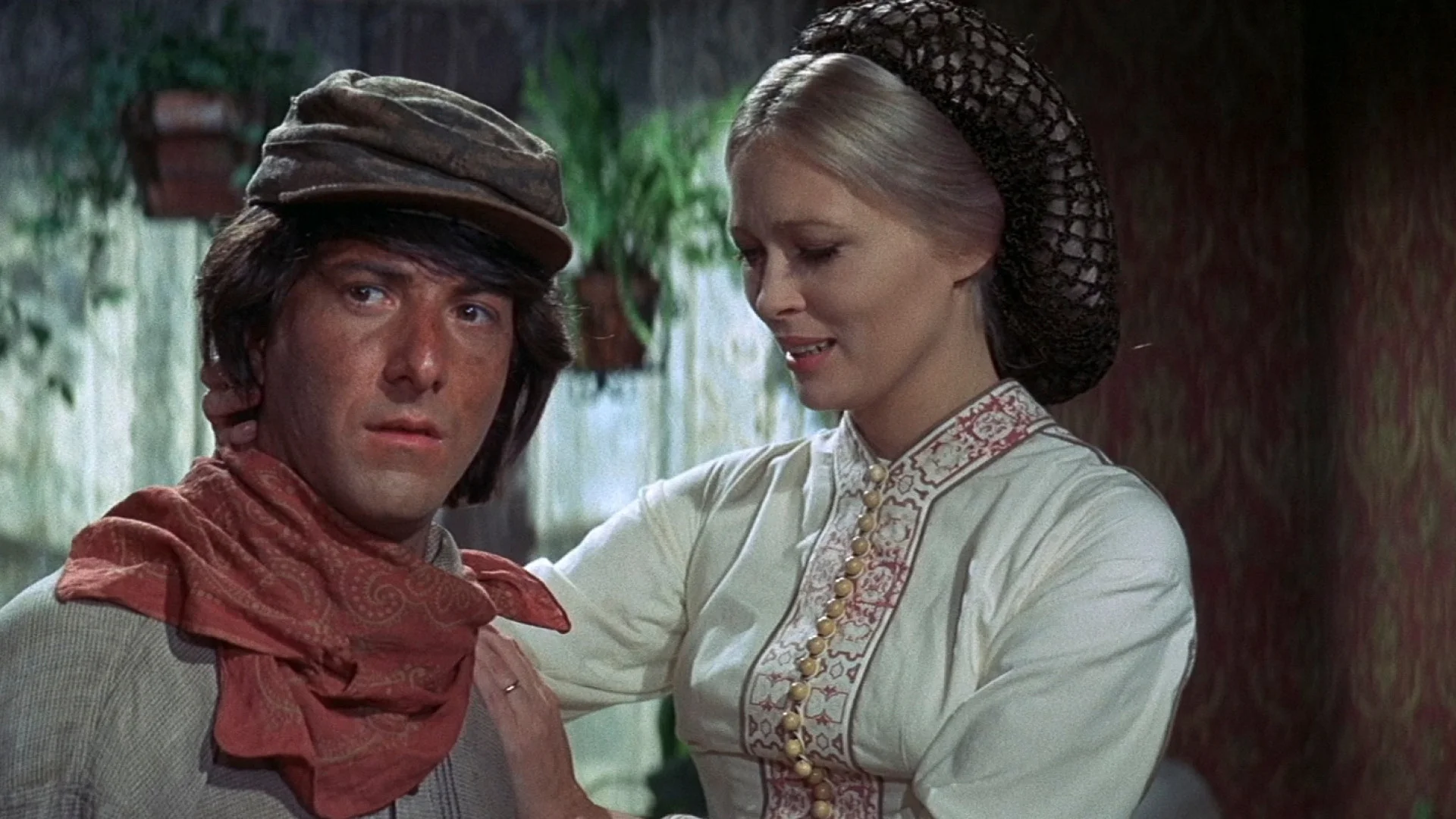
Released in 1970 at a time of profound cultural upheaval and national introspection, Arthur Penn’s Little Big Man stands as a monumental achievement in cinematic revisionism. The film boldly satirizes and dismantles the traditional tropes of the Western genre, offering a sweeping, irreverent, and ultimately tragic deconstruction of the mythology upon which the United States was built.
At the center of this epic narrative is Dustin Hoffman, who delivers a staggering, multi-generational performance as Jack Crabb, a man who claims to be the sole survivor of Custer’s Last Stand at the Battle of the Little Bighorn. Hoffman, a celebrated recipient of the American Film Institute (AFI) Life Achievement Award, anchors a powerhouse ensemble cast that includes Martin Balsam, Jeff Corey, Chief Dan George, and Faye Dunaway.
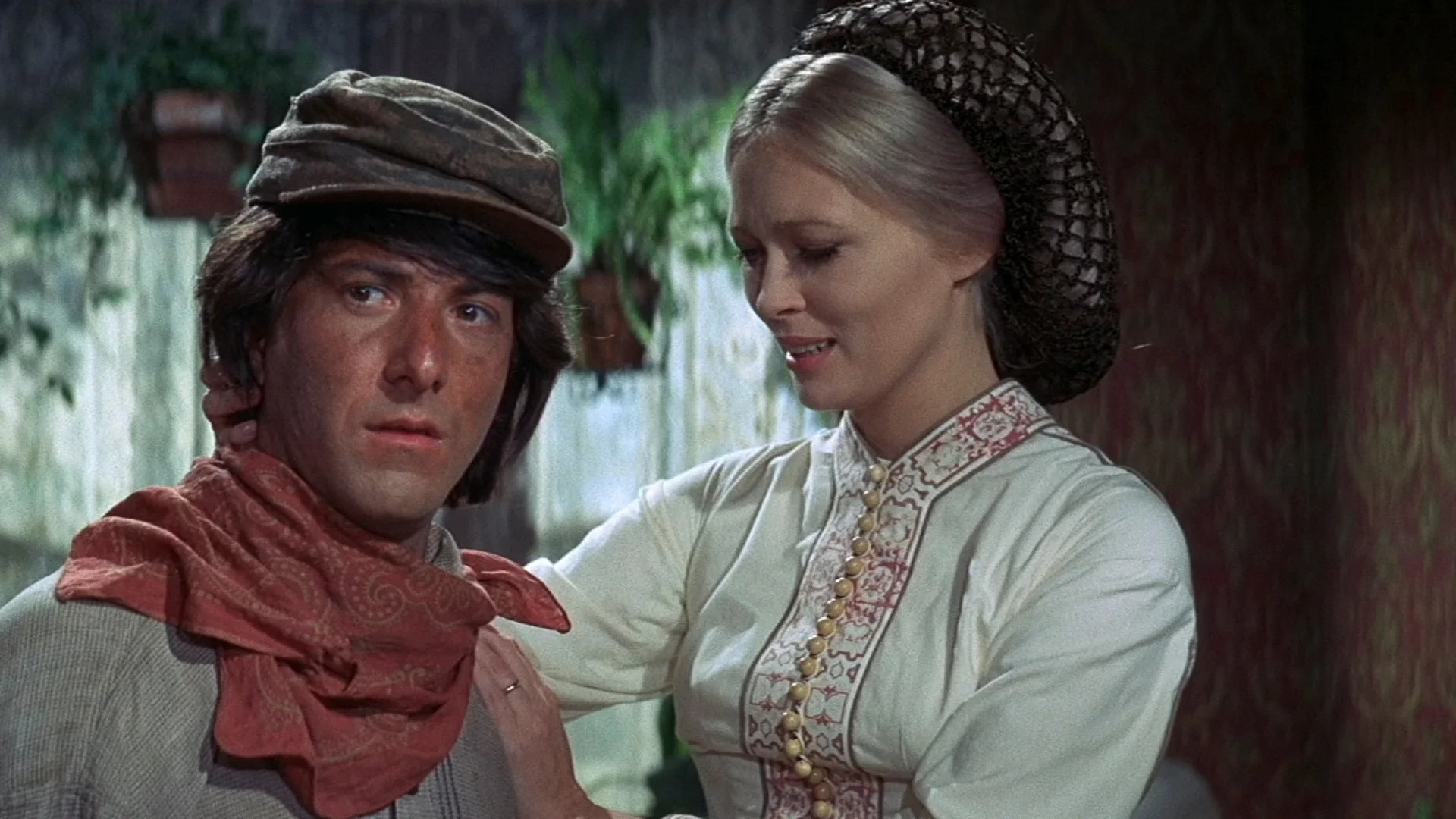
Far from the clean-cut, black-and-white morality of classical Hollywood Westerns, Little Big Man presents a chaotic, morally ambiguous frontier where historical figures like General George Armstrong Custer are depicted not as heroic defenders of civilization, but as vainglorious, narcissistic madmen. The Cheyenne people, frequently marginalized or demonized in earlier cinema, are portrayed with cultural nuance, warmth, and humanity, referred to simply as "The Human Beings."
As cinema institutions like the American Film Institute continue to preserve and highlight through the AFI Catalog, Little Big Man remains a defining text of the New Hollywood era—a period when filmmakers boldly challenged established political, social, and artistic orthodoxies.

Chronology
To understand the evolution of Little Big Man from source material to screen, one must trace its journey through the shifting cultural landscapes of the 1960s and 1970s:
- 1964: Author Thomas Berger publishes Little Big Man, a picaresque, satirical historical novel that captures the sprawling, contradictory nature of the American frontier through the sprawling life of its centenarian protagonist, Jack Crabb.
- Late 1960s: As the counterculture movement gains momentum, public disillusionment grows regarding institutional authority, the Vietnam War, and the romanticized depiction of American military expansion. Hollywood studios begin searching for material that reflects these contemporary anxieties.
- 1969: Production officially begins under the direction of Arthur Penn, fresh off his groundbreaking success with Bonnie and Clyde (1967). Penn and screenwriter Calder Willingham adapt Berger’s novel, balancing its tonal shifts between broad farce, sweeping historical drama, and biting social satire.
- December 1970: Little Big Man premieres in United States theaters. Distributed by National General Pictures, the film enters a crowded holiday marketplace that includes other countercultural and gritty cinematic statements of the era.
- 1971: The film receives critical acclaim, most notably yielding an Academy Award nomination for Chief Dan George in the Best Supporting Actor category, breaking barriers for Indigenous representation in mainstream Hollywood.
- Decades Following (1980s–Present): The film’s reputation steadily grows. Film historians and preservation bodies, including the American Film Institute, reclassify it as a masterwork of revisionist cinema, cementing its status alongside other anti-Westerns of the period like McCabe & Mrs. Miller and The Wild Bunch.
Supporting Data
The cultural and cinematic impact of Little Big Man is reflected in various production details, critical reception metrics, and its enduring presence in film archives:

- Cast and Creative Pedigree: The film brought together top-tier talent. Dustin Hoffman was already a major box-office draw following The Graduate (1967) and Midnight Cowboy (1969). Faye Dunaway, hot off Bonnie and Clyde, portrayed Mrs. Pendrake. Most notably, Chief Dan George—a Tsleil-Waututh Nation tribal leader—brought unprecedented authenticity to the role of Old Lodge Skins, earning critical raves worldwide.
- Box Office and Critical Standing: While initial box office returns were modest compared to high-concept blockbusters of the decade, the film grossed roughly $15 million domestically, performing respectably for an epic-length revisionist feature with a runtime of 139 minutes.
- Genre Deconstruction: Film studies data indicates that Little Big Man is one of the earliest major studio releases to directly parody the cavalry-and-Indian film trope. It inverted standard narrative expectations by showing the U.S. Cavalry committing unprovoked atrocities against peaceful Native settlements, directly mirroring contemporary public awareness of incidents like the My Lai massacre in Vietnam.
- Archival Preservation: The American Film Institute’s online catalog preserves the comprehensive production history, cast listings, and credit sheets for Little Big Man, ensuring that modern audiences and researchers can study its composition and historical context.
Official Responses
Upon its release, Little Big Man sparked intense discussions among film critics, historians, and the public, capturing the polarized spirit of the early 1970s:
- Critical Acclaim: Renowned film critic Roger Ebert gave the film a glowing review, praising its bold tonal shifts and noting that while it attempts a great deal, its ambition is entirely earned. Critics frequently highlighted Arthur Penn’s ability to seamlessly blend slapstick comedy with brutal historical tragedy.
- The Academy and Industry Recognition: Though the Academy of Motion Picture Arts and Sciences largely overlooked the film for major categories like Best Picture or Best Director, Chief Dan George’s historic nomination for Best Supporting Actor was heralded as a major milestone. George also won the New York Film Critics Circle Award and the National Society of Film Critics Award for Best Supporting Actor.
- Public and Political Resonance: The film’s parallel subtexts—comparing the extermination of Native Americans to American military interventions in Southeast Asia—drew commentary from political pundits. While conservative viewers occasionally criticized the film for its unvarnished cynicism toward American historical figures like Custer, progressive audiences embraced it as a long-overdue corrective to Hollywood’s whitewashed history.
Implications
The legacy of Little Big Man extends far beyond its runtime, leaving a permanent imprint on how American cinema treats history, myth, and identity:

- Redefining the Western: By dismantling the myth of Manifest Destiny, Little Big Man paved the way for subsequent cinematic explorations of the American frontier that rejected simple hero-villain binaries. Films like Kevin Costner’s Dances with Wolves (1990) and Martin Scorsese’s Killers of the Flower Moon (2023) owe a clear debt to the path carved by Penn, Hoffman, and their collaborators.
- Shifting Indigenous Representation: Though Hollywood still faces ongoing challenges regarding Native representation, the casting of Chief Dan George and the humanization of the Cheyenne characters in Little Big Man marked a crucial turning point. It challenged the dehumanizing "noble savage" or "bloodthirsty villain" stereotypes that had dominated cinema for half a century.
- The Mirror of Contemporary Anxiety: Ultimately, Little Big Man demonstrates how historical film can be used to interrogate the present. By projecting the political disillusionment of the Vietnam era onto the 19th-century frontier, Penn created a timeless artifact about national hubris, the danger of blind fanaticism, and the enduring search for identity in a fractured world.
For modern film lovers discovering or revisiting the movie through streaming platforms and archival resources like the AFI Catalog, Little Big Man remains a thrilling, hilarious, and devastating reminder that history is written by the survivors—even when those survivors are as delightfully unreliable as Jack Crabb.
