
Reimagining the Rebellion: Andy Serkis on Bringing a Fresh, Animated Vision to George Orwell’s Animal Farm
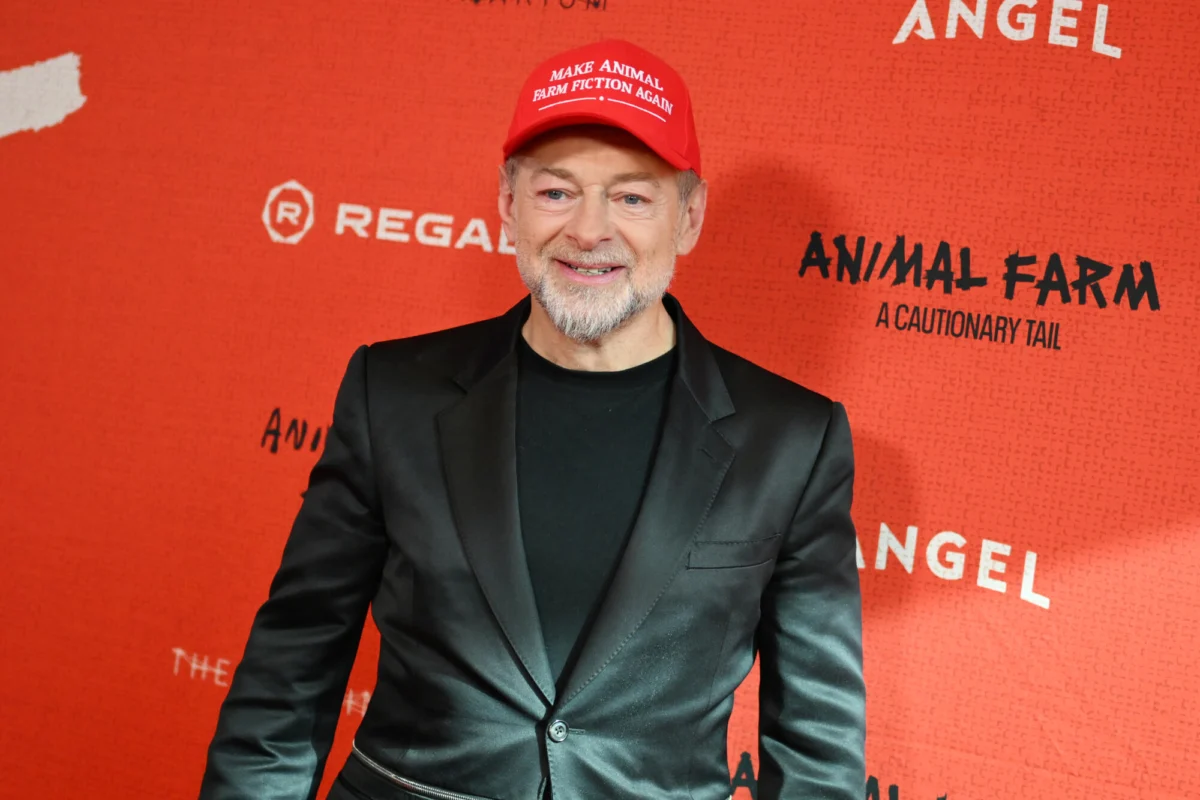
For generations, George Orwell’s 1945 novella Animal Farm has served as the definitive literary allegory for the corrupting nature of absolute power, widely understood as a sharp satire of the Soviet Union’s tragic descent into authoritarianism. Yet, when motion-capture pioneer and filmmaker Andy Serkis set out to adapt the classic text for the modern screen, he didn’t lean exclusively into historical grimness. Instead, Serkis steered his feature film into a surprisingly broad, family-friendly aesthetic—one complete with lighthearted humor, visual gags, and an unyielding narrative optimism that refuses to let malice utterly eclipse goodness.
Now playing in theaters courtesy of Angel Studios, Serkis’s Animal Farm represents a fascinating technological and artistic evolution. What began its developmental life as a photorealistic motion-capture project ultimately pivoted into full-scale animation, trading gritty realism for a more stylized, accessible framework. Boasting a star-studded voice cast that includes Seth Rogen as the tyrannical pig Napoleon, Laverne Cox as the idealistic revolutionary Snowball, Glenn Close as Freida Pilkington, and Serkis himself voicing the oppressive Farmer Jones, the film has sparked conversation about how classic literature is translated for modern, multi-generational audiences.
Main Facts: A Modern Twist on a Timeless Allegory
At its core, Serkis’s film retains the foundational framework of Orwell’s plot: the overworked and mistreated livestock of Manor Farm overthrow their human master, Farmer Jones, and establish a utopian society governed by the principle that "all animals are created equal." However, under the leadership of the power-hungry pig Napoleon, that socialist ideal is rapidly corrupted, slowly mutating into a tyranny just as brutal as the one that preceded it.
Despite the heavy subject matter, Serkis’s directorial choices skew toward a broader audience engagement strategy. The movie incorporates vibrant pacing, stylistic risks, and an expressive animation style that bridges the gap between traditional character design and the nuanced emotional beats of motion-capture performance. Rather than leaning into a dark, dystopian palette, the film embraces an environment of relative innocence, balancing its dark political undertones with an aesthetic designed to captivate both adults and younger viewers alike.

Chronology: From Photorealistic Motion-Capture to Traditional Animation
The journey of bringing Animal Farm to the screen has been a lengthy and arduous undertaking, characterized by notable technological shifts.
- Early Development: Initially, Serkis and his production team approached the property through the lens of cutting-edge, photorealistic motion-capture technology—a medium Serkis famously helped popularize through iconic roles like Gollum in The Lord of the Rings, Caesar in the Planet of the Alps trilogy, and King Kong.
- The Visual Pivot: During the early conceptualization and design phases, the visual effects teams produced concept art that leaned heavily into realism. These early iterations featured starved-looking animals with visible rib cages and pigs designed to look overtly gluttonous, menacing, and unforgiving.
- Targeting a Younger Audience: Recognizing that these hyper-realistic depictions of animal suffering and brutality might alienate younger viewers or create an overly bleak cinematic experience, Serkis made the pivotal decision to pivot away from photorealism entirely, moving the project into the realm of traditional animation.
- Worldbuilding and Production: Partnering with production designer Amos Sussigan and specialized layout and story teams, Serkis embarked on the painstaking process of crafting an entirely animated world from the ground up—building every blade of grass and piece of farm machinery digitally.
- The Release: Following years of intricate animation work, storyboard revisions, and vocal recordings, Animal Farm officially premiered in theaters under the distribution banner of Angel Studios.
Supporting Data and Production Insights
Transitioning from live-action and performance-capture directing to full animation introduced Serkis to an entirely new set of logistical hurdles and creative freedoms. Having previously directed VFX-heavy projects like Mowgli: Legend of the Jungle and Venom: The Last Dance, Serkis was already well-versed in digital character design, storyboarding, and previz workflows. However, animation demanded a completely different temporal pace.
"Getting to the end of a scene on an animated movie can take years because it goes through so many different hands and skills," Serkis explained in an interview with IndieWire. Unlike live-action filmmaking, where a director shoots a page of script on a given day and immediately has a tangible, editable version of the scene, animation requires a director to mentally hold various stages of a scene’s completeness in their head for extended periods.
Furthermore, economic realities and budgetary constraints meant that countless creative choices—and "darling" scenes—were ruthlessly pruned during the animatic and previz stages long before the film ever reached a final editing timeline or audio mix stage.

Conversely, the animation process unlocked unprecedented freedom for the film’s voice cast. Without the physical constraints of lighting setups, camera re-focusing, or lens changes, actors were able to focus purely on nuance and emotional delivery.
"If someone gives me the freedom to find a performance, I’ll try lots of different things," Serkis noted, praising the boundless creative environment the medium afforded his ensemble cast.
Official Responses and Creative Vision
Serkis has been transparent about his motivations for softening the visual edges of Orwell’s dystopian fable. Rather than delivering an unrelenting, cynical indictment of political revolution, Serkis envisioned the project as a cautionary tale wrapped in a layer of visual accessibility.
"The very early designs for the animal characters were much more unforgiving and brutal," Serkis shared. "When animals looked like they were starving, you could see their rib cages; the pigs were a lot more gluttonous and just looked meaner. There is a version of that film that could exist, but we wanted to reach out to a younger audience."
By softening the character designs, the production created a psychological safety margin for viewers of all ages. This allowed the narrative to explore complex themes of betrayal, totalitarian creep, and political corruption—typified by Napoleon co-opting Snowball’s radical equality—without inducing the paralyzing dread associated with more adult-oriented adaptations.

Serkis also emphasized his desire to maintain intimate emotional connections with the audience through deliberate camera framing:
"I wanted the audience to reach out to the characters and to really feel—when the camera’s pushing in on a character’s face—what they’re going through. And not to feel that the animators had to overperform it, as such."
Implications: What Serkis’s Animal Farm Means for Adaptations of Classic Literature
The release of Animal Farm via Angel Studios carries significant implications for how classic, politically charged literature is adapted for contemporary commercial cinema.
For decades, adaptations of Orwellian texts have tended to lean heavily into grim, dystopian aesthetics, operating under the assumption that political satire must inherently be dark and punishing to be effective. By subverting this expectation—infusing the narrative with stylistic accessibility, dynamic vocal performances, and an intentional safety buffer for younger audiences—Serkis’s film tests the boundaries of how accessible high-level political allegory can become without losing its underlying message.
While some purists might debate whether smoothing out the narrative’s brutal edges dilutes Orwell’s sharp critique of totalitarianism, the film undeniably stands as a technical and artistic achievement. It highlights the rigorous, collaborative marathon of modern animation and proves that even the most well-trodden literary properties can be recast in entirely new light through the vision of an experienced filmmaker willing to embrace experimentation.
