
From Revolution to Resonance: Inside Andy Serkis’ Animated Adaptation of George Orwell’s “Animal Farm”
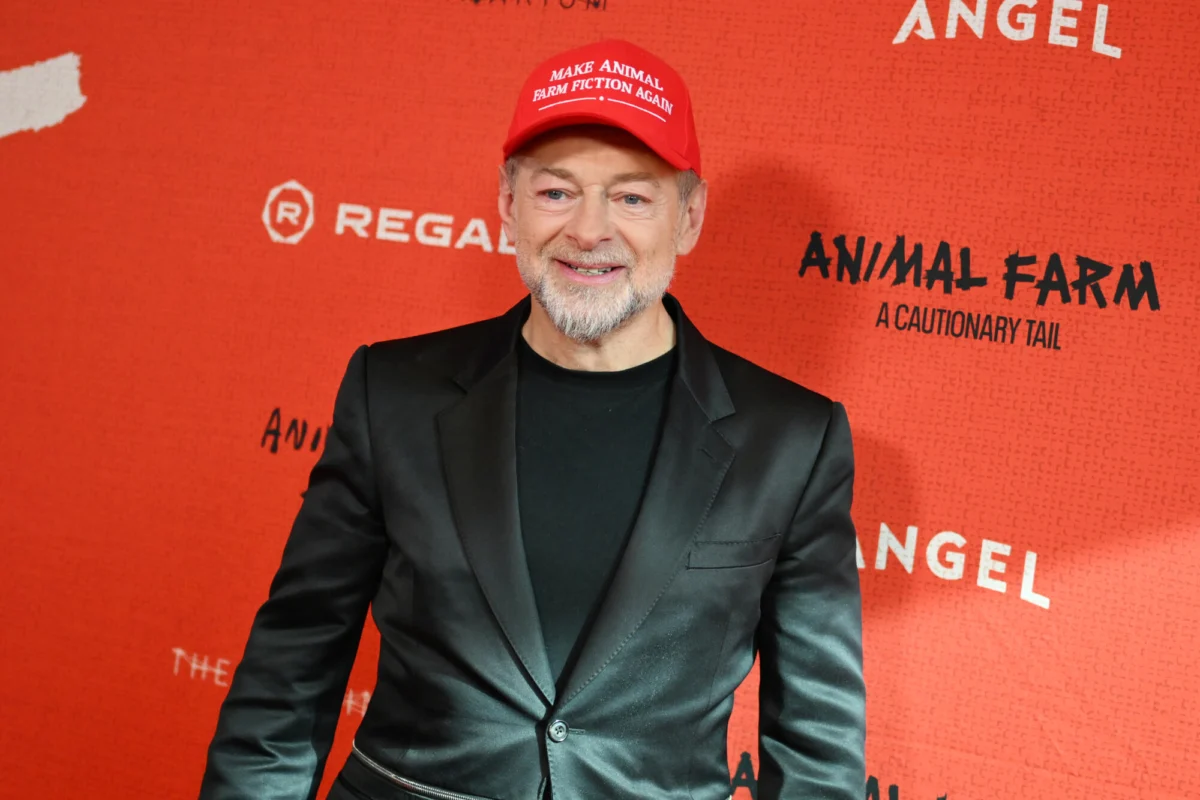
Main Facts: A Modern Twist on a Century-Old Allegory
George Orwell’s Animal Farm has long stood as a towering literary monument, a piercing allegory examining how the structures of power inevitably corrupt revolutionary idealism. Historically understood as a biting satire of the Soviet Union’s tragic slide into mid-20th-century authoritarianism, the text presents a grim philosophical landscape.
However, visionary filmmaker and performance-capture pioneer Andy Serkis has approached the classic text with a remarkably distinct perspective. Rather than leaning exclusively into bleak historical reenactment, Serkis’ newly released animated feature—distributed by Angel Studios—broadens the canvas. The film injects unexpected tonal elements, including rap songs, physical humor, and an unwavering commitment to contrasting good and evil, all while navigating the tragic collateral damage of corruption on the innocent.
Boasting a star-studded voice cast that includes Seth Rogen as the manipulative pig Napoleon, Laverne Cox as the radical idealist Snowball, Glenn Close as Freida Pilkington, and Serkis himself voicing the oppressive Farmer Jones, the project represents a fascinating evolutionary leap for cinematic storytelling. What began its life years ago as a gritty motion-capture endeavor ultimately morphed into a stylized animated film. In doing so, Serkis and his creative team abandoned the shackles of photorealism, discovering that true artistic freedom required stepping away from hyper-detailed live-action simulation to unlock the story’s timeless, fable-like heart.
Chronology: The Long Road from Motion-Capture to Animation
The journey of bringing Serkis’ Animal Farm to the screen has been a prolonged exercise in technical evolution and creative pivoting. The project’s timeline highlights the immense shifts required to adapt a culturally sensitive and complex literary property for modern audiences.

- Early Development & Concept Phase: Years prior to its theatrical release, the adaptation was conceptualized as a cutting-edge motion-capture project. Early visual iterations leaned heavily into a gritty, uncompromising aesthetic. Concept artists drafted starving animals with visible rib cages and depicted pigs with hyper-gluttonous, menacing features.
- The Pivot to Animation: As development progressed, Serkis and his producers recognized that a hyper-realistic, photorealistic approach would render the visceral violence and suffering of the story too punishing, particularly for younger viewers. The production pivoted toward a stylized animated format that maintained the expressive depth of character acting without crossing into gratuitous grimness.
- World-Building and Pre-Production: Working closely with master set designer Amos Sussigan and specialized layout teams, the production embarked on the meticulous task of building an animated world from scratch. Every blade of grass, weathered fence post, and piece of farm machinery required digital construction via advanced pipelines.
- Voice Recording and Scratch Tracks: The voice cast recorded their lines early in the process, generating scratch tracks that allowed the animation teams to block out scenes, synchronize movements, and translate nuanced human performances onto animal physiology.
- Theatrical Release: Following years of refinement across multiple animation houses and iterative feedback loops, the film officially completed post-production and arrived in theaters via Angel Studios.
Supporting Data: The Craft and Mechanics of Animation
Shifting from live-action and traditional performance capture to fully realized animation introduced Serkis to an entirely new paradigm of filmmaking, characterized by distinct logistical hurdles and creative advantages.
The Mathematics of World-Building
In a live-action production, a director relies heavily on existing locations or physical set builds, supplemented by visual effects. In contrast, Serkis notes that animation demands an absolute, foundational construction of reality:
- Total Environmental Design: Every visual element—from atmospheric weather patterns to micro-textures on farm equipment—must be digitally authored.
- Collaborative Pipelines: The production required close coordination between layout artists, story teams, and animators, extending the lifespan of individual scenes across months or even years.
- Iterative Budgeting: Unlike live-action filmmaking, where footage is captured on set and refined in the edit, animated films frequently undergo extensive "killing of darlings" during the animatic and pre-visualization stages long before final rendering.
Performance Dynamics for Voice Actors
Despite the mechanical constraints of animation, Serkis leveraged his extensive background in character work to give his actors unprecedented creative space inside the recording booth. Without the interruptions of camera resets, lens changes, or lighting adjustments, performers like Seth Rogen and Laverne Cox were able to experiment dynamically with vocal inflection, rhythm, and emotional delivery, ensuring that the animated characters retained a deeply human core.
Official Responses and Creative Insights
Speaking candidly with IndieWire about the artistic choices behind the film, Andy Serkis emphasized that his goal was to craft a narrative that balanced historical gravity with accessible storytelling.

"It’s a cautionary tale that has a whole heap of innocence around it," Serkis explained when discussing the film’s distinct visual style.
Reflecting on the early, scrapped iterations of the animal designs, Serkis noted that while a harsher, more brutal version of the film was technically possible, it would have alienated family audiences:
"The very early designs for the animal characters were much more unforgiving and brutal. When animals looked like they were starving, you could see their rib cages; the pigs were a lot more gluttonous and just looked meaner. There is a version of that film that could exist, but we wanted to reach out to a younger audience."
Serkis also highlighted the intentionality behind the film’s cinematography and framing, particularly the strategic use of close-ups to preserve emotional intimacy in an animated space.

"I wanted the audience to reach out to the characters and to really feel—when the camera’s pushing in on a character’s face—what they’re going through. And not to feel that the animators had to overperform it, as such. That was a really interesting part of the process."
Addressing the unique rhythm of directing animation compared to his previous live-action and hybrid ventures—such as Mowgli: Legend of the Jungle and Venom: The Last Dance—Serkis pointed out the extended timeline required to shepherd a scene through production:
"Getting to the end of an animated movie can take years because it goes through so many different hands and skills. So it was wonderful getting to know all the different departments in the animation team and to work with actors who were animators and be able to direct them in an interesting way."
Implications: A New Era for Adaptations of Classic Literature
The release of Serkis’ Animal Farm carries significant implications for how classic, politically charged literature is adapted for contemporary audiences across generations.

By softening the brutal photorealism initially planned for the project, Serkis has not only lowered the barrier to entry for younger viewers but has also reframed Orwell’s pessimistic political tract into a more universal parable. The inclusion of modern tonal sensibilities—such as stylized musical moments and lighter comedic beats—contrasts sharply with the traditional gravity associated with Soviet-era political satire.
Furthermore, the film underscores the viability of animation as a premier medium for complex character-driven narratives. While purists may debate whether lightening the thematic load compromises Orwell’s original biting cynicism, Serkis’ experiment proves that animated adaptations can successfully bridge the gap between high-concept political allegory and family-friendly cinematic engagement. As the film plays in theaters nationwide courtesy of Angel Studios, it invites a new generation of viewers to ponder the timeless question of how power shifts, how ideals are co-opted, and how easily the promise of equality can be compromised in the barnyard of human—and animal—society.
