
Return of the Retrowave Gumshoe: Brad Bird’s Ray Gunn Blends Noir Pastiche, Retrofuturism, and Complex Ideology
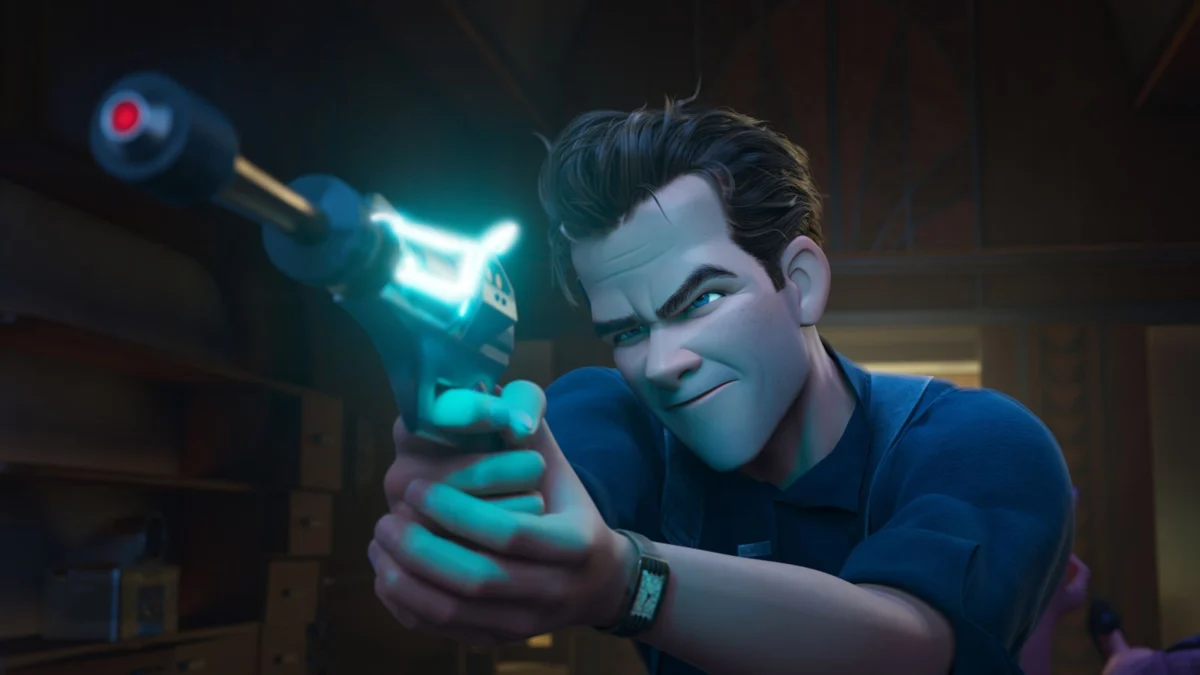
London — The family-friendly noir pastiche is rapidly becoming a distinct cinematic throwback, echoing the nostalgic cultural wave that Who Framed Roger Rabbit? once rode to Hollywood glory. Today, the manic, hard-boiled spirit of Robert Zemeckis’s classic is finding new life in the animation landscape. Earlier, audiences were treated to Coyote vs. Acme, a Looney Tunes legal conspiracy thriller that deployed a darker, late-capitalist satire rather than a mere cozy echo of an older cinematic era. Now, director Brad Bird has delivered his decades-in-the-making passion project, Ray Gunn. Set in a retrofuturistic metropolis where humans and aliens co-exist among flying cars, Blade Runner-style holograms, and towering Art Deco skyscrapers, Bird’s latest effort serves up a visually dazzling detective adventure with a biting subtext about our contemporary age of technology.
Main Facts
- Project History: Ray Gunn is a long-gestating, decades-in-the-making passion project directed by Brad Bird.
- Creative Team: Co-written by Brad Bird and veteran Steven Spielberg collaborator Matthew Robbins.
- Voice Cast: Headlined by Sam Rockwell as the reluctant private detective Ray, Tom Waits as his alien employee Eyera, Bobby Cannavale as Arnold, Scarlett Johansson as pop superstar Venus Nova, Alan Tudyk as manager Barry Vogel, and Matt Berry as an alien underworld kingpin.
- Themes: Retrofuturism, late-capitalist surveillance, AI replacement of human artists, and a nuanced dialogue with auteurist critiques of the director’s ideological leanings.
- Release Schedule: The film premiered at the 2026 BFI London Film Festival, scheduled for a theatrical release on December 4, followed by a Netflix streaming debut on December 18.
Chronology of Production and Release
The journey of Ray Gunn from conception to screen spans many years, evolving alongside Bird’s career trajectory. Following the high-budget commercial disappointment of Tomorrowland and the massive financial success—yet occasionally muted critical response—of Incredibles 2, Bird turned his focus back toward his original artistic roots. Ray Gunn represents a triumphant return to the inventive, fast-paced comedic form of his earliest animated masterpieces.
The film’s trajectory culminated with its high-profile premiere at the 2026 BFI London Film Festival, where it immediately captured the attention of critics and industry insiders. Following its festival debut, distributors lined up a theatrical rollout for December 4, ensuring a traditional cinematic window before the film lands on Netflix just two weeks later on December 18. This hybrid release strategy highlights the evolving marketplace for major animated features targeting both family demographics and adult cinephiles.
Supporting Data and Narrative Architecture
Despite a few structural stumbles—such as an overly prolonged "mystery" regarding a dual identity that adult viewers can easily decipher from vocal cues alone—Bird and Robbins have crafted a tightly wound script. Every piece of world-building introduced in the first act pays off satisfyingly by the finale. The narrative’s relentless, chaotic energy cleverly masks its meticulous construction.
At the center of this world is Ray, brought to life by Sam Rockwell in a decidedly against-type performance. Unlike the perpetually haunted, whiskey-soaked gumshoes of classic detective fiction, Ray is remarkably cautious, deeply in debt, and explicitly averse to violence. He cannot even afford to pay his sole employee, the alien Eyera (Tom Waits). Ray’s moral compass is so stringent that if he discovers a client hired him under false or sinister pretenses, he will actively return the fee.
The plot kicks into high gear when Ray and Eyera are hired by Arnold (Bobby Cannavale), the fourth husband of pop superstar Venus Nova (Scarlett Johansson). Arnold suspects his wife of infidelity. However, the private eyes quickly uncover that the accusation is merely a fabricated pretext for a messy divorce ahead of a predicted flop album. Enter Barry Vogel (Alan Tudyk), Venus’s manager, who promptly hires Ray and Eyera to protect the chaotic, tabloid-favourite pop star for the remainder of her release week.
As they navigate Venus’s high-tempered public fallout, the detectives discover a far deadlier plot: a ruthless alien underworld kingpin (Matt Berry) is blackmailing the star with a career-ruining secret. When individuals from Venus’s personal orbit begin to turn up dead, the cautious detective finds that staying out of trouble is no longer an option.
Ideological Implications and Auteurist Subtext
Beyond its entertainment value, Ray Gunn invites deep critical examination regarding its thematic intersections with the director’s past work. For years, critics have noted objectivist sympathies reminiscent of Ayn Rand in Bird’s filmography—notably in stories about exceptional individuals held back by ungrateful bureaucracies or forced to suppress their talents for the greater good.
Ray Gunn engages directly with these long-standing criticisms. Venus Nova is a massive superstar whose carefully curated public persona has effectively obscured her "true voice," leaving her art compromised and impersonal. While Bird’s previous heroes fought to express their extraordinary talents against societal pressure, Nova’s struggle is inverted: she possesses a platform she neither wants nor respects because it demands inauthentic conformity. This character arc complicates the narrative that Bird is singularly fixated on Randian archetypes, introducing a fascinating layer of internal tension.
This complexity deepens when juxtaposed with the film’s timely, overt allegories regarding contemporary technology. The latter half of the narrative tackles heavy-handed themes:
- The weaponization of a surveillance state for targeted marketing.
- The unsettling corporate replacement of human artists with artificial intelligence.
While these are conventional, widely accepted critiques in modern discourse, contextualizing them within Brad Bird’s body of work creates a provocative paradox. The defense of human creativity over algorithmic mediocrity, coupled with the right to live free from constant corporate monitoring, aligns seamlessly with the core tenets of individualist philosophy. Bird appears to lean directly into this intersection, challenging his critics by embedding progressive anxieties into a framework that subtly echoes libertarian ideals.
The inclusion of a "Produced by David Ellison" credit adds a final layer of real-world corporate irony, underscoring the friction between independent artistic expression and modern media conglomerates. Yet, this industry reality does little to detract from the film’s overarching achievement.
Conclusion
The fact that an animated throwback adventure like Ray Gunn can spark such spirited intellectual debate is the clearest indicator that Brad Bird is operating at the absolute peak of his creative powers. Beneath a brightly colored, crowd-pleasing, retro-futuristic veneer lies a rich, thorny narrative packed with sharp social commentary and character-driven comedy. Whether audiences engage with its timely technological warnings, its subversive take on noir tropes, or its fascinating ideological subtext, Ray Gunn proves to be a triumph that easily eclipses any minor missteps along the way.
