
Sunshine on Leith: A Theatrical Jukebox Musical Caught Between Charm and Cliché
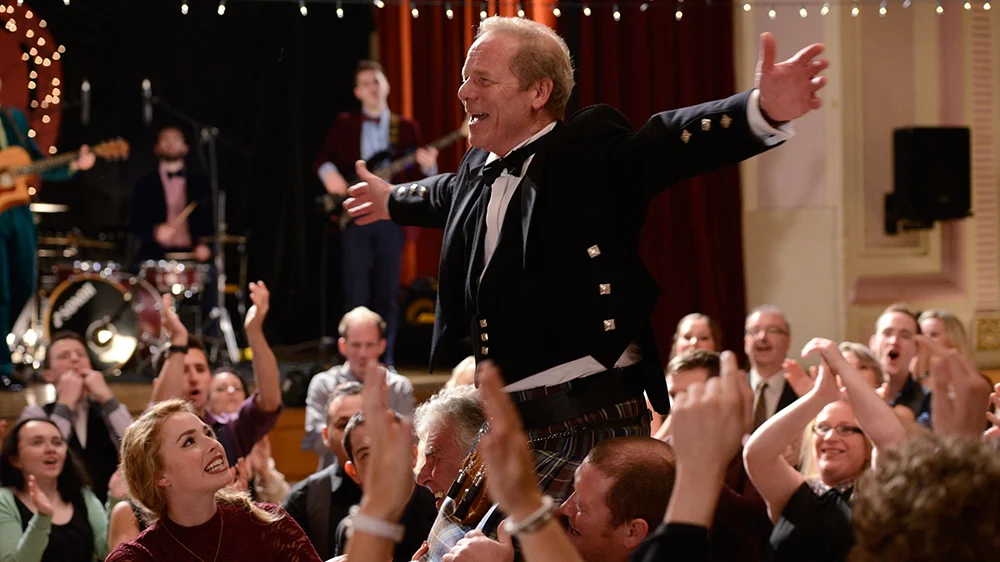
In the landscape of modern British cinema, the jukebox musical holds a precarious position. It must balance the weight of familiar, beloved songbooks with the narrative demands of a fresh, compelling story. Sunshine on Leith, the screen adaptation of the acclaimed stage musical, attempts to capture the boisterous, sentimental, and quintessentially Scottish spirit of The Proclaimers. Directed by Dexter Fletcher, the film arrives as a high-energy, heart-on-sleeve production that operates with the precision of a tourist board campaign. While it aims for the rafters with populist appeal, it finds itself navigating a thin line between "irresistible" and "highly resistible," depending entirely on the viewer’s tolerance for cinematic schmaltz.
Main Facts: The Anatomy of a Jukebox Musical
Sunshine on Leith is a narrative constructed around the discography of Charlie and Craig Reid—the iconic Scottish duo known as The Proclaimers. The film functions as a classic "laughter-and-tears" confection, utilizing the band’s folk-inflected pop anthems to punctuate the romantic and familial entanglements of its ensemble cast.
The story follows Davy (George MacKay) and Ally (Kevin Guthrie), two lifelong friends returning to their native Edinburgh after a harrowing tour of duty in Afghanistan. Their homecoming is tempered by the trauma of surviving a roadside mine explosion, yet the film quickly pivots from the grim realities of military life to the cozy, predictable rhythms of domestic civilian existence. With telemarketing serving as the primary post-war job market for the duo, the plot centers on their efforts to integrate back into society, navigate new romances, and confront the shifting dynamics of their families.
The film, which saw a U.K. release on October 4, presents itself as a feel-good, working-class drama. However, its reliance on formulaic tropes—the "meet-cute," the "secret past," and the "last-minute reconciliation"—suggests that the production is designed with a broad, international appeal in mind, even if its prospects outside of the United Kingdom remain, at best, spotty.
Chronology: Navigating the Streets of Edinburgh
The narrative arc of Sunshine on Leith is as structured as the songs that drive it. Upon their return to Edinburgh, the central characters are immediately thrust into a web of personal discovery.
The Return and the Reconnection:
Davy and Ally arrive home, greeted by the warmth of family and the immediate pressure to secure employment. Ally seeks to rekindle his relationship with Davy’s sister, Liz (Freya Mavor). However, the film establishes an early friction: while Ally dreams of a traditional, domestic life in Edinburgh, Liz is driven by a wanderlust and a desire to "see the world," creating an immediate, albeit predictable, obstacle to their happiness.
The Introduction of New Love:
To broaden the romantic scope, Liz introduces Davy to her hospital colleague, Yvonne (Antonia Thomas), a transplant from London. The two hit it off with the ease typical of musical-theater pairings, providing a secondary romantic subplot that mirrors the primary conflict between Ally and Liz.
The Familial Crisis:
While the younger generation navigates the complexities of modern dating, the older generation faces a tectonic shift. Davy and Liz’s parents, played by Peter Mullan and Jane Horrocks, are preparing for their 25th wedding anniversary. This celebration is derailed when the father discovers the existence of an adult daughter from an extramarital affair. This revelation throws their long-standing marriage into turmoil, serving as the film’s "emotional low" before the inevitable third-act resolution.
The Climax:
As is customary for the genre, the various subplots reach a boiling point simultaneously. A convenient medical crisis—a classic trope—acts as the catalyst to bring the estranged couples back together, forcing characters to confront their truths and realize that "love is true even when it’s hard." The film concludes with a grand, climactic production number, featuring the band’s global hit, "I’m Gonna Be (500 Miles)."
Supporting Data: The Craft and the Critique
The production values of Sunshine on Leith reflect a calculated approach to the musical genre. The musical direction, led by Paul Englishby, provides a backdrop of syrupy, folk-pop arrangements that underscore the film’s "decent people" philosophy.
Performance and Choreography
The younger cast members, including MacKay and Guthrie, deliver capable vocal performances. Their singing is earnest and, for the most part, hits the necessary emotional beats. However, the choreography by Rosie Kay has faced scrutiny for its lack of ambition. By opting for movements that would feel at home in a school pageant, the film aims for an "unpretentious" vibe but ultimately strikes many critics as pandering. This choice, while potentially meant to signal working-class authenticity, often feels like a missed opportunity to elevate the material beyond the constraints of a standard stage-to-screen adaptation.
Direction and Visual Identity
Dexter Fletcher, transitioning from actor to helmer, struggles to give the film a distinct visual identity. While the city of Edinburgh is showcased with pride, the cinematography often feels "televisual." The widescreen HD lensing, meant to capture the expanse of the city, frequently results in a flat, sterile look, failing to provide the cinematic texture one might expect from a feature-length musical.
The Mullan Factor
Peter Mullan remains the film’s anchor. In an ensemble cast that often trends toward the saccharine, Mullan provides the only real sense of gravity. His performance adds a layer of depth that the script, with its banal dialogue and predictable lyrics, often fails to support.
Official Responses and Industry Reception
The critical reception of Sunshine on Leith has been polarized. On one hand, supporters praise the film for its infectious joy and its ability to turn a collection of beloved songs into a coherent narrative. The film has been lauded as a "crowd-pleaser" that succeeds in its mission to make audiences leave the theater with a smile.
On the other hand, the film has faced criticism for its reliance on clichés and its "twee" nature. Industry analysts have noted that while the film may resonate strongly with British audiences familiar with the cultural cachet of The Proclaimers, it may struggle to find a foothold in international markets. The film’s "formulaic" structure is often cited as a barrier for viewers seeking something more substantive or less "prepackaged."
Implications: The Future of the Jukebox Musical
Sunshine on Leith stands as a case study for the risks and rewards of the jukebox musical. Its existence proves that there is a hunger for feel-good, musically driven storytelling, but it also highlights the dangers of becoming too reliant on "reassuring familiarity."
The "Tourist Board" Effect
By leaning so heavily into the aesthetic of the Scottish Tourist Board, the film risks alienating audiences who value narrative complexity over scenic beauty. The "cutesiness" provided by Jane Horrocks and the light-hearted tone of the musical numbers are clearly designed to make the film accessible, but they also risk rendering the film forgettable.
The Formulaic Ceiling
The film’s reliance on simple lyrics and predictable plot points raises a question about the longevity of the genre. As audiences become more accustomed to the "formula" of the jukebox musical, directors will need to find ways to innovate. Sunshine on Leith is a testament to the fact that while good music can carry a film, it cannot entirely mask a lack of narrative depth.
Ultimately, Sunshine on Leith is a film of contradictions. It is both ambitious in its scale and limited in its execution. It is a production that captures the energy of its source material while simultaneously highlighting the limitations of that very material when forced into a cinematic structure. For those who find comfort in the familiar, the film is a rousing success. For those seeking a challenge, it may serve as a reminder that even the most "sunshine-filled" stories require more than just catchy tunes to truly leave a lasting impression.
As it stands, Sunshine on Leith will likely remain a beloved piece of Scottish cinema—a nostalgic, heartfelt, and occasionally flawed tribute to the music that helped define a generation. Whether it succeeds in transcending its origins to become a global classic, however, remains to be seen.
