
The Alchemy of Time: James Gray on the Enduring Resonance of ‘Little Odessa’ and the Evolution of a Master
For the devoted followers of James Gray, this autumn represents a unique convergence of past and present. As the celebrated writer-director prepares to unveil his latest cinematic achievement—the haunting, meticulously crafted crime drama Paper Tiger, slated for theatrical release on November 13—cinephiles are being granted a rare opportunity to revisit the origin of his journey. The Criterion Collection has just released a definitive 4K UHD and Blu-ray edition of Gray’s 1994 directorial debut, Little Odessa.
To experience these two films in tandem is to witness a profound dialogue between a fledgling visionary and a seasoned master. While Little Odessa remains the raw, kinetic outburst of a 23-year-old prodigy, Paper Tiger reflects the refined, architectural precision of a veteran filmmaker. Together, they map the trajectory of a career defined by family, trauma, and an unwavering commitment to the soul of cinema.
The Genesis: A Career Defined by Family and Genre
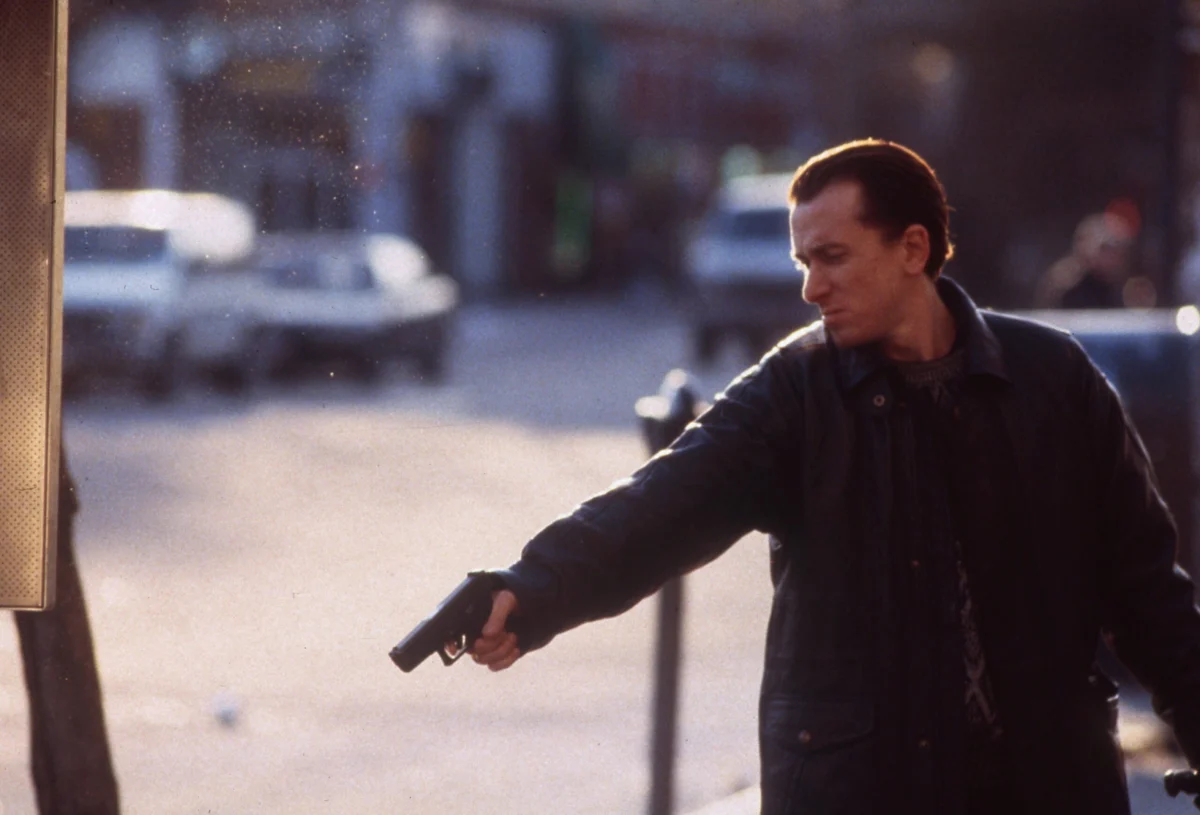
James Gray’s career has consistently gravitated toward the intersection of the intimate and the epic. His films are rarely mere genre exercises; rather, they are textured family dramas that utilize the architecture of crime or historical spectacle to explore the fractures in human relationships. Little Odessa, which introduced the world to his distinct sensibilities, follows a cold, efficient hitman (played with icy brilliance by Tim Roth) who returns to his Brighton Beach neighborhood to confront the ghosts of his past.
For Gray, the process of returning to this foundational work after more than three decades was a surreal, almost out-of-body experience. "It’s the first time I ever made a film, watched it, and had trouble remembering what was coming next," Gray remarked in an exclusive interview. "It was a little bit fresh in a weird way. What I saw was a movie made by a very young person. I can’t say that I didn’t see my mistakes—I certainly did."
Chronology of a Stylist: From Fearless Youth to Measured Rigor
The evolution of a filmmaker is rarely a linear progression of "improvement." Gray is quick to reject the notion that artistry necessarily peaks with age or experience. Instead, he views his career as a series of experiments in alchemy, where the ingredients—crew, personal perspective, and cultural climate—shift with every project.

The Audacity of the Novice
Reflecting on the production of Little Odessa, Gray speaks with a mixture of nostalgia and disbelief. At 23, he possessed a creative fearlessness that he admits has since mellowed into something more controlled. "I was 23 when we started making it, and I was totally fearless," he said. "I made mistakes, but I was a little more of a stylist than I am now. I took real risks with pace, and in some sense was very willing to reject the audience’s needs."
This willingness to prioritize internal vision over external expectation led to moments of cinematic daring that Gray, in his current, more rigorous phase, might hesitate to attempt. He points to a specific, hypnotic camera maneuver—a sequence where the camera seems to lurch over Tim Roth as he opens a fateful envelope—as a prime example. "I don’t know where I got that shot from," he laughed. "I would never do that today. I wish there were a way to liberate myself a little. In youth, you’re so dumb that you don’t know what won’t work, so you make stupid decisions, and sometimes those stupid decisions are interesting."
The Burden of Control
With time, Gray has cultivated a level of technical mastery that provides his films with their trademark visual elegance. However, he remains acutely aware of the trade-offs that come with experience. "I’m more rigorous now, and with rigor comes control, but with rigor comes something that maybe isn’t dangerous enough," he noted.
This tension between the wild, uninhibited risks of youth and the polished, intellectualized control of middle age is the central theme of Gray’s reflections. He views the history of cinema as proof that there is no singular path to greatness. To illustrate this, he points to two towering figures: Akira Kurosawa, who reached his zenith with the epic Ran at age 75, and Bernardo Bertolucci, who delivered his masterwork The Conformist at just 33. For Gray, "the alchemy is always different."
The Collaborative Engine: Why First-Timers Defy Logic
A significant factor in the success of Little Odessa was the collaborative atmosphere of the set. Gray credits his young, ambitious crew with enabling his vision, despite his own relative lack of professional experience.

"I had a very young crew who were very willing to do stupid things with me," Gray explained. "Really, it’s an act of insanity when somebody allows a first-timer to direct, because those people don’t know anything." He draws a parallel to the legendary Orson Welles, whose chaotic, inspired production of Citizen Kane remains a testament to the fact that not knowing the "rules" of the industry can be a creative asset. "Even Orson Welles didn’t know what he was doing on Citizen Kane—which is part of why it’s great."
Restoring the Past: A Respectful Resurrection
The release of the Criterion 4K edition was not just a commercial endeavor; it was an act of preservation. Gray’s own 35mm print of Little Odessa had succumbed to the ravages of time, specifically "vinegar syndrome," a chemical deterioration that threatens the longevity of film stock.
When the opportunity arose to oversee the 4K transfer, Gray faced a choice familiar to many directors: should he "fix" his past work? In an era where directors like George Lucas or Ridley Scott often re-edit their earlier films to align with their modern sensibilities, Gray took a firm stance against revisionism.
"Of course I was dying to change everything, but I always tell myself, ‘No, that’s the person you were at 23 or 24,’" he stated. "I might have done one reposition because I thought I saw a light stand, but other than that I denied myself the right to change it."
For Gray, the film is a time capsule, a snapshot of his artistic identity at a specific, unrepeatable moment. To alter it would be to strip away its authenticity. "You have to respect what you made in the heat of creation. Stepping back with distance doesn’t mean you’re right—you’re in a different place in your life. I would not go back and change it for what my taste is now—to me, that would be a gigantic mistake. Because you move on, you’re different. In 1993 I had no awareness of my process at all. I was just beginning."

Implications for the Future of Filmmaking
The conversation between Little Odessa and Paper Tiger invites audiences to consider what we value in cinema. Are we looking for the seamless perfection of a master who has learned every lesson the medium has to offer? Or are we searching for the raw, unadulterated energy of a filmmaker who has yet to learn why something shouldn’t be done?
Gray’s current trajectory suggests that the answer is not an "either/or" but a continuous synthesis. By embracing his past while relentlessly pursuing new challenges in Paper Tiger, Gray is demonstrating a model of career longevity that is increasingly rare in an industry obsessed with immediate returns and "content" over craft.
As we look toward the November release of his latest work, it is clear that Gray is not merely interested in replicating his past successes. He is engaged in a lifelong study of the human condition, using the camera to probe the depths of family secrets and the quiet, devastating power of regret.
The Criterion edition of Little Odessa serves as a crucial primer for this study. It reminds us that while technical skills can be refined and processes can be tightened, the heart of a great film lies in that initial, often reckless, spark of inspiration—a spark that James Gray has managed to keep burning for over thirty years.
The 4K UHD special edition of "Little Odessa," which features an audio commentary by James Gray and a wealth of new supplementary features, is available now through The Criterion Collection. "Paper Tiger" hits theaters nationwide on November 13.
