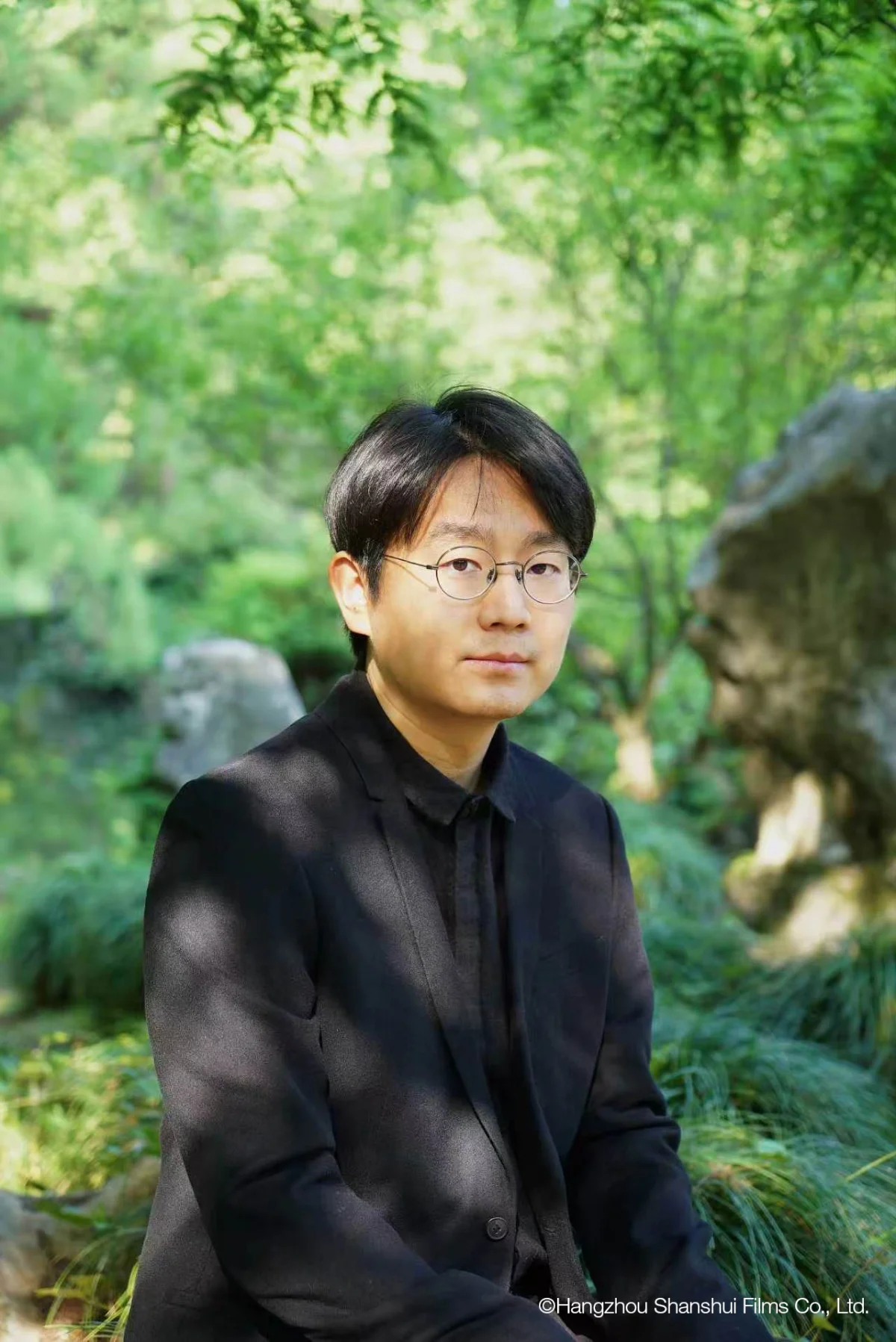
Unscrolling Grief and Memory: Director Gu You Discusses the Cinematic Philosophy of The First Taste of Loneliness
Main Facts
At the 2026 Busan International Film Festival, Chinese filmmaker Gu You unveiled the final chapter of his ambitious cinematic trilogy: The FirstTaste of Loneliness. Following his acclaimed debut Dwelling in the Fuchun Mountains (2019)—which screened at Cannes—and 2023’s Dwelling by the West Lake, Gu’s latest feature centers on three generations of women navigating the terminal illness and eventual passing of the family patriarch.
The film stars acclaimed Chinese actress Zhou Xun as Jiang Yue, a recently divorced mother who loses her design job and returns home to assist her mother, Luna (played by Xi Meijuan), in caring for her ailing husband. Meanwhile, Yue’s teenage daughter, Moon (Wang Shengdi), struggles to adapt to a domestic sphere completely consumed by illness and impending loss.
Collaborating once again with Japanese cinematographer Mikiya Takimoto, Gu crafts a visually arresting aesthetic inspired by traditional Chinese Shanshui landscape paintings. Eschewing modern, rapid-fire editing trends, the film relies on fluid, patient, long-duration takes that strictly move from right to left, mirroring the physical action of unrolling an ancient scroll.
The First Taste of Loneliness premiered in the main competition at Busan to considerable critical acclaim, securing two major accolades: Zhou Xun took home the prize for Best Actor, while sound designer Li Danfeng was honored with the Busan Award for Artistic Contribution.
Chronology of Production and Aesthetic Development
The conceptualization of The First Taste of Loneliness stems from a deeply personal place for Gu You, who built the narrative backward from a singular, evocative emotional endpoint. The director’s journey toward the film’s unique visual grammar began long before cameras rolled on set.
The Conceptual Genesis: Gu first conceptualized the film’s conclusion, inspired by the classic Teresa Teng song from which the movie draws its title. The nostalgic lyrics—“The wind came over and asked me: What is loneliness? You are still young. What do you know about loneliness?”—served as the philosophical anchor for the entire project. Gu constructed the plot mechanics and emotional arcs afterward, deliberately designing a narrative that tracks the final 100 days leading up to the grandfather’s death.
Pre-Production and Rehearsal Phase: To capture the intricate, flowing spatial dynamics of the film, production rented a primary apartment location months in advance. This extended timeframe allowed the director and crew to meticulously map out complex, continuous tracking shots that traverse multiple rooms and temporal planes without cutting.
Principal Photography and Public Interventions: Shooting with major Chinese stars—including top-tier idols—presented significant logistical hurdles. Because public spaces inevitably attracted enthusiastic onlookers and bystanders, the production team was forced to execute elaborate, multi-layered tracking shots in the dead of night. Rehearsals were conducted in empty streets and parks, leaving the crew with a high-stakes "one-take, one-chance" window before crowds gathered.
Festival Circuit and Premiere: Following its completion, the film was selected for the main competition at the 2026 Busan International Film Festival. Its world premiere introduced international audiences to Gu’s rigorous stylistic rules and earned immediate recognition from the festival’s jury.
Supporting Data and Technical Architecture
The technical framework of The First Taste of Loneliness is defined by a rigid set of self-imposed rules designed to push back against contemporary digital filmmaking trends, particularly the rise of AI-generated content and unrestricted stylistic norms.
Production Element
Technical Approach & Execution
Camera Movement
Strictly moves from right to left across all master shots, directly emulating the physical action of opening a traditional Chinese horizontal scroll painting.
Spatial-Temporal Flow
Incorporates multiple timelines and distinct physical locations within a single, unbroken frame, rejecting linear editing conventions in favor of fluid scroll-painting perspectives.
Cinematography
Spearheaded by Japanese cinematographer Mikiya Takimoto, utilizing a patient, floating camera that frequently adopts the spiritual point of view of the dying grandfather.
Sound Design
Led by Li Danfeng (recipient of the Busan Award for Artistic Contribution), employing overlapping audio environments where dialogue from future or past spatial zones bleeds into the present frame.
Cast & Ensemble
Headlined by Zhou Xun (Best Actor winner at Busan) as Jiang Yue, Xi Meijuan as Luna, and Wang Shengdi as Moon, supported by high-profile ensemble actors in high-security public night shoots.
Official Responses and Director’s Statement
In an exclusive interview at the Busan International Film Festival, Gu You elaborated on the philosophical underpinnings, structural experiments, and emotional intentions driving his work. Discussing the pervasive camera movements that seem to track through water and river motifs, Gu clarified the literal and spiritual lens of the movie:
"The camera is actually looking for family members. Those shots you mention find the three generations of women in and around water and the river. The camera is taking the grandfather’s point of view. When it sees Jiang Yue crying, it also looks for the rest of the family. You can say that this film is the last 100 days leading up to the grandfather’s passing. The camera is, in a sense, like his soul."
Defending his radical decision to restrict the film’s visual grammar, Gu explained how ancient art forms offered an antidote to modern cinematic homogenization:
"What I was trying to do was restrict how we shot in order to find new ways of making films. Because right now we see people using AI to create films. Anyone has access to every method of filmmaking. There’s no longer an ‘incorrect’ style. I used my rules or principles to restrict or return to a more honest way of shooting—not only for Chinese films, but for films of all cultures."
Addressing the film’s complex, non-linear sequences—such as a mountain shrine scene encompassing multiple seasons and a restaurant scene where dialogue precedes visual presence—Gu emphasized that viewer participation is essential to completing the artwork:
"That’s an inspiration for my movie, because there is a time and space we can film, but it’s up to the viewer to combine them. For example, in the second long take, the montage is moving forward, but the story itself is going backwards."
Implications for Contemporary Cinema
The First Taste of Loneliness arrives at a critical juncture in global film culture. As studios increasingly lean toward algorithmic editing, visual effects saturation, and hyper-fast pacing designed to capture diminishing attention spans, Gu You’s uncompromising triptych demonstrates the power of radical formal restriction.
By grounding modern domestic tragedy in ancient artistic traditions—specifically the multi-temporal, spatial fluidity of Shanshui painting—Gu challenges both filmmakers and audiences to reconsider how cinema handles memory, time, and mortality. The film’s success at Busan signals a growing international appetite for meditative, formally rigorous storytelling that refuses to sanitize grief.
Ultimately, Gu offers a sobering yet ultimately optimistic perspective on the human condition. Rather than viewing sorrow as an aberration, the director frames loneliness as the fundamental background color of existence:
"If we can think of the meaning of loneliness beforehand, before we have a taste of it, maybe we will be prepared. Perhaps we can face topics like life and death in films more seriously, maybe even optimistically. We can also have a better understanding of the meaning of life."
Through its precise choreography of actors, camera, and sound, The First Taste of Loneliness cements Gu You’s status as one of contemporary Asian cinema’s most visionary architects, transforming personal bereavement into a universal cinematic scroll.