
The Architecture of Freedom: Rodrigo Moreno’s The Delinquents and the Reinvention of Argentine Cinema
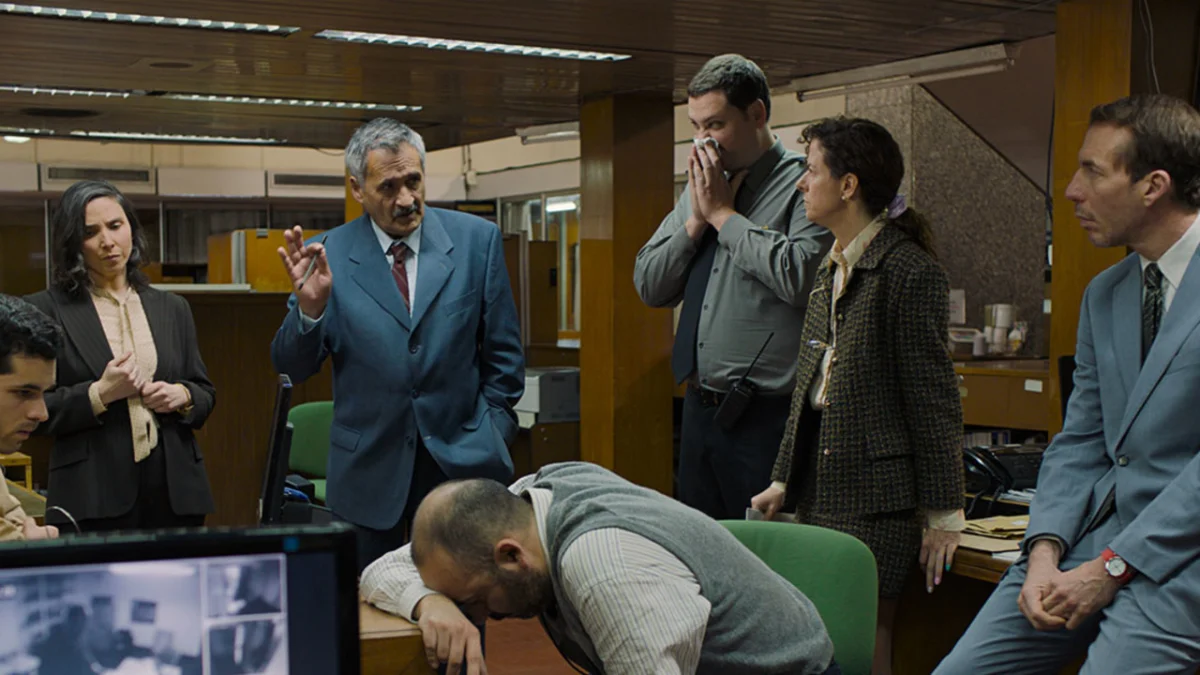
In the landscape of contemporary world cinema, few works have arrived with the sprawling, inquisitive, and effortlessly charismatic energy of Rodrigo Moreno’s The Delinquents (Los delincuentes). A 189-minute masterwork that defies the traditional constraints of genre, the film serves as a pivotal reintroduction to one of the New Argentine Cinema’s most subtle yet profound voices. After a nine-year hiatus from narrative filmmaking—a period marked by forays into experimental documentary and observational studies—Moreno has returned with a sprawling, serpentine epic that is as much a heist movie as it is a philosophical inquiry into the nature of labor, time, and the pursuit of freedom.
The Premise: A Heist Without the Haste
At its core, The Delinquents functions as a deliberate, thoughtful "rewiring" of Hugo Fregonese’s 1949 classic, Hardly a Criminal (Apenas un delincuente). The original film followed an insurance clerk who embezzled money, served a fixed prison term, and retrieved the loot upon release. Moreno’s iteration, however, shifts the focus from the mechanics of greed to the existential weight of the white-collar grind.
The film introduces us to Morán (Daniel Elías) and Román (Esteban Bigliardi), two bank tellers trapped in the soul-crushing monotony of downtown Buenos Aires. In a calculated act of defiance against their life-sentence of employment, Morán absconds with $650,000—a sum he notes is roughly equivalent to the combined remaining salaries of their working lives. His plan is simple: confess, serve the sentence, and split the spoils with Román, who is tasked with hiding the cash.
What follows is not the tightening vice of a typical crime thriller, but a languorous, anachronistic journey. As Román finds himself buckling under the pressure of guilt and the scrutiny of his superiors, the film pivots from the claustrophobic, urban interiors of the bank to the expansive, liberating landscapes of the Argentine countryside.
Chronology of a Creative Evolution
Moreno’s trajectory toward The Delinquents was not a sudden departure, but a gradual accumulation of artistic concerns. His early work, including the sullen existentialism of El custodio (2005) and the ironic detachment of A Mysterious World (2011), placed him firmly within the cynical art-house trends of the early 2000s.
However, his shift toward non-fiction—specifically the docu-fiction hybrid Reimon (2012) and the purely observational A Provincial City (2017)—provided the filmmaker with the tools he needed to abandon the "cruelty" he feels defined his earlier efforts.
- 2005–2011: The Era of Formalism. Moreno establishes himself as a sharp observer of urban alienation.
- 2012–2017: The Documentary Pivot. Through Reimon and A Provincial City, Moreno begins to explore the rhythms of daily life, labor, and leisure without the pressure of a narrative arc.
- 2020–2023: The Production of The Delinquents. Spanning three and a half years—the same amount of time Morán spends in prison—the production process becomes a living, breathing laboratory. The film is edited incrementally, with the final structure emerging only after shooting concludes.
Supporting Data: The Mechanics of the "Two-Part" Structure
The brilliance of The Delinquents lies in its bifurcated structure, a decision Moreno arrived at only in the final stages of editing.
- Part I: The City/Money. This section is characterized by the claustrophobic, "brisk" atmosphere of the bank. It centers on the mechanics of the crime, the investigation led by the bank manager (Germán de Silva), and the moral weight of the act.
- Part II: The Country/Freedom. This section represents a shift to the "carefree and unbound." Through a series of transcendental interludes—including a 20-minute sequence involving filmmakers at a lake—the film moves into a space of philosophical inquiry.
Moreno notes that the decision to move a crucial flashback regarding the character Norma (Margarita Molfino) to the third act was the "key" that unlocked the film. It transformed the story from a simple crime narrative into a meditation on what one does with absolute, non-productive time. By integrating themes of literature, poetry, and music—specifically the talismanic use of the Pappo’s Blues song "Adonde Está la Libertad"—the film functions as a diary of an era rather than a rigid script.
Official Responses: Moreno on Tradition and Influence
In discussions regarding the film’s heavy referentiality—the allusions to Bresson’s L’argent, Olmi’s The Fiances, and the classic Argentine canon—Moreno maintains a stance of joyful continuity.
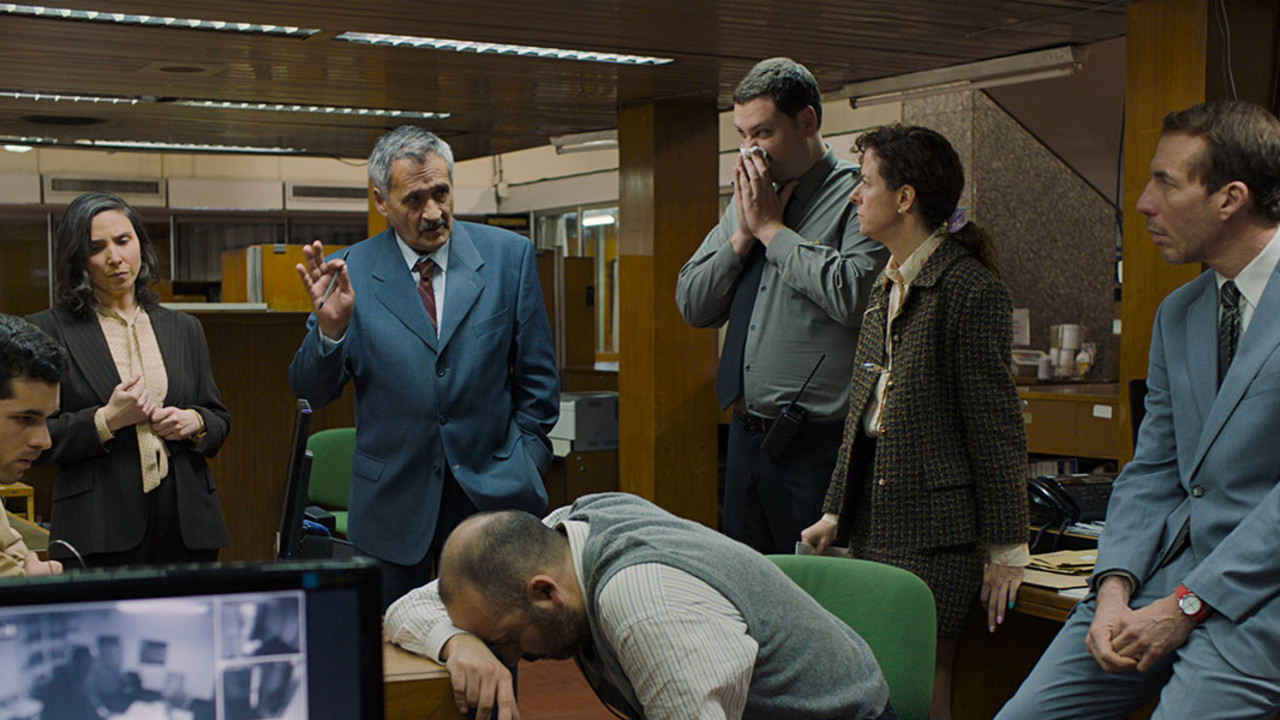
"When we were coming up at the end of the 20th century, our mindset was to react against any trace of Argentine cinema," Moreno admits. "But now I’m in my fifties, and I think it’s time to look back and try to establish a bridge with our ancestors."
Moreno is quick to differentiate his work from the current wave of "El Pampero Cine" epics (such as La Flor and Trenque Lauquen), despite the overlapping cast and thematic weight. While those films often rely on a "second level" of narrative that comments on the story, Moreno views his own approach as more solitary. "My film is built from a place of solitude—it’s very personal, a diary by other means. El Pampero is always working collectively. I consider myself a lone soldier."
His use of music, too, reflects this bridge-building. By choosing the music of Astor Piazzolla—specifically a piece utilizing the oboe instead of the traditional tango bandoneon—Moreno bridges the gap between the intimate feeling of classic European cinema and the specific, haunted architecture of his native Buenos Aires.
Implications: The Death of Cruelty in Cinema
Perhaps the most significant implication of The Delinquents is its conscious rejection of cinematic cynicism. Throughout the 2000s, global art cinema was marked by a certain brand of "cruel" observation—a detached, often cold exploration of character suffering.
Moreno’s explicit abandonment of this aesthetic marks a shift in his own philosophy. He posits that the modern viewer, constantly bombarded by the cruelty of digital news and television, deserves a work of art that is fundamentally humane. By replacing the "duty" of the heist genre with the "leisure" of character-driven interaction, he creates a space where characters can be more than their socio-economic function.
A New Horizon for Argentine Film
The Delinquents challenges the idea that a film must be "productive" in its storytelling. It encourages the audience to get lost in its tangents, to treat the plot as secondary to the atmosphere, and to accept the film as a game of memory and identity.
As Moreno himself summarizes: "Was it a song, a riddle, or a story? Or was it a game?" By posing this question, the director invites the audience to stop looking for the moral center of the heist and instead look for the humanity in the margins. In an age where cinema is increasingly governed by algorithmic pacing, Moreno’s three-hour sprawl is a radical act of defiance—a reminder that, sometimes, the most profound thing a director can do is give their characters the time to breathe, swim in a lake, and listen to a record.
Ultimately, The Delinquents is not just a film about two tellers stealing money; it is a film about the reclamation of the self from the machine of capitalism. It is a work that succeeds because it is not afraid to be slow, not afraid to be referential, and above all, not afraid to find joy in the "non-productive" moments of existence. In doing so, Moreno has crafted a landmark piece of world cinema that will undoubtedly serve as a touchstone for filmmakers and cinephiles for years to come.
