
The Director’s Threshold: James Gray Reflects on Creative Autonomy and the Legacy of ‘Two Lovers’
Introduction: A Moment of Creative Awakening
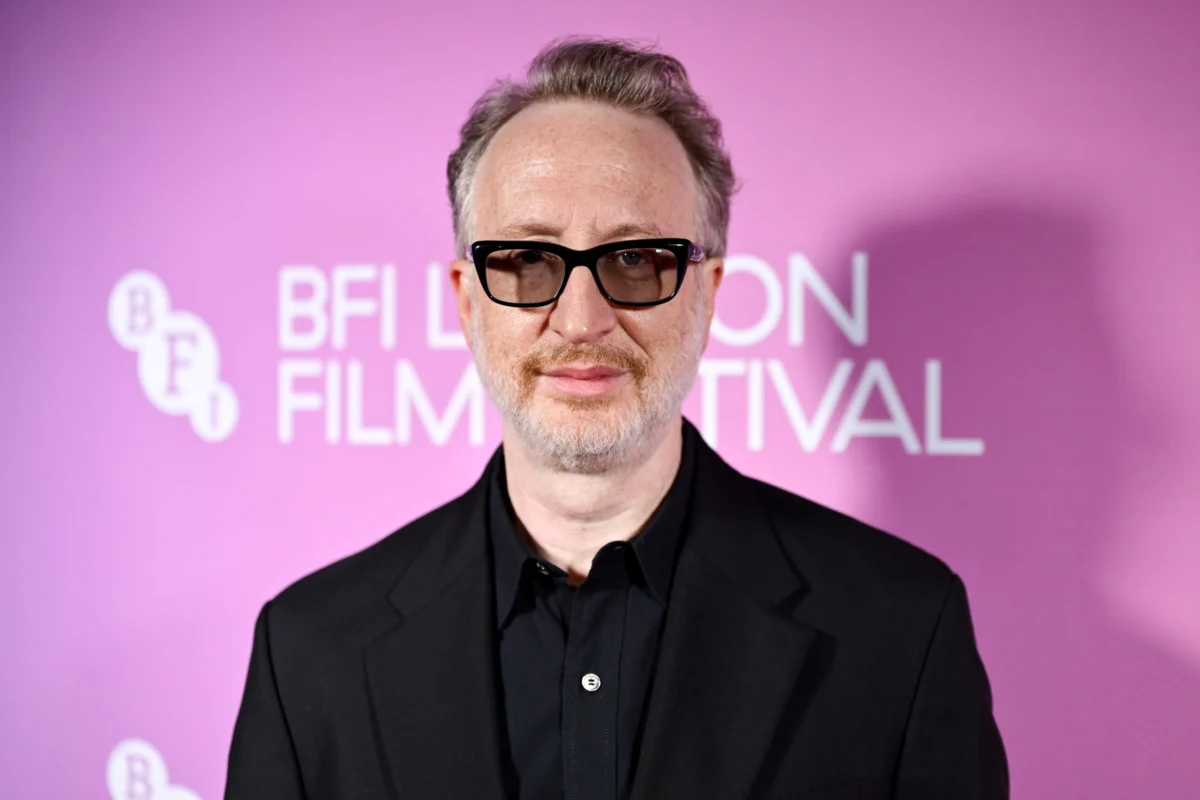
For many filmmakers, the trajectory of a career is a jagged line of compromises, lessons learned, and gradual artistic discovery. For James Gray, the director behind critically acclaimed works such as The Lost City of Z and Ad Astra, that trajectory found its definitive turning point in 2008. During a candid career retrospective at the London Film Festival (LFF) this week, Gray pinpointed his fourth feature film, Two Lovers, as the singular moment he finally transitioned from a director-for-hire to an auteur in full command of his vision.
In a wide-ranging Q&A session, Gray provided a rare, unvarnished look at his early career, expressing a level of detachment—and occasionally disdain—for his earlier output. For the audience in London, the revelation was clear: Two Lovers was not just another project on his filmography; it was the birth of his true cinematic voice.
Chronology: The Road to Creative Liberation
To understand the significance of Gray’s statement, one must look at the landscape of his early career. Gray burst onto the scene in 1994 with Little Odessa, a gritty crime drama that garnered significant attention. However, in the eyes of the director, the projects that followed—The Yards (2000) and We Own the Night (2007)—represented a period of searching rather than arrival.
"I don’t regard the films I made before this very highly," Gray admitted to the LFF audience. "I hope people like them, but I don’t think of them as truly mine. I was still trying to do something. Two Lovers was the first film that felt like who I was trying to be, if that makes sense, because I had total freedom."
This period of "trying to do something" was defined by the typical constraints of the studio system. Gray struggled with the pressures of budget, casting, and narrative interference—elements that often dilute the singular focus of a director. By the time he reached the mid-2000s, Gray was determined to strip away the artifice. With Two Lovers, he secured the one commodity that every director covets but few possess in their early years: total creative control.
Supporting Data: The Anatomy of a $9.5 Million Vision
What makes the triumph of Two Lovers particularly noteworthy is the modest nature of its production. In an era where blockbuster budgets were ballooning, Two Lovers was crafted for approximately $9.5 million—a "cheap movie," as Gray affectionately termed it.
This budget restriction, rather than hindering the production, served as a catalyst for intimacy. With limited resources, the focus shifted from spectacle to character study. The narrative, co-written by Gray and Ric Menello, is a taut, emotionally devastating exploration of longing. It follows Leonard (Joaquin Phoenix), an aspiring photographer and introvert who, reeling from a recent heartbreak, retreats to his parents’ home in Brooklyn.
The story hinges on a classic, yet expertly executed, romantic dilemma. Leonard’s parents attempt to anchor him with Sandra (Vinessa Shaw), a stable, sensible choice. However, his life is upended by the arrival of Michelle (Gwyneth Paltrow), a volatile, enigmatic neighbor trapped in an affair with a married man.
Gray’s ability to weave these threads into a coherent, deeply personal tapestry was made possible by the isolation he was granted during filming. "I was left alone," Gray recalled. "The actors were great. I made exactly what I wanted."
Official Responses: The Actors and the Atmosphere
The success of Two Lovers is inextricably linked to the performance of Joaquin Phoenix, an actor with whom Gray has cultivated a lifelong professional partnership. Phoenix’s portrayal of Leonard is marked by a vulnerability that would become a hallmark of their future collaborations.
Gray’s reflection on the production highlights the importance of the environment he fostered on set. "I don’t know if the film is great, good, or terrible," he mused, "but my emotional connection to it is profound because it was a beautiful time in my life." This admission suggests that for Gray, the value of the film lies not in its critical reception or box office performance, but in the internal validation he achieved by successfully translating his internal landscape into external art.
The collaboration between Gray, Phoenix, and Paltrow created a quiet intensity that resonated with audiences. While the film was a modest performer at the box office, it solidified Gray’s reputation as a director of profound human empathy, capable of extracting nuanced, career-best performances from his leads.
Implications: The Evolution of the Auteur
Gray’s comments at the London Film Festival carry significant weight for the broader conversation surrounding auteurism in contemporary cinema. As major studios continue to favor franchises and tentpole releases, Gray’s experience serves as a reminder of the power of the "small" film.
The Shift Toward Personal Narrative
The implication of Gray’s shift at Two Lovers is that artistic maturity is often a byproduct of ownership. Once a director stops worrying about the "what if" of executive interference, they can begin to explore the "why" of their storytelling. This philosophy has guided Gray through his subsequent work, leading to the sprawling, ambitious canvases of The Immigrant and Ad Astra.
A Legacy of Queens
Currently, Gray is at the London Film Festival to promote his latest feature, Paper Tiger. The film, which recently premiered at the Cannes Film Festival, serves as a thematic bookend to the world he began exploring in Two Lovers. Set in 1986 Queens, the film follows two brothers caught in a web of Russian mafia intrigue. Starring Adam Driver, Scarlett Johansson, and Miles Teller, the film represents the culmination of the lessons Gray learned during that crucial period in 2008.
By returning to the setting of his early works but with the confidence of a seasoned veteran, Gray is illustrating the cyclical nature of a filmmaker’s career. The "total freedom" he first experienced with Two Lovers has now become his baseline, allowing him to tackle complex narratives with a level of technical and emotional sophistication that was once out of reach.
Conclusion: Looking Ahead
As the London Film Festival continues through October 18, the conversation surrounding Gray’s career remains a focal point for those interested in the craft of filmmaking. His honesty regarding his early works—a willingness to dismiss his own history in favor of his current standard—is a testament to his commitment to growth.
For fans of Two Lovers, Gray’s retrospective serves as a reminder to revisit the film with fresh eyes. It is not merely a romantic drama; it is the document of a filmmaker finding his footing, shedding the skin of his early influences, and stepping into the light of his own unique vision.
With the upcoming release of Paper Tiger on November 13, courtesy of Neon, audiences will have the chance to witness the evolution of that vision once more. Whether Paper Tiger will be regarded with the same personal reverence as Two Lovers remains to be seen, but one thing is certain: James Gray is a director who continues to demand that his work be judged not by its budget, but by the integrity of the soul he pours into every frame.
