
The Human Element: Why Kore-eda Hirokazu Rejected AI as a Creative Partner
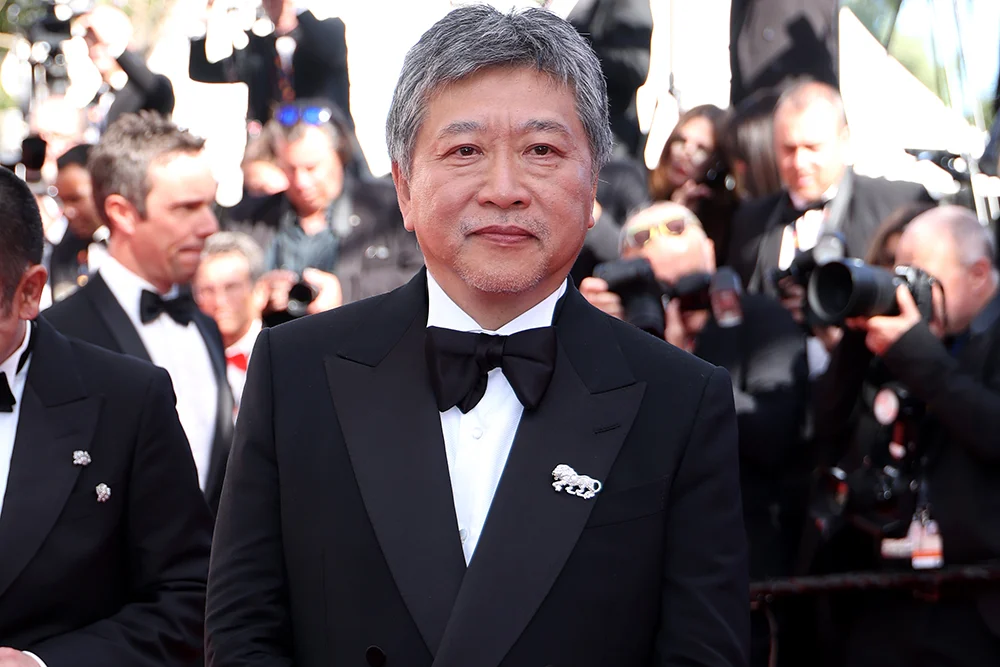
In an era where generative artificial intelligence is rapidly encroaching upon the creative industries—from scriptwriting rooms in Hollywood to animation studios in Tokyo—acclaimed Japanese auteur Kore-eda Hirokazu has drawn a firm line in the sand. The director, currently receiving the Cinema Honorary Award at the Singapore International Film Festival, recently revealed that he experimented with a generative AI chatbot to assist in the drafting of his latest film, Sheep in the Box. His conclusion was definitive: despite the technology’s ability to provide technically “correct” feedback, it lacks the essential, lived human experience that gives cinema its soul.
The Experiment: “Chat-kun” and the Anatomy of a Script
Kore-eda’s experiment began as a curiosity driven by the thematic content of Sheep in the Box. Set in a near-future landscape, the film explores the grief of a couple who, having lost their seven-year-old son, attempt to fill the void by adopting a humanoid robot constructed from the child’s data.
To better understand the interplay between human emotion and cold logic, the director engaged with a generative AI chatbot—whom he affectionately nicknamed “Chat-kun”—to critique his screenplay. The process involved a multi-stage dialogue.
“It praised me a lot,” Kore-eda told Variety. “It offered plenty of affirmation, and then followed up with notes like, ‘However, if you fleshed out the protagonist’s mother a little more, it would be a better film.’”
While the director acknowledged that the AI’s suggestions were objectively correct from a structural standpoint, they failed to inspire him. “What it said was correct,” he noted, “but it only ever says correct things. And I wondered what it was that made this so boring.”
The “Correctness” Trap: Why AI Fails the Artistic Test
Kore-eda’s critique of AI touches on a growing anxiety among filmmakers regarding the homogenization of storytelling. He observes that modern blockbuster cinema, particularly in the action genre, has begun to mirror the output of algorithmic logic. He points to the predictability of set-pieces—the fight scene that occurs exactly when the audience expects it, or the inevitable transition through a tunnel at a climactic moment.
“There are lots of films now that make you think there’s some computer serving as the model,” Kore-eda explained. By prioritizing logical flow and expected structural beats, AI risks stripping cinema of its idiosyncrasies—the messy, illogical, and deeply personal flourishes that elevate a movie from a product to a piece of art.
The fundamental disconnect, according to the director, is that an AI has never lived a life that necessitated the existence of cinema. It may possess an encyclopedic database of every film ever made, but it lacks a personal history. It has never had a film that “changed its life,” nor has it experienced the formative journey of falling in love with a “trashy” film before slowly maturing into a nuanced appreciation of high art.
“However few films a person has seen, however skewed their taste, the opinion of someone who has a film that changed their life will lead to more interesting work in the end,” Kore-eda stated. Following several rounds of interaction, he concluded that the chatbot’s advice was fundamentally hollow and terminated the relationship.
Chronology of a Career: From "Maborosi" to the Present
Kore-eda’s career, spanning over three decades since his 1995 debut Maborosi, has been defined by his intimate, humanistic gaze. His work—ranging from the Palme d’Or-winning Shoplifters to his recent international collaborations—consistently examines the structures of family, loss, and the nature of the human spirit.
His recent activity has been particularly prolific. In addition to Sheep in the Box, which debuted at Cannes, the Singapore International Film Festival is also screening Look Back, his adaptation of Fujimoto Tatsuki’s 2021 manga. The film, which follows the evolving relationship between two young aspiring manga artists, proved to be a turning point for the director.
Having first encountered the source material during the COVID-19 pandemic—a period when he felt the professional stagnation shared by many in the industry—the story of creative companionship and eventual grief served as a catalyst for his own return to filmmaking. “In the end, I suppose it came down to: ‘I can’t quit now,’” he reflected.
He notes that as he moves through his career, he feels a growing connection to the collaborators he has lost. “About half of the producers and actors who helped me keep working over the years have since died,” he said. This realization has transformed his approach to his craft; he no longer feels the pressure of legacy, but rather the encouragement of those who came before him, pushing him to make work that is “proper” and honest.
Supporting Data: The State of the Japanese Film Industry
While Kore-eda remains a titan of world cinema, he is vocal about the structural challenges facing the next generation of Japanese directors. The domestic market, he explains, is increasingly bifurcated.
Statistically, anime dominates the Japanese box office, accounting for roughly 70% of total revenue. This creates a difficult environment for live-action directors like Hamaguchi Ryusuke and Fukada Koji, who often find it more financially viable to secure production funding in France than within Japan’s domestic industry.
Furthermore, the erosion of “mini-theaters”—the long-running independent arthouse cinemas—threatens the cultural pipeline of the nation. “Filmmakers up to the generation of Hamaguchi and Fukada grew up watching films in mini-theaters,” Kore-eda warned. “When those disappear, how will the next filmmakers develop?”
These theaters have historically served as the incubator for experimental and arthouse cinema, providing a space for films that do not fit the commercial mold of the anime-heavy market. Their decline is not merely a loss of real estate, but a loss of the communal, tactile experience of cinema that Kore-eda believes is essential to artistic growth.
Implications: The Human Side of Filmmaking
The central question for the future of the industry, Kore-eda suggests, is not what humans should do with new technology, but why we choose to create in the first place.
He draws a parallel to the Olympic 100-meter sprint. Even if a robot were eventually engineered to run faster than any human, the Olympic Games would remain relevant. “That’s not because we should,” he said. “It’s because it’s fun. In the same way, the act of making things is fun. I’d like to stand on the human side. So I intend to keep AI out of the process as much as possible.”
His films Sheep in the Box and Look Back share a thematic bridge: the question of how the living face the dead. By refusing to delegate the creative process to an algorithm, Kore-eda reinforces his belief that the act of storytelling is a fundamentally human ritual of grief, memory, and connection.
As he looks back on his thirty-year trajectory, his philosophy has crystallized. When asked what the biggest change has been since his debut, he replied with a simplicity that belies the depth of his career: “Well, I suppose it’s realizing that it’s okay to be free.”
By rejecting the "correctness" of AI, Kore-eda is choosing to remain free—free to be flawed, free to be personal, and free to continue making films that are shaped by the soul rather than the spreadsheet. In a world that is increasingly obsessed with efficiency, the director stands as a reminder that the most essential components of art—empathy, intuition, and the messy reality of the human experience—cannot be programmed.
