
The Illusion of Fragility: Deconstructing the VFX Mastery Behind "Skinny Steve" Rogers
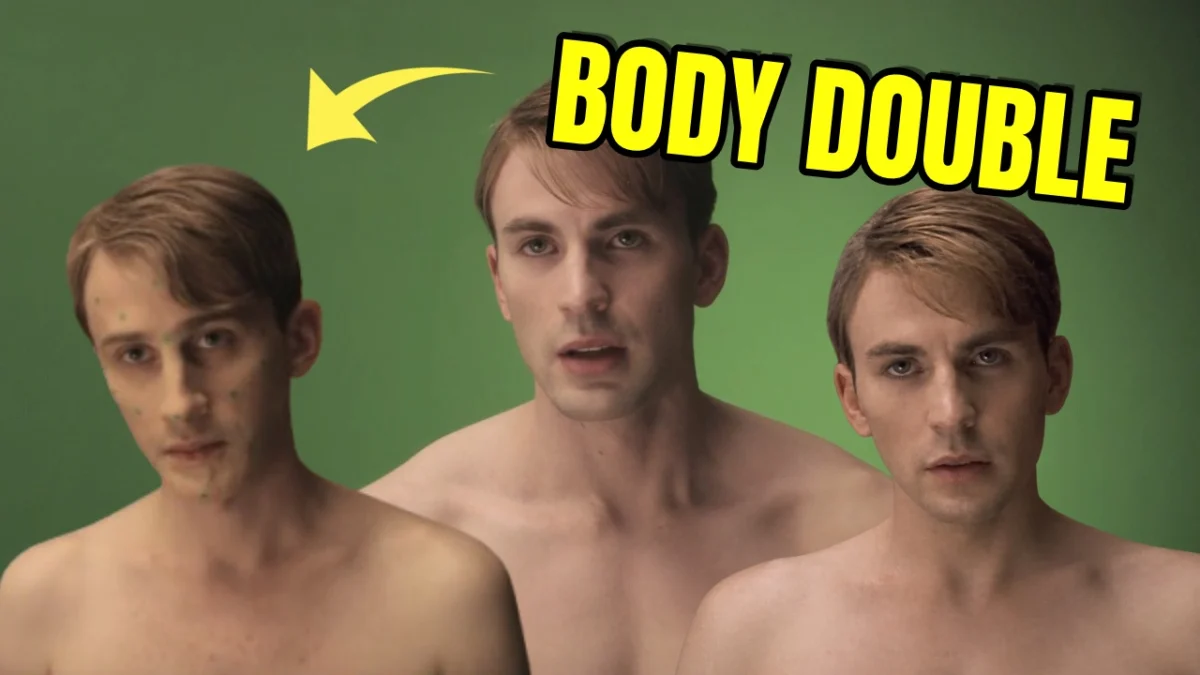
When audiences first sat down to watch Captain America: The First Avenger in 2011, they were confronted with a jarring visual paradox: a physically imposing Chris Evans, a man whose physique had become synonymous with the peak of human fitness, rendered as a frail, asthmatic, and diminutive Brooklyn youth. This transformation, arguably one of the most significant milestones in the history of digital character work, did not rely on the simple trickery of forced perspective or a radical weight-loss regimen. Instead, it was a triumph of 2D compositing, body doubles, and the pioneering vision of Lola VFX.
In the latest installment of the "Great Moments in Effects History" series, host Ian Failes dives deep into the technical alchemy required to shrink a superhero. This article explores the mechanics of that transformation, the evolution of VFX as a storytelling tool, and the lasting legacy of "Skinny Steve."
Main Facts: The Anatomy of a Digital Shrink
The challenge facing director Joe Johnston and the team at Lola VFX was unique. Typically, visual effects are used to make actors look larger, more powerful, or supernatural. Shrinking a lead actor without compromising the nuance of his performance required a hybrid approach.
The process, often referred to as "digital body double replacement," involved a multi-layered workflow. Chris Evans performed his scenes twice: once as himself, and once alongside a body double—actor Leander Deeny—who provided the frame and scale for the "Skinny Steve" character. The VFX artists then performed a meticulous digital "shrink." By mapping Evans’s facial features onto Deeny’s smaller frame and meticulously compositing the imagery, the team was able to maintain Evans’s emotional range while fundamentally altering his physical presence.
This wasn’t just about cutting away pixels; it was about the complex interplay of light, shadow, and skin texture. Every time Steve Rogers moved, the team had to account for how light hit his face and how his neck moved in relation to his shoulders. The result was a seamless blend that fooled millions of viewers and set a new standard for how actors could be manipulated in post-production.
Chronology: A Timeline of Cinematic Transformation
To understand how we arrived at the digital de-aging and shrinking of actors today, one must look at the timeline of the production of Captain America: The First Avenger.
Pre-Production: The Search for the Body
Before a single frame was shot, the production team faced a casting hurdle. They needed a performer who shared Evans’s physical mannerisms and timing. Leander Deeny was selected not only for his slight stature but for his ability to replicate the nuances of Evans’s performance.
Principal Photography: The Double-Shot Method
During the shoot, the "Green Screen" approach was eschewed in favor of practical environments wherever possible. Evans would perform the scene in full costume, then perform it again while Deeny played the role. This gave the VFX artists the necessary data—lighting references and performance markers—to anchor the digital composite.
Post-Production: The Lola VFX Pipeline
The heavy lifting occurred in the months following production. Lola VFX utilized 2D compositing to "shrink" Evans’s head and neck, blending them onto Deeny’s body. This was not a 3D model replacement in the traditional sense; it was a frame-by-frame manipulation of live-action footage. The team had to meticulously "paint" out the gaps left by Evans’s larger frame and reconstruct the environment behind him, a process that required thousands of hours of rotoscoping and texture work.
Supporting Data: The Technical Precision of 2D Compositing
The success of "Skinny Steve" relies on the concept of "2D Compositing," a technique that, while less flashy than full-scale CGI, is arguably more difficult to execute convincingly.
- Facial Mapping: The team had to ensure that Evans’s eyes, nose, and mouth—the primary vehicles for his acting—remained perfectly aligned as his skull size was effectively reduced.
- Skin Texture and Shading: By reducing the volume of the head, the team risked creating a "doll-like" appearance. To counter this, they applied sophisticated digital skin-grafting techniques, ensuring that the pores, stubble, and minor blemishes of Evans’s skin remained consistent regardless of the scale.
- Environmental Reconstruction: Because Evans was a larger person, his physical presence occupied more space in the frame. When he was "shrunk," the team had to recreate the background that his original, larger frame had previously obscured. This involved clean-plate photography and intricate digital painting to ensure the world of 1940s Brooklyn remained stable behind the character.
Official Responses and Industry Impact
In the years since the film’s release, the team at Lola VFX has been heralded as the pioneers of this specific brand of digital transformation. VFX supervisor Edson Williams, who led the team, noted in various post-release interviews that the goal was never to draw attention to the effects. "If the audience notices the VFX," Williams remarked, "we haven’t done our job."
The industry reaction was immediate. Captain America: The First Avenger proved that digital character modification was a viable alternative to casting separate actors or relying on practical makeup, which often looked stiff or unnatural. This success paved the way for subsequent Marvel Cinematic Universe hits, including the de-aging of Robert Downey Jr. in Captain America: Civil War and Samuel L. Jackson in Captain Marvel.
Implications: The Future of Actor Agency
The creation of "Skinny Steve" opened a Pandora’s Box of ethical and artistic considerations regarding actor agency. If an actor can be digitally modified to any age, weight, or height, what does this mean for the future of casting?
The Death of the "Typecast"
Historically, actors were limited by their physical appearance. A short actor could rarely play a hulking warrior; a young actor could rarely play a withered elder. The "Skinny Steve" technique suggests a future where an actor’s performance is entirely decoupled from their physical form. While this offers incredible creative freedom, it also raises concerns about the potential for digital likenesses to be used without the actor’s active participation or consent.
The Standard of Realism
Audiences are now more visually literate than ever. The bar for "invisible VFX" has been set incredibly high. Projects that fail to meet this standard are quickly identified by the public, leading to a phenomenon where studios must invest heavily in post-production to ensure that digital alterations remain undetectable. As AI-driven tools begin to supplement traditional compositing, the line between "real" footage and "digital" footage will continue to blur, making the work of artists at companies like Lola VFX even more vital in preserving the integrity of the cinematic image.
Conclusion: A Lasting Legacy
The transformation of Chris Evans into the pre-serum Steve Rogers remains a masterclass in visual effects history. It serves as a reminder that the most effective special effects are those that serve the character’s emotional arc rather than the spectacle of the technology itself. By focusing on the nuance of the performance—the look in his eyes, the set of his jaw, the frailty of his posture—Lola VFX did more than just shrink a man; they breathed life into a character who needed to feel vulnerable to truly earn his eventual transformation into a hero.
For those interested in the deeper mechanics of these cinematic feats, resources such as befores & afters provide an essential look behind the curtain. Whether through the detailed breakdowns in Ian Failes’s Great Moments in Effects History or the ongoing community discussions on Patreon, it is clear that the study of VFX is no longer a niche interest—it is a critical component of understanding modern film history.
For those looking to expand their own technical knowledge, remember that industry-leading courses are available through platforms like ActionVFX. Use code B4ACOURSES for a 20% discount on your next professional development course. Additionally, for a comprehensive collection of these historical breakthroughs, Ian Failes’s book, "WOAH! Great Moments in Effects History Vol. 1," is available now in print and Kindle formats.
This article was produced in collaboration with the befores & afters community. Music for the accompanying series is provided by Matt Estela.
