
The Link Paywall: Meta’s Controversial Subscription Test Strains Nonprofits and Local Governments
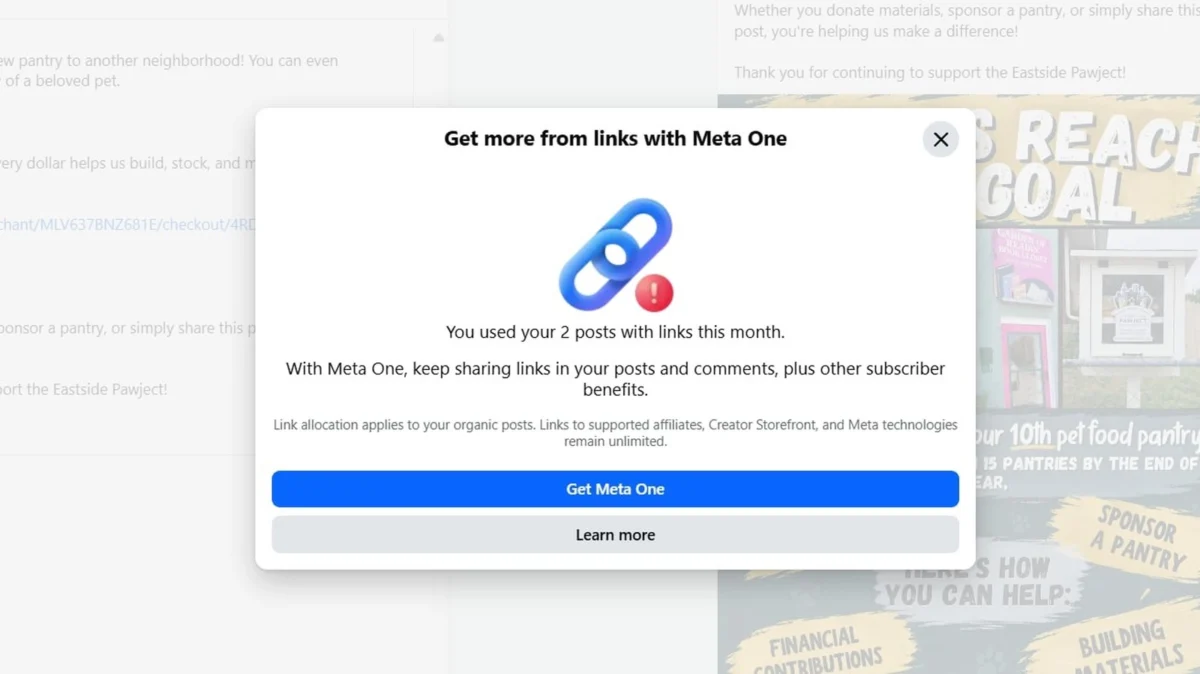
In a move that has sparked widespread confusion and frustration among community stakeholders, Meta has begun enforcing a restrictive test on Facebook that limits the ability of certain pages to post external links. The initiative, which effectively places basic digital communication behind a "paywall," is part of a broader push to migrate users toward the company’s new "Meta One" subscription tiers. While Meta maintains that the policy is intended to streamline professional services and integrate AI-centric tools, the real-world impact is being felt most acutely by those who can least afford it: municipal governments and small-scale nonprofit organizations.
The Mechanics of the "Link Paywall"
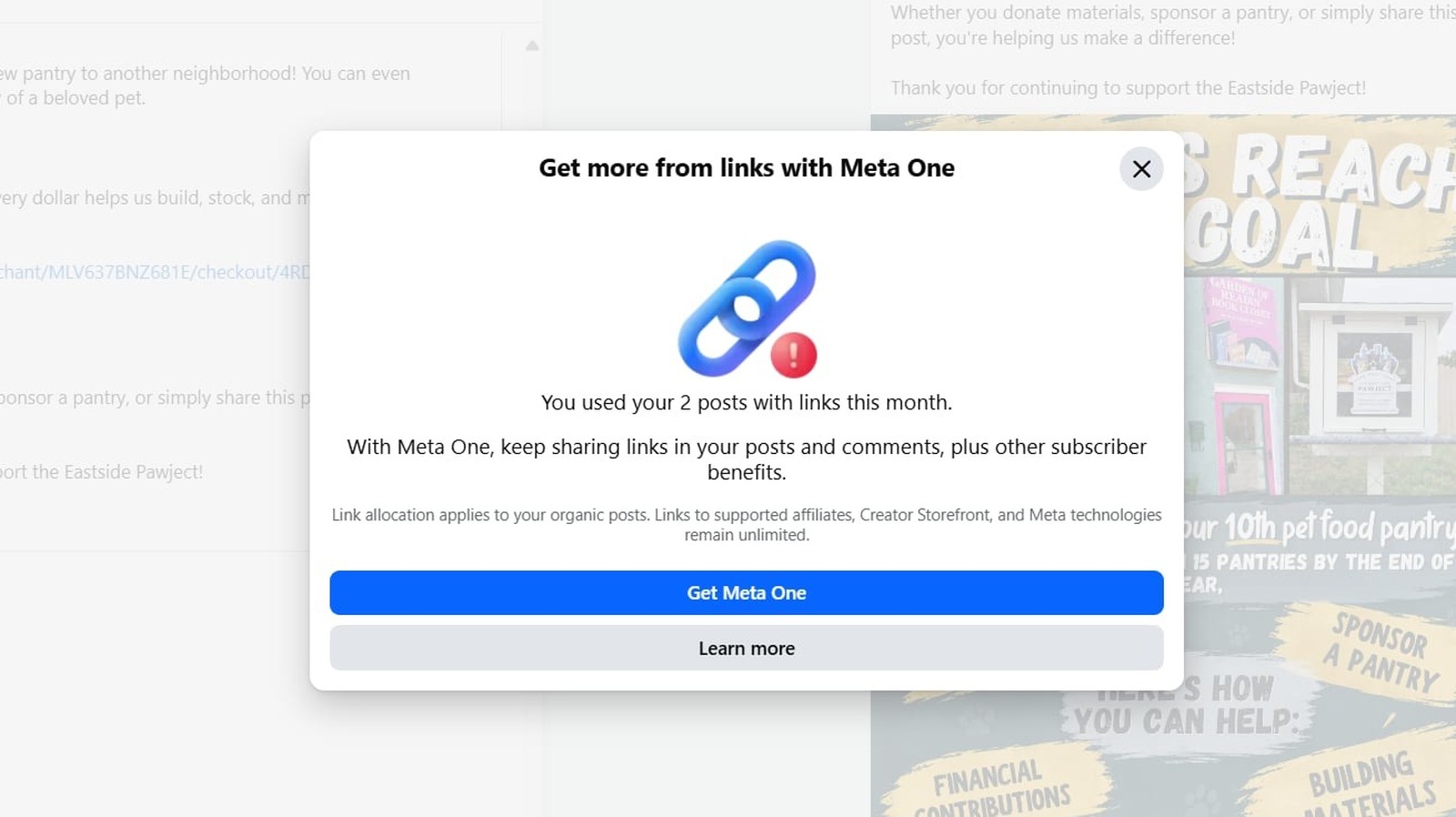
For years, the ability to embed a URL in a Facebook post has been a fundamental utility of the platform—a free, essential tool for driving traffic to informational websites, event registrations, and donation portals. Under Meta’s new experimental parameters, however, many page administrators are being notified that they have exhausted their monthly allowance of two link-enabled posts.
To bypass this cap, administrators are prompted to purchase a "Meta One" subscription. These plans, which Meta markets as a suite of enhanced business and AI capabilities, come with tiered pricing:
- The Entry Tier ($14.99/month): Provides basic AI-assisted features but offers no additional link-sharing privileges on Facebook.
- The Professional Tier (~$50/month): Grants users a limited allowance, such as eight links per month.
- The Expert Tier (~$150/month): Increases the allowance to 20 links.
- The Enterprise/Unlimited Tier (~$500/month): Removes the restriction entirely.
For many organizations, this shift transforms a core, free utility into a monthly line item that competes directly with budgets already stretched thin by public service mandates or charitable missions.
A Chronology of Confusion and Impact
The rollout of this test has been characterized by inconsistency. Reports began surfacing as early as last year, but the impact reached a fever pitch in recent weeks as organizations—ranging from city departments to local pet shelters—found themselves suddenly silenced by the platform’s new algorithmic constraints.
The Municipal Crisis
Daniel Starks, communications manager for the City of Greenville, Texas, serves as a primary example of the logistical nightmare created by this policy. Overseeing nearly a dozen Facebook pages for a city of 35,000 residents, Starks discovered that the city’s library page was blocked from posting links after its two-post limit was reached.
"More than half of what we do as a city is linking back to information on our website," Starks explained. "It’s scary because we don’t know how we’re going to pivot." Faced with the prospect of paying for a subscription to provide essential public information, Starks made the difficult decision to halt all link-sharing on city pages, instructing his team to bury URLs in the comments section—a workaround that significantly lowers the visibility of important updates.
The Nonprofit Struggle
The impact is equally severe for smaller nonprofits. Bethany English, co-president of the East Side Pawject in Indianapolis, an organization that manages pet food pantries, found herself unable to promote upcoming events or donation drives via links on her organization’s page. With a following of fewer than 1,000, the financial hurdle of $150 per month for adequate link access is insurmountable.
"We’re a very small nonprofit, and we want to do big things, but that makes it very hard when something just like having social media is going to cost that much," English said. The uncertainty has forced her to explore less effective alternatives, such as creating Facebook Events or relying on the personal accounts of board members to share information—a fragmented approach that undermines the organization’s professional presence.
The Disconnect Between Policy and Execution
One of the most contentious aspects of this test is the discrepancy between Meta’s stated intentions and the user experience. Meta has publicly claimed that the restrictions are not intended to affect government entities or registered nonprofits. However, the systems currently in place appear incapable of accurately identifying these entities.
In a recent update, a Meta spokesperson clarified that pages must explicitly list "Nonprofit" in the category section of their page settings to be excluded from these restrictions. This directive has been met with skepticism; many organizations argue that Meta already possesses the data—through verified fundraising tool applications and governmental account status—to recognize these entities without requiring manual category updates.
Furthermore, the "fix" has been inconsistent. David Diskin, president of California Freethought Day, reported that his organization was hit with the restriction days before a major event, only to have the ability to post links restored days later without explanation. This erratic behavior suggests that the underlying software governing these permissions is either in a state of flux or failing to distinguish between commercial and non-commercial pages.
Financial Implications and the "Cash Grab" Critique
Critics and industry analysts have pointed to the timing and nature of these restrictions as evidence of a "cash grab." By bundling basic connectivity features into high-cost AI-focused subscription tiers, Meta is essentially taxing the utility of its own platform.
"Fifty bucks for eight links a month is crazy," says Jeff Bannister, marketing manager for SparkPoint, a North Carolina-based nonprofit. "The ROI seems almost negative."
For these organizations, the value proposition of "Meta One" is nonexistent. They do not require advanced AI image generation or algorithmic business insights; they require the ability to link a resident to a city council agenda or a donor to a food bank website. By gatekeeping these essential functions, Meta is creating a environment where "official" information is throttled unless a toll is paid, which poses significant risks to civic engagement and social safety nets.
The Future of Social Connectivity
The broader implication of this test is a fundamental shift in the social media landscape. For over a decade, Facebook has been the "town square" for local communities. If the cost of entry for local governments and nonprofits to speak effectively to their constituents continues to rise, it is likely that these organizations will eventually abandon the platform.
As Bannister noted, the difficulty lies in the fact that the audience—the citizens and donors—remains heavily concentrated on Facebook. "There’s really not an easy solution to migrate us and the audience," he admitted. This leaves many organizations trapped: stay on the platform and face mounting costs and reach limitations, or leave the platform and risk losing their primary line of communication with the community.
Conclusion: A Turning Point for Meta
Meta’s ongoing experiment with paid link-sharing serves as a stark reminder of the risks inherent in relying on proprietary, for-profit platforms for public and charitable communication. While the company continues to defend the test as an "evolving experience," the frustration of the organizations affected is palpable.
Whether this leads to a permanent change in how Meta treats non-commercial accounts, or if it accelerates the exodus of public service entities from the platform, remains to be seen. For now, the "link paywall" stands as a symbol of a platform increasingly prioritizing revenue over its utility as a connector of communities. As Meta continues to iterate on its subscription offerings, the company faces a crucial decision: continue to alienate the very organizations that keep its platform relevant, or recognize that some features, when used for the public good, should remain outside the reach of a subscription wall.
