
The New Normal: Why ‘Ted Lasso’ Season 4 Embraces the Sitcom Over the Sentimental
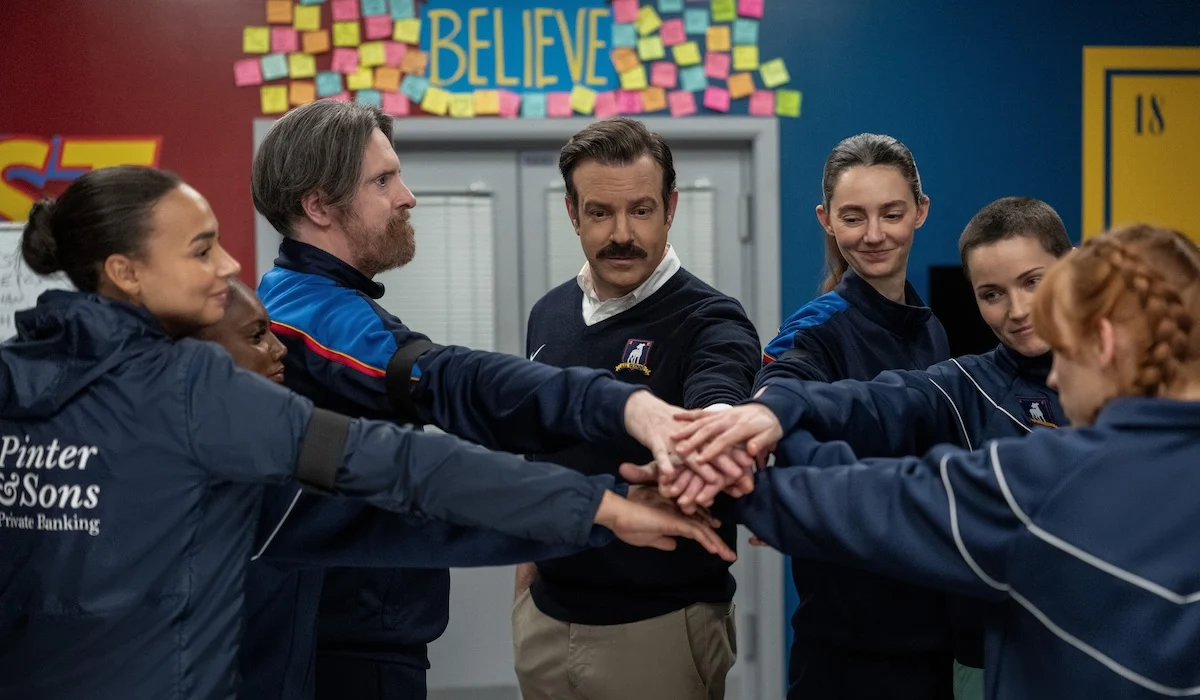
[Editor’s note: The following review contains spoilers for "Ted Lasso" Season 4, Episode 10, "Being Alive."]
In the closing moments of the Ted Lasso Season 4 finale, "Being Alive," we witness a quintessential moment of growth for Jason Sudeikis’s titular coach. Ted, once defined by his boundless, sometimes suffocating optimism, finds himself grappling with the messy, unvarnished truth of his own history. His son, Henry (Grant Feely), approaches him with a sanitized version of his grandfather’s passing—a story about a tragic fall down the stairs that Ted’s own mother had peddled to keep the darkness at bay.
For a show that built its reputation on the "Lasso Way"—a philosophy of radical empathy and emotional transparency—this is a pivotal juncture. Does Ted continue the cycle of polite fiction, or does he finally confront the trauma of his father’s suicide head-on? The scene unfolds, Ted begins to speak, and then, in a move that signals a seismic shift for the series, the camera pulls back, the dialogue fades, and we are left to imagine the conversation ourselves. It is a departure from the series’ past, and it perfectly encapsulates the new identity of Ted Lasso in its fourth outing.
The Evolution of a Modern Classic
When Ted Lasso first debuted, it was hailed as a revolutionary tonic in a cynical television landscape. It wasn’t just a show about soccer; it was a character study on the necessity of vulnerability. The second season, in particular, remains the gold standard for how the series handled mental health, specifically through Ted’s breakthrough therapy sessions with Dr. Sharon Fieldstone (Sarah Niles). Those episodes were "event television," demanding the viewer’s full emotional participation.
However, Season 4 operates in a different register. The decision to cut away from Ted’s discussion with Henry is not, as some might argue, an act of cowardice. It is an act of maturation. The narrative has already walked through the fire of Ted’s trauma; to dwell there again would be to diminish the progress he has made. By moving the camera away, the show acknowledges that while the trauma is a part of Ted, it is no longer the entirety of his story.

A Chronology of Change: From Coaching to Life Transitions
The structural pacing of Season 4 has been marked by a series of deliberate "shortcuts"—a move that has drawn mixed reactions from the fanbase. In the last two weeks alone, significant plot points have occurred offscreen. The death of Mae, the beloved proprietor of the local pub, happens entirely behind the curtain, with the audience only witnessing the aftermath of the news.
Similarly, the trajectory of Roy Kent (Brett Goldstein) and Keeley Jones (Juno Temple) has moved at breakneck speed. After a protracted "will-they-won’t-they" arc that stretched through the majority of the season, the finale pivots abruptly into a surprise pregnancy. This narrative choice highlights the show’s transition into a more traditional sitcom framework.
- Mid-Season: The Lady Greyhounds, under the management of Ted and the eventual promotion of Alice Chilton (Tanya Reynolds), gain momentum.
- Late Season: The team’s promotion is confirmed, though the show opts for a viral video trope to fill seats, a decision that feels more aligned with the breezy tone of a classic sitcom than the gritty, slow-burn character development of earlier years.
- The Finale: Ted steps down as manager of the Lady Greyhounds to serve as an assistant, prioritizing his role as a father. Roy Kent accepts a head coaching role at Chelsea, marking a significant geographic and professional departure from the Richmond bubble.
Supporting Data: The Shift in Narrative Philosophy
Critics and long-time viewers have noted that Season 4 lacks the intense, singular focus of the show’s origins. However, the data suggests this is a feature, not a bug. By embracing the "sitcom engine"—the idea that affable characters can sustain stories through predictable but heartwarming beats—the production team has found a way to extend the life of the series beyond its original three-season plan.
The introduction of Alice Chilton as a breakout character provides the series with a fresh energy source. Tanya Reynolds’ performance has been widely praised, injecting a sense of curiosity and ambition that balances out the more settled arcs of the veteran cast. The show’s willingness to let the "big" moments—like the pregnancy announcement—overshadow the professional shifts (such as Roy’s new job) signals that the show is no longer interested in complex, multi-layered dramatic tension. Instead, it is interested in comfort.
Official Responses and Creative Direction
Jason Sudeikis has been vocal about the fact that the first three seasons were a closed loop—a specific story he wanted to tell. Anything following that, including this fourth season, exists in a space where the characters are "living" rather than "arcing."

In interviews, the creative team has emphasized that Ted Lasso was never intended to be a family drama or a high-stakes sports epic. It is a show about people learning to be better to one another. By leaning into the lighter, more episodic nature of the sitcom format, the show avoids the "disjointed storytelling" and "egregious runtimes" that plagued the third season. While some fans may mourn the loss of the "magical" quality that defined the first two years, there is a clear trade-off: a more functional, sustainable, and consistently pleasant viewing experience.
The Implications for Season 5 and Beyond
The implications for a potential fifth season are clear: Ted Lasso is settling into its role as a "comfort watch." The departure of Roy to Chelsea and the shift in Ted’s management status suggest that the show is willing to break up the band to allow for new configurations.
This presents both a risk and an opportunity. The risk is that by "trimming the fat" and simplifying the emotional stakes, the show loses the very thing that made it a cultural phenomenon. The opportunity, however, is that it avoids the fate of many great dramas that overstay their welcome by clinging to a tone that no longer fits the narrative.
If the show returns for a fifth season, the focus will likely remain on the evolution of characters like Alice and the shifting dynamics of the Richmond community. We can expect less "therapy-speak" and more "workplace-shenanigans," a shift that will inevitably polarize those who came for the profound emotional lessons and those who stayed for the charm.
Ultimately, the fourth season of Ted Lasso proves that the show can exist without being a masterpiece of psychological depth. It has evolved into something humbler, more manageable, and, dare we say, more human. It is a functional sitcom with an oversized heart—and for a television landscape currently defined by cynicism and chaos, that might be exactly what the audience needs.

As the credits rolled on the finale, the message was clear: Ted doesn’t need to be our savior, and he doesn’t need to be our therapist. He just needs to be a coach. And if that is all the show chooses to be moving forward, no apologies are necessary.
“Ted Lasso” is available on Apple TV. As of publication, the series has not been officially renewed for Season 5, though the ending of the current season leaves the door wide open for further explorations of the Richmond AFC universe.
