
The Streaming Era Arrives: Primetime Emmys Forge Historic Six-Year Exclusive Partnership With Prime Video
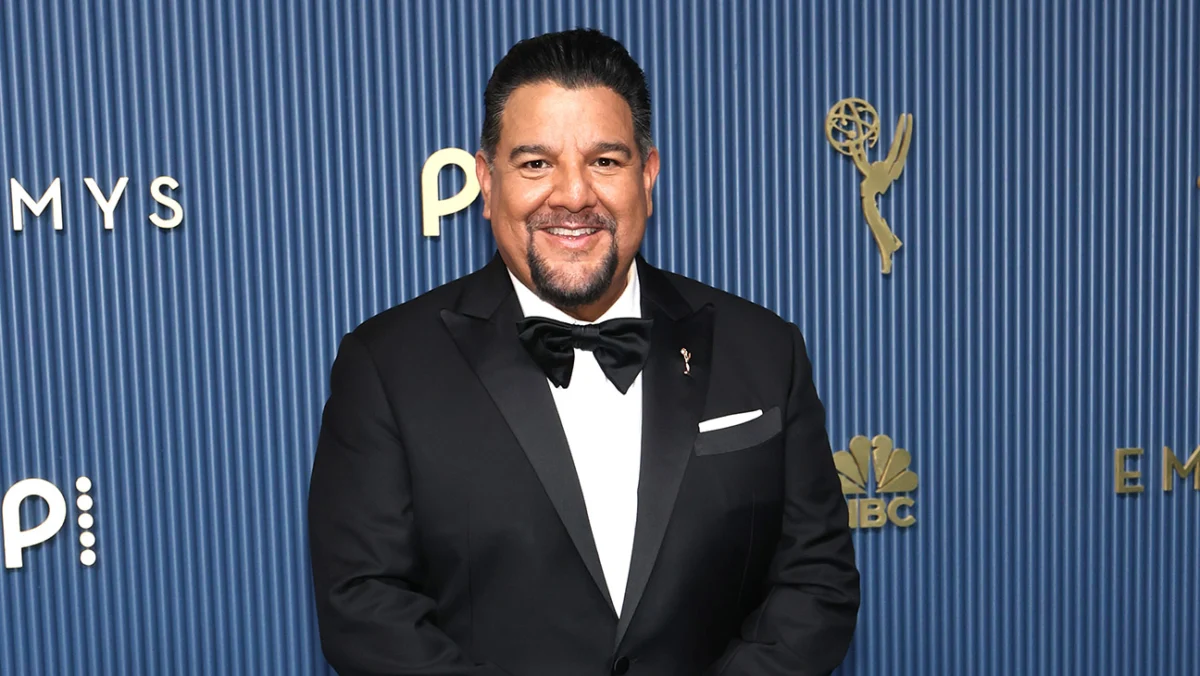
LOS ANGELES — In a landmark decision that signals a fundamental realignment of the entertainment industry’s relationship with traditional television, the Emmy Awards are officially cutting the cord.
The Television Academy and Amazon-owned Prime Video have finalized a major six-year agreement that will make the streaming titan the exclusive, worldwide home of the Primetime Emmy Awards from 2027 through 2032.
For the first time in the 79-year history of the awards, the grand celebration of television’s finest achievements will not air on a traditional broadcast network. Instead, the ceremony will bypass the terrestrial airwaves entirely, marking a seismic shift in how Hollywood honors its own.
This multi-year pact not only upends a decades-old broadcast tradition but also positions the Emmys as the first major member of the prestigious EGOT (Emmy, Grammy, Oscar, Tony) family to transition into a streaming-first, exclusive broadcast model. While the Academy Awards recently announced a future migration to YouTube beginning in 2029, the Primetime Emmys will achieve this milestone first, reshaping the landscape of live awards-show broadcasting for the foreseeable future.
Main Facts of the Agreement
The newly minted partnership between the Television Academy and Prime Video introduces several key structural and operational changes to the delivery of television’s highest honors:
- Exclusive Home: Prime Video will serve as the exclusive global home for the Primetime Emmy Awards for six consecutive ceremonies, spanning 2027 through 2032.
- The Free-Access Model: In a critical stipulation championed by Academy leadership, the Emmy telecast will be completely free to stream for all viewers globally—requiring no active Prime subscription to watch.
- Expanded Programming: Beyond the main Primetime telecast, the agreement opens the door for Prime Video to distribute other marquee Television Academy events, including the Television Academy Hall of Fame and the Television Academy Honors.
- Creative Arts Emmys In Limbo: The future home of the Creative Arts Emmy Awards—which have traditionally aired on FXX for more than a decade—remains under discussion and is not definitively bound to the primary Prime Video deal at this stage.
Chronology: The End of the "Wheel" and the Road to Streaming
To understand the magnitude of the 2027 shift, one must look back at the historical framework that has governed the Emmys since the late 20th century.
The Broadcast Era (1987–2026)
For generations, television viewers knew the Emmys as a rotating event that bounced across the major broadcast networks.
- 1987–1992: The awards enjoyed a six-year exclusive run on Fox.
- 1993–1994: The telecast moved to ABC for a brief two-year stint.
- The "Wheel" Agreement: In the mid-1990s, the Television Academy formalized a multi-network rotation, or "wheel" agreement, among the "Big Four" broadcast networks: ABC, CBS, Fox, and NBC.
This rotational system meant that the production team, network promotional muscle, creative direction, and corporate brand partnerships reset entirely every single year. The final installment of this legacy agreement concluded with the 2026 Emmys, which aired on NBC and streamed on Peacock.
The Turning Point
Immediately following the conclusion of the 2026 ceremony, industry whispers began to swirl. Reports broke that the Television Academy and Prime Video were locked in advanced discussions—a rumor that has now culminated in an industry-altering reality.
Supporting Data and Strategic Rationale
While the transition to a streaming platform may shock traditionalists, Television Academy Chair Cris Abrego insists the move was driven by a desire for long-term creative stability rather than novelty.
In an exclusive interview with The Hollywood Reporter, Abrego detailed the friction inherent in the old broadcast model. "Rotating every year meant in many ways that we were starting over again with a new partner," Abrego explained. "That included everything from the creative, bringing on a new producer, to building partnerships with brands. That was always one of the challenges with the wheel agreement."
Before settling on Amazon, the Academy engaged in robust discussions regarding a potential renewal with the traditional broadcast networks, alongside explorations with other digital outlets. However, conversations with Mike Hopkins, head of Prime Video and Amazon MGM Studios, ultimately proved decisive.
"Mike really got it," Abrego noted. "Having the ability to have one partner over six years together, to learn from that from year to year and really build from that, became exactly what we all were aligned with and wanted to do."
Solving the Global Footprint Challenge
Another foundational pillar of the agreement is Prime Video’s massive, established global infrastructure. While the Emmys have historically relied on a patchwork of international broadcast syndication partners to reach global audiences, the capacity to stream the event simultaneously and seamlessly worldwide under one unified banner offers an unprecedented scaling opportunity.
Crucially, however, the Academy refused to allow a streaming exclusivity deal to introduce financial or logistical barriers for the viewing public.
"Access has been something I have prioritized from the very start," Abrego asserted. "Exclusivity in the honors should never mean exclusivity in access. Removing the paywall means we are inviting every single fan on the planet to get a front row seat to the Emmys."
Official Responses and Industry Reactions
The leadership on both sides of the historic partnership have emphasized collaboration, prestige, and a shared vision for the future of entertainment storytelling.
In an official statement addressing the monumental deal, Mike Hopkins highlighted the historical significance of the partnership:
"For nearly eight decades the Emmys have recognized the best storytelling and talent in television, and we’re honored that Prime Video will be trusted as the global home for this celebration over the next six years. We look forward to collaborating with the Television Academy on this iconic event."
Cris Abrego echoed this sentiment, pointing toward the creative freedom that a long-term, single-partner arrangement affords both production teams and executives. Drawing on his parallel career as CEO of Hyphenate Media Group—which he co-founded alongside creative partner Eva Longoria—Abrego expressed genuine enthusiasm for the brainstorming sessions ahead.
"My day job is developing and working on projects, and it’s the best part," Abrego said. "Similarly here, the conversations we’ve had are really exciting about what the possibilities are. Both sides, the academy and Amazon, are focused on making a great, great, entertaining, meaningful, celebratory show."
Implications for the Entertainment Industry
The migration of the Primetime Emmy Awards to Prime Video carries profound long-term implications for the entertainment business, linear television, and the broader awards-show ecosystem.
1. The Decline of Linear Television Dominance
For nearly a century, live awards shows served as the ultimate promotional anchors for traditional broadcast networks, commanding millions of viewers and commanding top-tier advertising dollars. By abandoning broadcast entirely, the Emmys acknowledge a hard truth: linear television viewership continues to erode, particularly among the younger demographics that stream prestige television. Moving to a digital-first platform aligns the medium of the awards directly with the medium of the art it celebrates—streaming television.
2. A Precedent for the EGOT Circuit
With the Primetime Emmys officially making the leap to a streaming ecosystem—and the Academy Awards slated to follow suit on YouTube by 2029—the traditional television network stranglehold on live cultural events is officially broken. The Grammys and the Tonys now find themselves standing as the final major holdouts on traditional linear broadcasting (currently airing on CBS), though industry analysts suggest that media conglomerates will closely monitor the Prime Video experiment to evaluate the long-term economic and viewership viability of streaming-exclusive awards galas.
3. Redefining "Exclusivity" and Public Access
By mandating that the stream remain entirely free and accessible to non-Subscribers, the Television Academy has successfully sidestepped the primary consumer criticism leveled against streaming-exclusive live events: paywalls. By ensuring that anyone with an internet connection can watch the ceremony without purchasing an Amazon Prime membership, the Academy preserves the populist, mass-media nature of the Emmys while leveraging Amazon’s vast technological delivery systems.
4. Creative Continuity and Brand Evolution
With a guaranteed six-year runway, future Emmy telecasts will no longer suffer from the jarring tonal shifts, administrative resets, and producer shakeups that defined the bygone "wheel" era. Producers will be empowered to build multi-year creative arcs, test long-term promotional partnerships, and iterate on show formats with an institutional memory that simply was not possible under a multi-network rotation.
Looking Ahead
As the ink dries on the multi-year contract, the Television Academy and Prime Video face a blank canvas. Because the 2026 ceremony concluded only weeks ago, formal production planning for the inaugural 2027 Prime Video telecast has yet to kick into high gear.
Nevertheless, the industry is watching closely. When the red carpet rolls out for the 2027 Primetime Emmy Awards, it will not just be celebrating the best television of the year—it will mark the definitive dawn of a new, digital-first epoch for Hollywood’s most storied institutions.
