
Unearthing a 1960s Western Gem: Why David Carradine and Robert Mitchum’s Young Billy Young Deserves a Second Look
Main Facts
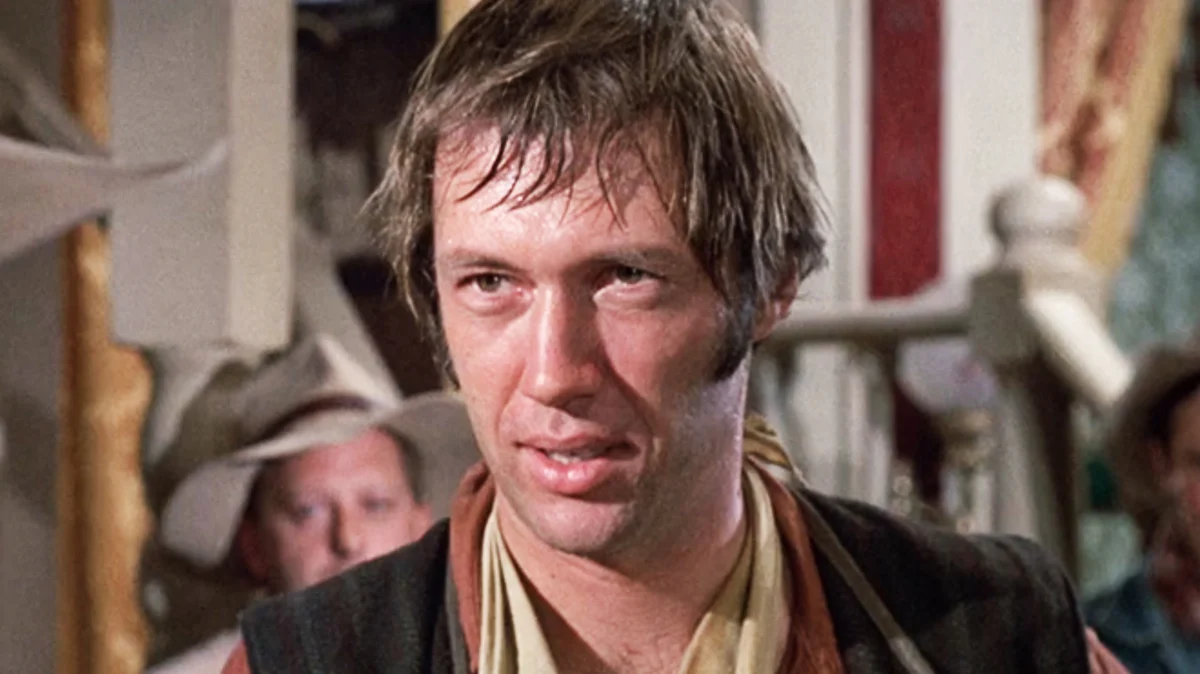
For fans of classic Hollywood cinema, the late 1960s represent a fascinating crossroads for the Western genre. As boundary-pushing, revisionist epics like Sam Peckinpah’s The Wild Bunch and Sergio Leone’s Once Upon a Time in the West were redefining what a cowboy movie could be, traditional studio-system horse operas were quietly completing their historic run. Tucked away in this transitional era is Young Billy Young (1969), a solidly crafted, formulaic prairie saga directed by veteran filmmaker Burt Kennedy and starring noir icon Robert Mitchum alongside a rising David Carradine.
While the film initially came and went with modest box office returns and mixed critical notices—frequently dismissed as feeling more like a television pilot than a cinematic event—it has aged into a charming piece of nostalgia. Today, modern cinephiles and genre enthusiasts looking to explore the deeper cuts of Hollywood history can stream Young Billy Young completely free on platforms like Tubi.
The film boasts a rich intersection of Hollywood lineage. David Carradine, whose father John Carradine was a legendary character actor present at the dawn of John Wayne’s superstardom in 1939’s Stagecoach, was carving out his own path in the genre before achieving global fame as Shaolin monk Kwai Chang Caine in ABC’s Kung Fu (1972). Paired with Mitchum’s world-weary gravitas and Kennedy’s swift, veteran direction, Young Billy Young offers a textbook study of late-stage classical Western storytelling.
Chronology of an Era: The Carradines, Kennedy, and the Western Evolution
To understand Young Billy Young, one must look at the broader timeline of its key players, whose careers trace the arc of the American Western from its 1930s golden age to its 1970s deconstruction.
1939: The Foundation
John Carradine witnesses history on the set of John Ford’s Stagecoach, portraying Hatfield opposite John Wayne’s iconic Ringo Kid. This masterclass in genre filmmaking establishes a standard that subsequent generations of actors—including John’s sons—would perpetually chase.
The 1950s: Burt Kennedy’s Rise
Director and writer Burt Kennedy establishes himself as a vital architect of the mid-century Western. Beginning in radio before transitioning to television and film, Kennedy scripts essential screenplays for John Wayne’s Batjac Productions, including Seven Men from Now (1956) and Gun the Man Down (1956).
1966–1969: David Carradine’s Prairie Years
After leaving a successful Broadway run in Royal Hunt of the Sun to headline the television adaptation of Shane (1966), David Carradine faces disappointment when the series is canceled after just 17 episodes. Undeterred, Carradine pivots heavily to the big screen, entering a remarkably productive period in 1969. During this single year, he appears in three distinct Westerns: Heaven with a Gun, The Good Guys and the Bad Guys, and Young Billy Young.
October 1969: The Dual Releases
Burt Kennedy oversees two back-to-back releases starring Robert Mitchum: Young Billy Young and The Good Guys and the Bad Guys. Both films premiere to mixed critical receptions, overshadowed by the seismic cultural impact of revisionist Westerns released the same year.
1972: The Breakthrough
Following his supporting work in films like Young Billy Young, David Carradine lands the career-defining role of Kwai Chang Caine in the television series Kung Fu, transforming him from a dependable character actor into an international pop-culture icon.
Supporting Data and Production Details
Behind the scenes, Young Billy Young was built on a foundation of seasoned professionals who knew the mechanics of the genre inside and out.
- The Creative Engine: Burt Kennedy transitioned from scripting gritty, morally complex 1950s oaters to directing television mainstays like Lawman and The Virginian in the 1960s. His feature directorial credits include John Wayne’s The War Wagon (1967) and a sequel to The Magnificent Seven.
- The Ensemble Cast:
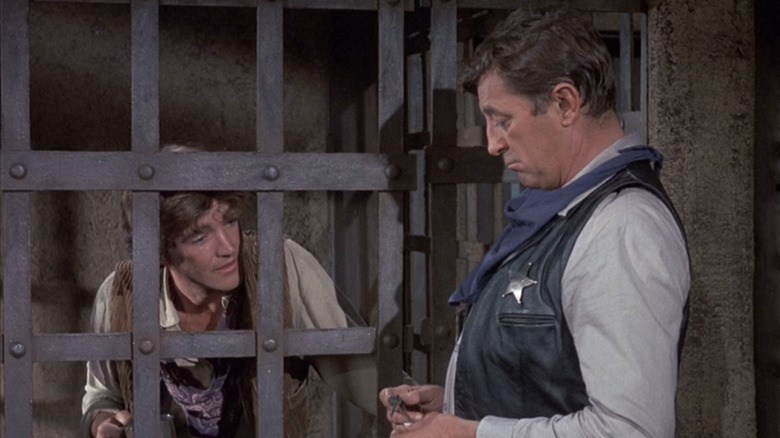
- Robert Mitchum stars as Ben Kane, a newly appointed deputy/sheriff driven by a personal vendetta.
- Robert Walker Jr. plays the titular Billy Young, a hot-headed youth taken under Kane’s wing following a deadly shootout in Mexico.
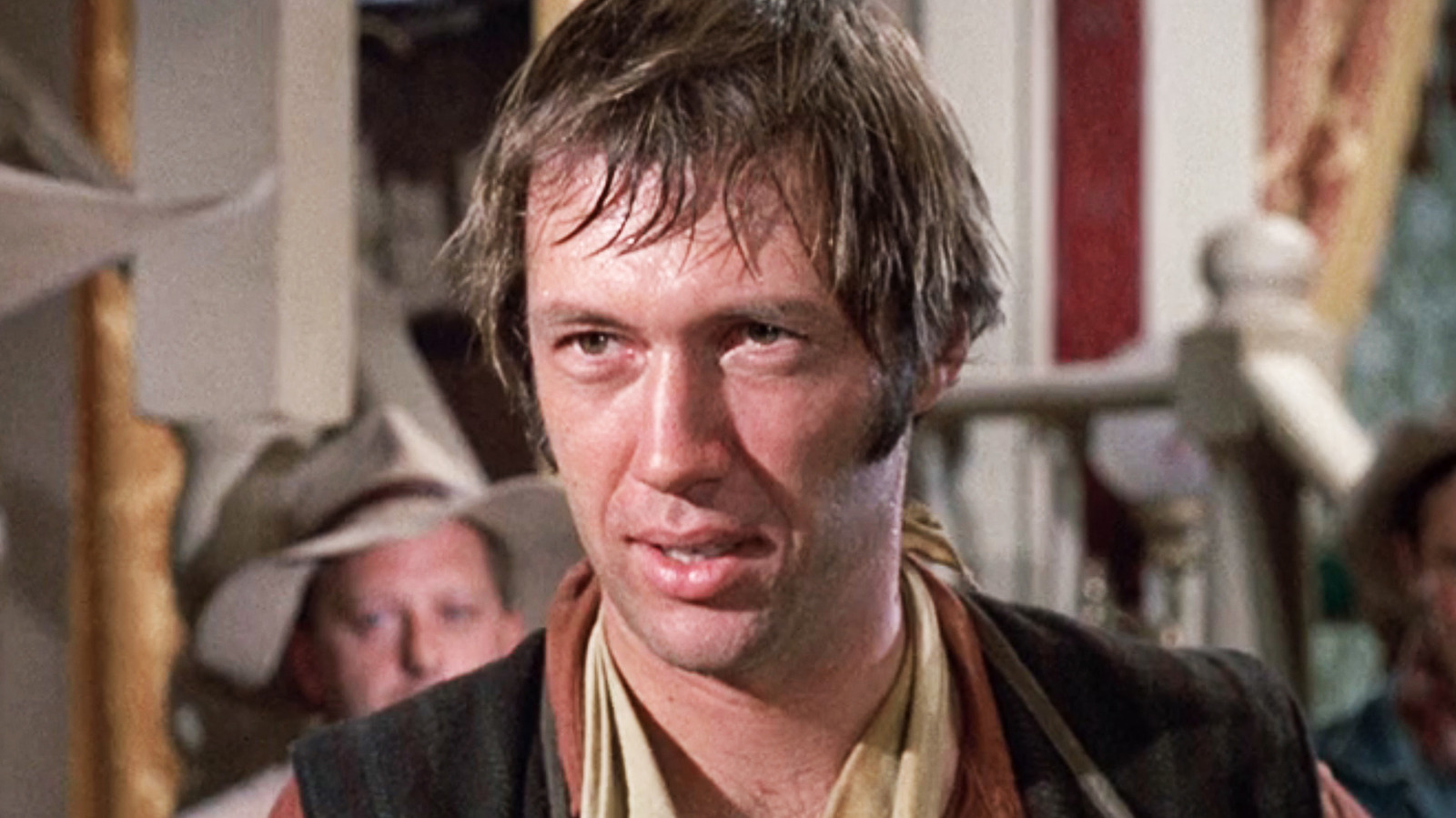
- David Carradine steps into the boots of Jesse Boone, the duplicitous son of the vicious outlaw Frank Boone (played by John Anderson). Jesse deserts Billy in Mexico, setting up the film’s core tensions.
- Angie Dickinson rounds out the principal cast as Lily Beloit, a sharp-tongued dance-hall girl who develops a romance with Mitchum’s character. Dickinson had previously broken through in Kennedy’s Gun the Man Down over a decade earlier.
- Box Office and Critical Reception: Upon its October 1969 release through United Artists, the film struggled to find its footing against high-concept competition. Esteemed New York Times critic Howard Thompson famously panned the film’s scope, writing, "It looks, plays and sounds exactly like an episode—a middling one—in a weekly series."
Official Responses and Critical Perspectives
The critical discourse surrounding Young Billy Young reflects a broader industry anxiety at the close of the 1960s. Studio executives and traditionalists championed the comforting formula of the traditional Western, while contemporary reviewers and ticket buyers increasingly gravitated toward the cynical, blood-soaked realism introduced by foreign and domestic revisionists.
The Contemporary View
In 1969, critics struggled to justify spending time on a picture that utilized standard narrative beats—such as the reluctant lawman, the reckless youth seeking redemption, and the small town controlled by a corrupt syndicate (featuring Jack Kelly as the secondary villain)—when cinematic art forms were being rapidly rewritten. The comparison to episodic television was a frequent critique, signaling that standard studio craftsmanship was no longer enough to satisfy a changing audience.
The Modern Reassessment
Decades later, however, the film’s traditional structure has become its primary selling point. Film historians and genre fans now view Young Billy Young as a comforting, highly watchable relic of an era when movie stars like Mitchum could anchor a picture purely on charisma and screen presence. Rather than looking for structural subversion, modern viewers appreciate the film for its unpretentious pacing, sharp desert cinematography, and the fascinating friction between veteran actors and the counterculture-era performers like Carradine who were just beginning to infiltrate the studio system.
Implications for Film History and the Western Genre
The legacy of Young Billy Young extends far beyond its modest box office footprint. It serves as a microcosm of Hollywood’s labor dynamics during a period of massive industrial shift.
- The Passing of the Torch: The film represents a physical bridge between classical Hollywood royalty (Mitchum, Kennedy, John Anderson) and the emerging generation of 1970s actors (Carradine, Walker Jr.). Watching Carradine navigate a traditional studio Western just years before embracing the psychedelic, countercultural aesthetic of Kung Fu highlights his versatility as a performer.
- The Value of the "Middling" Studio Picture: While cinema textbooks frequently focus exclusively on masterpieces like The Wild Bunch, the survival of films like Young Billy Young on free streaming platforms demonstrates the enduring value of solid, workmanlike genre filmmaking. Not every movie from a golden age needs to reinvent the wheel to be worth preserving; sometimes, the sheer craftsmanship of a veteran director like Burt Kennedy and the effortless cool of Robert Mitchum are more than enough to justify a two-hour watch.
For modern audiences, Young Billy Young stands as an accessible, deeply entertaining window into the twilight of the classic Hollywood Western—proving that even the genre’s middle-tier efforts possess an undeniable, timeless charm.
