
Unleashing the Arcade on the Silver Screen: A Deep Dive into Kitao Sakurai’s Wild, Polarizing Street Fighter Adaptation
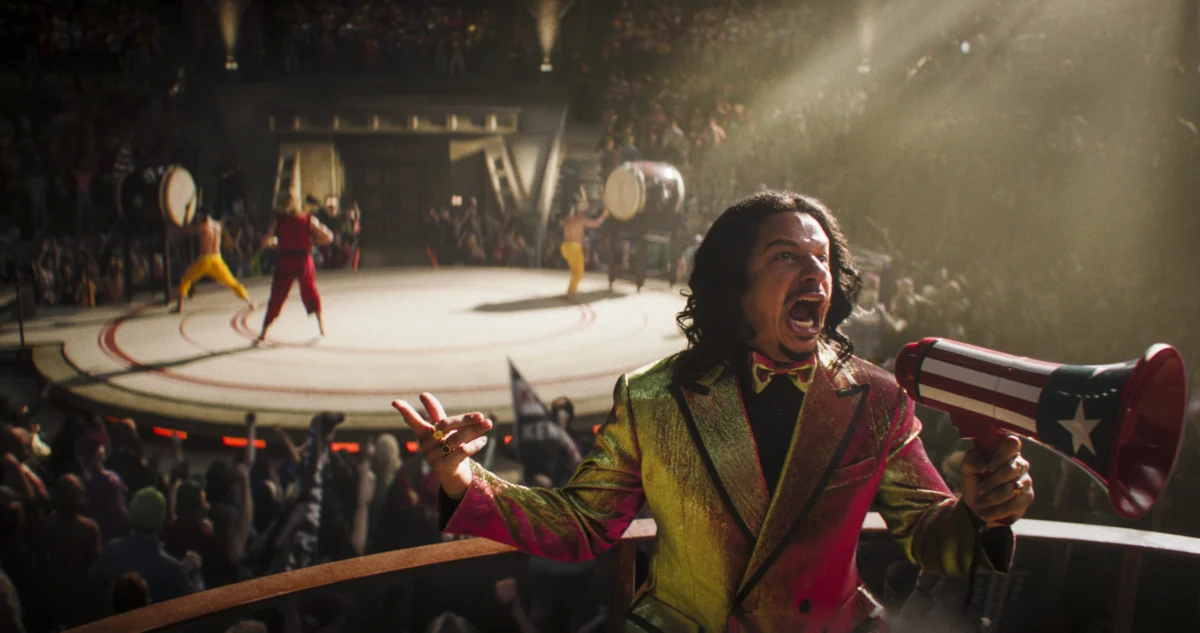
As video game adaptations continue to evolve—shedding their long-held reputation as Hollywood’s ultimate cinematic graveyard—filmmakers have begun establishing distinct playbooks for translating interactive digital media to film. On one end of the spectrum lie meticulous expansions of rich lore and immersive mythologies, yielding blockbuster hits ranging from prestige television triumphs like The Last of Us to family-friendly phenomena like Super Mario Galaxy. On the opposite end, we find a more chaotic, liberated approach: acknowledging that a game’s narrative might be paper-thin and instead constructing an original cinematic vehicle that merely captures the kinetic, high-octane vibe of holding the controller.
Kitao Sakurai’s wildly eccentric new take on Capcom’s legendary Street Fighter franchise lands somewhere precariously between these two extremes. While it ultimately fails to reap the full, cohesive benefits of either strategy, it delivers an undeniably unforgettable, fever-dream experience at the movies.
Paramount Pictures is slated to release Street Fighter in theaters nationwide on Friday, October 16, and if early festival chatter and insider buzz are any indication, the film is poised to be one of the most fiercely debated pop culture artifacts of the year. Awarding the film a B-, critics note that while conventional narrative coherence is frequently sacrificed at the altar of pure style, Sakurai has engineered a cinematic thrill ride that is never, under any circumstances, boring.
The Main Facts: Plot, Production, and the Ultimate "Choose Your Fighter" Ensemble
At its core, Sakurai’s film maintains a tenuous tether to the classic arcade lore regarding its central protagonists, Ryu (portrayed with stoic intensity by Andrew Koji) and Ken Masters (brought to life with cocksure charisma by Noah Centineo). As adopted brothers and martial arts disciples who grew up training under the same master, the two men are bound by a shared past and an ongoing struggle to protect each other from their inner demons.
However, the actual viewing experience bypasses traditional dramatic pacing in favor of replicating the visceral thrill of an arcade cabinet. The film functions much like the classic selection screen, asking audiences to gawk at a lineup of cartoonish, hyper-stylized warrior characters before watching them trade bone-crunching blows.
That chaotic energy is amplified tenfold by a staggering, whiplash-inducing ensemble cast. A brief glance at the call sheet is enough to induce double-takes:

- Jason Momoa covered entirely in green CGI-enhanced muscle mass;
- 50 Cent stepping into the ring as a Mike Tyson-esque heavyweight sporting a hairline sharper and more geometric than anything found in nature;
- Professional wrestling titans Cody Rhodes and Roman Reigns bringing squared-circle gravitas to the silver screen;
- Polarizing comedy personalities spanning political divides, including Eric Andre and Andrew Schulz;
- Country-pop icon Orville Peck, donning a striking, Wolverine-inspired set of claws;
- Character actor mainstays David Dastmalchian and Kyle Mooney rounding out the chaotic backdrop.
This eclectic mishmash of talent ensures that ticket buyers will find plenty to both adore and despise on screen, guaranteeing that no two audience members will walk into the theater with the same expectations.
Chronology of Chaos: Tracing the Narrative Arc
For those attempting to parse the plot of Street Fighter without losing their minds, the narrative structure can feel a bit like trying to dance about architecture. Yet, for the sake of completion, here is how the story unfolds:
1. The Early Days and the First Tournament
Ryu and Ken study under a demanding master who continually warns them of the darkness within and the necessity of keeping one another grounded. Both harbor dreams of competing in the prestigious World Warrior Tournament—a high-stakes, Kumite-style bracket that assembles the planet’s premier martial artists across various disciplines. Ryu emerges victorious in the inaugural tournament, but the triumph is short-lived. A bitter falling out fractures the brotherhood, compounded by an escalating blood feud with a demonic entity known as Akuna. The duo goes their separate ways, leaving Ken isolated, undisciplined, and coasting on hollow celebrity endorsements rather than disciplined training.
2. Six Years Later and the Second Bracket
Six years after their parting of ways, a second World Warrior Tournament is abruptly announced, forcing Ryu and Ken back into each other’s orbit against a backdrop of corporate greed, media saturation, and underground martial arts syndicates.
Supporting Data and Baffling Creative Choices
To truly understand Street Fighter, one must pause and unpack the labyrinth of bizarre creative decisions that populate Sakurai’s cinematic canvas.
- The Animation Shift: Every single flashback sequence in the film is rendered in fully realized animation, providing a jarring visual contrast to the gritty live-action sequences occupying the present day.
- The Absentee Brawls: Despite centering on a marquee 16-warrior martial arts tournament, more than half of the tournament’s defining matchups end in offscreen forfeits before a single punch is thrown.
- Lounge Room Politics: Rather than training or battling in the arena, the world’s elite street fighters spend a disproportionate amount of time loitering in hotel bars, lingering in hallways, and trading verbal barbs.
- Cody Rhodes’ Sideline Swagger: Despite being arguably professional wrestling’s most recognizable global star, Cody Rhodes barely fights in the movie. Instead, his screen time is predominantly dedicated to uttering vaguely homoerotic insults—such as labeling rivals "titty boy"—or seductively sliding a Budweiser across a table with the label facing out, daring adversaries to "suck on this."
- Anachronistic Worldbuilding: The film inexplicably places its narrative in the year 1993. Yet, its satirical, authoritarian backdrop—where fighters’ ultimate aspirations involve securing lucrative endorsement deals for Taco Bell Gorditas—feels profoundly tuned to contemporary, mid-2020s corporate anxieties.
Official Responses and Industry Reception
Early studio responses from Paramount indicate high hopes for the film’s theatrical footprint, though box-office analysts remain deeply divided. Speaking on condition of anonymity, industry insiders have noted that Street Fighter represents a massive financial swing, testing the limits of how far mainstream audiences are willing to suspend their disbelief for surrealist video game adaptations.

Critics, meanwhile, have offered sharply contrasting interpretations of the film’s avant-garde aesthetic:
- The Cynic’s View: Detractors argue that Street Fighter was engineered specifically in the age of short-form media—designed to be chopped up into hyper-vibrant, out-of-context clips better suited for algorithmic consumption on TikTok and Instagram Reels than a traditional theatrical engagement.
- The Auteur’s Defense: Conversely, champions of the film praise its unapologetic visual ambition, hailing it as a misunderstood masterpiece of pop-art expressionism that prioritizes pure sensory overload over conventional three-act storytelling.
Implications for Future Video Game Adaptations
As Street Fighter prepares to open in theaters on October 16, its cultural trajectory seems preordained. Many industry prognosticators predict a soft opening weekend, followed by a slow, steady rehabilitation over the next quarter-century as the film is inevitably reclaimed as a misunderstood cult classic.
Ultimately, the movie succeeds by understanding the fundamental nature of the source material. Casual fans of the Street Fighter franchise rarely obsess over the labyrinthine lore; rather, the games have always functioned as flashy, vibrant vessels onto which players project their own competitive fantasies.
Sakurai’s film mirrors this dynamic. It acts as a blank emotional canvas—its ultimate cinematic value entirely dependent on what the viewer brings to the table. It is messy, confounding, and structurally baffling, but above all else, Street Fighter looks and feels cool as hell.
